
What Are Macronutrients? Carbs, Protein and Fat Explained
A clear guide to macronutrients, including carbohydrates, protein and fat, what each one does and how to build balanced meals without obsessing over numbers.
In this article(10 sections)
Nutrition advice can feel contradictory. One day carbohydrates are blamed for weight gain, and the next day fat is treated as the problem. So what are macronutrients, and do you really need to track them? Carbohydrates, protein and fat all have useful roles in the body. For most people, the overall pattern of what you eat, including food quality, portions and variety, matters more than labelling one macronutrient as “good” or “bad” or trying to hit a perfect ratio every day.
What are macronutrients?
Macronutrients are nutrients the body needs in relatively large amounts. The three main energy-providing macronutrients are carbohydrates, protein and fat. Carbohydrates and protein provide roughly 4 calories per gram, while fat provides about 9 calories per gram. Beyond supplying energy, each one has its own jobs in the body.
Carbohydrates

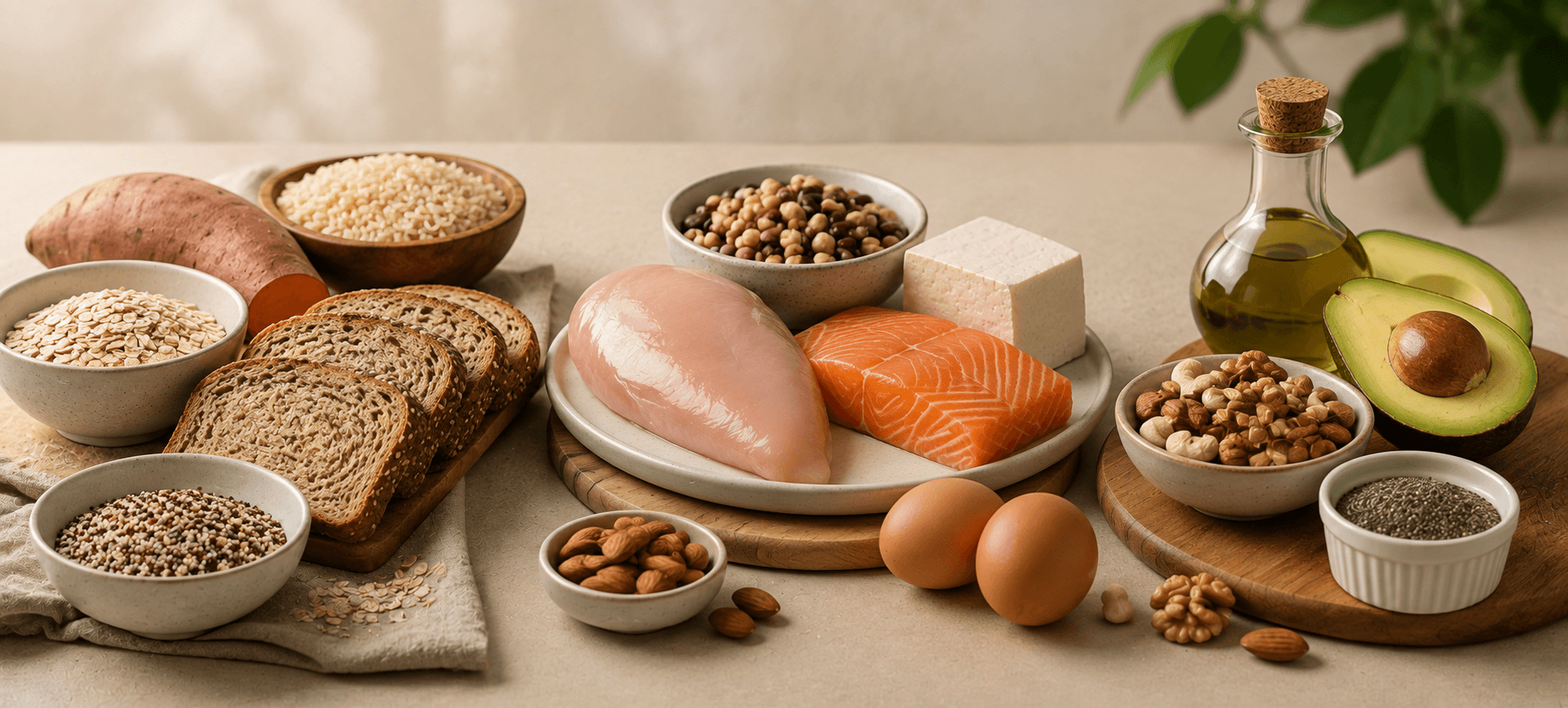
Carbohydrates are a major source of energy. They are especially useful during many forms of physical activity, and glucose made from carbohydrates is used by the brain and other tissues. The World Health Organization (WHO) recommends getting most carbohydrate intake from foods such as whole grains, vegetables, fruit and pulses rather than letting highly refined foods and free sugars dominate the diet. Useful carbohydrate sources include oats and other whole grains, brown rice and millets, potatoes and sweet potatoes, lentils, beans and chickpeas, and fruit and vegetables. These foods can provide fibre, vitamins, minerals and other nutrients alongside carbohydrates.
Are simple carbohydrates bad? Not automatically. “Simple” and “complex” describe carbohydrate structure, but they do not tell you everything about the nutritional quality of a food. Fruit contains simple sugars but also provides fibre, water, vitamins and plant compounds. A sugary soft drink also contains simple sugars, but with far less nutritional value. It is usually more useful to ask whether most of your carbohydrate intake comes from fibre-rich, minimally processed foods.
Protein
Protein provides amino acids that the body uses to build and repair tissues and make enzymes, hormones and many other compounds. It is also important for maintaining muscle. Useful sources include fish, eggs, dairy products, lentils, beans, chickpeas, soy foods such as tofu, nuts, seeds and lean poultry. Protein becomes particularly relevant as we get older because muscle mass and strength tend to decline with age. The National Institute on Aging (NIA) recommends choosing a variety of nutrient-dense protein foods. Protein alone cannot prevent age-related muscle loss, and more is not automatically better, but getting enough protein alongside regular resistance exercise helps support muscle maintenance.
For more on nutrition later in life, read 7 Best Foods to Eat After 50 for Strength and Healthy Ageing.
Fat

Dietary fat provides energy, supplies essential fatty acids and helps the body absorb the fat-soluble vitamins A, D, E and K. It is also part of cell membranes and many normal biological processes. The type of fat matters. The WHO recommends replacing saturated and trans fats with unsaturated fats where possible and avoiding industrially produced trans fats. Nuts, seeds, fish, avocado and many plant oils provide unsaturated fats. Fat therefore does not need to be removed from a healthy diet. The more useful goal is to choose better sources most of the time and keep overall portions appropriate for your needs.
Does food quality matter more than macro numbers?
Two meals can contain similar amounts of carbohydrate, protein and fat while having very different nutritional value. A meal built around a sugary drink and highly refined snacks may have the same broad macro numbers as a meal containing rice, dal, vegetables and a protein source, but the second meal also provides more fibre, vitamins, minerals and a wider range of useful nutrients. This is why tracking macros alone cannot tell you whether a diet is balanced. Food quality, dietary variety and the combination of foods on the plate matter too. Highly processed foods are also a broad category, so there is no need to treat every packaged food as unhealthy. Frozen vegetables, plain yoghurt, canned beans and whole-grain bread can all be convenient, nutritious choices.
What is a healthy macronutrient ratio?
There is no single ideal ratio that everyone needs to follow. The National Academies’ Acceptable Macronutrient Distribution Ranges (AMDRs) for adults give broad ranges as a percentage of total energy:
Carbohydrates: 45–65%
Protein: 10–35%
Fat: 20–35%
These are population-level reference ranges, not a personal prescription. Age, activity level, body size, health conditions, dietary preferences and goals can all affect what works for an individual. Other health organisations may use somewhat different ranges when giving population guidance, which is another reason not to treat one macro split as a universal rule.
Do you need to count macros?

Most people do not need to calculate carbohydrate, protein and fat precisely to eat well. Macro tracking can be useful in some sporting or clinical situations, but it can also make ordinary eating unnecessarily complicated when there is no clear reason to track. A simpler approach is to build meals around a variety of vegetables or fruit, a useful protein source, a fibre-rich carbohydrate and some unsaturated fat. The Harvard T.H. Chan School of Public Health Healthy Eating Plate uses roughly half the plate for vegetables and fruit, with the remaining half divided between whole grains and healthy protein, plus healthy oils in moderation. It is a visual guide rather than a rule, and your appetite, culture, activity level and health needs still matter.
Macronutrients vs micronutrients: what is the difference?
Macronutrients are needed in larger amounts and provide energy or major structural components. Micronutrients are vitamins and minerals needed in much smaller amounts. Vitamin D, iron, zinc and vitamin B12 are examples of micronutrients. The two groups are not competing parts of nutrition. Many foods provide both. Lentils, for example, provide carbohydrate and protein along with fibre, iron and other micronutrients. Nuts provide fat and protein alongside vitamins and minerals. That is another reason food quality matters beyond simply hitting macro numbers.
Also read
Medical Disclaimer
This article is for general educational purposes only and should not replace professional medical advice, diagnosis or treatment. Speak with a qualified healthcare professional or dietitian before making major dietary changes if you are pregnant, breastfeeding, taking regular medicines, managing a medical condition or have specific nutritional requirements.
Continue this topic
Connected guides, ingredient explainers, product context, and tools chosen from this article's topic cluster.
Cravings, protein, insulin sensitivity, fibre, metabolism basics
Relevant for daily micronutrient coverage during a weight or metabolism plan.
Most Indian breakfasts are mostly cereal. Learn what morning protein really does for fullness, cravings and muscle, plus easy swaps from home food.
The scale finally moved and now your hair is falling out. Here is why hair fall after weight loss happens, how long it lasts and what actually helps it grow back.
Recovery problems are not always solved by another supplement. Sometimes the real issue is sleep, training load, food or simply not enough time between hard sessions.
Quick questions
What are the three main macronutrients?
The three main energy-providing macronutrients are carbohydrates, protein and fat. Your body needs all three for different functions, although the amounts can vary from person to person.
What do carbohydrates do?
Carbohydrates are a major source of energy for the body. They are particularly important as a fuel source during many forms of physical activity, and glucose derived from carbohydrates is commonly used by the brain and other tissues. The World Health Organization’s healthy diet guidance emphasises that carbohydrate quality matters, with most carbohydrate intake ideally coming from foods such as whole grains, vegetabl
Are simple carbohydrates bad?
Not automatically. The terms simple and complex describe carbohydrate structure, but they do not tell you everything about the nutritional quality of a food. Fruit, for example, naturally contains simple sugars but also provides fibre, water, vitamins and plant compounds, while a sugary soft drink contains simple sugars with little nutritional value.
Why is protein important?
Protein provides amino acids that the body uses to build and repair tissues and make enzymes, hormones and many other compounds. It is also important for maintaining muscle. Muscle mass tends to decline with age, which makes adequate protein intake and regular resistance exercise increasingly relevant in later life.
Which macronutrient provides the most energy?
Fat provides the most energy per gram at about 9 calories. Carbohydrates and protein each provide roughly 4 calories per gram.
What is the best macro ratio for weight loss?
There is no single macro ratio that guarantees weight loss. Overall energy intake, food quality, protein intake, activity and whether the eating pattern is realistic enough to maintain all matter. People with medical conditions or specific weight-management needs may benefit from individual advice from a qualified dietitian or healthcare professional.
Do I need to count macros to eat healthily?
No. Most people can build a balanced diet without tracking every gram of carbohydrate, protein and fat. A varied eating pattern built around minimally processed foods, useful protein sources, fibre-rich carbohydrates and unsaturated fats is a practical starting point.
4 linked sources checked against our citation and claim-safety process.
Reviewed 22 Aug 2026 for supplement-claim and medical-disclaimer boundaries.
Recommended from the Aora range
Aora Nutrivit Plus
19 Essential Nutrients with Zinc, Magnesium and Vitamins B Complex, C and D3
- Multivitamin
- Daily Foundation
- Made in India
From₹690.00
Try Aora - free
Put this article to work on you.
Health and safety notice
- This article is educational. It is not medical advice and is not a substitute for guidance from a qualified healthcare provider. Consult a physician before starting any supplement, especially during pregnancy or breastfeeding, with a medical condition, or while on medication.
- FSSAI compliance: Health supplements and nutraceuticals are not intended for medicinal use. Any supplement-related information is provided to describe nutritional or physiological support and should not be interpreted as a claim to diagnose, treat, cure, or prevent any disease. FSSAI regulates health supplements and nutraceuticals separately from medicinal products.
Read our full medical disclaimer and editorial policy.
Sources and editorial standards
- 1World Health Organization (WHO)
- 2National Institute on Aging (NIA)
- 3National Academies’ Acceptable Macronutrient Distribution Ranges (AMDRs)
- 4Harvard T.H. Chan School of Public Health Healthy Eating Plate
Supplement content is educational only and should not replace medical advice from a qualified clinician. Product mentions are reviewed for claim safety before publication.