
Text Neck: Is Your Phone Really to Blame for Neck Pain?
Text neck is the head-down posture we hold over phones. See what studies say about posture, sleep and movement, easy desk stretches and when to see a doctor.

In this article(15 sections)
- What is text neck?
- Is your phone really to blame for neck pain?
- Where the scary numbers come from
- What studies of real people show
- Why your neck aches after a day on screens
- How do you ease text neck at home?
- Bring the screen up, not your head down
- Change position often
- Gentle neck movements
- Build strength over time
- Use heat or cold sensibly
- Sleep and movement are part of the fix
- When should you see a doctor for neck pain?
- Looking up
- Sources
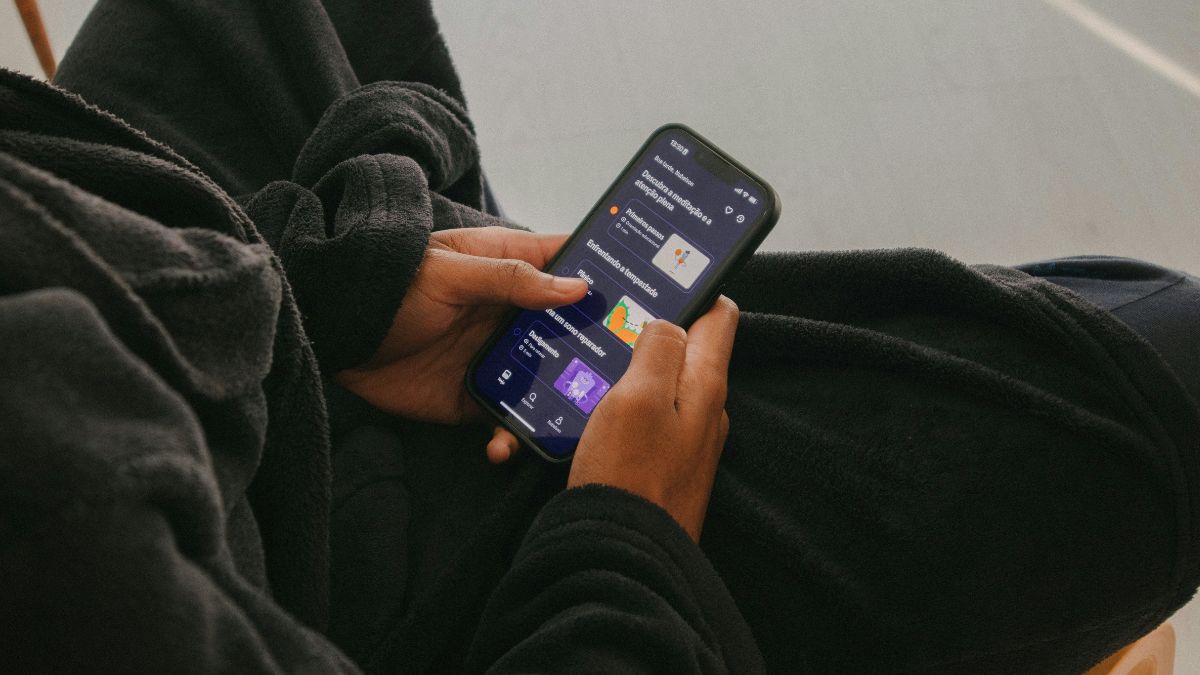
It's 11 at night. You're lying in bed, scrolling through reels on your phone. You only meant to check one message, but somehow, 40 minutes have passed. When you finally put your phone down, your neck feels stiff. The next morning, you're looking down at your phone again on the way to work. By lunchtime, there's a dull ache between your shoulders. Sounds familiar? You may have heard this called text neck, a term used to describe the forward-bent head posture we often adopt while using our phones, as well as the neck discomfort associated with it.
Social media posts often warn that looking down at your phone puts enormous pressure on your spine. But the research isn't quite that straightforward. While spending long hours on screens can contribute to neck discomfort, the angle of your head alone may not be the main problem. How long you stay in one position, how often you move, your sleep and your daily habits can all play a part. The good news is that many of these habits are within your control. Understanding what causes text neck, what the research actually says and which small changes can help may make those long hours on your phone a little easier on your neck.
What is text neck?
Text neck describes the habit of bending the head forward to look at a handheld screen. Doctors also call this forward head posture when it becomes the way you usually hold your head. When you look down, the muscles at the back of your neck and upper back work harder to stop your head from tipping further forward. Held for hours with little change, those muscles get tired and sore. How far do people actually bend? In a lab study from Korea, 18 adults held their heads bent 33 to 45 degrees from upright while texting, browsing or watching videos. The bend was greatest while texting and greater when sitting than standing (Lee, Ergonomics, 2015). So texting while sitting bent the neck the most.
Is your phone really to blame for neck pain?
Where the scary numbers come from
The figure you have probably seen, the head growing heavier and heavier as it tilts, traces back to a 2014 paper from a New York spine clinic. It used a model to estimate how the force on the neck rises as the head bends forward (Hansraj, Surgical Technology International, 2014). That is a calculation, not a measurement taken inside living people. It shows that bending forward asks more of your neck. It does not show that looking at your phone damages your spine.
What studies of real people show
Studies that ask people about their phone habits do find a link. A 2025 review pooled seven studies with 10,715 participants. People who overused their smartphones had more than twice the odds of neck pain compared with those who did not (Chen, Postgraduate Medical Journal, 2025). Those studies looked back in time, so they show an association, not proof that the phone caused the pain. A Brazilian team tested the posture question more directly. They measured the neck angle of 457 adults without neck pain while each person typed on their phone, then followed them for a year, with 396 completing the follow-up. The angle of the neck did not predict who developed neck pain. Poor sleep and low physical activity did. Poor sleep raised the odds by about 1.8 times and too little activity by about 2.4 times (Correia, Brazilian Journal of Physical Therapy, 2025). Put together, the bent neck itself may matter less than how long you stay still, how little you move and how badly you sleep. Heavy phone use can come with all three. So the habit, more than the angle, is worth working on.
Why your neck aches after a day on screens
Muscle strain is a common reason for a sore neck after screen time. MedlinePlus lists bending over a desk for an hour or more, poor posture while watching TV or reading and a computer monitor set too high or too low among the everyday causes (MedlinePlus, Neck pain). The NHS adds sleeping with the neck locked in an awkward position and sitting at a desk for a long time (NHS, Neck pain). Think about a typical day. Phone in bed, news on the metro, eight hours at a laptop placed flat on the table, a cricket match on the sofa, then more scrolling in bed. Your neck barely changes position from morning to midnight. Our guide on joint stiffness after sitting explains why long still periods leave muscles and joints feeling rusty. The neck behaves the same way.
How do you ease text neck at home?
According to the NHS, most neck pain only lasts a few weeks (NHS, Neck pain). These steps may help it settle.
Bring the screen up, not your head down
Hold your phone closer to eye level, with your elbows resting on your body or on a table, so your chin stays nearer to level.
Put your laptop on a stand or a pile of thick books and use a separate keyboard, so the top of the screen sits around eye level.
Use voice notes or calls for long WhatsApp conversations instead of typing everything.
Change position often
The NHS advises against keeping your neck in the same position for a long time, for example at a desk (NHS, Neck pain). Set a regular reminder to look up and move. Stand up for calls. Stretch while the chai is being made.
Gentle neck movements
MedlinePlus suggests slow range of motion exercises, moving the neck up and down, side to side and ear to ear to gently stretch the muscles (MedlinePlus, Neck pain). A simple routine you can do at your desk:
Sit tall. Slowly look down towards your chest, then up towards the ceiling. Repeat five times.
Turn your head to look over your right shoulder, then your left. Repeat five times.
Tilt your right ear towards your right shoulder, then the left ear to the left. Repeat five times.
Gently draw your chin straight back, as if making a double chin. Hold it for five seconds. Repeat five times.
Squeeze your shoulder blades together and down, hold for five seconds and relax. Repeat ten times.
Move slowly. Stop if a movement causes sharp pain, tingling or dizziness.
Build strength over time
Stretching can ease tightness. Strength work has trial evidence too. A review of eight trials in office workers with long-standing neck pain found that strengthening exercises for the neck, shoulder and shoulder blade muscles lowered pain and disability. The quality of the evidence was low, so the size of the benefit is uncertain (Jones, Applied Ergonomics, 2024). A physiotherapist can show you exercises with light resistance bands that suit your neck.
Use heat or cold sensibly
The NHS suggests a hot water bottle wrapped in a tea towel for 20 minutes, two to three times a day, or a pack of frozen peas wrapped in a towel for 5 minutes, three times a day (NHS, Neck pain). It advises against a neck collar unless a doctor suggests one, since moving the neck is better.
Sleep and movement are part of the fix

Poor sleep and low activity were stronger risks than neck angle in the Brazilian study, so they deserve as much attention as screen height.
Use a low, firm pillow that keeps your head level with the rest of your body, as the NHS suggests. Avoid sleeping on your front.
Stop scrolling in bed. Put the phone on charge across the room 30 minutes before sleep.
Aim for a daily walk, a yoga session or a game of badminton with your children. Any movement that gets you away from a screen counts.
If you find you keep waking up stiff or tired, our Aora guide on waking up at night looks at what may be breaking your sleep. For a wider reset, these healthy daily habits are easy to fit around office life.
When should you see a doctor for neck pain?
Many people find screen-related neck ache eases with the steps above. Some signs mean you should see a doctor rather than wait. MedlinePlus says to seek medical help right away if you have:
Fever and headache with a neck so stiff you cannot touch your chin to your chest, which may indicate meningitis. Call 112 or get to a hospital
Symptoms of a heart attack, such as shortness of breath, sweating, nausea, vomiting or arm or jaw pain
MedlinePlus and the NHS advise contacting a doctor if you have:
Neck pain after a fall, blow or injury. If you cannot move your arm or hand, have someone call 112
Numbness, tingling or weakness in your arm or hand, or pins and needles or a cold arm
Pain that does not ease after a week of self-care (MedlinePlus), or that does not go away after a few weeks (NHS)
Pain that does not go away with regular doses of over-the-counter painkillers
A lump or swollen glands in your neck
Pain that gets worse when you lie down or wakes you at night
Difficulty swallowing or breathing with the pain
Trouble walking or balancing, or loss of bladder or bowel control
Pain so severe that you cannot get comfortable
Pain you are worried about (NHS)
Ask your doctor or pharmacist before taking painkillers, especially if you have stomach, kidney or heart problems or take other medication.
Looking up
Your phone is not going away. It does not need to. The neck you have today is built to bend forward and look down. What it struggles with is staying there for hours, night after night, with little sleep and little movement in between. Lift the screen a little. Look up at the sky on the walk to the bus stop. Put the phone down half an hour before bed. Small shifts like these, repeated every day, can help turn a stiff neck back into one you stop noticing.
Sources
Medical Disclaimer: This article is for general information and is not a substitute for advice from your doctor. Speak to a qualified healthcare professional before starting any supplement, especially if you are pregnant, breastfeeding or taking medication.
Continue this topic
Connected guides, ingredient explainers, product context, and tools chosen from this article's topic cluster.
Calf seizing at 3 am? Why night leg cramps happen, how to ease one fast, which medicines can trigger them and the signs that need a doctor.
Folate is in your dal and palak. Folic acid is in the tablet. This guide explains why the tablet matters before pregnancy, how much to take and what MTHFR claims get wrong.
Iron tablets making you sick or constipated? How to time them, what to keep away, what black stools mean and when to recheck your haemoglobin.
Quick questions
What is text neck?
Text neck is the name for bending your head forward to look down at a phone or tablet for long periods. The muscles at the back of the neck and upper back work harder in that position, so they can feel tight and sore after hours of screen use.
Does looking at my phone damage my spine?
There is no good evidence that the angle of your neck on a phone damages the spine. The well known figures about the head getting heavier come from a 2014 model estimate. A study that followed adults for a year found poor sleep and low activity predicted neck pain better than neck angle did.
How long does text neck pain take to go away?
The NHS says most neck pain only lasts a few weeks. Taking regular breaks, lifting your screen closer to eye level, gentle neck movements and better sleep may help it settle. See a doctor if it has not eased after a few weeks.
What exercises help text neck?
Slow neck movements up and down, side to side and ear to ear help stretch tight muscles. Chin tucks and shoulder blade squeezes are easy to do at a desk. Over time, strengthening the neck, shoulder and shoulder blade muscles can help, ideally with guidance from a physiotherapist.
When is neck pain from phone use a reason to see a doctor?
Contact a doctor if you have numbness, tingling or weakness in an arm or hand, pain that wakes you at night or pain after a fall or injury. If you cannot move your arm or hand after an injury, MedlinePlus says to have someone call 112. It says to seek medical help right away for a very stiff neck with fever and headache, or for signs of a heart attack such as breathlessness, sweating or arm or jaw pain.
7 linked sources checked against our citation and claim-safety process.
Reviewed 14 Oct 2026 for supplement-claim and medical-disclaimer boundaries.
Recommended from the Aora range
Aora Nutrivit Plus
19 Essential Nutrients with Zinc, Magnesium and Vitamins B Complex, C and D3
- Multivitamin
- Daily Foundation
- Made in India
From₹690.00
Try Aora - free
Put this article to work on you.
Health and safety notice
- This article is educational. It is not medical advice and is not a substitute for guidance from a qualified healthcare provider. Consult a physician before starting any supplement, especially during pregnancy or breastfeeding, with a medical condition, or while on medication.
- FSSAI compliance: Health supplements and nutraceuticals are not intended for medicinal use. Any supplement-related information is provided to describe nutritional or physiological support and should not be interpreted as a claim to diagnose, treat, cure, or prevent any disease. FSSAI regulates health supplements and nutraceuticals separately from medicinal products.
Read our full medical disclaimer and editorial policy.
Sources and editorial standards
- 1Lee, Ergonomics, 2015
- 2Hansraj, Surgical Technology International, 2014
- 3Chen, Postgraduate Medical Journal, 2025
- 4Correia, Brazilian Journal of Physical Therapy, 2025
- 5MedlinePlus, Neck pain
- 6NHS, Neck pain
- 7Jones, Applied Ergonomics, 2024
Supplement content is educational only and should not replace medical advice from a qualified clinician. Product mentions are reviewed for claim safety before publication.