Cardiac Arrest in Young Adults: Signs Never to Ignore
The clips of young people collapsing at gyms, weddings and cricket matches travel fast. This calm symptom decoder explains what chest pain, breathlessness, fainting and palpitations may point to, why it happens young and how to do hands-only CPR.

In this article(16 sections)
- How rare is cardiac arrest in young adults?
- Cardiac arrest or heart attack: What is the difference?
- The symptom decoder
- Chest pain, pressure or tightness
- Breathlessness that is new or out of proportion
- Fainting during exercise
- Palpitations
- Someone collapses and is not breathing normally
- Why does it happen in young people?
- Why South Asians get heart disease earlier
- What did India's own study find?
- The risk factors you can actually check
- Which checks are worth asking a doctor about?
- Hands-only CPR: the skill worth learning this month
- When to call 112 and when to book a doctor
- Sources
The stand-up has barely started when your phone buzzes. Someone has forwarded a clip to the team group: a man in his thirties drops on a badminton court. Last month it was a groom at his sangeet, before that a batter at a weekend cricket match. Cardiac arrest in young adults is when the heart suddenly stops pumping because its electrical rhythm fails. It is rare. What helps is knowing which signs to act on and what to do if someone near you collapses.
How rare is cardiac arrest in young adults?
Rarer than your feed makes it feel. One careful count comes from a study of every sudden cardiac death in people aged 1 to 35 across Australia and New Zealand over three years. It found 490 deaths, a yearly rate of 1.3 per 100,000 people in that age group. About seven in ten (72%) were boys or young men. The rate was highest at ages 31 to 35, at 3.2 per 100,000 a year.These figures come from outside India, where similarly comprehensive national data is not yet available, so they may not reflect the situation here.
Cardiac arrest or heart attack: What is the difference?
Think of plumbing and wiring. A heart attack is a plumbing problem. A blood vessel feeding the heart muscle gets blocked, most often by fatty build-up in the coronary arteries. The person is often awake and in pain. A cardiac arrest is a wiring problem. The British Heart Foundation explains that the heart's electrical system misfires. The heart beats too quickly, too slowly or irregularly and cannot pump blood. The person collapses, is unresponsive and stops breathing normally. They may make gasping noises. Without immediate treatment, they die. The two are linked. A heart attack can trigger a dangerous rhythm, which is one reason chest pain should never be waved off.
The symptom decoder
Chest pain, pressure or tightness
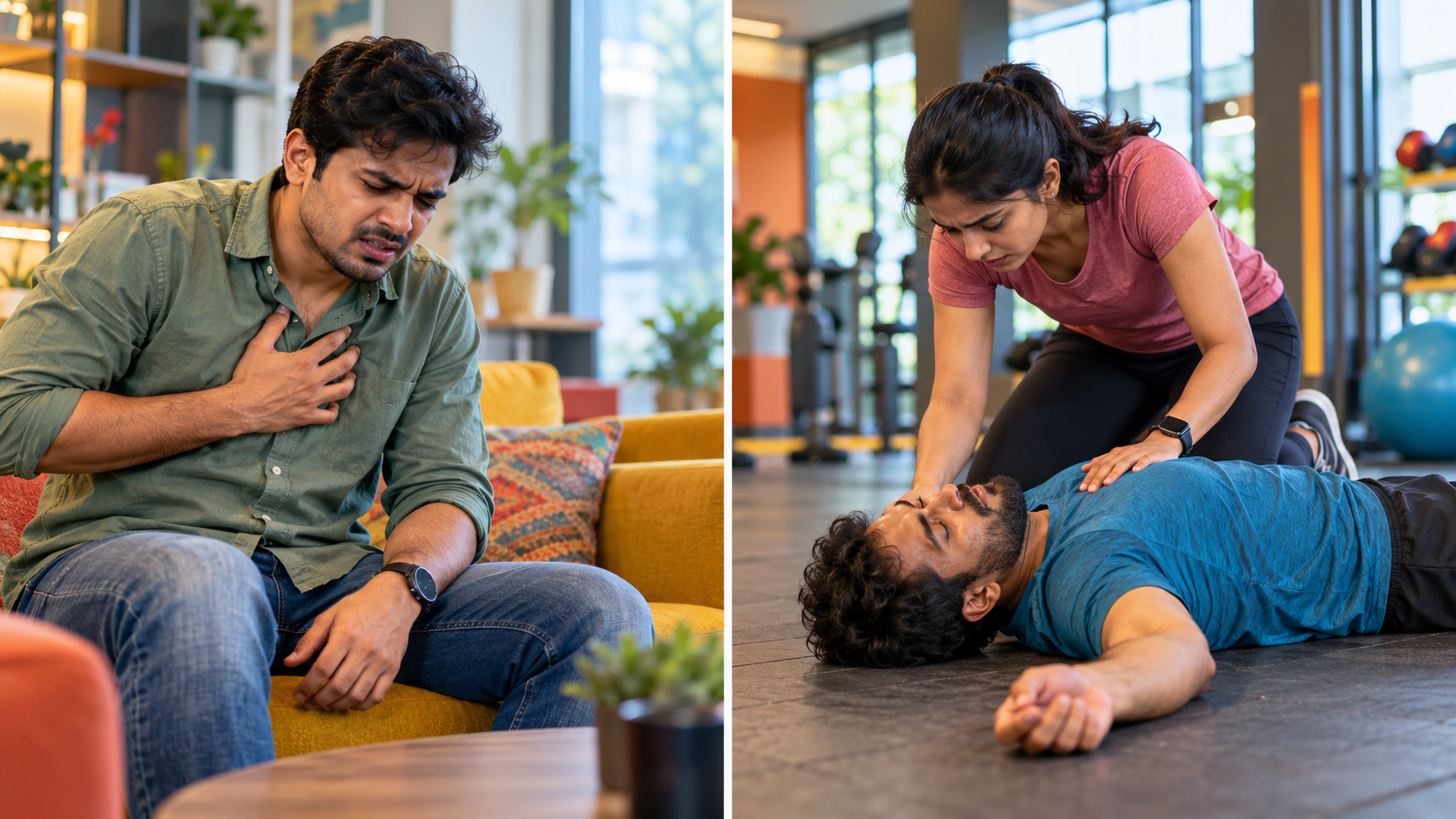
It may point to a heart attack. The NHS describes it as crushing or squeezing, sometimes spreading to the arm, neck or jaw. Other symptoms can include feeling short of breath, feeling or being sick, a burning feeling like indigestion, sweating and pale, blue or grey skin.
What to do: The NHS says to call for an ambulance (112 in India) if chest pain feels tight or like squeezing or is spreading to your arms, neck or jaw, you are having severe difficulty breathing, your lips or skin are pale, blue or grey, or someone has passed out and is not responding normally. Do not drive yourself. Sit and rest while help comes. It lists chest pain with feeling or being sick as needing urgent medical advice.
Breathlessness that is new or out of proportion
It may point to the heart not pumping well, a lung problem or a heart attack. The NHS heart attack page calls severe difficulty breathing, gasping, choking or being unable to get words out an emergency. It says being suddenly more breathless than usual needs urgent advice.
What to do: If office stairs suddenly leave you more breathless than usual, get urgent advice. If it is severe, call 112.
Fainting during exercise
It may point to a heart problem. The NHS says fainting is not usually a sign of something serious. Causes can include standing up too quickly, not eating or drinking enough, being too hot, being very upset, angry or in severe pain, heart problems, taking drugs or drinking too much alcohol. The NHS fainting guidance says to see a GP if you have fainted. It says to call an ambulance if someone is not breathing, cannot be woken up within 1 minute, has not fully recovered or has difficulty with speech or movement, has chest pain or a pounding, fluttering or irregular heartbeat, has seriously hurt themselves, is shaking or jerking, fainted while exercising or fainted while lying down.
What to do: Anyone who blacks out mid-run, mid-match or in the gym needs emergency help, even if they feel fine a minute later.
Palpitations
It may point to nothing serious at all. The NHS palpitations page says they are common and not usually a sign of anything serious. Common causes include strenuous exercise, lack of sleep, stress and anxiety, medicines, alcohol, caffeine, nicotine and recreational drugs.
What to do: The NHS says to call an ambulance or go to the emergency department if you have palpitations now and they do not go away, or you also have chest pain, shortness of breath, feeling faint or fainting. See a doctor if they keep coming back or happen more often, last longer than a few minutes, or you have a heart condition or a family history of heart problems. Our guide to your resting heart rate at night explains what a normal pattern looks like.
Someone collapses and is not breathing normally
This is the one that points to cardiac arrest. Gasping is not normal breathing. Start CPR at once, using the steps further down.
Why does it happen in young people?
The Australia and New Zealand study found three main patterns. Coronary artery disease, the same blocked-artery problem that causes heart attacks, explained 24% of deaths. Inherited diseases of the heart muscle (cardiomyopathies) explained 16%. The biggest group, 40%, stayed unexplained even after a full autopsy. When researchers tested genes in 113 of those cases, about one in four (27%) carried a relevant heart gene change. Inherited heart conditions were later diagnosed in 13% of the families. The British Heart Foundation lists other causes too, including inherited electrical problems such as Brugada syndrome and severe inflammation of the heart muscle (myocarditis).
Why South Asians get heart disease earlier
In the INTERHEART study, which compared 1,732 first heart attacks in five South Asian countries with cases from other countries, the average age of a first heart attack was 53.0 years in South Asia. In other countries it was 58.8. The authors found the gap was largely explained by higher risk factor levels at younger ages. Only 6.1% of South Asian comparison participants did moderate or hard exercise, against 21.6% elsewhere. Only 26.5% ate fruit and vegetables daily, against 45.2%.
What did India's own study find?
The ICMR ran a study across 47 hospitals. It compared 729 apparently healthy adults aged 18 to 45 who died suddenly without explanation with 2,916 matched people who did not. The study found several factors linked to sudden death in young adults:
COVID-19 vaccination: There was no evidence of increased risk. In fact, people who had received at least one dose had lower odds of sudden death.
Family history: Those with a family history of sudden death had about 2.5 times higher odds.
Binge drinking: Heavy drinking within the previous 48 hours was linked to about 5.3 times higher odds.
Recreational drug use: People who reported using recreational drugs had about 2.9 times higher odds.
Intense physical activity: Strenuous exertion in the previous 48 hours was linked to about 3.7 times higher odds.
Previous COVID-19 hospitalisation: Those who had been hospitalised for COVID-19 had about 3.8 times higher odds.
These findings need some context. This was a case-control study, which means researchers identified associations but could not prove that these factors directly caused sudden death. The finding about physical activity is particularly important to understand. It does not mean exercise is dangerous or that you should avoid it. Regular physical activity is good for heart health, as the INTERHEART study also found. The concern is more about suddenly pushing yourself far beyond your usual fitness level, especially after a long period of inactivity. Building up exercise gradually is a more sensible approach than avoiding it altogether.
The risk factors you can actually check

Smoking, including the occasional one on a smoke break.
Diabetes or blood sugar creeping up on a routine test.
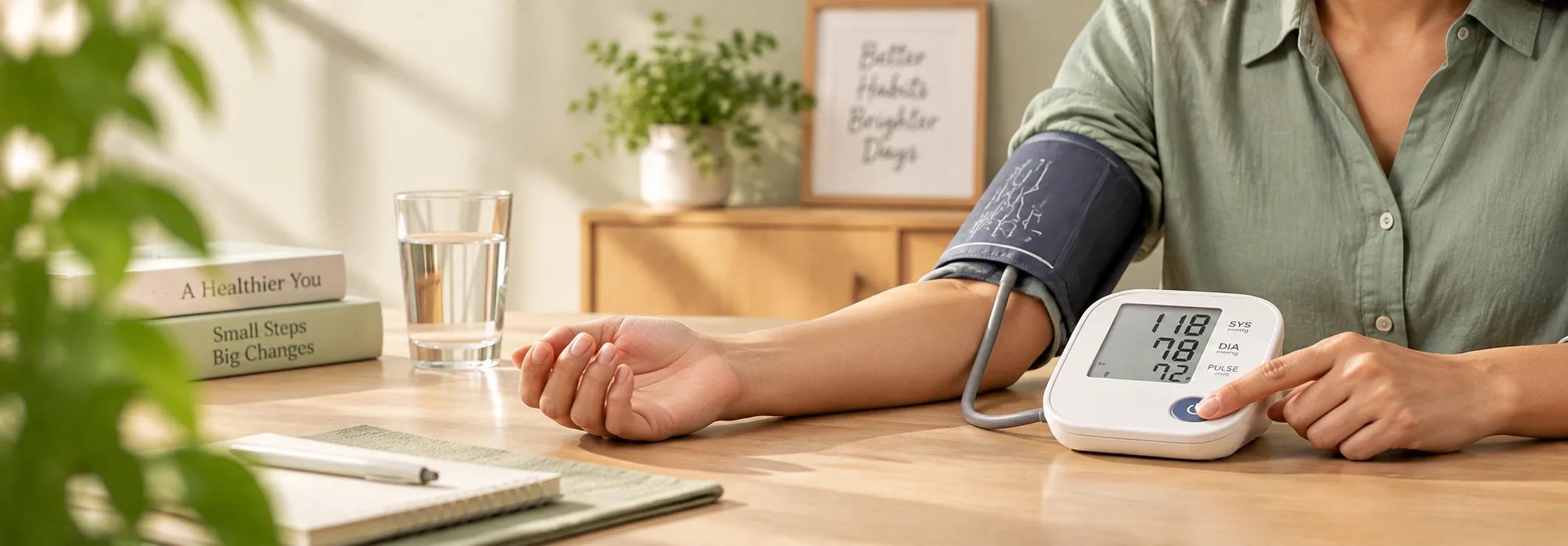
High blood pressure. Our guide on how to measure blood pressure at home shows you how to get a reading you can trust.
Cholesterol, especially if no one has ever checked yours.
A parent, sibling or cousin who died suddenly and young, or who had a heart condition diagnosed early.
Binge drinking and recreational drugs, given what the ICMR study found.
This article on unhealthy daily habits can help you start an honest audit.
Which checks are worth asking a doctor about?
No single test rules out every cause. High blood pressure, diabetes and blood fats were among the risk factors in INTERHEART. All three can be checked with simple tests, so ask your doctor which ones suit you and how often. If someone in your family died suddenly, tell your doctor exactly what happened and at what age. The British Heart Foundation lists inherited heart conditions among the causes of cardiac arrest, so that history matters.
Hands-only CPR: the skill worth learning this month
If a colleague collapses at the office cricket match, what you do before the ambulance arrives counts. The British Heart Foundation explains that CPR keeps blood and oxygen moving to the brain. These steps follow St John Ambulance guidance.
Check if the person responds. Gently shake their shoulders and ask loudly, "Are you okay?"
Call for help immediately. If they don't respond and aren't breathing normally, call 112. Put your phone on speaker so you can follow instructions while helping them. Don't mistake occasional gasping for normal breathing.
Ask someone to get an AED. An automated external defibrillator (AED) can help restore a normal heart rhythm. Ask someone nearby or building security to find one. You don't need special training to use it because the device gives step-by-step voice instructions.
Position your hands. Kneel beside the person, place the heel of one hand in the centre of their chest and put your other hand on top.
Start chest compressions. Keep your arms straight and your shoulders directly above your hands. Push down firmly, about 5 to 6 cm, and allow the chest to rise fully after each push.
Keep a steady rhythm. Aim for 100 to 120 compressions per minute. If you're not trained to give rescue breaths, continue with hands-only CPR.
Don't stop unless necessary. Keep giving compressions until emergency responders take over, the AED tells you to pause, or the person shows signs of life. If someone else can help, take turns about every two minutes to avoid getting tired.
When to call 112 and when to book a doctor
Call 112 for chest pain that feels tight or squeezing or is spreading to your arms, neck or jaw, severe difficulty breathing, pale, blue or grey lips or skin, palpitations that do not go away or come with chest pain, shortness of breath, feeling faint or fainting, the fainting signs the NHS lists above (including fainting while exercising or lying down) or anyone who has passed out and is not responding or breathing normally. Get urgent medical advice if you are suddenly more short of breath than usual or have chest pain and feel or are sick. See a doctor if you have fainted, or if palpitations keep coming back, last longer than a few minutes or you have a heart condition or a family history of heart problems. Do not stop or change any prescribed medication on your own. That is a decision for your doctor.
The next time a clip lands in the team group, watch it once. Then put a reminder in your calendar to learn CPR and to ask your parents what really happened to that uncle who died young.
Sources
Medical Disclaimer: This article is for general information and is not a substitute for advice from your doctor. Speak to a qualified healthcare professional before starting any supplement, especially if you are pregnant, breastfeeding or taking medication.
Continue this topic
Connected guides, ingredient explainers, product context, and tools chosen from this article's topic cluster.
Quick questions
What is the difference between cardiac arrest and a heart attack?
A heart attack happens when a blood vessel feeding the heart gets blocked. The person is usually awake. A cardiac arrest happens when the heart's electrical rhythm fails and it stops pumping. The person collapses and stops breathing normally. A heart attack can trigger a cardiac arrest.
Are there warning signs before cardiac arrest in young adults?
The British Heart Foundation says a cardiac arrest usually happens without warning, so knowing CPR matters. The NHS lists signs that need emergency help, such as chest pain that feels tight or is spreading, fainting while exercising and palpitations with chest pain or fainting.
Did the COVID vaccine cause sudden deaths in young Indians?
An ICMR study across 47 hospitals found COVID-19 vaccination did not raise the risk of unexplained sudden death in adults aged 18 to 45. Family history of sudden death, binge drinking, recreational drugs and very hard exertion in the 48 hours before were linked to higher odds.
Is fainting during exercise serious?
Fainting while exercising is serious. The NHS says to call an ambulance for anyone who faints while exercising, so call 112 even if the person feels fine afterwards. Heart problems are one of the causes of fainting the NHS lists.
Which heart tests should a young adult ask a doctor about?
No single test rules out every cause. High blood pressure, diabetes and blood fats were among the risk factors in the INTERHEART study. All can be checked with simple tests, so ask your doctor which suit you. Tell your doctor about any relative who died suddenly or young.
How do I do hands-only CPR?
Call 112 and put the phone on speaker. Place the heel of one hand in the middle of the chest with the other hand on top. Press down hard about 5 to 6 cm at 100 to 120 a minute. Keep going until help arrives or a defibrillator is ready.
8 linked sources checked against our citation and claim-safety process.
Reviewed 14 Oct 2026 for supplement-claim and medical-disclaimer boundaries.
Recommended from the Aora range
Aora Nutrivit Plus
19 Essential Nutrients with Zinc, Magnesium and Vitamins B Complex, C and D3
- Multivitamin
- Daily Foundation
- Made in India
From₹690.00
Try Aora - free
Put this article to work on you.
Health and safety notice
- This article is educational. It is not medical advice and is not a substitute for guidance from a qualified healthcare provider. Consult a physician before starting any supplement, especially during pregnancy or breastfeeding, with a medical condition, or while on medication.
- FSSAI compliance: Health supplements and nutraceuticals are not intended for medicinal use. Any supplement-related information is provided to describe nutritional or physiological support and should not be interpreted as a claim to diagnose, treat, cure, or prevent any disease. FSSAI regulates health supplements and nutraceuticals separately from medicinal products.
Read our full medical disclaimer and editorial policy.
Sources and editorial standards
- 1study of every sudden cardiac death
- 2British Heart Foundation
- 3NHS
- 4NHS fainting guidance
- 5NHS palpitations page
- 6INTERHEART study
- 7study across 47 hospitals
- 8St John Ambulance guidance
Supplement content is educational only and should not replace medical advice from a qualified clinician. Product mentions are reviewed for claim safety before publication.