Blood Sugar Spike After Eating: What Is Normal and What Helps
CGM graphs of idli and rice spikes are everywhere. This guide explains what a rise after a meal really means, what is normal and the simple habits that help.
In this article(13 sections)
- What is a blood sugar spike after eating?
- What is normal for people without diabetes?
- Where the CGM trend gets ahead of the evidence
- Why this matters more in India
- Simple Indian meal habits that blunt the spike
- Eat your sabzi and dal before the rice or roti
- Have the sweet with a meal, not on its own
- Walk for a few minutes after eating
- Choose fibre and watch the portion
- Protect your sleep
- Who should get tested?
- The bottom line
- Sources
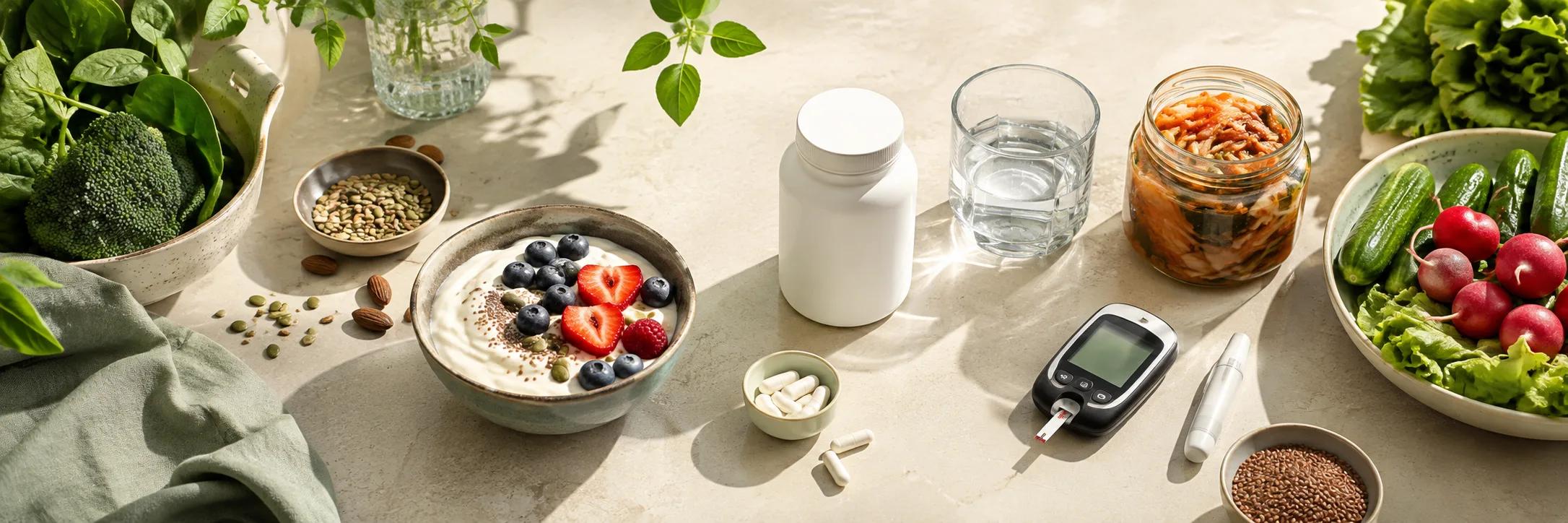
Scroll through Instagram or YouTube, and you might come across someone showing a graph of their blood sugar after a meal. They've just eaten idli and sambar, and the line is climbing. The caption makes it sound as though a blood sugar spike after eating is something to worry about. Rice, mangoes, poha and even bananas seem to get blamed. These graphs come from continuous glucose monitors (CGMs), small sensors that track glucose levels throughout the day. While they are mainly used to manage diabetes, some people without diabetes now wear them to see how different foods affect their blood sugar.
But here’s what these graphs often leave out: blood sugar naturally rises after you eat carbohydrates. That doesn't automatically mean something is wrong. What matters is how high it rises, how long it stays elevated and what your overall blood sugar levels look like over time. So, how do you tell a normal rise from one that needs attention? And can simple changes to your meals help? Let us look at what the research says.
What is a blood sugar spike after eating?

A blood sugar spike is simply a rise in your blood glucose level after eating. To understand why it happens, it helps to look at what your body does with food. When you eat rice, roti, idli or something sweet, your digestive system breaks down the carbohydrates into glucose, which enters your bloodstream. Your pancreas then releases insulin, a hormone that helps glucose move into your muscles and other cells to be used for energy or stored for later. As your body uses or stores the glucose, your blood sugar gradually comes back down. That rise and fall is the ‘spike’ people post about. In a healthy body, blood sugar rises after a meal and gradually comes back down. But when your body doesn't respond to insulin as well as it should, glucose can stay in your blood for longer. This is called insulin resistance. Over time, your blood sugar may start staying higher than normal, even before you've eaten anything. If those levels remain elevated, it can be a sign of prediabetes or type 2 diabetes.
What is normal for people without diabetes?
This is where the social media graphs need some context. One useful reference comes from a study that put modern CGMs on 153 healthy people aged 7 to 80 for up to ten days. In the study, average blood sugar levels were around 98 to 99 mg/dL for most age groups and 104 mg/dL for people over 60. Participants spent about 96% of the day with blood sugar between 70 and 140 mg/dL. But even these healthy adults had readings above 140 mg/dL for around 30 minutes a day. So a healthy person crossing 140 after a big meal now and then is expected. It shows up in the data of people with perfectly normal metabolism.
Another study grouped people by the shape of their glucose curves. It found that even people with normal standard tests reached the prediabetic range about 15% of the time and the diabetic range about 2% of the time. The researchers also saw that two people can respond very differently to the same meal. The findings are interesting, but they don't necessarily mean that everyone in the group had a blood sugar problem.
Where the CGM trend gets ahead of the evidence
A CGM is a genuinely useful tool in diabetes care. For a healthy person, a few honest limits are worth keeping in mind:
One reading after one meal tells you very little. Sleep, stress, a cold or a long sitting day can all change your curve the next day.
There is no agreed target for "how flat" a healthy person's curve should be. Influencers often set their own lines.
A food that raises your sugar is not automatically a bad food. Idli, rice and mango are part of meals that millions of healthy Indians eat daily.
Chasing a flat line can push people into cutting whole food groups or feeling anxious at every meal.
What the evidence does support is simpler. Keeping your average sugar healthy over months and years lowers your risk of diabetes. The habits that do this are the same ones that also smooth the spike after a meal. You do not need a sensor to practise them.
Why this matters more in India
India is not a place to be casual about blood sugar. The ICMR-INDIAB study tested 113,043 adults across 31 states and union territories between 2008 and 2020. It found that 11.4% had diabetes and 15.3% had prediabetes. That is about one adult in every six or seven living with prediabetes. It usually has no symptoms, so many people only find out from a blood test. Two details stand out. Diabetes was more common in cities, yet prediabetes was the one condition that was not. So living in a village does not mean your sugar levels are safe. The authors also noted that in many less developed states, people with prediabetes outnumber those with diabetes. That is a warning about the years ahead. The better next step is a blood test, not a graph.
Simple Indian meal habits that blunt the spike
You don't have to give up rice, rotis or your favourite meals to manage blood sugar spikes. Often, small changes to how you eat and what you do after a meal can help. Here are a few simple habits you can try with the foods already on your plate.
Eat your sabzi and dal before the rice or roti
Order matters. Eating vegetables and protein first and the starch last is called ‘carbohydrate last’. Earlier trials in people with overweight and prediabetes or type 2 diabetes found this order led to lower glucose rises over three hours than eating the same foods the other way round. Be clear about its limits, though. When researchers then tested it as everyday advice in 45 adults with prediabetes over 16 weeks, glucose tolerance did not change in either group. Changes in weight and HbA1c were similar to those seen with standard diet counselling. What did change was diet quality. People ate more vegetables and protein. Most found it easy to follow. In practice, start with the salad, the poriyal or the sabzi along with some dal, curd, paneer, egg or chicken. Move to the rice or roti once you are a few bites in.
Have the sweet with a meal, not on its own
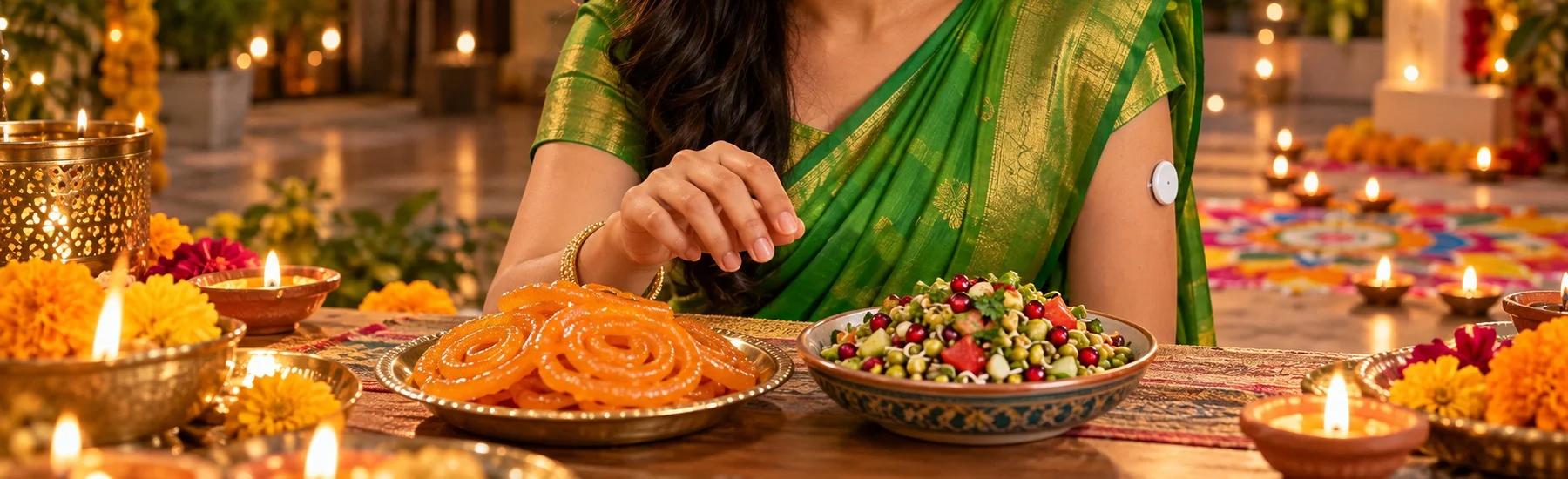
A laddoo eaten alone on an empty stomach at 5 pm hits your blood quickly. The same laddoo eaten at the end of lunch arrives behind fibre, protein and fat. That is the carbohydrate last idea applied to mithai. Direct trials on Indian sweets are few, so treat this as sensible use of the food order evidence rather than proven fact. During the festive season, it also helps to decide on one or two pieces, put them on a plate and sit down with them. Picking from the open box every time you walk past can add up to far more than you planned.
If you keep fighting the urge for something sweet after meals, this article on why you crave sugar looks at the common reasons.
Walk for a few minutes after eating
Even a short walk after eating can help manage blood sugar. A review of seven trials found that taking breaks from sitting to walk at a gentle pace helped lower blood sugar and insulin levels after meals. Walking also worked better than simply standing up. These studies only looked at short-term effects, so they don't tell us whether the same benefits last over months or years. Still, it's an easy habit to try. A ten-minute walk after dinner or a little pacing during a phone call is a good place to start.
Also read: Walking After Meals: How Much Does It Help?
Choose fibre and watch the portion
Whole dal, rajma, chana, vegetables and whole grains slow digestion. Mixing a cup of vegetables into your upma or poha does the same. Portion matters too. Two heaped servings of rice will raise your sugar more than one, whatever you eat it with. If you are unsure how carbohydrate, protein and fat fit together on a plate, read our guide to macronutrients.
Protect your sleep
A review of randomised trials found that cutting sleep short reduced insulin sensitivity, meaning the same meal pushes your sugar higher. Suppressing deep sleep and living out of step with your body clock had similar effects. Late nights during the festive weeks add up.
If you often feel heavy and sleepy after lunch, our piece on feeling tired after eating explains what is going on.
Who should get tested?
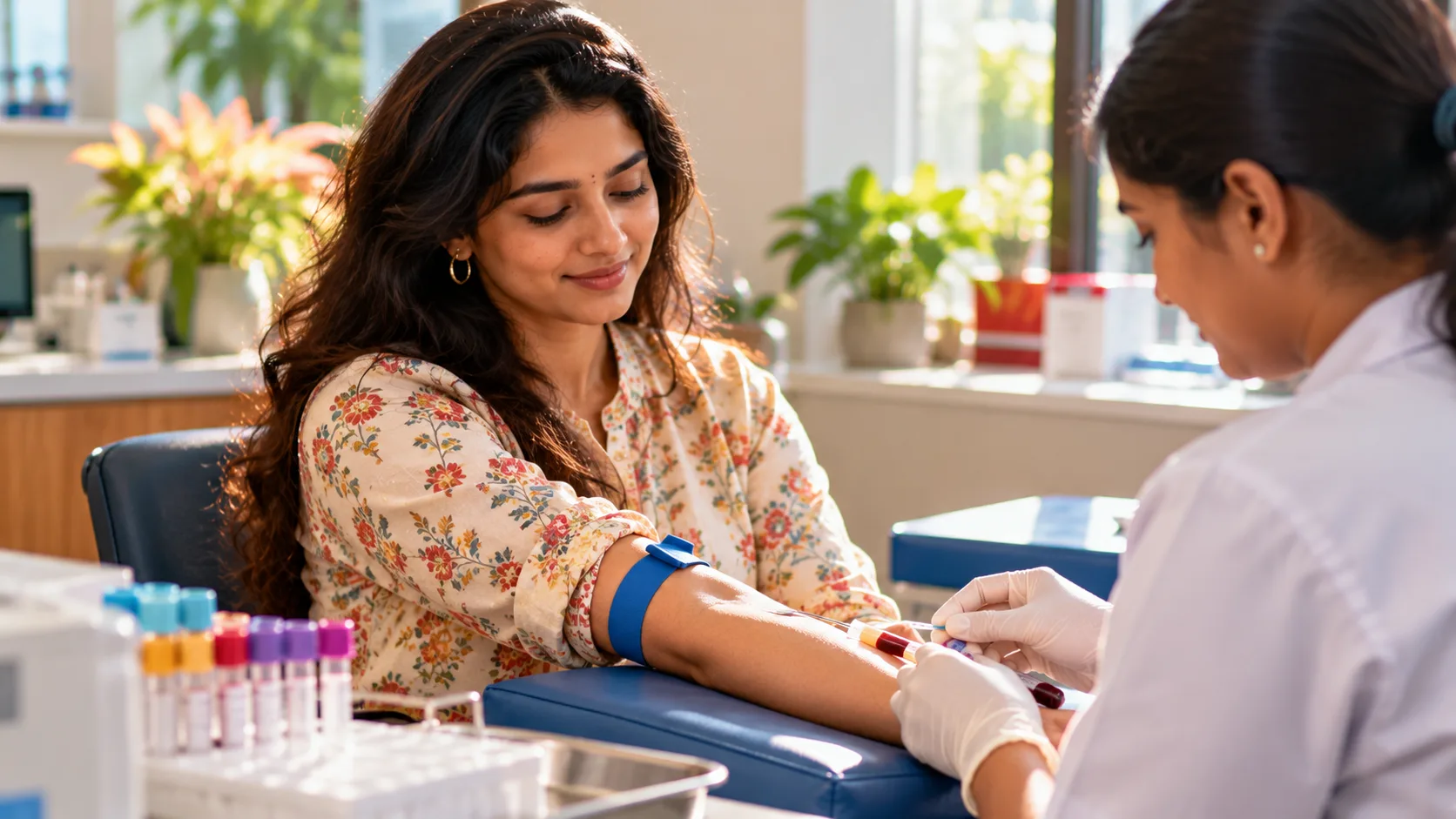
You don't need a CGM to find out if your blood sugar is a concern. Two simple, affordable blood tests available at most Indian labs can give you a clearer picture:
Fasting blood sugar: You do not eat for at least 8 hours before the test.
HbA1c: This shows your average sugar over roughly the past three months and needs no fasting.
According to MedlinePlus, a fasting level of 99 mg/dL or below is normal. A level of 100 to 125 is prediabetes. A level of 126 or above points to diabetes. For HbA1c, below 5.7% is normal and 5.7% to 6.4% is prediabetes. A level of 6.5% or more points to diabetes. Your doctor may repeat a test before confirming anything. The same source lists the groups at higher risk. They include people who are overweight, people over 45, people with a parent, brother or sister with diabetes, people who are not active and people with high blood pressure or high cholesterol. Women who had diabetes in pregnancy or who have PCOS also belong on this list. Given how common prediabetes is in India, ask your doctor whether you should start checking earlier.
The NHS advises seeing a GP if you think you may have type 2 diabetes or have a higher risk of it. It lists the most common symptoms as feeling very tired, peeing more than usual, feeling thirsty all the time and losing weight without trying. Other symptoms can include blurred vision, cuts or wounds taking longer to heal and itching around the penis or vagina, or getting thrush again and again. Not everyone gets symptoms, so getting checked matters.
The bottom line
A rise in sugar after your idli or your Diwali barfi is your body doing its job. Spikes become worth acting on when they sit on top of a high fasting sugar or a creeping HbA1c. Get those two numbers checked once. Then eat your dal before your rice, take the sweet with lunch and walk your family around the block after dinner. That walk is a nice festive habit even without the science.
Sources
Medical Disclaimer: This article is for general information and is not a substitute for advice from your doctor. Speak to a qualified healthcare professional before starting any supplement, especially if you are pregnant, breastfeeding or taking medication.
Continue this topic
Connected guides, ingredient explainers, product context, and tools chosen from this article's topic cluster.
Berberine is sold as nature's Ozempic. This guide covers what trials show for sugar and weight, why the comparison fails and which medicines it can clash with.
Most Indian breakfasts are mostly cereal. Learn what morning protein really does for fullness, cravings and muscle, plus easy swaps from home food.
Many adults with diabetes can take probiotics, but they are not a treatment for high blood sugar. Learn what research says about safety, HbA1c, probiotic foods and choosing a supplement.
Quick questions
Is it normal for blood sugar to rise after eating?
It is normal. Any meal with carbohydrate raises your blood sugar for a while. In healthy people insulin brings it back down. A rise is only a concern when your fasting sugar or HbA1c is also high.
Should I wear a CGM if I do not have diabetes?
You do not need one to check your risk. A CGM can be interesting for a short spell, but single readings vary from day to day. A fasting sugar test and an HbA1c tell you about your real risk for much less money.
Why does rice raise my sugar quickly?
White rice is digested quickly, so its glucose reaches your blood fast. The portion on your plate matters too. Eating dal and sabzi first or adding more vegetables to the plate can soften the rise.
How long after eating should I walk to lower blood sugar?
The trials used short bouts of light walking. A gentle walk soon after you finish the meal is an easy way to start. You do not need to walk fast or sweat for it to count.
Can people with diabetes eat festive sweets?
Ask your doctor what fits your treatment plan. If a small piece fits, plan for it and count it within a meal rather than eating sweets on their own through the day.
8 linked sources checked against our citation and claim-safety process.
Reviewed 20 Oct 2026 for supplement-claim and medical-disclaimer boundaries.
Recommended from the Aora range
Aora Nutrivit Plus
19 Essential Nutrients with Zinc, Magnesium and Vitamins B Complex, C and D3
- Multivitamin
- Daily Foundation
- Made in India
From₹690.00
Try Aora - free
Put this article to work on you.
Health and safety notice
- This article is educational. It is not medical advice and is not a substitute for guidance from a qualified healthcare provider. Consult a physician before starting any supplement, especially during pregnancy or breastfeeding, with a medical condition, or while on medication.
- FSSAI compliance: Health supplements and nutraceuticals are not intended for medicinal use. Any supplement-related information is provided to describe nutritional or physiological support and should not be interpreted as a claim to diagnose, treat, cure, or prevent any disease. FSSAI regulates health supplements and nutraceuticals separately from medicinal products.
Read our full medical disclaimer and editorial policy.
Sources and editorial standards
- 1study
- 2reached the prediabetic range about 15% of the time
- 311.4% had diabetes and 15.3% had prediabetes
- 4usually has no symptoms
- 5led to lower glucose rises over three hours
- 6review of seven trials
- 7cutting sleep short reduced insulin sensitivity
- 8seeing a GP if you think you may have type 2 diabetes
Supplement content is educational only and should not replace medical advice from a qualified clinician. Product mentions are reviewed for claim safety before publication.