
Why Do I Feel Tired After Eating? The 2 pm Slump Explained
That 2 pm slump is not always your lunch. Your body clock, sleep and meal size can all affect post-meal sleepiness, while some symptoms deserve a closer look.

In this article(8 sections)
Lunch is over, you are back at your desk, and suddenly you cannot concentrate on anything. Your eyes feel heavy, and a second cup of coffee is starting to sound very important. When the 2 pm slump hits, it is incredibly easy to blame whatever you ate last. But feeling tired after eating is not always about the food itself. Your energy can be affected by your body clock, how well you slept and how much you ate. Before cutting out carbs or spending money on supplements to ‘fix’ your metabolism, let’s look at what might actually be making you feel tired.
Does Feeling Tired After Eating Mean a Blood Sugar Crash?
If you search online for why you feel sleepy after lunch, you will probably come across the idea that your blood sugar has ‘spiked and crashed’. But feeling sleepy after a meal does not automatically mean your blood sugar has dropped too low. True reactive hypoglycaemia is different. It means blood sugar falls after eating, usually within a few hours, and can cause symptoms such as shakiness, sweating, strong hunger, dizziness, weakness, a fast heartbeat and confusion. The Mayo Clinic describes these as typical symptoms of reactive hypoglycaemia and notes that a medical assessment is needed to determine whether symptoms are actually being caused by low blood sugar.
Research also suggests that the normal rise and fall of blood glucose after a meal is not enough, on its own, to explain why everyone feels sleepy afterwards. Post-meal sleepiness can be influenced by your body clock, how much you ate, what you ate and how well you slept. So if you simply feel a little drowsy after eating a sandwich or having lunch, low blood sugar should not be your first assumption. If you regularly experience shakiness, sweating, dizziness, confusion or other symptoms along with the sleepiness, that is different and worth discussing with a doctor.
Also read: Why Do I Keep Waking Up at Night?
Why You Feel Tired After Eating: 3 Common Reasons
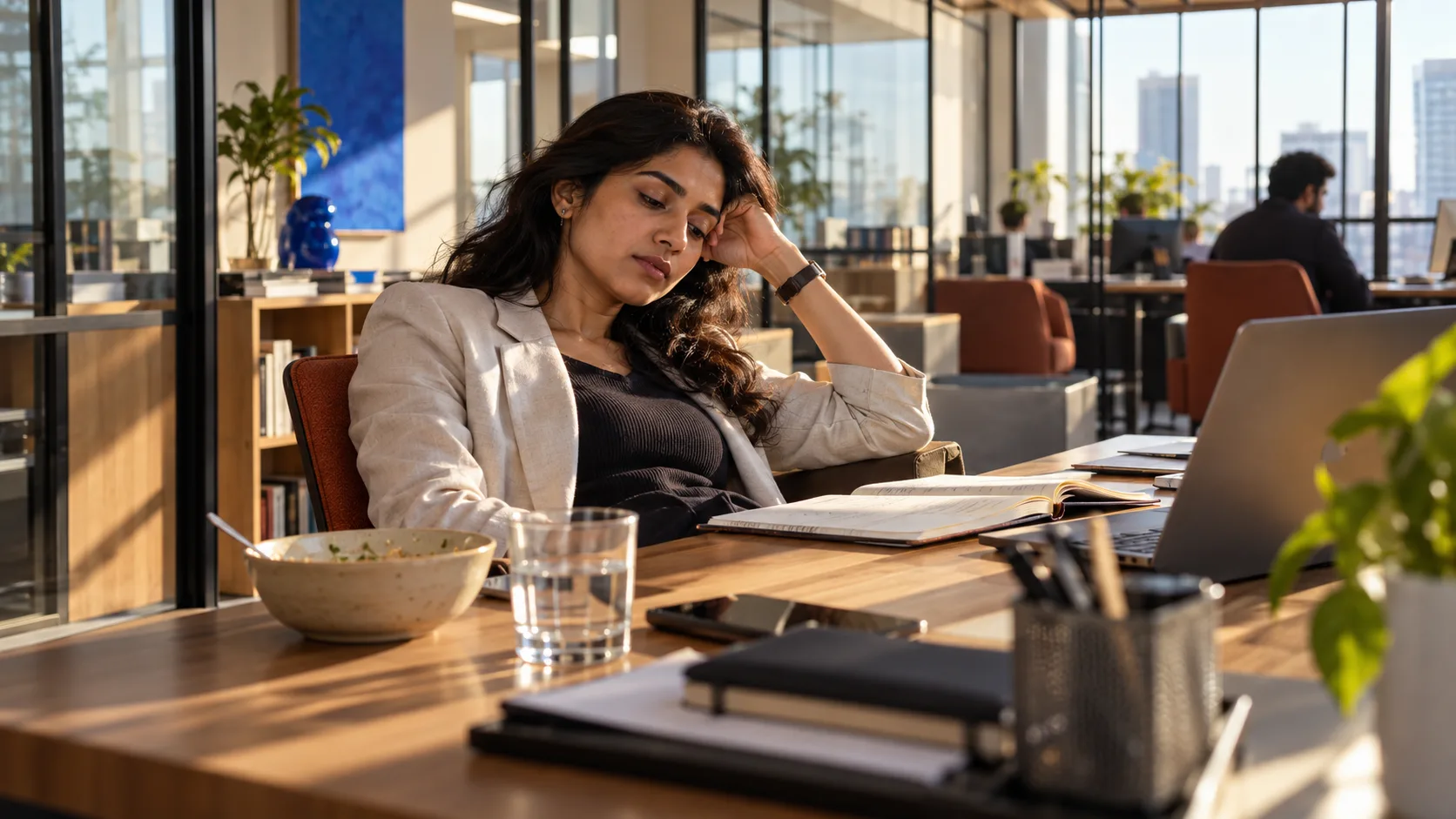
If it isn't a blood sugar crash, why is it so hard to keep your eyes open? The answer is usually a combination of these three factors.
1. It May Be Your Natural Afternoon Dip
The phrase ‘post-lunch dip’ makes it sound like food is the culprit, but research shows that people can experience a natural drop in alertness during the early afternoon even when they have not eaten lunch. A review published in Clinical Sports Medicine describes the post-lunch dip as a real mid-afternoon decline in alertness that can occur independently of lunch, while earlier controlled research also found a midday increase in sleep tendency even when food intake was kept constant. For many people, mild afternoon sleepiness is therefore a normal biological pattern rather than a sign that something is wrong with their metabolism.
2. Last Night’s Sleep Was Not Enough
Sometimes you get sleepy after lunch simply because you did not sleep well the night before. If you slept less than usual or kept waking up, that normal afternoon dip can feel much stronger. When you are already tired, staying awake and focused during the day becomes harder. So if you notice that you feel much sleepier after lunch on days when you slept badly, the meal may not be the main reason. Your lack of sleep could be catching up with you.
3. You Ate a Heavy Lunch
A very large lunch can leave you feeling more sluggish afterwards, particularly if you are already short on sleep. In a controlled study of young men following a restricted night of sleep, a heavier lunch produced more objective signs of sleepiness during a long afternoon driving task than a lighter lunch. The same study also found that afternoon sleepiness worsened over time under both meal conditions, reinforcing the idea that meal size and the natural afternoon dip can act together. PubMed So it is probably too simple to blame one food or say that carbohydrates are always the reason you feel sleepy. How much you eat, what the meal contains, your sleep and the natural afternoon dip in alertness can all play a role.
How to Beat the Afternoon Slump
If you only feel a little sleepy after lunch, you probably do not need to overhaul your routine. A few simple changes may be enough to see what helps.
Make your lunch more balanced: You do not have to cut out rice, bread or other carbs. Add some protein and fibre-rich vegetables so your meal is not mostly one type of food.
Try a smaller lunch: If you notice that big lunches always make you very sleepy, eat a little less at lunch and have a healthy snack later if you need one.
Do not wait until you are starving: Going for hours without eating can make you very hungry by lunchtime, which can lead to eating a large meal quickly. That can leave you feeling heavy afterwards.
Take a short walk: Sitting down straight after lunch can make the slump harder to shake off. A brief walk or a few minutes of movement may help you feel more alert. The CDC's workplace fatigue guidance also lists a brief period of exercise, such as a brisk walk or a few flights of stairs, as one way to improve alertness after lunch.
Get enough sleep at night: If you are regularly sleeping too little, changing your lunch may only do so much. Start by giving yourself enough time to sleep.
When Is Feeling Tired After Eating a Medical Problem?

Most of the time, feeling sleepy after a meal is harmless. However, you should pay attention if the tiredness is severe, happens after every single meal, including breakfast, or comes with other concerning symptoms.
Feeling dizzy or faint after eating: If you feel dizzy, light-headed or faint after a meal, it may be a drop in blood pressure called postprandial hypotension. Cleveland Clinic notes that this is more common in adults over 65 and can cause dizziness, weakness, fatigue and fainting after meals.
Feeling tired all day: If you are exhausted from morning to night rather than just sleepy after lunch, your meal may not be the main reason. Ongoing fatigue can have many causes, including iron-deficiency anaemia, thyroid problems, poor sleep, some medicines and other health conditions.
Signs of sleep apnoea: Sometimes the reason you cannot stay awake during the day starts at night. The National Heart, Lung, and Blood Institute lists loud snoring, breathing that starts and stops, gasping for air and daytime sleepiness among possible signs of sleep apnoea.
Other signs of diabetes: Feeling sleepy after eating does not by itself mean you have diabetes. But the CDC lists increased thirst, frequent urination, unexplained weight loss, fatigue and blurry vision among possible symptoms, so a combination of these signs is worth getting checked.
Feeling a little sleepy after lunch is normal. Instead of only thinking about what you ate, look at the bigger picture. How well did you sleep? Was your lunch much bigger than usual? Do you have any other symptoms? For most people, a few simple changes to their meals, sleep or daily routine can make that afternoon slump easier to handle.
Also read: Vitamin and Mineral Deficiencies That Cause Fatigue in Men
Sources
PubMed: Multiple Sleep Latency Tests During the Constant Routine
National Heart, Lung, and Blood Institute: Sleep Apnea Symptoms
Medical Disclaimer: This article is for general educational purposes only and is not a substitute for personalised medical advice, diagnosis or treatment. Speak with a qualified healthcare professional if fatigue after eating is severe, persistent, worsening or accompanied by dizziness, fainting, confusion, symptoms of low blood sugar or significant daytime sleepiness.
Continue this topic
Connected guides, ingredient explainers, product context, and tools chosen from this article's topic cluster.
Nighttime hunger often has more to do with what happened earlier in the day than the clock. Here is what may be driving late-night cravings and when they deserve a closer look.
Recovery problems are not always solved by another supplement. Sometimes the real issue is sleep, training load, food or simply not enough time between hard sessions.
A multivitamin, magnesium, vitamin D and a few other products can quickly overlap. Here is how to check what you are actually taking and whether every product still has a reason to be there.
Quick questions
1. Why Do I Feel Tired After Eating Even If the Meal Was Small?
A meal is not always the main reason. You may be hitting the natural early-afternoon dip in alertness, especially if you slept poorly the night before. If tiredness happens after small meals at different times of day as well, look at your overall sleep, medications and general energy levels rather than assuming the food itself is responsible.
2. Is a Food Coma a Real Thing?
The phrase “food coma” is informal, but post-meal sleepiness is real. Researchers often refer to it as postprandial somnolence. A large meal can make the sleepiness more noticeable, but your natural body clock and previous night’s sleep also matter.
3. Why Am I Tired After Every Meal?
If this happens after breakfast, lunch and dinner rather than mainly during the afternoon, it is less likely to be explained by the usual post-lunch dip alone. Severe or persistent tiredness after every meal may be worth discussing with a healthcare professional, particularly if it comes with dizziness, fainting, weight loss, unusual thirst or other symptoms.
4. Does Eating Carbs Make You Sleepy?
Carbohydrates can be part of a meal that leaves you feeling sleepy, but it is too simple to say that carbs are always the cause. Studies looking at post-meal sleepiness suggest that meal size, sleep loss and time of day can all matter. You do not need to automatically remove rice, bread or other carbohydrates just because you feel sleepy after lunch.
5. Is It Normal to Need a Nap After Lunch?
Feeling a little sleepier in the early afternoon is common. Some research even shows that short naps can temporarily improve alertness and performance during the post-lunch dip. PubMed Needing to sleep every day because you cannot function without a nap is different and may be worth looking at, especially if you are already spending enough time in bed at night.
6. Can Low Blood Pressure Make You Tired After Eating?
Yes. Postprandial hypotension is a drop in blood pressure after eating and can cause weakness, tiredness, dizziness or fainting. It is more common in older adults and in people with certain medical conditions. If post-meal tiredness comes with light-headedness or fainting, it deserves medical assessment rather than being treated as a normal afternoon slump
8 linked sources checked against our citation and claim-safety process.
Reviewed 28 Sept 2026 for supplement-claim and medical-disclaimer boundaries.
Recommended from the Aora range
Nutrivit Plus | Supports Immune Function & Energy Metabolism
19 Essential Nutrients with Zinc, Magnesium and Vitamins B Complex, C and D3
- Multivitamin
- Daily Foundation
- Made in India
From₹690.00
Try Aora - free
Put this article to work on you.
Health and safety notice
- This article is educational. It is not medical advice and is not a substitute for guidance from a qualified healthcare provider. Consult a physician before starting any supplement, especially during pregnancy or breastfeeding, with a medical condition, or while on medication.
- FSSAI compliance: Health supplements and nutraceuticals are not intended for medicinal use. Any supplement-related information is provided to describe nutritional or physiological support and should not be interpreted as a claim to diagnose, treat, cure, or prevent any disease. FSSAI regulates health supplements and nutraceuticals separately from medicinal products.
Read our full medical disclaimer and editorial policy.
Sources and editorial standards
- 1Mayo Clinic
- 2PubMed
- 3Cleveland Clinic
- 4National Heart, Lung, and Blood Institute
- 5CDC
- 6PubMed: The Post-Lunch Dip in Performance
- 7PubMed: Multiple Sleep Latency Tests During the Constant Routine
- 8CDC/NIOSH: Increasing Alertness During Day Shift
Supplement content is educational only and should not replace medical advice from a qualified clinician. Product mentions are reviewed for claim safety before publication.