
Millets vs Rice: Which Is Better for Blood Sugar?
Are millets healthier than rice for diabetes? Learn how different millets, rice varieties, cooking methods and portions affect blood sugar.
In this article(11 sections)
- Millets vs rice: What is the nutritional difference?
- Do millets raise blood sugar less than rice?
- Which millet is better for blood sugar?
- Can people with diabetes eat white rice?
- Does the way you cook rice or millets matter?
- Millets vs rice for weight loss: Is one better?
- How can you include both rice and millets in your meals?
- Where does Aora Nutrivit Plus fit into daily nutrition?
- So, should you replace rice with millets?
- References and sources
- Medical disclaimer
You're sitting down for lunch, and there's a familiar plate of rice, sambar and poriyal in front of you. Just as you're about to eat, someone mentions they've stopped eating rice altogether. They've switched to millets because they're supposedly better for blood sugar. Suddenly, your everyday lunch doesn't seem quite so healthy. You've probably heard similar advice. Replace white rice with foxtail millet, choose ragi over regular dosa or start eating little millet if you're worried about diabetes. But is the difference really that simple? When comparing millets vs rice, some millets may produce a slower rise in blood sugar than certain types of white rice. However, the variety, cooking method, portion size and rest of the meal all matter. You don't necessarily need to give up rice to eat well.
Millets vs rice: What is the nutritional difference?
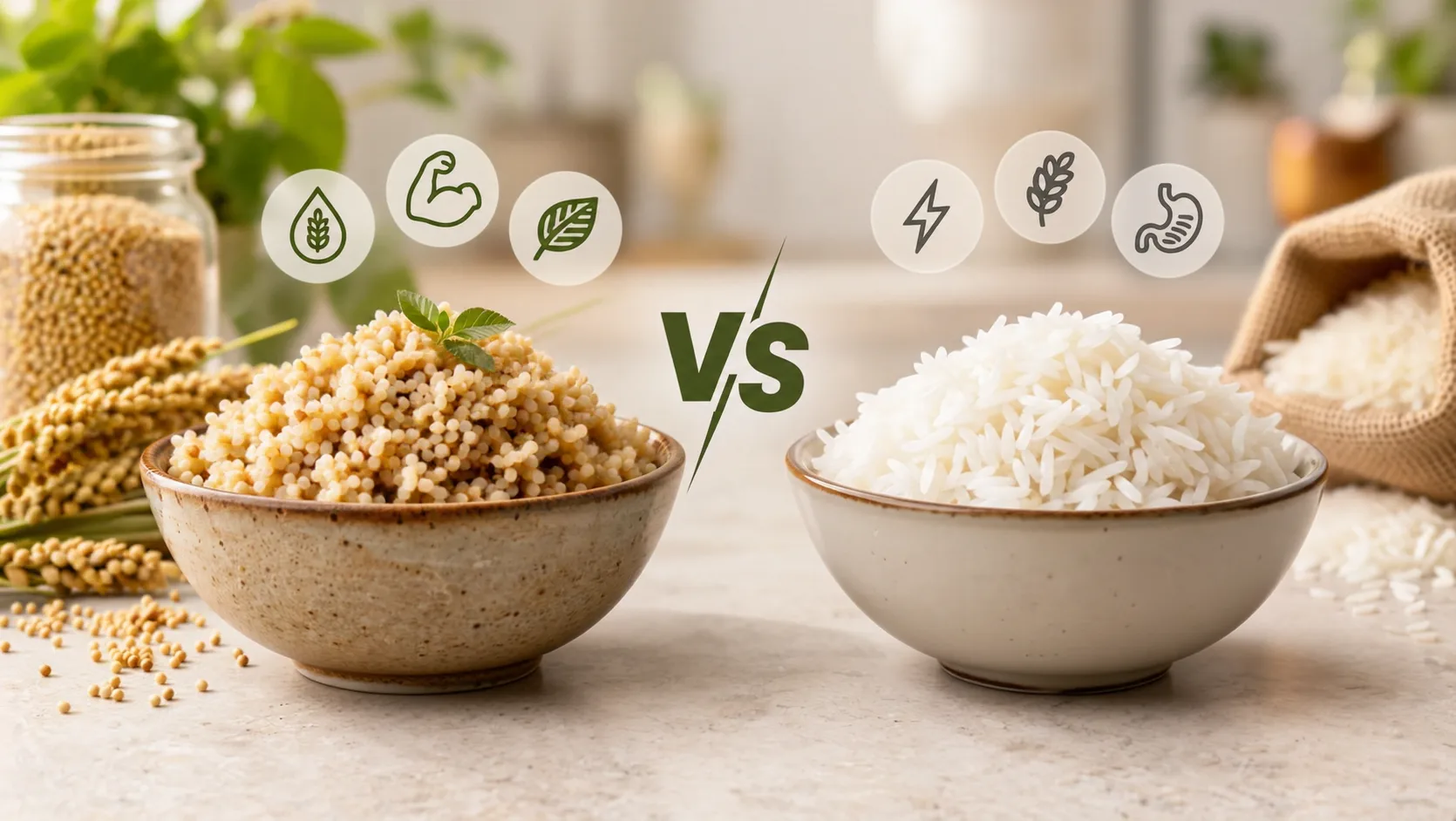
Rice has been part of Indian meals for generations, especially in southern and eastern India. Millets have an equally long history. Ragi, jowar, bajra, thinai and samai were everyday foods long before they became popular in health-food aisles. Both rice and millets provide carbohydrates, which the body breaks down into glucose for energy. The difference lies partly in their fibre, protein and mineral content. Many less-refined millets offer more fibre and certain minerals than polished white rice. Brown rice also retains more of its outer grain layers than polished rice. But millets aren't one single grain. Ragi, foxtail millet, little millet and barnyard millet have different nutritional compositions. The ICMR-NIN Dietary Guidelines for Indians encourage dietary variety, including whole grains and millets, alongside pulses, vegetables and other nutrient-rich foods.
Do millets raise blood sugar less than rice?
Imagine eating a bowl of plain white rice for lunch one day and a similar portion of cooked millet the next. Would your blood sugar respond differently? Possibly. One reason is the glycaemic index, or GI, which describes how quickly a carbohydrate-containing food raises blood glucose under standard test conditions. A 2021 systematic review and meta-analysis reported an average GI of approximately 53 across the millet foods studied, compared with about 72 for milled rice. That suggests certain millet preparations may have an advantage. However, those figures are averages across different foods and studies, not fixed values for every variety.
A 2026 systematic review found that some millet-based foods were associated with improvements in blood glucose measures, but the overall evidence from intervention studies remained limited and mixed. So the useful conclusion isn't that every millet is better than every type of rice. It's that choosing the grain and preparing it carefully may make a difference.
Also read: Are Probiotic Drinks Good for You? What to Check First
Which millet is better for blood sugar?
By the time you reach the supermarket, the options can feel confusing. There's foxtail millet, little millet, barnyard millet, ragi and several others. They all look healthy, but do they work in the same way? Not necessarily.
Foxtail millet: Some studies have reported lower blood glucose responses from particular foxtail millet preparations.
Barnyard millet: Certain preparations have shown promising results in small studies.
Ragi or finger millet: Provides useful nutrients, but finely milled ragi products aren't automatically low-GI.
Little millet: Its glycaemic response has varied across studies and preparation methods.
Jowar and bajra: These provide alternatives to refined cereals, although their blood sugar effects also depend on processing and cooking.
A 2026 article in the Indian Journal of Medical Research highlighted a particularly interesting finding: in one trial, finger millet meals did not produce significantly different 24-hour blood glucose responses from comparable white rice meals, despite containing more fibre. This is why it's better to consider the actual food on your plate rather than assuming every millet has the same effect.
Can people with diabetes eat white rice?
Rice is sometimes treated as though it must disappear from the menu as soon as someone develops diabetes. For a person who's eaten rice with dal or sambar for decades, that can make meals unnecessarily stressful. But people with diabetes can include rice in their diet, depending on their carbohydrate requirements, portion sizes and overall meal plan. Rice contains carbohydrates, so the amount eaten matters. A large serving of plain rice may affect blood glucose differently from a smaller serving accompanied by vegetables and a protein source. Diabetes UK explains that glycaemic index is only one consideration. Carbohydrate portions and the composition of the complete meal can have an even greater influence on blood sugar. Some varieties of rice, including certain basmati and brown rice preparations, may also have lower GI values than others. The goal is to understand portions and meal balance, not to make rice a forbidden food.
Does the way you cook rice or millets matter?
Consider two breakfasts: a bowl of cooked whole millet and a plate of dosas made from finely ground millet flour. They come from similar grains, but that doesn't mean their digestive effects will be identical. Grinding, processing and cooking can change how easily carbohydrates are digested. Research has found that some whole-grain preparations produce different glucose responses from finely milled or heavily processed versions. Cooking method and the other ingredients in the dish can also influence the result. That's why a packaged millet biscuit isn't automatically healthier than an ordinary homemade rice meal. The same applies to rice. Polishing removes some fibre-rich outer layers, while different rice varieties and cooking methods can affect the finished food.
Millets vs rice for weight loss: Is one better?
Perhaps you've also heard that replacing rice with millet will help you lose weight. Millets can be part of a balanced weight-management diet, particularly when they replace less nutritious choices. But they still provide calories and carbohydrates. Switching from a modest portion of rice to an oversized serving of millet doesn't automatically reduce energy intake. Similarly, a millet-based dessert made with plenty of sugar or ghee remains an energy-containing dessert. Your overall food intake, activity levels and eating habits matter more than replacing one grain with another.
How can you include both rice and millets in your meals?
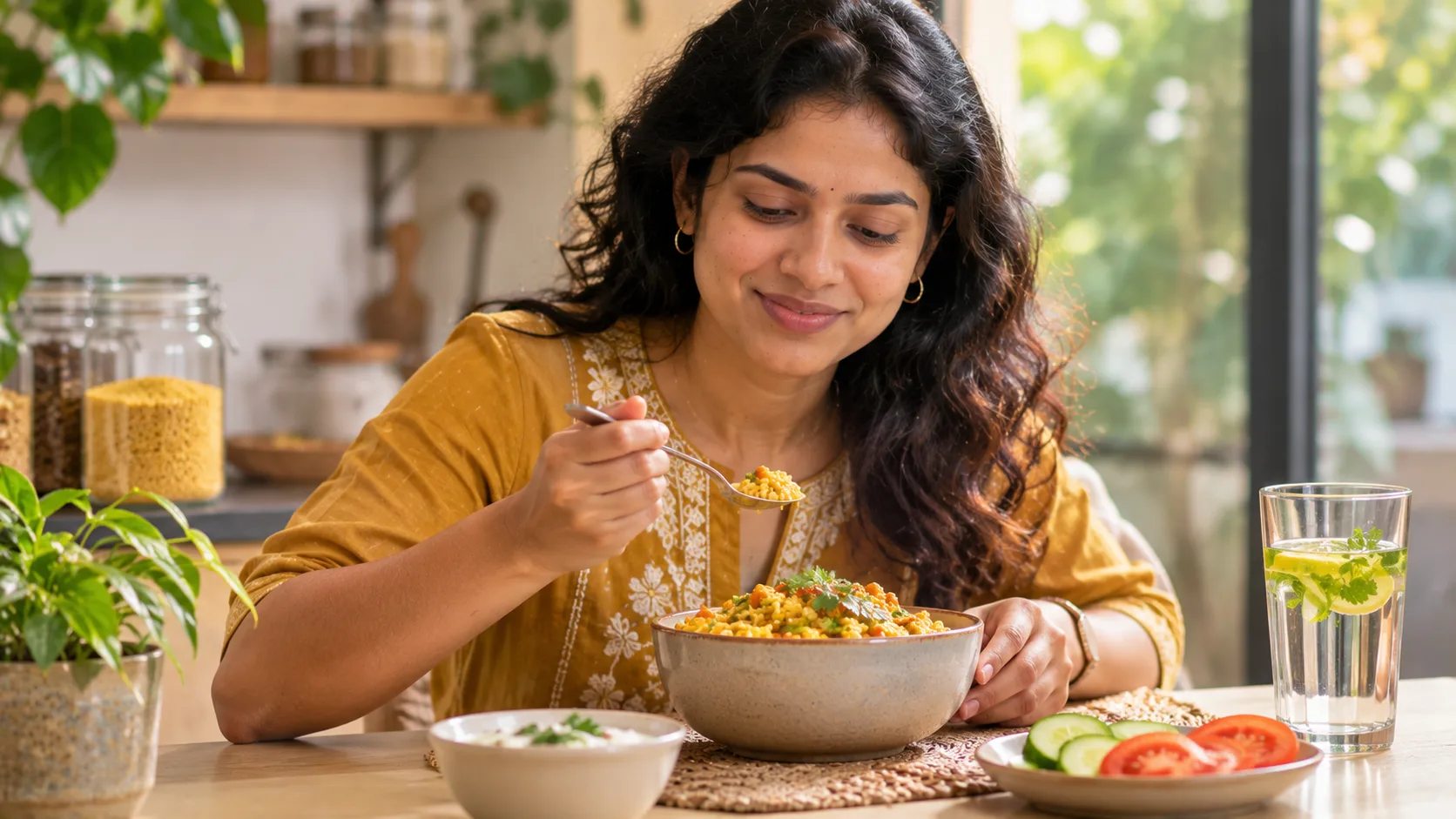
Instead of completely changing your kitchen, start with familiar dishes. Rice and millets can both fit into a varied Indian diet. A few simple ideas may help:
Keep rice, adjust the plate. Serve a suitable portion alongside dal, sambar, vegetables, curd or another protein source.
Introduce millets gradually. Try foxtail millet or little millet in a familiar lunch preparation before replacing several meals.
Choose less-refined grains where practical. Compare products rather than relying only on a millet label.
Pay attention to the portion. Millets contain carbohydrates too, so the serving still matters.
Include variety. Rice, millets, pulses and vegetables provide different nutrients.
If you're managing diabetes and monitoring blood glucose, your readings may help you and your healthcare team understand how different meals affect you.
Also read: Fatty Liver Diet: An Indian Meal Plan You Can Live With. Learn how rice, dal, vegetables and whole grains can fit into balanced everyday meals.
Where does Aora Nutrivit Plus fit into daily nutrition?
Whether you prefer rice, millets or a combination of both, a balanced diet involves more than choosing the right grain. Your body also needs essential vitamins and minerals for everyday functions. Aora Nutrivit Plus is a daily nutritional supplement formulated with 19 nutrients, including vitamins and minerals, to complement your regular diet. It isn't a substitute for nutritious meals or a treatment for diabetes, and it shouldn't be viewed as a way to offset an unbalanced diet. If you have diabetes or take regular medication, check with your healthcare professional before adding a supplement.
So, should you replace rice with millets?
The next time someone suggests that your rice lunch is unhealthy, there's no need to push the plate away. Some millet preparations may offer advantages for blood sugar management, and introducing them can improve dietary variety. But rice can also be part of a balanced diet. What matters is the grain you choose, how it's cooked, the amount you eat and what accompanies it. You don't have to choose one side in the millets-versus-rice debate. A sensible approach leaves room for both.
References and sources
ICMR-NIN: Dietary Guidelines for Indians, 2024. Indian dietary guidance on whole grains, millets and balanced meals.
Anitha et al., 2021, Frontiers in Nutrition. Systematic review and meta-analysis examining glycaemic index and blood glucose responses to millet-based foods.
Effects of Millet Consumption on Metabolic Homeostasis, 2026. Systematic review of clinical studies and limitations of the available evidence.
Indian Journal of Medical Research, 2026: Lessons Learnt From Polishing of Rice Can Be Applied to Millets. Research discussion on processing, whole grains and glycaemic responses.
Diabetes UK: Glycaemic Index and Diabetes. Explanation of GI, serving sizes and balanced meals.
Diabetes UK: Carbohydrates and Diabetes. Guidance on carbohydrate choices and blood glucose management.
Medical disclaimer
This article is for general educational purposes and does not replace personalised medical or dietary advice. People with diabetes, prediabetes or other conditions requiring dietary management should consult their doctor or registered dietitian about suitable grain choices and portions. Do not change prescribed medication based on food claims or individual study findings.
Continue this topic
Connected guides, ingredient explainers, product context, and tools chosen from this article's topic cluster.
What does your Health Age mean? Learn what affects your score, what studies say about ageing and how everyday lifestyle changes can support better health
Does skipping meals affect your nutrition? Learn what research says about missed meals, nutrient intake and how to maintain a balanced diet.
Taking biotin but still experiencing hair fall? Learn why biotin may not help, other possible causes of hair loss and when to see a dermatologist.
Quick questions
Are millets better than rice for diabetes?
Some millet preparations have shown lower glycaemic responses than certain white rice preparations, but results vary. Portion sizes and the complete meal matter.
Which millet has the lowest glycaemic index?
There is no single variety that always has the lowest GI. Research has found relatively low values for some foxtail and barnyard millet preparations, but processing and cooking can change the results.
Can people with diabetes eat rice every day?
Rice may fit into an individual diabetes meal plan. Total carbohydrates, serving size and the rest of the meal should be considered with advice from a qualified professional.
Do millets contain fewer carbohydrates than rice?
Not necessarily. Both are carbohydrate-rich grains. Their fibre, protein and mineral content may differ, but replacing rice with millet doesn't eliminate carbohydrates.
Are millets better than rice for weight loss?
Neither grain directly causes weight loss. Both can fit into a balanced diet, depending on portions, preparation and overall energy intake.
6 linked sources checked against our citation and claim-safety process.
Reviewed 13 Nov 2026 for supplement-claim and medical-disclaimer boundaries.
Recommended from the Aora range
Aora Nutrivit Plus
19 Essential Nutrients with Zinc, Magnesium and Vitamins B Complex, C and D3
- Multivitamin
- Daily Foundation
- Made in India
From₹690
Try Aora - free
Put this article to work on you.
Health and safety notice
- This article is educational. It is not medical advice and is not a substitute for guidance from a qualified healthcare provider. Consult a physician before starting any supplement, especially during pregnancy or breastfeeding, with a medical condition, or while on medication.
- FSSAI compliance: Health supplements and nutraceuticals are not intended for medicinal use. Any supplement-related information is provided to describe nutritional or physiological support and should not be interpreted as a claim to diagnose, treat, cure, or prevent any disease. FSSAI regulates health supplements and nutraceuticals separately from medicinal products.
Read our full medical disclaimer and editorial policy.
Sources and editorial standards
- 1ICMR-NIN Dietary Guidelines for Indians
- 22021 systematic review and meta-analysis
- 32026 systematic review
- 4Indian Journal of Medical Research
- 5Diabetes UK
- 6Diabetes UK: Carbohydrates and Diabetes
Supplement content is educational only and should not replace medical advice from a qualified clinician. Product mentions are reviewed for claim safety before publication.