
Does Hard Water Cause Hair Fall or Hair Breakage?
Does hard water cause hair fall? Learn what research says about hair breakage, mineral buildup, shedding and practical ways to care for your hair.
In this article(10 sections)
- What is hard water, and how does it affect your hair?
- Does hard water cause hair fall or breakage?
- How can you tell if your hair is breaking or shedding?
- Can hard water make hair dry, rough or frizzy?
- What can you do if you have hard water at home?
- Does changing your water solve hair fall?
- Where does Aora Chamrose fit into hair care?
- The next time you notice hair in the shower
- References and sources
- Medical disclaimer
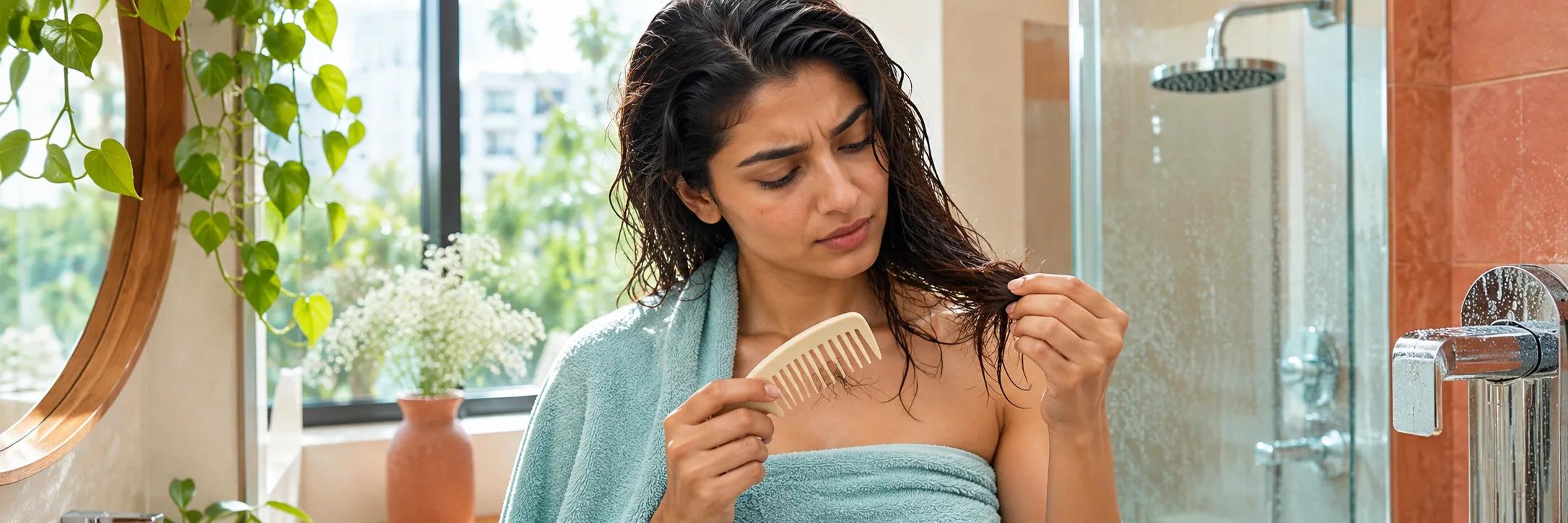
You've just finished washing your hair. It feels clean, but something isn't quite right. The ends seem rougher than usual, your hair gets tangled while combing, and there are a few broken strands on your bathroom floor. You start wondering whether the water in your apartment has something to do with it. After all, you've heard plenty of people blame hard water for hair fall, especially after moving to a new city. But does hard water cause hair fall, or does it actually lead to hair breakage? They're not the same thing. Research suggests that hard water may weaken hair strands and contribute to breakage. However, there is limited evidence that hard water directly causes hair to fall from its roots. Understanding the difference can help you choose the right kind of hair care instead of blaming every fallen strand on your shower.
What is hard water, and how does it affect your hair?
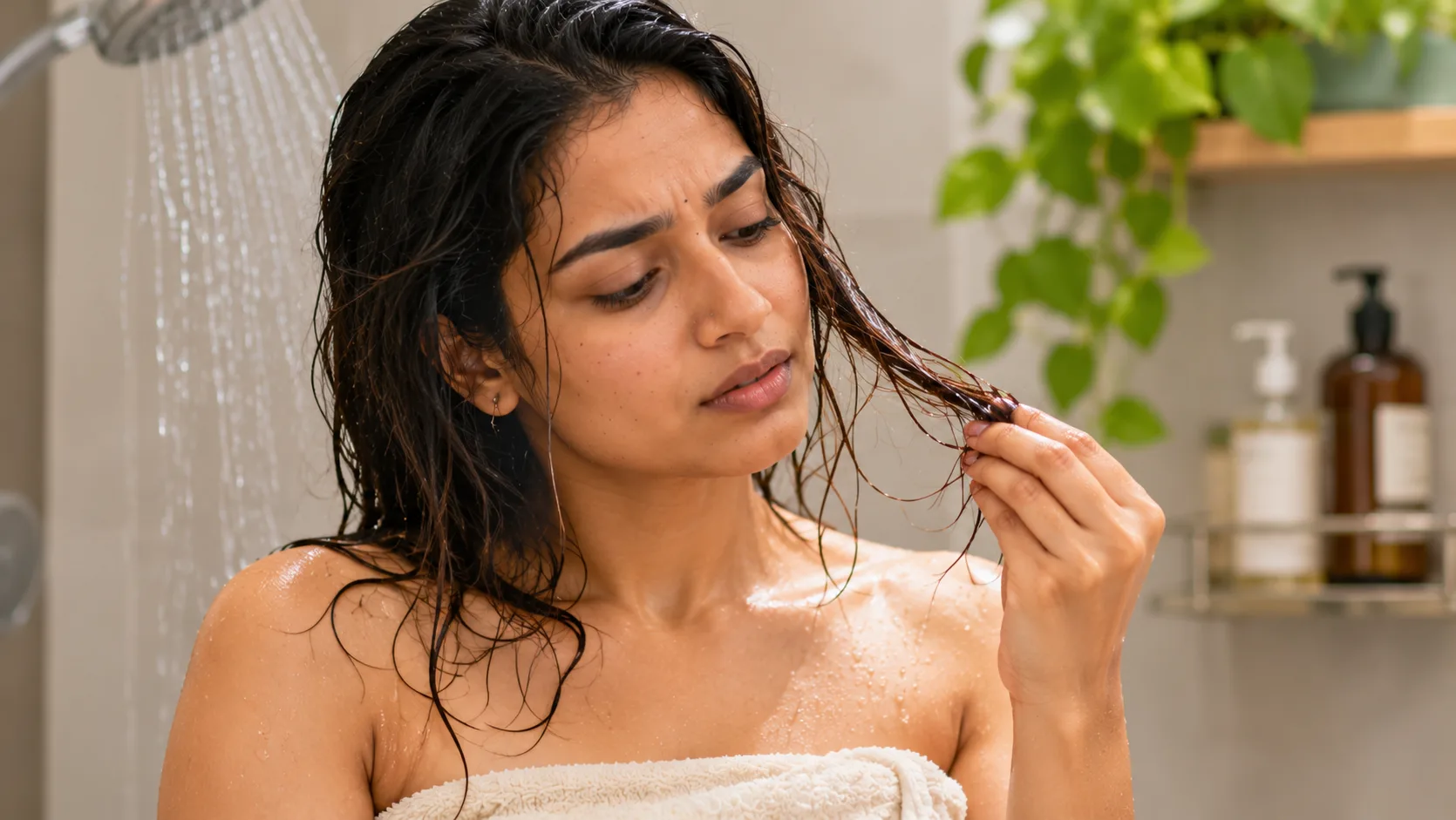
Hard water contains relatively high concentrations of dissolved minerals, mainly calcium and magnesium. These minerals occur naturally as water moves through rocks and soil. If you've noticed white deposits around your bathroom taps or a soap that doesn't lather easily, mineral-rich water could be one explanation. But these signs alone don't tell you exactly how hard your water is. When you wash your hair, some minerals may deposit on the surface of the strands. Over time, this may affect how your hair feels and behaves during washing and combing. You might notice that your hair feels less smooth, tangles more easily or needs extra care to manage. However, these experiences aren't specific to hard water. Shampoo, hair treatments, humidity and previous damage can produce similar changes.
Does hard water cause hair fall or breakage?
This is where many hair-care conversations become confusing. When you see hair collecting near the shower drain, it's natural to call it hair fall. But the strands may be coming away for different reasons. Hair shedding happens when a strand is released from its follicle as part of the hair-growth cycle. Hair breakage happens when an existing strand snaps somewhere along its length. That difference matters because hard water affects the hair shaft directly, whereas hair shedding can involve hormones, nutritional deficiencies, stress, illness and other factors.
A 2025 systematic review published in the International Journal of Trichology examined nine studies on hard water and human hair. Researchers found greater mineral deposition and evidence of reduced hair strength after exposure to hard water. The review suggested that hard water probably contributes to breakage, although stronger studies under everyday washing conditions are still needed. Earlier research wasn't entirely consistent. A 2013 Indian study involving hair samples from 15 volunteers found no significant difference in strength or elasticity after hard-water exposure. A 2018 study using hair samples from 70 men, however, reported reduced tensile strength. So the evidence supports concern about breakage, but it doesn't establish that washing with hard water directly damages hair follicles or causes permanent hair loss.
Also read: Hair shedding vs hair breakage: Learn why the difference matters before changing your hair-care routine.
How can you tell if your hair is breaking or shedding?
Think about what you find after combing your hair. Are there several short pieces scattered around your shoulders, or mostly full-length strands caught in your comb? Neither observation gives you a definite diagnosis, but it can offer a useful clue.
Hair breakage: You may notice short, uneven strands, split ends, roughness or hair snapping during detangling.
Hair shedding: You may see more full-length strands coming away during washing or brushing.
Hair thinning: Your parting may appear wider, your ponytail may feel smaller or your scalp may become more visible.
The American Academy of Dermatology (AAD) explains that shedding some hair every day is normal. Losing around 50 to 100 strands a day is generally considered normal, although the amount can vary from person to person. If you're experiencing persistent thinning, patchy hair loss or a sudden increase in shedding, it's worth consulting a dermatologist. Water quality may not explain what's happening.
Can hard water make hair dry, rough or frizzy?
Perhaps your hair looked manageable when you lived elsewhere, but now it feels rough even after conditioning. It's tempting to assume the new water supply is responsible. Mineral deposits may influence the hair surface and make strands more difficult to manage. However, there's limited research measuring exactly how hard water affects everyday symptoms such as frizz and dryness. Your routine matters too. Frequent heat styling, colouring, chemical treatments and rough towel-drying can damage the outer layers of hair. The AAD notes that damaged hair becomes fragile and more likely to break. This means changing your water may not address every problem. If your hair has already been weakened by several factors, gentle handling may be just as important.
What can you do if you have hard water at home?
You don't necessarily need to replace your entire bathroom setup. Start by understanding whether your water is actually hard and reviewing how you care for your hair. A few practical steps may help:
Check your water hardness. A water-testing kit or a report from your water supplier can help you understand the mineral content. Don't assume that all borewell or apartment water has the same hardness.
Use a gentle shampoo. Choose a shampoo suited to your scalp and hair type. If mineral buildup is a concern, ask a dermatologist whether an occasional clarifying or chelating shampoo is appropriate.
Condition after washing. Apply conditioner to the lengths and ends. Conditioning helps reduce friction and makes detangling easier.
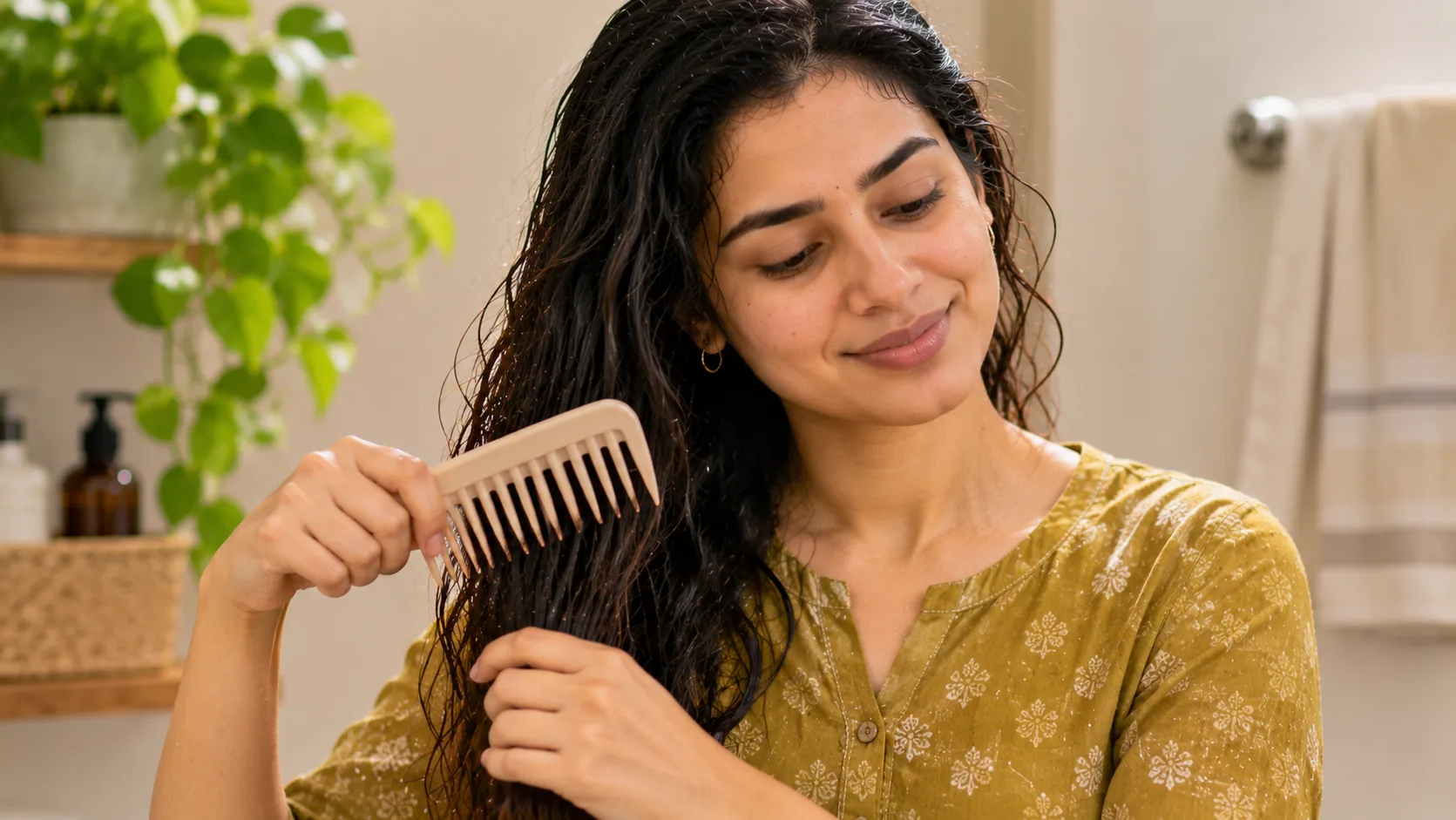
Detangle carefully. Use a wide-toothed comb and work gradually through tangles, especially when hair is wet and more vulnerable to mechanical damage.
Reduce unnecessary heat. Frequent high-temperature styling can add to existing hair-shaft damage. Use lower temperatures where practical.
Understand what filters can do. Ordinary shower filters don't necessarily soften water. Water softening generally requires a system designed to remove or exchange hardness minerals.
These measures can support gentler hair care, but there is limited clinical evidence showing that installing a water softener alone reduces hair breakage in everyday conditions.
Does changing your water solve hair fall?
Suppose you've changed your shampoo, installed a filter and started washing your hair more carefully, but you're still noticing unusual shedding. That deserves a closer look. Hair loss can have several causes, including hereditary hair loss, hormonal changes, certain illnesses, medications and nutritional deficiencies. For example, inadequate iron or protein intake may contribute to some forms of hair shedding. But taking additional nutrients won't necessarily help if you already have sufficient levels. A dermatologist can examine your scalp, ask about recent health changes and recommend investigations when appropriate.
Also read: Hair Fall After Weight Loss: Why It Happens and When It Stops
Where does Aora Chamrose fit into hair care?
Healthy hair care involves both gentle handling and adequate nutrition. Aora Chamrose is a daily hair nutrition supplement formulated with rosemary, chamomile, jatamansi, biotin and lysine. It is intended to complement a balanced diet, not to remove mineral deposits, repair broken strands or treat hair-loss conditions.
The next time you notice hair in the shower
Before blaming your water, look more closely at what's happening. Are your strands snapping, are you shedding more than usual, or is your hair simply becoming harder to manage? Hard water may contribute to hair breakage, but it isn't an established explanation for every kind of hair fall. Checking your water, handling your hair gently and recognising when to seek dermatological advice are more useful than assuming one change will solve every hair concern.
References and sources
Bikash et al., 2025, International Journal of Trichology: The Effects of Hard Water on Human Hair. Systematic review and meta-analysis of nine studies examining mineral deposition and hair-shaft properties.
Srinivasan et al., 2013: Effects of Hard Water on Hair. Experimental study that found no significant difference in hair strength or elasticity.
Luqman et al., 2018: Hard Water and Hair Breakage. Experimental study reporting reduced tensile strength after hard-water exposure.
Scanning Electron Microscopy Study of Hair Shaft Changes Related to Hardness of Water, 2017. Research examining mineral deposition and microscopic hair-shaft changes.
American Academy of Dermatology: Hair Loss Overview. Hair shedding, thinning and reasons to seek evaluation.
American Academy of Dermatology: Hair-Care Habits That Can Damage Hair. Guidance on reducing avoidable hair breakage.
American Academy of Dermatology: Tips for Managing Hair Loss. Conditioner, gentle washing and reducing hair damage.
Medical disclaimer
This article is for general educational purposes and does not replace professional medical advice. Hair shedding, breakage and thinning can have different causes. Consult a dermatologist if you notice sudden or persistent shedding, visible thinning, patchy hair loss or scalp symptoms. Nutritional supplements should not replace appropriate diagnosis or treatment.
Continue this topic
Connected guides, ingredient explainers, product context, and tools chosen from this article's topic cluster.
What does your Health Age mean? Learn what affects your score, what studies say about ageing and how everyday lifestyle changes can support better health
Does skipping meals affect your nutrition? Learn what research says about missed meals, nutrient intake and how to maintain a balanced diet.
Taking biotin but still experiencing hair fall? Learn why biotin may not help, other possible causes of hair loss and when to see a dermatologist.
Quick questions
Does hard water cause permanent hair loss?
There is insufficient evidence that hard water directly causes permanent hair loss from the follicles. Research has mainly examined mineral deposits and hair-shaft strength.
Can hard water cause hair breakage?
Yes, it may contribute. A 2025 review found evidence of reduced hair strength after hard-water exposure, although further real-world research is needed.
How do I know if my shower water is hard?
You may notice mineral deposits on taps or reduced soap lathering. A water-hardness test provides a more reliable indication.
Does a shower filter remove hard water minerals?
Not necessarily. Many shower filters target chlorine or sediment rather than dissolved calcium and magnesium. Check the product's actual filtration specifications.
Can changing shampoo help with hard-water hair problems?
A suitable shampoo and conditioner may improve manageability. If mineral buildup is suspected, a dermatologist can advise whether a clarifying or chelating shampoo is appropriate.
7 linked sources checked against our citation and claim-safety process.
Reviewed 13 Nov 2026 for supplement-claim and medical-disclaimer boundaries.
Recommended from the Aora range
Aora Chamrose
Chamomile, Rosemary & Jatamansi Extract
- Hair Care
- Hair Support
- Made in India
From₹960
Try Aora - free
Put this article to work on you.
Health and safety notice
- This article is educational. It is not medical advice and is not a substitute for guidance from a qualified healthcare provider. Consult a physician before starting any supplement, especially during pregnancy or breastfeeding, with a medical condition, or while on medication.
- FSSAI compliance: Health supplements and nutraceuticals are not intended for medicinal use. Any supplement-related information is provided to describe nutritional or physiological support and should not be interpreted as a claim to diagnose, treat, cure, or prevent any disease. FSSAI regulates health supplements and nutraceuticals separately from medicinal products.
Read our full medical disclaimer and editorial policy.
Sources and editorial standards
- 12025 systematic review published in the International Journal of Trichology
- 22013 Indian study
- 32018 study
- 4American Academy of Dermatology (AAD)
- 5AAD
- 6Scanning Electron Microscopy Study of Hair Shaft Changes Related to Hardness of Water, 2017
- 7American Academy of Dermatology: Tips for Managing Hair Loss
Supplement content is educational only and should not replace medical advice from a qualified clinician. Product mentions are reviewed for claim safety before publication.