

Sore Throat Due to Air Pollution: Causes and Relief
Can air pollution cause a sore throat? Learn how dust, smoke and PM2.5 irritate your throat, what may help and when you should see a doctor.
In this article(13 sections)
- Why does air pollution make your throat hurt?
- What in polluted air causes throat irritation?
- PM10 and PM2.5
- Gases you cannot see
- Is your sore throat from pollution or a cold?
- Why can pollution feel worse after Diwali?
- What does the AQI on your phone mean?
- Why does pollution affect some people more?
- What helps when pollution makes your throat sore?
- Can ginger tea, honey or steam inhalation help?
- When should you see a doctor?
- Pay attention to the air around you
- References and sources
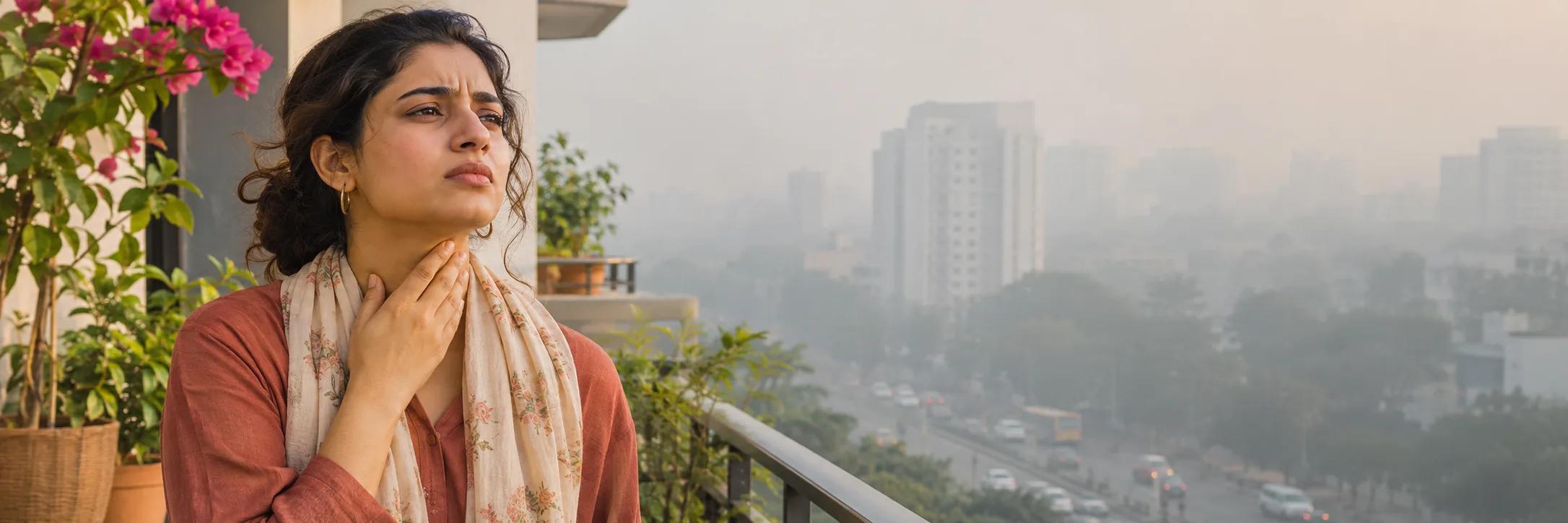
It's Monday morning, and you're already running late for work. The traffic is moving slowly, buses are leaving exhaust behind them and there's a haze over the road. By the time you reach the office, your throat feels dry and scratchy. You drink some water, clear your throat and return to your emails. But by lunchtime, it still hurts. You wonder whether you're catching a cold. Then a colleague mentions how poor the air quality has been since Diwali. A sore throat due to air pollution is possible because dust, smoke and certain gases can irritate your airways, even without an infection. But pollution isn't the only cause of throat pain. Understanding what you're breathing, what your symptoms mean and when to seek help can make it easier to know what to do next.
Why does air pollution make your throat hurt?

That scratchy feeling after your commute may have something to do with the air you've been breathing. Every breath travels through your nose or mouth, past your throat and into your lungs. Along the way, mucus helps trap dust and other unwanted particles, while tiny hair-like structures called cilia help move some of that material out. When polluted air contains irritating particles or gases, these delicate surfaces can become inflamed. You may notice dryness, coughing, mild pain or the need to clear your throat repeatedly. The US Environmental Protection Agency (EPA) explains that ground-level ozone, a common air pollutant, can cause coughing and a sore or scratchy throat. That doesn't mean everyone exposed to pollution will experience symptoms. Some people may barely notice it, while others feel uncomfortable after a short time outdoors.
What in polluted air causes throat irritation?
By your afternoon tea break, you check the air quality on your phone. There's a number beside the letters PM2.5, something you've seen in news reports without paying much attention. PM stands for particulate matter, or tiny particles floating in the air. Some are visible, like dust settling on your scooter. Others are too small to see.
PM10 and PM2.5
PM10 includes inhalable particles that can irritate your nose and throat. PM2.5 particles are even smaller and can travel deep into your lungs. According to the Centers for Disease Control and Prevention (CDC), larger particles such as PM10 can cause irritation, while finer particles are particularly concerning because they can reach deeper parts of the respiratory system. These particles can come from road dust, construction work, vehicle emissions and smoke.
Gases you cannot see
Not every pollutant looks like smoke. Ground-level ozone forms when certain pollutants react in sunlight. Unlike the ozone layer high above Earth, ozone near the ground can irritate your airways. So even when the sky looks reasonably clear, the air may contain pollutants that affect your breathing.
Is your sore throat from pollution or a cold?
By late afternoon, you're still clearing your throat. You don't have a fever or body aches, but you're beginning to wonder whether you should take something for a cold. Pollution-related irritation may appear after outdoor exposure and sometimes improve when exposure decreases. A viral infection often comes with other symptoms, although there's considerable overlap. A few clues may help:
Dryness after travelling: Pollution may be contributing.
Fever and body aches: An infection becomes more likely.
Sneezing and itchy eyes: Allergies may be involved.
Burning after meals: Acid reflux could be another cause.
Wheezing or chest tightness: Your lower airways may also be affected.
The NHS explains that most sore throats are caused by viruses, although several other conditions can produce similar symptoms. These signs cannot confirm the cause. If your discomfort continues or gets worse, medical advice is important.
Also read: Pollution Hair Damage: What Smog Season Does to Your Scalp
Why can pollution feel worse after Diwali?
When you leave the office, the roads still look hazy. In some Indian cities, particularly during winter, pollution can build up when low wind speeds and certain weather conditions make it harder for dirty air to disperse. Fireworks during Diwali can temporarily add smoke and fine particles. Traffic, construction dust and other sources also contribute, so the amount of pollution varies between locations and days.
What does the AQI on your phone mean?
You were planning your evening walk, but the Air Quality Index, or AQI, is showing 285. India's Central Pollution Control Board (CPCB) classifies readings between 201 and 300 as Poor. Prolonged exposure at this level may cause breathing discomfort. Higher readings fall into the Very Poor and Severe categories. Instead of walking beside a busy road, choosing an indoor activity may be sensible, particularly when your throat is already irritated. You can check local readings through the CPCB's air-quality dashboard.
Why does pollution affect some people more?
You might feel fine on one polluted day, while an older family member starts coughing after a short walk. People respond differently because their health, age and exposure aren't the same. Children, older adults and people with asthma, chronic lung disease or certain heart conditions can be more vulnerable. People who spend long hours outdoors may also breathe more polluted air. If you have asthma, pollution can trigger coughing, wheezing or chest tightness. Follow your prescribed treatment plan and seek medical advice if symptoms worsen.
What helps when pollution makes your throat sore?
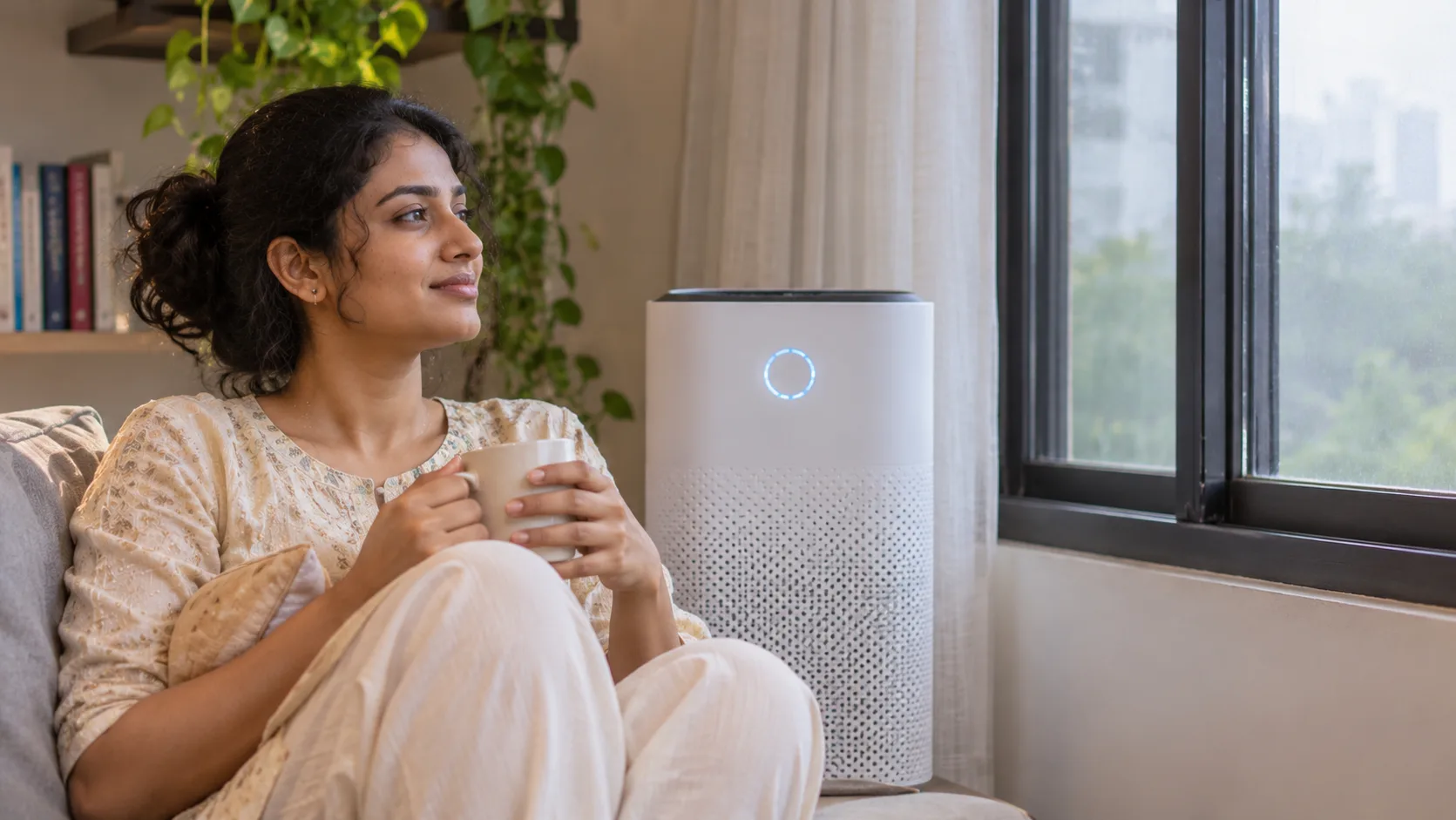
You're finally heading home, and the scratchiness hasn't completely settled. You still have another journey through traffic ahead of you. You cannot control the city's air quality, but a few changes can reduce your exposure and help you feel more comfortable.
Check the AQI before going out. When pollution is high, consider exercising indoors or choosing a less polluted location.
Avoid unnecessary time near heavy traffic. Quieter routes may reduce exposure compared with busy junctions.
Consider a well-fitting N95 respirator. A properly fitted N95 can reduce exposure to fine airborne particles. However, it doesn't protect against harmful gases or vapours.
Keep indoor air cleaner. Temporarily closing windows during severe outdoor pollution may help reduce incoming particles. A suitable air purifier with a high-efficiency particle filter may also help. Ventilate when outdoor conditions improve.
Drink water regularly. Sipping water may soothe a dry throat, although it doesn't remove pollution particles from your lungs.
Try a warm salt-water gargle. The NHS suggests mixing half a teaspoon of salt into a glass of warm water, gargling and spitting it out. Young children shouldn't gargle.
Reduce smoke indoors. Tobacco smoke and other indoor sources can add to irritation when outdoor air quality is already poor.
These measures have different purposes. Some reduce the amount of polluted air you breathe, while others simply make an irritated throat feel more comfortable.
Can ginger tea, honey or steam inhalation help?
By the time you're home, a warm cup of ginger tea sounds appealing. Someone suggests adding honey, and another familiar suggestion comes up: steam inhalation. Warm drinks may temporarily soothe a dry throat. Honey may help relieve some types of cough, although it doesn't treat pollution exposure. Never give honey to a baby younger than one year. Salt-water gargling may also provide temporary relief. Steam inhalation is different. There's no good evidence that breathing steam over a bowl of hot water removes pollution particles or treats pollution-related throat irritation. It can also cause serious burns if the water spills. The NHS and British Burn Association advise against this practice.
Also read: Steam Inhalation: What It Does for Colds and Smog
When should you see a doctor?
A few days have passed, but your throat still feels uncomfortable. You may be tempted to blame the polluted air and carry on as usual. However, persistent throat pain can have several causes. The NHS recommends seeing a doctor if a sore throat doesn't improve after about a week or keeps returning. Seek medical advice sooner if you have worsening pain, a very high temperature, signs of dehydration or a weakened immune system. Difficulty breathing, being unable to swallow, drooling because you cannot swallow or rapidly worsening severe symptoms require emergency medical care. If you have asthma or another respiratory condition, worsening breathlessness or wheezing also needs prompt attention.
Pay attention to the air around you
The next time your throat feels scratchy after a long commute, consider the air you've been breathing. Pollution may be contributing, especially when the AQI is high. Check local air quality, reduce exposure where possible and use simple measures for comfort. If the pain continues or becomes severe, don't assume pollution is the only cause.
References and sources
CDC: Air Pollutants. Effects of PM10, PM2.5 and ozone, including respiratory irritation and vulnerable groups.
US EPA: Health Effects of Ozone Pollution. Evidence on sore throat, coughing and airway inflammation.
CPCB: About the National Air Quality Index. India's AQI categories and associated health guidance.
CPCB: All India AQI Dashboard. Outdoor air-quality monitoring information.
CDC/NIOSH: Respirators and Mask Types. Particle filtration and the limitations of N95 respirators.
US EPA: Guide to Air Cleaners in the Home. Guidance on indoor filtration and reducing particulate exposure.
NHS: Sore Throat. Common causes, self-care measures and symptoms requiring medical attention.
NHS and British Burn Association: Steam Inhalation Safety Warning. Evidence and safety concerns related to steam inhalation.
WHO: Ambient Outdoor Air Pollution. Broader respiratory and cardiovascular risks associated with outdoor air pollution.
Medical disclaimer: This article is intended for general information and educational purposes only. It does not replace professional medical advice, diagnosis or treatment. The everyday situations described are illustrative and do not represent an actual patient's experience. A sore throat can have several causes, including infections, allergies, acid reflux and environmental irritation. If you have asthma, COPD or another respiratory condition, follow your prescribed treatment plan. Seek medical advice for persistent or worsening symptoms and emergency care for serious breathing or swallowing difficulties.
Continue this topic
Connected guides, ingredient explainers, product context, and tools chosen from this article's topic cluster.
What does your Health Age mean? Learn what affects your score, what studies say about ageing and how everyday lifestyle changes can support better health
Does skipping meals affect your nutrition? Learn what research says about missed meals, nutrient intake and how to maintain a balanced diet.
Taking biotin but still experiencing hair fall? Learn why biotin may not help, other possible causes of hair loss and when to see a dermatologist.
Quick questions
Can air pollution cause a sore throat without fever?
Yes. Dust, smoke and irritating gases can cause throat discomfort without fever or infection. However, other conditions may produce similar symptoms.
How long does a sore throat from pollution last?
There is no fixed duration. Mild irritation may improve when exposure decreases. Seek medical advice if symptoms persist, worsen or keep returning.
Does an N95 mask help with pollution?
A properly fitted N95 respirator can reduce exposure to fine airborne particles, including PM2.5. It doesn't remove all harmful gases.
Can drinking warm water clear pollution from your lungs?
No. Warm water may soothe your throat, but it cannot wash pollution particles out of your lungs.
9 linked sources checked against our citation and claim-safety process.
Reviewed 10 Nov 2026 for supplement-claim and medical-disclaimer boundaries.
Recommended from the Aora range
Aora Nutrivit Plus
19 Essential Nutrients with Zinc, Magnesium and Vitamins B Complex, C and D3
- Multivitamin
- Daily Foundation
- Made in India
From₹690
Try Aora - free
Put this article to work on you.
Health and safety notice
- This article is educational. It is not medical advice and is not a substitute for guidance from a qualified healthcare provider. Consult a physician before starting any supplement, especially during pregnancy or breastfeeding, with a medical condition, or while on medication.
- FSSAI compliance: Health supplements and nutraceuticals are not intended for medicinal use. Any supplement-related information is provided to describe nutritional or physiological support and should not be interpreted as a claim to diagnose, treat, cure, or prevent any disease. FSSAI regulates health supplements and nutraceuticals separately from medicinal products.
Read our full medical disclaimer and editorial policy.
Sources and editorial standards
- 1US Environmental Protection Agency (EPA)
- 2Centers for Disease Control and Prevention (CDC)
- 3NHS
- 4Central Pollution Control Board (CPCB)
- 5CPCB's air-quality dashboard
- 6NHS and British Burn Association
- 7CDC/NIOSH: Respirators and Mask Types
- 8US EPA: Guide to Air Cleaners in the Home
- 9WHO: Ambient Outdoor Air Pollution
Supplement content is educational only and should not replace medical advice from a qualified clinician. Product mentions are reviewed for claim safety before publication.