Fatty Liver Diet: An Indian Meal Plan You Can Live With
Your health check says grade 1 fatty liver. This guide shows what an Indian plate should look like, from dal and rice portions to chai, oil, fruit, coffee and alcohol.
In this article(16 sections)
- How common is fatty liver in India?
- How much weight do you actually need to lose?
- What does a fatty liver plate look like in an Indian home?
- Rice and roti: do you have to give them up?
- Where does protein come from?
- A sample day you can actually follow
- What should you cut back on first?
- Sugar and sweetened chai
- Fruit juice versus whole fruit
- Fried snacks and cooking oil
- Is a Mediterranean diet better for fatty liver?
- What about coffee?
- Does a little alcohol matter?
- When should you see a doctor?
- The plate you can live with
- Sources
You go for your annual health check feeling perfectly fine. A few days later, your ultrasound report arrives, and one line catches your attention: Grade 1 fatty liver. You don't drink much alcohol, you haven't noticed any symptoms, and now you're looking at your usual dinner of rice, rajma and curd, wondering what needs to change. The good news is that a fatty liver diet doesn't mean giving up your favourite Indian foods. It's about adjusting your portions, eating more vegetables and protein, cutting back on sugar and fried foods, and managing your weight if needed. You don't need expensive superfoods or a completely new menu. So, what should you actually eat when you have fatty liver? Let's look at simple, practical changes you can make to your everyday meals.
How common is fatty liver in India?
Fatty liver is more common than many people realise. A review of 50 Indian studies found that around 28% of people in average-risk groups had fatty liver, with rates exceeding 50% in higher-risk groups. Doctors now often use the term MASLD (metabolic dysfunction-associated steatotic liver disease) for fatty liver linked to metabolic risk factors such as excess body fat or blood sugar problems. The older term, NAFLD, is still widely recognised. The encouraging part is that lifestyle changes, including improvements to your diet and gradual weight loss when needed, can help reduce liver fat.
Also read: Can Fatty Liver Be Reversed?
How much weight do you actually need to lose?
If you have fatty liver and are carrying extra weight, losing even a few kilos can make a difference to your liver health. According to the NIDDK, losing around 3% to 5% of your body weight can help reduce fat in your liver. Losing 7% to 10% may also help improve inflammation and scarring. To put that into perspective, if you weigh 80 kg, losing 5% means losing just 4 kg. A 10% reduction would mean 8 kg. It's a goal you can work towards gradually rather than trying to lose weight quickly.
Research supports this approach. In a study involving 293 people with fatty liver inflammation, participants followed a lifestyle programme for one year. Among those who lost at least 10% of their body weight, 90% saw their liver inflammation resolve, while 45% showed improvement in liver scarring. Even losing 5% was linked to better outcomes than losing less. The important thing is to lose weight gradually. Crash diets and rapid weight loss can sometimes make liver problems worse, as the NIDDK warns. Instead, focus on balanced meals, regular physical activity and changes you can maintain over time.
What does a fatty liver plate look like in an Indian home?
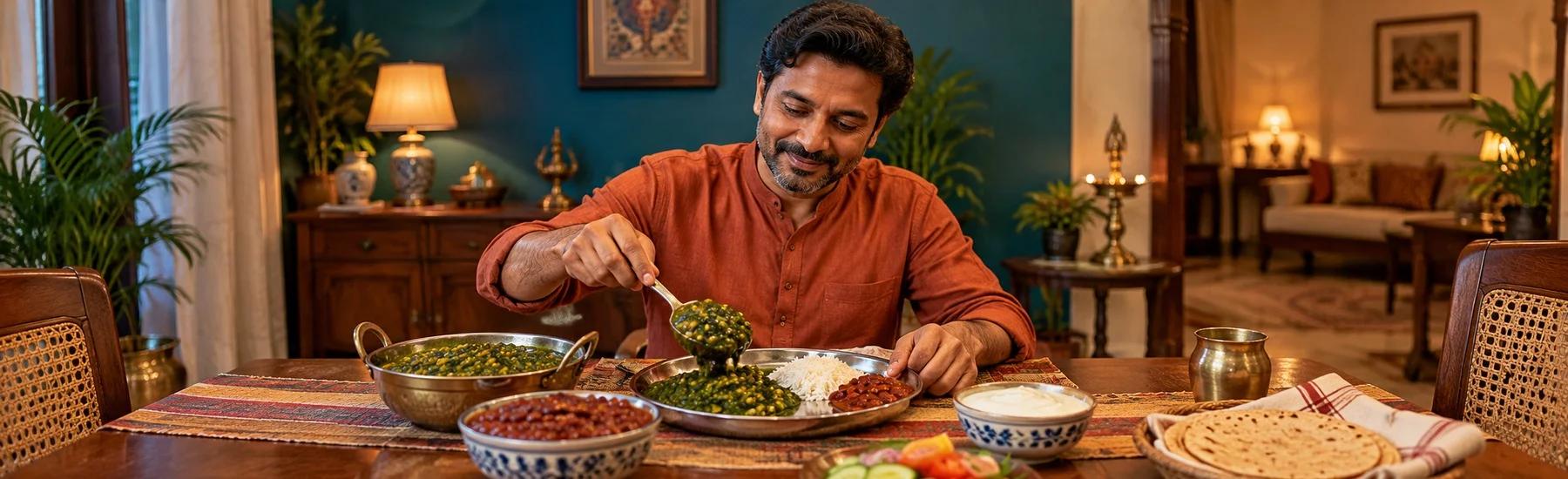
Most Indian meals already include foods that support liver health. You don't need to give up rice, roti or your favourite dishes. The key is to adjust how much of each food goes onto your plate. Here's a simple way to balance your lunch or dinner:
Half your plate: Fill it with vegetables such as palak, lauki, bhindi, beans or mixed vegetable kootu. You can also include a fresh salad.
One-quarter of your plate: Add protein-rich foods such as dal, rajma, chana, paneer, eggs, fish or chicken. Curd can be included alongside your meal.
One-quarter of your plate: Keep space for rice or roti. Depending on your needs, this could be a small katori of rice or one or two phulkas, rather than large portions of both.
You can still enjoy the same meals your family eats. It's about balancing your portions, not following a completely different diet.
Rice and roti: do you have to give them up?
You can keep rice and roti on the plate. NIDDK suggests choosing more low glycaemic index foods such as most fruits, vegetables and whole grains. These affect blood sugar less than white bread, white rice and potatoes (NIDDK, Eating, Diet and Nutrition for NAFLD and NASH). In practice that means a smaller katori of rice, or mixing in some brown rice, millets such as jowar, bajra or ragi, or whole wheat phulkas without ghee brushed on top. If you love rice with rasam or sambar, keep it. Just let the dal and vegetables take up more room than the rice.
Where does protein come from?
Protein keeps you full, protects muscle while you lose weight and makes smaller grain portions easier to live with. Good everyday sources:
Dal, rajma, chole, sprouts and besan chilla
Curd, buttermilk and paneer
Eggs, boiled or as a bhurji with vegetables
Fish or chicken cooked in a curry or grilled rather than deep fried
A sample day you can actually follow
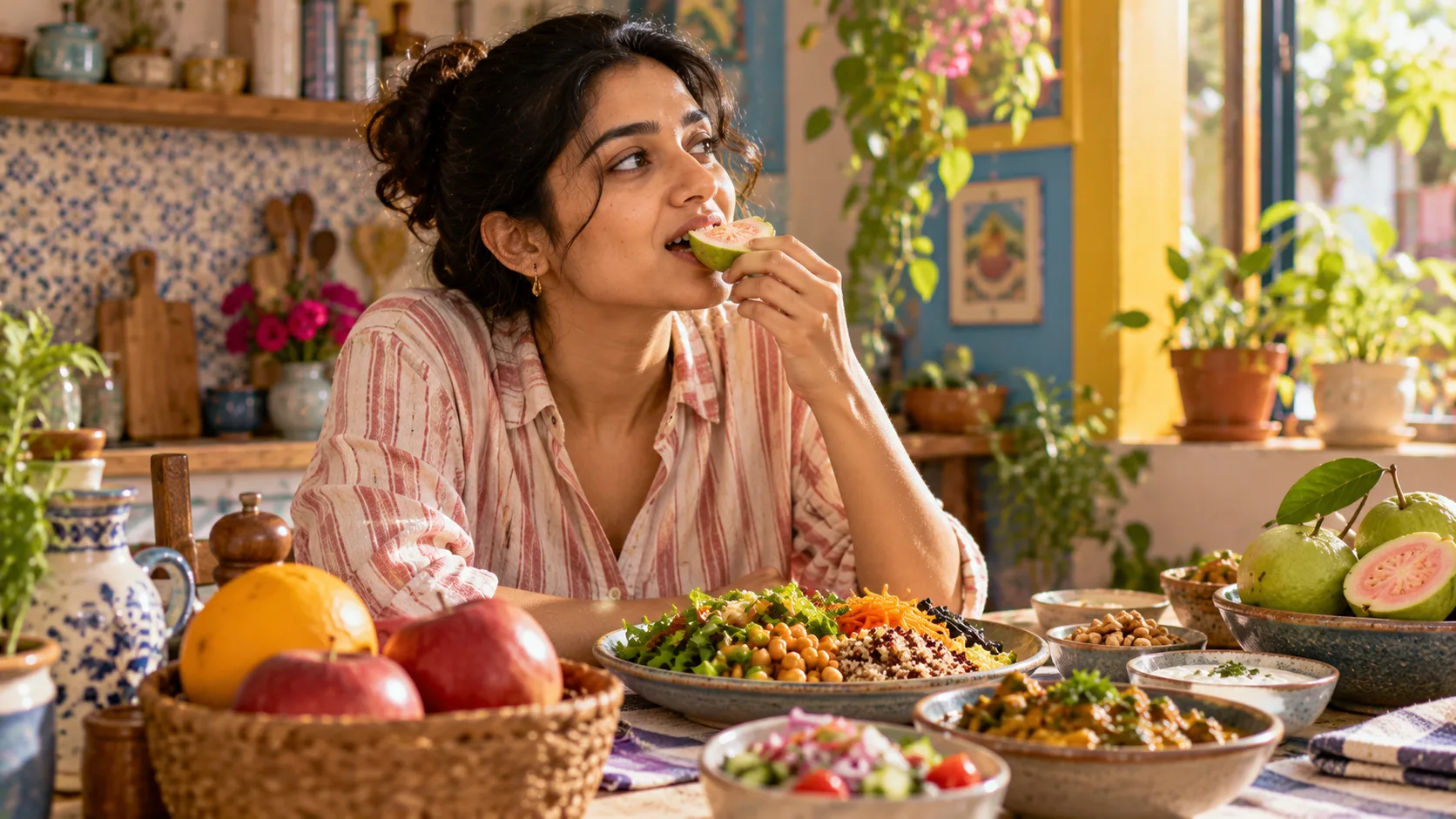
Here's a simple Indian meal plan you can follow if you have fatty liver. Adjust the portions based on your appetite, body weight and activity level.
Early morning: Start with tea or coffee with little or no sugar. If you're hungry, have a few almonds or walnuts.
Breakfast: Choose vegetable poha or upma with peanuts, two besan chillas with mint chutney, or egg bhurji with a phulka.
Mid-morning: Have a whole fruit such as guava, orange, apple or papaya instead of fruit juice.
Lunch: Enjoy dal or rajma with plenty of sabzi, salad, a bowl of curd and two phulkas or a small serving of rice.
Evening snack: Choose buttermilk, roasted chana or a handful of nuts instead of making biscuits, samosas or namkeen an everyday habit.
Dinner: Keep it balanced with options such as grilled fish or paneer tikka, sautéed vegetables and a phulka. Try to avoid heavy meals just before bedtime.
You don't have to follow this exact menu every day. Mix and match foods you enjoy while keeping your meals balanced and portions suitable for you. A short walk after lunch or dinner is another useful habit. Even ten minutes of walking adds to your daily activity.
Also read: Walking After Meals: Why Even 10 Minutes Can Help
What should you cut back on first?
Sugar and sweetened chai
NIDDK advises avoiding foods and drinks with large amounts of simple sugars, especially fructose. It names sweetened soft drinks, sports drinks, sweetened tea and juices. It also notes that table sugar is broken down into glucose and fructose during digestion, which makes it a major source of fructose. For many Indian adults the hidden source is chai. Three or four cups a day with two spoons of sugar each adds up fast. Cut down one spoon at a time. Mithai at festivals is fine as an occasional treat, not a daily habit. If the cravings feel strong, our guide on why you crave sugar may help.
Fruit juice versus whole fruit
A glass of fresh orange or mosambi juice feels healthy, but juice is listed alongside soft drinks as a source of fructose. Whole fruit comes with fibre, fills you up and is eaten more slowly.
Fried snacks and cooking oil
NIDDK suggests limiting fats because they are high in calories. It also suggests replacing saturated and trans fats with unsaturated fats, especially omega-3 fats. In an Indian kitchen this means:
Fewer deep-fried snacks such as pakoras, bhajjis, samosas and puris
Avoiding reused frying oil and vanaspati, which are common sources of trans fats
Measuring cooking oil with a spoon instead of pouring from the bottle
Rotating oils such as mustard, groundnut and rice bran, with a little ghee if you enjoy it
Adding a handful of nuts, flaxseed or fish for omega-3 fats
Is a Mediterranean diet better for fatty liver?
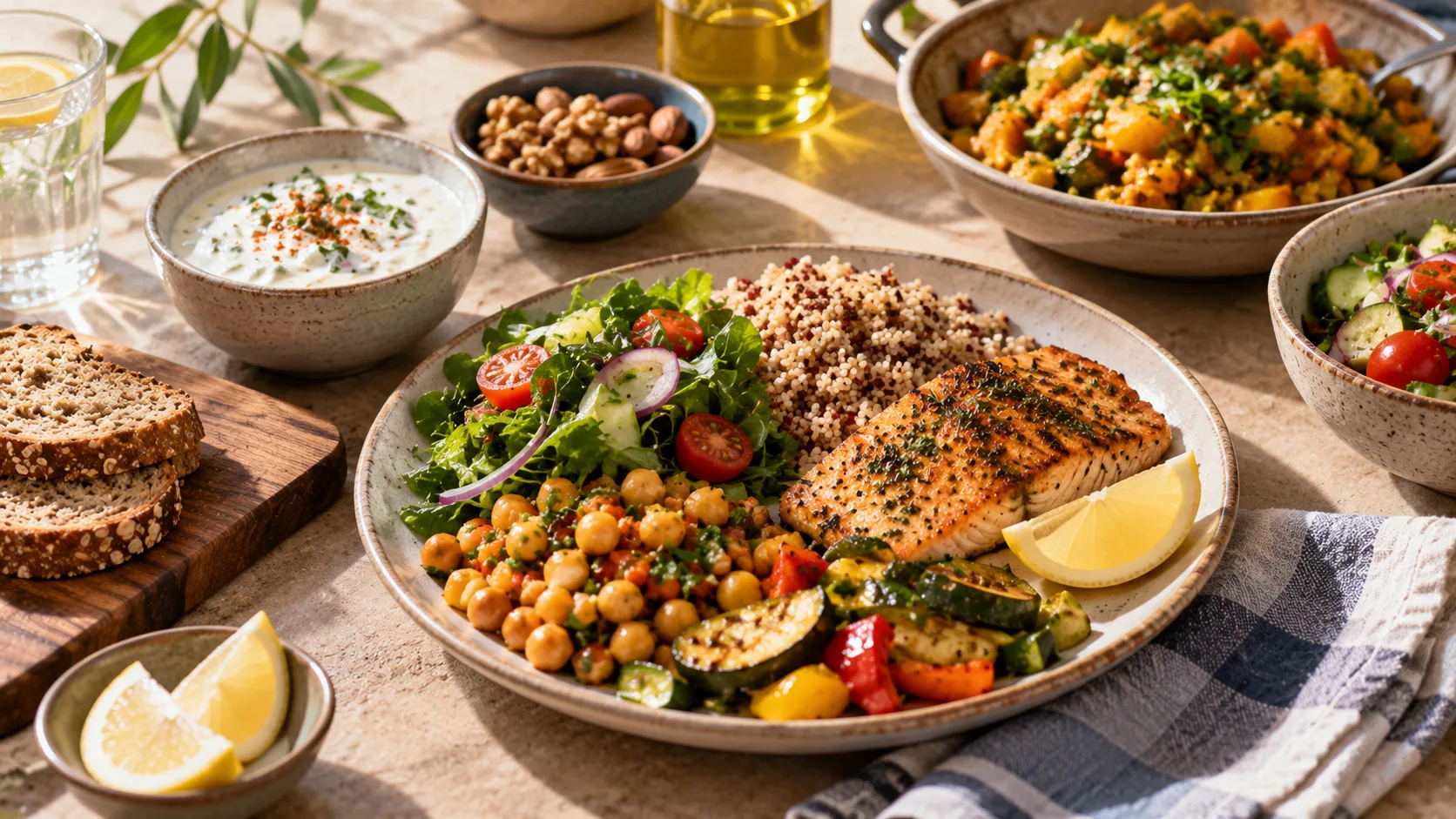
You may have heard that the Mediterranean diet is one of the best eating patterns for fatty liver. There is research to support its benefits. In a 2013 study involving 12 people with fatty liver, researchers compared a Mediterranean diet with a low-fat, high-carbohydrate diet. After six weeks, liver fat decreased by 39% with the Mediterranean diet, compared with 7% on the other diet. Interestingly, both groups lost similar amounts of weight. The results are encouraging, although the study was small, so larger studies are needed to confirm the benefits.
The good news is that you don't need to eat Mediterranean food to follow this approach. The diet focuses on vegetables, legumes, whole grains, nuts, fish and healthy oils, while limiting sugar and processed foods. An Indian version can include dal, chana, sabzi, ragi, other millets, curd, peanuts, walnuts and fish if you eat it. The idea is simple: eat more whole, nutritious foods and cut back on refined flour, sugary foods and heavily processed snacks.
What about coffee?
If you enjoy a cup of filter coffee, there is no need to give it up. A review of five studies found that coffee drinkers had a lower risk of fatty liver, with a pooled risk ratio of 0.71. People who already had fatty liver and drank coffee regularly had a lower risk of liver scarring (Wijarnpreecha and colleagues, European Journal of Gastroenterology and Hepatology, 2017). The authors note that these were observational studies with different definitions of regular coffee drinking. So enjoy your coffee with little sugar, but there is no need to start drinking it for your liver.
Does a little alcohol matter?
Even a little alcohol matters. NIDDK says that if you have fatty liver you should minimise alcohol, because it can further damage your liver. Weekend drinks or a peg at a wedding add work to a liver that is trying to recover. The safest choice is to stop. If that feels hard, speak to your doctor about it honestly.
When should you see a doctor?
A grade 1 fatty liver on an ultrasound is common, but it still deserves a proper follow-up. See your doctor to go through the scan alongside your blood test results. Also speak to your doctor before starting any crash diet, weight loss medicine or new supplement, especially if you take medication for diabetes, cholesterol or blood pressure. The NHS notes that fatty liver does not usually cause any symptoms. Some people feel very tired, feel generally unwell or have liver pain or discomfort in the tummy under the right side of the ribs. Mention any of these to your doctor. The NHS advises asking for an urgent doctor's appointment if your skin or the whites of your eyes look yellow. You may also have itchy skin, darker pee and paler poo than usual.
The plate you can live with
Go back to that Thursday evening and the rajma, rice and curd on the table. Almost nothing on it needs to go. The rajma stays. The curd stays. The rice gets a little smaller, a bowl of sabzi joins it, the papad becomes an occasional extra and the second cup of sweet chai quietly disappears. Do that most days, walk after dinner and let the kilos come off slowly. Next year, when the office health check comes round again, you can open the ultrasound page with less worry.
Sources
Medical Disclaimer: This article is for general information and is not a substitute for advice from your doctor. Speak to a qualified healthcare professional before starting any supplement, especially if you are pregnant, breastfeeding or taking medication.
Continue this topic
Connected guides, ingredient explainers, product context, and tools chosen from this article's topic cluster.
Isabgol is trending as a belly fat drink. Learn what psyllium husk really does for constipation, cholesterol, sugar and weight, plus how to take it safely.
Green tea extract, caffeine stacks, L-carnitine and garcinia promise to burn fat. See what the trials found and the side effects labels skip.
ACV gummies and vinegar shots are everywhere. What the trials show for weight, the 2024 study that was retracted, label checks and who should avoid it.
Quick questions
What is the best diet for fatty liver in India?
A good fatty liver diet for Indian homes fills half the plate with vegetables, a quarter with protein such as dal, curd, paneer, eggs or fish and a quarter with rice, roti or millets. It keeps sugar, fried snacks, fruit juice and alcohol low. Steady weight loss matters more than any single food.
Can I eat rice if I have fatty liver?
You can eat rice. Keep the portion to a small katori, pair it with plenty of dal and sabzi and try mixing in brown rice or millets. Low glycaemic index foods such as whole grains, vegetables and most fruits affect blood sugar less than white rice eaten in large amounts.
How much weight should I lose for fatty liver?
According to NIDDK, losing at least 3% to 5% of your body weight can reduce liver fat. Losing up to 7% to 10% may be needed to reduce inflammation and scarring. Lose it gradually, as NIDDK advises, because rapid weight loss can make liver disease worse.
Is chai or coffee allowed with fatty liver?
Both are fine with little or no sugar. Sweetened tea is a common hidden source of sugar, so cut the sugar down slowly. Observational studies link regular coffee drinking with a lower risk of fatty liver and liver scarring.
Is fruit juice good for fatty liver?
Whole fruit is the better choice. NIDDK lists juices with sweetened soft drinks among the drinks high in simple sugars to avoid. Eat an orange, guava or apple instead of drinking a glass of juice.
When should I see a doctor about fatty liver?
See your doctor after any scan that shows fatty liver to go through it alongside your blood test results. The NHS advises asking for an urgent doctor's appointment if your skin or the whites of your eyes look yellow.
8 linked sources checked against our citation and claim-safety process.
Reviewed 30 Oct 2026 for supplement-claim and medical-disclaimer boundaries.
Recommended from the Aora range
Aora Silybeet
Milk Thistle with N-Acetyl Cysteine, Beetroot & Dandelion Root
- Liver Support
- Made in India
From₹1,400.00
Try Aora - free
Put this article to work on you.
Health and safety notice
- This article is educational. It is not medical advice and is not a substitute for guidance from a qualified healthcare provider. Consult a physician before starting any supplement, especially during pregnancy or breastfeeding, with a medical condition, or while on medication.
- FSSAI compliance: Health supplements and nutraceuticals are not intended for medicinal use. Any supplement-related information is provided to describe nutritional or physiological support and should not be interpreted as a claim to diagnose, treat, cure, or prevent any disease. FSSAI regulates health supplements and nutraceuticals separately from medicinal products.
Read our full medical disclaimer and editorial policy.
Sources and editorial standards
- 1review of 50 Indian studies
- 2NIDDK
- 3study involving 293 people with fatty liver inflammation
- 4NIDDK, Eating, Diet and Nutrition for NAFLD and NASH
- 52013 study involving 12 people with fatty liver
- 6Wijarnpreecha and colleagues, European Journal of Gastroenterology and Hepatology, 2017
- 7NHS
- 8NHS
Supplement content is educational only and should not replace medical advice from a qualified clinician. Product mentions are reviewed for claim safety before publication.