
Isabgol Benefits: What Psyllium Husk Can and Cannot Do
Isabgol is trending as a belly fat drink. Learn what psyllium husk really does for constipation, cholesterol, sugar and weight, plus how to take it safely.
In this article(10 sections)
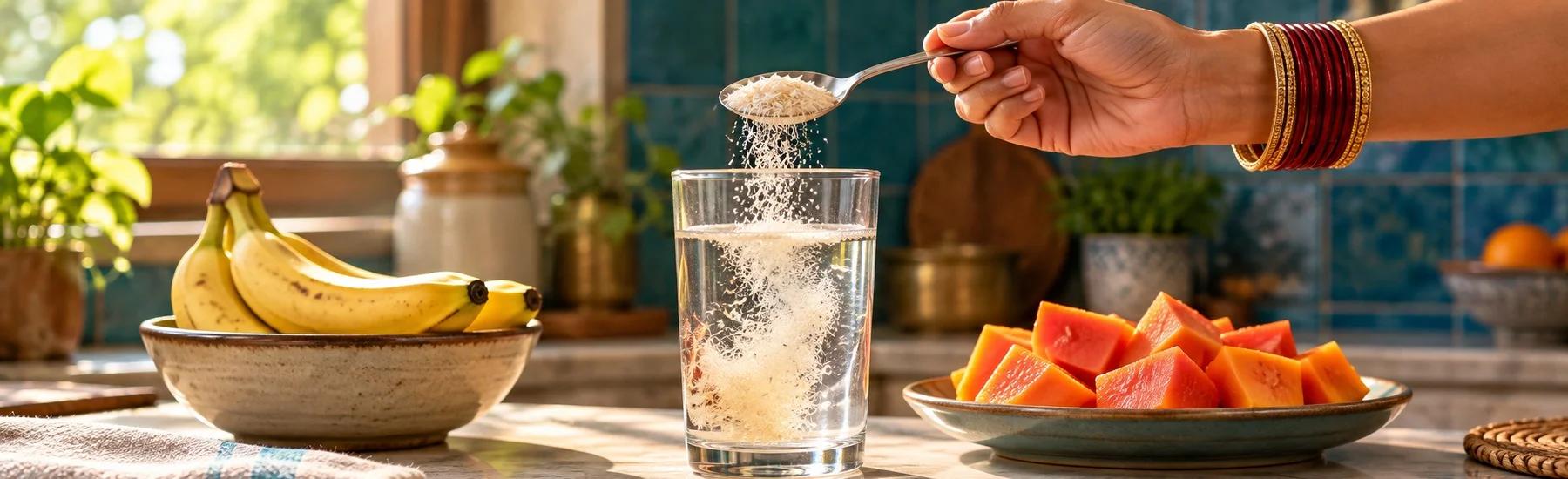
Isabgol, also known as psyllium husk, is a natural soluble fibre commonly used to relieve constipation. It absorbs water in the gut, helping make stools softer and easier to pass. You may have seen it making a comeback on social media under the trend called “fibremaxxing”. Fitness reels show people mixing isabgol into water before meals, claiming it can help burn belly fat. Interestingly, it's something Indian families have used for generations, long before it became a wellness trend. So, what are the real benefits of isabgol? Research shows that it can help with constipation, slightly lower LDL (bad) cholesterol and improve blood sugar control in people with elevated levels. It may also help you feel fuller, but the evidence for weight loss is mixed. Isabgol can be a useful addition to your diet when taken correctly, but it isn't a shortcut to losing weight.
What isabgol actually is
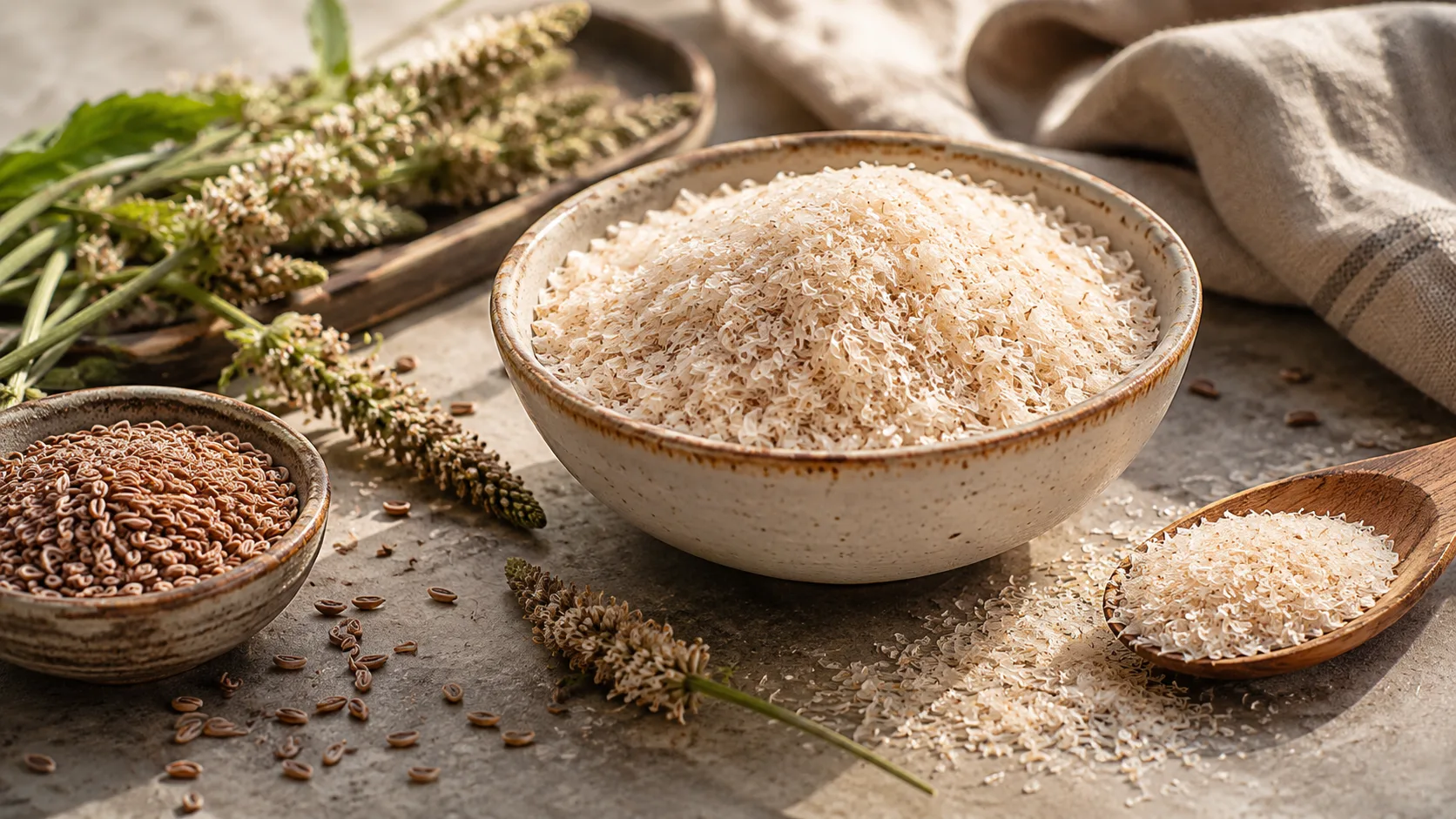
Isabgol is the husk, or outer coat, of the seeds of a plant called Plantago ovata. It has been part of Indian homes for generations. The US Food and Drug Administration even lists it by the name "Indian psyllium". The husk is mostly soluble fibre. That means it soaks up water and turns into a thick gel. The gel is what makes stools soft and bulky, what slows the speed at which food is absorbed and what makes your stomach feel fuller. It is also why taking it the wrong way can be risky, which we cover below. One review describes psyllium as a gel that is not digested or fermented, so it does not act like a typical prebiotic.
If you are confused about where fibre ends and prebiotics begin, this article on probiotics versus prebiotics explains the difference.
Isabgol for constipation: the use it earned
Isabgol has been used for generations to relieve constipation, and research supports this benefit. According to MedlinePlus, psyllium absorbs water in the intestines, making stools bulkier and easier to pass. It works gradually, so don't expect immediate relief. Constipation can also leave you feeling bloated or gassy. If that sounds familiar, read this article on Whether constipation can cause bloating and gas? It explains why these symptoms often occur together and what you can do to manage them. So, while isabgol may be getting attention as a new wellness trend, its most familiar benefit is the same one Indian families have relied on for years: helping with constipation.
Does isabgol lower cholesterol?
Yes, isabgol can help lower LDL (bad) cholesterol, although the effect is fairly small. A 2018 review of 28 studies involving 1,924 people found that taking around 10 g of psyllium daily reduced LDL cholesterol by an average of 13 mg/dL. The studies also found improvements in other cholesterol-related markers linked to heart health. The US FDA also recognises that soluble fibre from psyllium may help reduce the risk of heart disease when included in a diet low in saturated fat and cholesterol.
The important thing to remember is that isabgol works alongside a healthy diet, not instead of one. Adding a spoonful after a meal full of fried foods won't undo the effects of that meal. A small reduction in LDL cholesterol may be helpful, especially if your levels are slightly high. However, isabgol cannot replace prescribed cholesterol medicines such as statins. If you're already taking medication, speak to your doctor before adding isabgol regularly.
Isabgol and blood sugar
The gel slows how fast carbohydrates from your meal reach your blood. A 2015 meta-analysis of 35 trials found that the effect depended on where you started. In people with normal sugar levels there was no meaningful change. People with prediabetes saw a modest improvement. People already being treated for type 2 diabetes who took psyllium before meals saw fasting glucose fall by about 37 mg/dL and HbA1c fall by about 0.97 percentage points. Two cautions. First, the authors of that review worked for Procter and Gamble, which makes a psyllium product. Some of the data came from company records. Second, if you take diabetes medicine, an extra drop in sugar is a real risk. Speak to your doctor before adding isabgol so your readings can be watched.
Simple habits can help sugar too, such as a short stroll after dinner. Our article on walking after meals for blood sugar explains why.
Psyllium husk for weight loss: what the trials really show
This is the claim driving the reels, so it deserves a careful look. Two reviews point in different directions. A small 2023 meta-analysis found that psyllium taken just before meals led to about 2.1 kg more weight loss than the comparison groups. Waist size fell by about 2.2 cm. The average dose was 10.8 g a day for about 4.8 months. It included only six studies with 354 people, all overweight or obese. Its authors worked for Procter and Gamble, which sells a psyllium product. A larger 2025 review pooled 27 randomised trials in adults. It found no significant change in BMI or waist size with psyllium. It also reported a rise in body weight, a result that is hard to interpret. Either way, it does not support isabgol as a way to lose weight. Put together:
Isabgol is not a weight loss tool. The best case is a couple of kilos over several months. The larger review did not find even that.
No trial shows isabgol targets belly fat. Fat does not leave one part of the body because of a drink.
It may help some people feel fuller before a meal. That is its realistic role in weight. Its strongest evidence is still for constipation and LDL cholesterol.
A thick gel in your stomach before a meal may make you eat a little less. If you then eat the same amount anyway, there is nothing for the fibre to work with. The real work is still in the meal itself: enough protein, plenty of vegetables and sensible portions of rice or roti.
Our explainer on macronutrients is a good place to start building that plate.
How to take isabgol safely
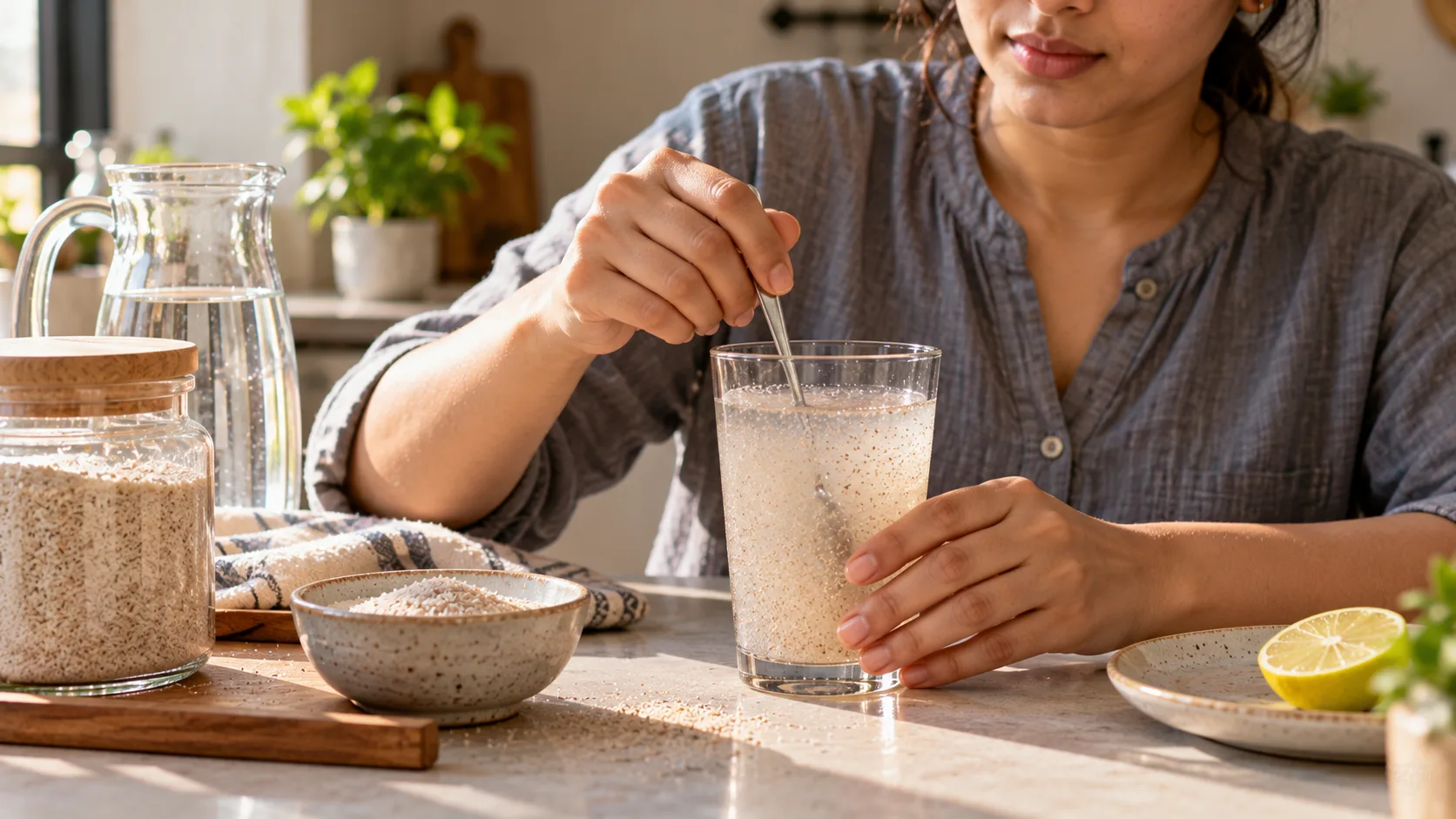
The gel that makes isabgol useful is the same thing that makes it risky when taken carelessly. Taken without enough fluid, it can swell and block the throat or food pipe. MedlinePlus says to mix each dose with 240 ml of liquid and to drink at least that much when you take it. A sensible routine looks like this:
Read the dose on your pack and start at the low end of it.
Stir it into a full glass of water, buttermilk or juice. Drink it straight away, before it thickens into a lump.
Drink more water through the day. Fibre without fluid can make constipation worse, not better.
Never swallow the dry powder or sprinkle it on your tongue, however short of time you are.
Take it at a different time from your medicines. MedlinePlus advises keeping a 3 hour gap for digoxin, aspirin and the antibiotic nitrofurantoin. Ask your pharmacist about anything else you take daily.
Avoid breathing in the powder while mixing, since it can trigger allergic reactions in some people.
Gas and bloating can happen at first as your gut adjusts. Building up slowly can help. MedlinePlus says to call your doctor immediately if you have difficulty breathing, stomach pain, difficulty swallowing, skin rash, itching, nausea or vomiting. The NHS heart attack page says to call 112 straight away for chest pain that feels tight or like squeezing, chest pain spreading to your arms, neck or jaw, severe difficulty breathing, lips or skin that are pale, blue or grey, or if someone has passed out and is not responding normally.
Who should be careful with isabgol
Isabgol is generally safe when taken correctly, but it may not be suitable for everyone. According to MedlinePlus, you should speak to your doctor or pharmacist before taking it if you:
Have any allergies, especially to psyllium.
Take regular medicines, vitamins or other supplements.
Have diabetes, heart disease, high blood pressure, kidney disease or a history of intestinal blockage.
Have difficulty swallowing or have experienced rectal bleeding.
Are pregnant, planning a pregnancy or breastfeeding.
Follow a low-sugar or low-sodium diet, as some psyllium products contain added ingredients.
Don’t use isabgol to treat unexplained blood in your stool. The NHS advises seeing a doctor if you have blood in your stool for three weeks or unexplained weight loss. Black or dark red stools, or bloody diarrhoea, need urgent medical attention. Be especially careful if you are buying isabgol for an older family member. Some older adults have difficulty swallowing or take several medicines that may need to be spaced apart from psyllium. Make sure they can swallow safely and follow the instructions for mixing it with enough water. If they have swallowing difficulties, ask a doctor before giving it to them.
Isabgol or food first?
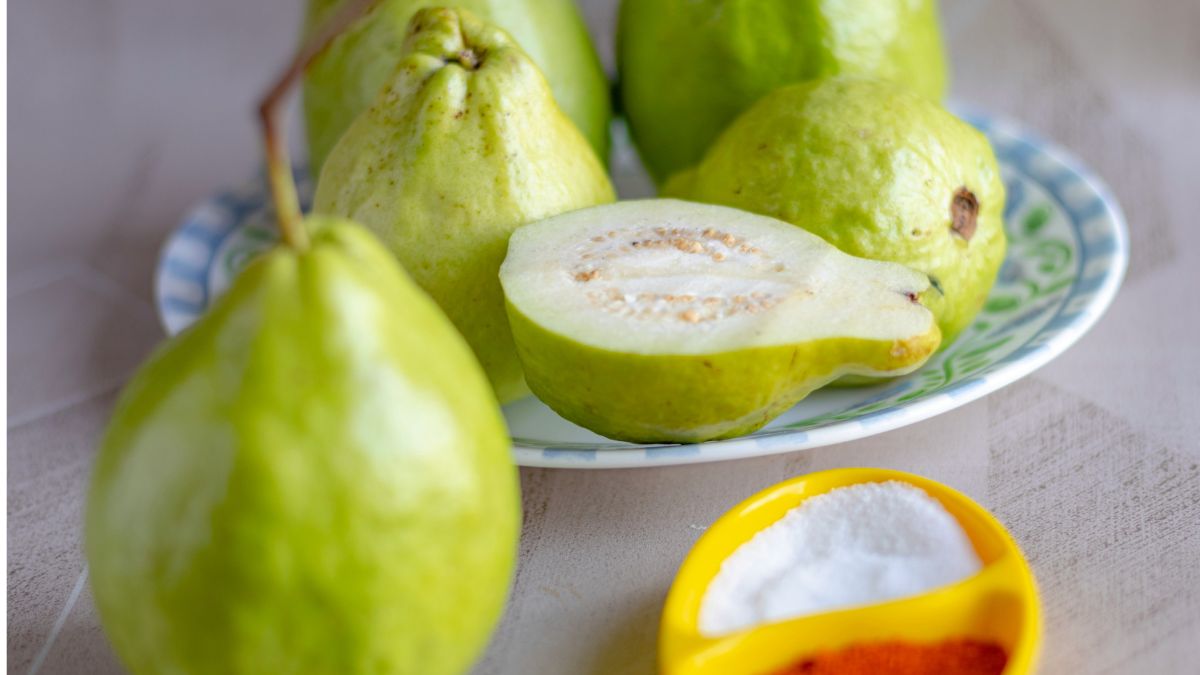
The NHS recommends adults aim for 30 g of fibre a day and notes that most adults manage only about 20 g. A typical Indian plate can close that gap without any powder:
A katori of dal, rajma or chana at lunch and dinner.
A sabzi or salad with every main meal, rather than a few pieces of onion on the side.
Whole wheat roti, bajra or jowar instead of only white rice or maida.
A piece of whole fruit like guava, apple or papaya in place of juice.
A handful of roasted chana, peanuts or flax seeds instead of a packet of biscuits.
Food fibre comes with vitamins, minerals and a mix of fibre types that psyllium alone cannot give you. Isabgol makes sense as a top up when your diet still falls short, or when a doctor has suggested it for constipation or cholesterol. Raise your fibre slowly from either source and drink more water as you go.
The quiet case for the old box
The reels make isabgol sound new, but it has sat in Indian kitchens for decades. Its real strengths are quieter than the hype. It softens stools, nudges LDL cholesterol down a little and may steady sugar in people who already struggle with it. It will not flatten your belly, though if it stops you reaching for a second helping, that is a bonus. Take it with a full glass of water, keep it away from your morning tablets and let your dal and sabzi do most of the work.
Sources
Medical Disclaimer: This article is for general information and is not a substitute for advice from your doctor. Speak to a qualified healthcare professional before starting any supplement, especially if you are pregnant, breastfeeding or taking medication.
Continue this topic
Connected guides, ingredient explainers, product context, and tools chosen from this article's topic cluster.
Blood pressure, cholesterol, salt, stamina, omega-3
Relevant for antioxidant and liver-support education, which heart articles often touch.
Relevant for daily micronutrient coverage alongside a heart-healthy routine.
Green tea extract, caffeine stacks, L-carnitine and garcinia promise to burn fat. See what the trials found and the side effects labels skip.
ACV gummies and vinegar shots are everywhere. What the trials show for weight, the 2024 study that was retracted, label checks and who should avoid it.
Berberine is sold as nature's Ozempic. This guide covers what trials show for sugar and weight, why the comparison fails and which medicines it can clash with.
Quick questions
Can I take isabgol every day?
MedlinePlus advises not taking psyllium for longer than 1 week unless your doctor tells you to. Doctors sometimes prescribe it for other uses, such as high cholesterol. Talk to your doctor before making it a long term habit.
Should I take isabgol with hot water or cold water?
Either hot or cold water works. What matters is the amount of liquid and drinking it quickly before it sets into a thick lump. Lukewarm water or buttermilk is fine if that is easier for you to drink.
Is isabgol safe for children?
Children need less fibre than adults and their doses are different. Do not give an adult dose of isabgol to a child. Ask your paediatrician first, particularly if the child is constipated often.
Can isabgol cause constipation?
It can if you take it without enough water. The fibre needs fluid to form a soft gel. Drink a full glass with each dose and more water through the day.
Is psyllium husk powder the same as isabgol?
They are the same fibre. Isabgol is the Hindi name for psyllium husk from the Plantago ovata plant. Plain and powdered husk do not differ in fibre type, though flavoured packs may contain added sugar, so read the label.
9 linked sources checked against our citation and claim-safety process.
Reviewed 27 Oct 2026 for supplement-claim and medical-disclaimer boundaries.
Recommended from the Aora range
Aora Nutrivit Plus
19 Essential Nutrients with Zinc, Magnesium and Vitamins B Complex, C and D3
- Multivitamin
- Daily Foundation
- Made in India
From₹690.00
Try Aora - free
Put this article to work on you.
Health and safety notice
- This article is educational. It is not medical advice and is not a substitute for guidance from a qualified healthcare provider. Consult a physician before starting any supplement, especially during pregnancy or breastfeeding, with a medical condition, or while on medication.
- FSSAI compliance: Health supplements and nutraceuticals are not intended for medicinal use. Any supplement-related information is provided to describe nutritional or physiological support and should not be interpreted as a claim to diagnose, treat, cure, or prevent any disease. FSSAI regulates health supplements and nutraceuticals separately from medicinal products.
Read our full medical disclaimer and editorial policy.
Sources and editorial standards
- 1"Indian psyllium"
- 2not digested or fermented
- 3MedlinePlus
- 42018 review of 28 studies involving 1,924 people
- 535 trials
- 627 randomised trials in adults
- 7NHS heart attack page
- 8NHS
- 930 g of fibre a day
Supplement content is educational only and should not replace medical advice from a qualified clinician. Product mentions are reviewed for claim safety before publication.