Why Am I Hungry at Night? What May Be Behind Late-Night Cravings
Nighttime hunger often has more to do with what happened earlier in the day than the clock. Here is what may be driving late-night cravings and when they deserve a closer look.

In this article(10 sections)
- Are You Eating Enough During the Day?
- Is It True Hunger or Just a Nighttime Habit?
- Does Your Dinner Have Enough Protein and Fibre?
- How Poor Sleep Can Affect Late-Night Cravings
- Stress Eating: Is Food Your Way to Unwind?
- Are You Dieting Too Aggressively?
- Do Blood Sugar or Magnesium Explain Nighttime Cravings?
- Night Eating Syndrome vs Normal Snacking
- What Should You Change First?
- Sources
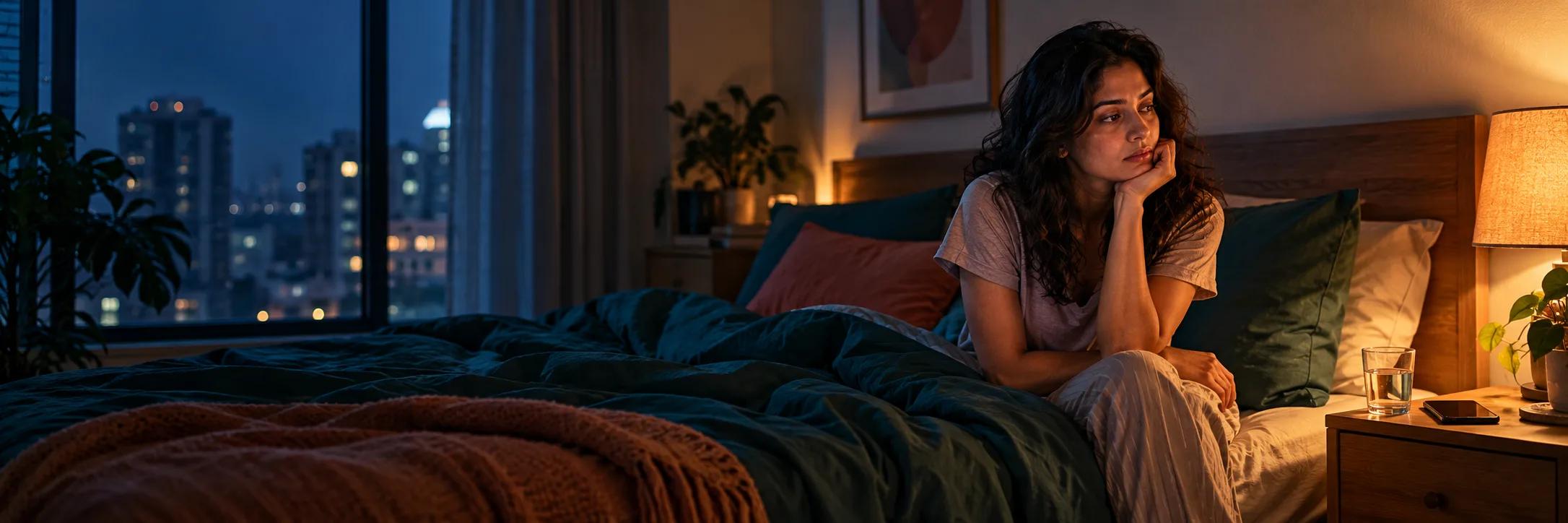
You were not particularly hungry when you washed your dinner plate. But now it is 10:30 pm, and suddenly you cannot stop thinking about biscuits, a bag of chips, or whatever happens to be easiest to reach in the pantry. You eat something. And the next evening, the same thing happens. After a few weeks of this, it is easy to wonder if there is some problem with your metabolism, or if your hormones are out of balance. Sometimes, there is a much simpler explanation. Nighttime hunger is usually the result of what happened earlier in the day. It depends on how much you ate, how well you slept the night before, your stress levels, and your evening routine. If you find yourself constantly raiding the fridge before bed and asking, ‘Why am I hungry at night?’, the most useful question is not, ‘How do I stop myself from eating at night?’ The question you should ask yourself is: ‘Why am I hungry at this particular point in my day?’
Are You Eating Enough During the Day?
Think back to your breakfast. Maybe it was just a cup of coffee. Maybe you skipped your lunch because work got busy. Later you grabbed something from the office pantry. When it was finally time for dinner, you ate how much you regularly eat. But if you have barely eaten all day, your body may simply be trying to make up for what it missed. So feeling hungry again at 10 pm is not that surprising. Your hunger does not disappear just because it is late. If you often skip meals, eat very little or go for hours without eating, you may end up feeling hungry later because you have not eaten enough during the day. Often, the most effective way to stop eating so much at night is to eat more consistently throughout the day.
Is It True Hunger or Just a Nighttime Habit?

Now imagine a different evening. You ate a large, satisfying dinner. You are not really hungry. But you sit down on the couch to watch a show, and you walk back into the kitchen almost out of habit. This is a completely different pattern. Over time, human beings naturally attach food to specific situations. Think of these:
Watching TV = eating a snack
Working late at the laptop = eating a snack
Scrolling on your phone in bed = eating something sweet
Over time, your usual routine can also become a trigger to eat. That does not mean the craving is not real, but hunger may not be the only reason you want something. Before grabbing a snack, ask yourself: ‘Would I eat a proper meal right now?’ If yes, you may actually be hungry. If the answer is, ‘No, I just want chocolate,’ it may be more about habit, boredom or simply wanting that particular food.
Also read: Why Do I Crave Sugar All the Time? 7 Common Reasons
Does Your Dinner Have Enough Protein and Fibre?
You eat dinner at 7:30 pm, but by 9:30 pm, your stomach is growling. Take a close look at your meal. Was it mostly rice, noodles or bread, with only a tiny amount of protein and vegetables? There is nothing wrong with carbohydrates. The real question is whether your meal is filling enough. Research on protein and appetite suggests that higher-protein meals can increase fullness in the short term, although longer-term effects are less clear. A 2024 review in Critical Reviews in Food Science and Nutrition also looked at how dietary fibre may influence appetite and satiety through several mechanisms. A dinner that keeps you full for longer should include a good source of protein. For example:
Dal with vegetables and rice
Rajma or chana with a side salad
Paneer or eggs with vegetables
Chicken or fish alongside a complex carbohydrate
You do not need to do perfect macronutrient maths at every meal. But if your usual dinner leaves you raiding the kitchen two hours later, you may need to look at whether your meal contains enough protein, fibre and overall food to satisfy you.
How Poor Sleep Can Affect Late-Night Cravings
Think about how you slept last night. You went to bed late, tossed and turned, and woke up early. By the time evening hits, those salty or sweet snacks suddenly seem much harder to ignore. Sleep can influence appetite and food intake, although the relationship is not as simple as poor sleep automatically causing stronger hunger. A 2026 review in the Journal of Sleep Research found that sleep restriction was associated with higher food intake in some trials, but changes in hunger and motivation to eat were inconsistent across studies.

So if your evening cravings are consistently worse after a poor night’s sleep, working on your sleep may be more useful than immediately looking for an appetite-suppressing supplement.
Stress Eating: Is Food Your Way to Unwind?
Some days you are not really hungry. You are just exhausted. You finish work, sit through traffic, sort out dinner and finally get a moment to yourself. And then one thought comes to mind: ‘I deserve something nice.’ Food is one of the easiest ways to unwind after a stressful day. The problem is when it becomes the only way you know how to relax at the end of the day. Notice what happens right before the craving hits. Are you anxious? Frustrated? Mentally drained? If the answer is yes, a filling protein bar is not going to fix the problem. You need to build a different routine to mark the end of the day, whether that is taking a hot shower, reading or stepping outside for ten minutes.
Are You Dieting Too Aggressively?
Nighttime hunger can get much worse when you spend the whole day trying to eat as little as possible. You make breakfast smaller, have a plain salad for lunch and skip your afternoon snack. Then 11 pm comes around and you are starving. That can turn into a frustrating cycle: you eat too little during the day, get very hungry at night, overeat, feel guilty and try to eat even less the next day. If this sounds familiar, the answer is not to force yourself to have more willpower at night. Eating enough during the day can help you feel more in control of your hunger later.
Do Blood Sugar or Magnesium Explain Nighttime Cravings?
Late-night cravings are sometimes linked to changes in blood sugar, but a craving on its own does not mean your blood sugar is too low. This can be a real concern for people with diabetes who take certain glucose-lowering medicines, but an ordinary 10 pm snack craving is not enough to tell you that something is wrong with your blood sugar. The same applies to magnesium. Because magnesium is often associated with sleep and relaxation, it is easy to assume that craving chocolate at night means you are deficient. There is not enough evidence to use a chocolate craving as a sign of magnesium deficiency. Magnesium is an essential mineral, but one nighttime craving cannot tell you whether you are getting enough. Before reaching for a supplement, look at the basics first: are you eating enough during the day, and are you getting enough sleep?
Night Eating Syndrome vs Normal Snacking
Occasional late-night snacking is normal. But if you regularly wake up in the middle of the night because you need to eat, or feel like you cannot get back to sleep without eating, it is worth paying attention to. Cleveland Clinic describes Night Eating Syndrome (NES) as a condition in which people repeatedly wake to eat, consume a significant share of their daily food after dinner and may have little appetite in the morning. Consider speaking with a healthcare professional if you:
Regularly wake up specifically to eat
Feel like you cannot fall back asleep unless you eat
Often eat at night and have little or no memory of it
Feel a lot of distress, shame or a loss of control around nighttime eating
Not remembering eating at night can also point to a different condition called sleep-related eating disorder, so it is worth getting checked rather than assuming it is simply late-night hunger.
Also read: Walking After Meals for Blood Sugar: How Much Does It Help?
What Should You Change First?
You do not need to change everything at once. The best approach is to first figure out what is actually driving your nighttime cravings, then make one or two changes that fit your pattern.
If you are really hungry: Look at what you are eating earlier in the day. A better breakfast or a more filling lunch may help you feel less hungry at night.
If dinner does not keep you full: Make your dinner more satisfying by adding a good source of protein and fibre. This can help you stay full for longer.
If cravings are worse after poor sleep: Work on your sleep first. Aim for enough consistent sleep and see whether your evening cravings change when you are better rested.
If you always crave food while watching TV: Your routine may be part of the trigger. Try changing what you do at that time, such as reading, doing a puzzle or having a cup of tea instead of sitting in your usual snacking spot.
Nighttime hunger is often the result of what happened during the day. If you want your evenings to feel easier, start by looking at how you are eating, sleeping and feeling earlier in the day.
Sources
Medical Disclaimer: This article is for general educational purposes only and is not a substitute for personalised medical advice, diagnosis or treatment. Speak with a qualified healthcare professional if nighttime eating causes significant distress, regularly wakes you from sleep, occurs with loss of control or memory gaps, or if you have diabetes and are concerned about nighttime blood sugar changes.
Continue this topic
Connected guides, ingredient explainers, product context, and tools chosen from this article's topic cluster.
Cravings, protein, insulin sensitivity, fibre, metabolism basics
Relevant for gut-comfort routines that often sit alongside appetite and metabolism questions.
Relevant for daily micronutrient coverage during a weight or metabolism plan.
A multivitamin, magnesium, vitamin D and a few other products can quickly overlap. Here is how to check what you are actually taking and whether every product still has a reason to be there.
Waking once or twice during the night is not always a problem. But if you are regularly wide awake at 2 or 3 AM, the pattern may offer clues about what is disturbing your sleep.
Vitamin D deficiency can cause bone pain and muscle weakness, but that does not mean every aching joint is caused by low vitamin D. Here is how to tell the difference.
Quick questions
1. Why Am I Hungry at Night Even After Dinner?
Sometimes dinner simply was not filling enough. A meal may be large in volume but still leave you hungry if it contains relatively little protein, fibre or overall energy. Your daytime intake matters too. If you barely ate before dinner, your body may still be catching up even after a normal evening meal.
2. Is It Okay to Eat Before Bed If I Am Genuinely Hungry?
An occasional snack before bed is not automatically a problem. If you are genuinely hungry, eating something may make more sense than going to bed uncomfortable. The bigger question is why the hunger keeps appearing. If it happens every night, look at the amount and balance of food you eat earlier in the day.
3. Why Do I Crave Sweet Foods at Night?
Sweet cravings can come from several places. You may be hungry, tired, stressed or simply used to having something sweet at a particular time. Recent discussions around late-night eating also commonly center on strong sweet cravings after dinner, especially during calorie restriction. A craving for one specific food does not by itself prove that you have a vitamin, mineral or blood sugar problem.
4. Does Eating Late at Night Automatically Cause Weight Gain?
The clock alone does not determine whether you gain weight. Your overall energy intake, eating pattern, food choices, activity and other factors matter. Late-night eating can become relevant when it regularly adds food on top of what you already need or becomes part of a pattern of overeating, but eating something after a certain hour does not suddenly change how calories work.
5. Why Do I Wake Up Hungry in the Middle of the Night?
Occasionally waking hungry can happen if you ate very little that day or had an unusually early or small dinner. But regularly waking specifically to eat, needing food before you can return to sleep or consuming a large proportion of your daily intake at night can fit the pattern seen in Night Eating Syndrome and deserves a closer look.
3 linked sources checked against our citation and claim-safety process.
Reviewed 26 Sept 2026 for supplement-claim and medical-disclaimer boundaries.
Recommended from the Aora range
Gut-Guard | Probiotics & Prebiotics With Targeted Intestinal Delivery
Patented SNZ Tribac®
- Probiotic
- SNZ Tribac
- Made in India
From₹678.00
Try Aora - free
Put this article to work on you.
Health and safety notice
- This article is educational. It is not medical advice and is not a substitute for guidance from a qualified healthcare provider. Consult a physician before starting any supplement, especially during pregnancy or breastfeeding, with a medical condition, or while on medication.
- FSSAI compliance: Health supplements and nutraceuticals are not intended for medicinal use. Any supplement-related information is provided to describe nutritional or physiological support and should not be interpreted as a claim to diagnose, treat, cure, or prevent any disease. FSSAI regulates health supplements and nutraceuticals separately from medicinal products.
Read our full medical disclaimer and editorial policy.
Sources and editorial standards
- 1Protein and satiety: systematic review
- 2Sleep restriction, appetite and food intake: Journal of Sleep Research
- 3Cleveland Clinic: Night Eating Syndrome
Supplement content is educational only and should not replace medical advice from a qualified clinician. Product mentions are reviewed for claim safety before publication.