

Why Do I Keep Waking Up at Night? What Could Be Disrupting Your Sleep
Waking once or twice during the night is not always a problem. But if you are regularly wide awake at 2 or 3 AM, the pattern may offer clues about what is disturbing your sleep.

In this article(16 sections)
- Is Waking Up in the Middle of the Night Normal?
- Why Do I Keep Waking Up at 3 AM?
- Common Causes of Waking Up at Night
- 1. Stress, Anxiety and Overthinking
- 2. Blood Sugar Fluctuations
- 3. Alcohol and Afternoon Caffeine
- 4. Hormonal Changes and Menopause
- 5. Frequent Bathroom Trips
- 6. Poor Sleep Environment
- 7. Sleep Apnea and Breathing Issues
- When Does Nighttime Waking Become Insomnia?
- What to Do When You Wake Up and Can’t Fall Back Asleep
- How to Reduce Waking Up in the Middle of the Night
- Do You Need Melatonin or Magnesium?
- When to See a Healthcare Professional
- Sources
You fall asleep without a problem, but somewhere in the middle of the night, your eyes snap open. You glance at the clock to see it is 2:47 am. The next night, it is 3:12 am, and then 2:55 am. After a few nights, this pattern starts to feel oddly specific, and you find yourself wondering why you keep waking up at night at almost the exact same time. The answer is usually much less mysterious than it feels. Brief awakenings are actually a normal part of human sleep, and we are just more likely to notice them during our lighter sleep stages. However, factors like daily stress, alcohol, a full bladder, pain or sleep disorders can make this break in sleep last much longer. What really matters is not whether you wake up at a certain time. It is how often it happens, why it happens, whether you can easily fall back asleep and how exhausted you feel the following day.
Is Waking Up in the Middle of the Night Normal?
Yes, waking up during the night is normal because sleep is not one continuous cycle. Adults move through lighter sleep, deeper sleep and REM sleep multiple times throughout the night. Brief awakenings naturally occur between these sleep cycles, and most of the time, you simply roll over and go back to sleep without ever remembering it.
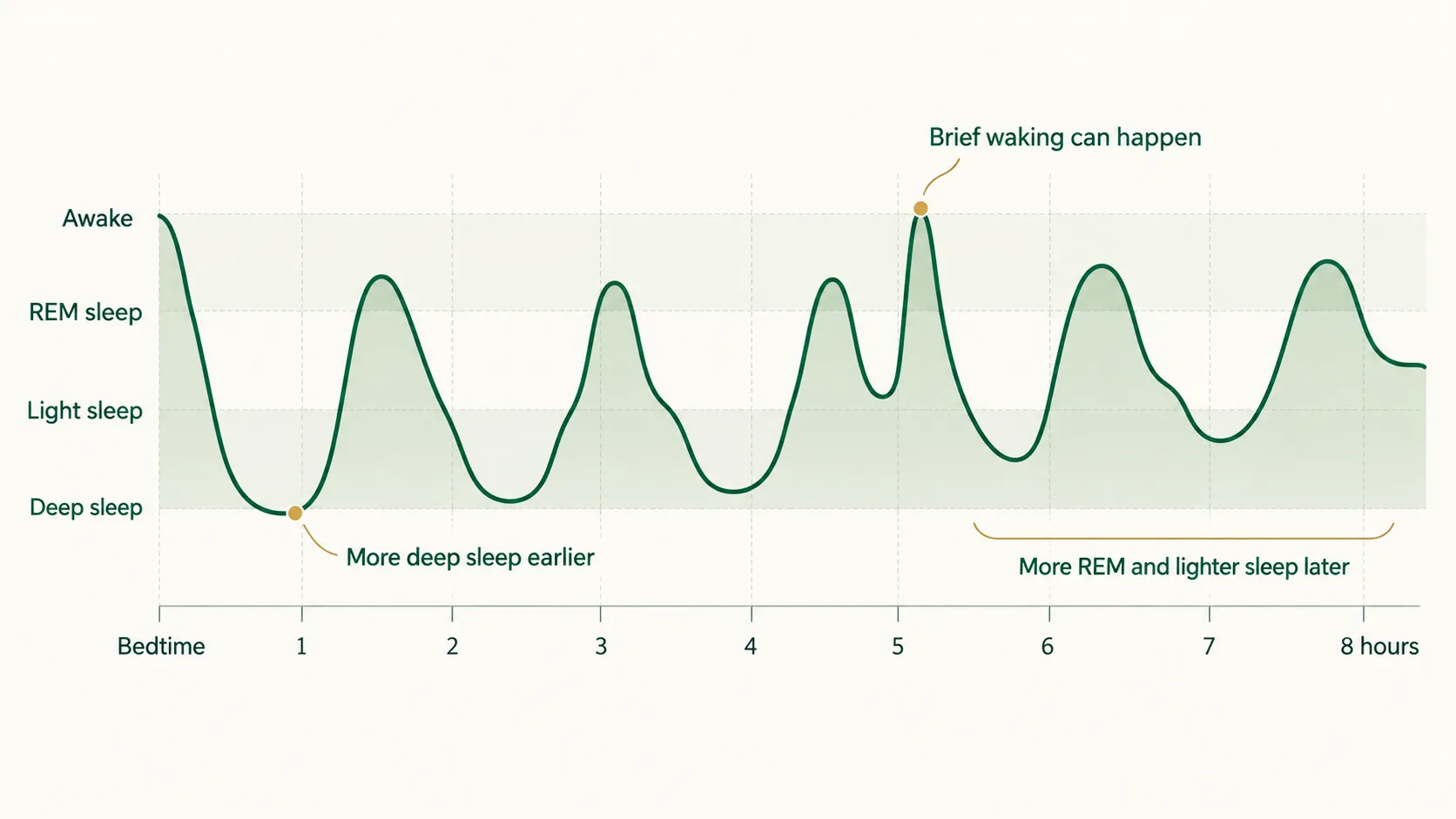
The National Institute of Neurological Disorders and Stroke explains that deep sleep tends to occur more in the first half of the night, while REM periods become longer as the night progresses. Waking up in the night only becomes a problem when you wake up repeatedly, stay awake for long stretches or start feeling anxious about whether you will ever get back to sleep. It is also a concern if you consistently wake up hours before your alarm and feel irritable, tired or foggy the next day. If this is happening regularly, ask yourself: Are these wake-ups leaving you tired the next day?
Why Do I Keep Waking Up at 3 AM?
Waking up at three in the morning is not a medical diagnosis. If you usually go to bed around 10 or 11 pm, 3 am puts you a few hours into your sleep. By that point in the night, you are generally moving through sleep stages in which longer periods of REM sleep become more common. This can make brief awakenings easier to notice. It also means you can ignore a lot of the viral advice you see online. Routinely waking at 3 am does not automatically mean your cortisol is broken, your liver is detoxing or your blood sugar has crashed. If you wake up at roughly the same time every night, look at the habits around your sleep environment and daily routine rather than obsessing over the time on the clock.
Also read: How Much Deep Sleep Do Adults Need?
Common Causes of Waking Up at Night

If you are trying to figure out why your sleep is constantly interrupted, the culprit is usually one of these common disruptors. Identifying the cause is the first step toward understanding what may be breaking your sleep.
1. Stress, Anxiety and Overthinking
Sometimes your body is exhausted, but your brain refuses to clock out. Work deadlines, family issues, financial worries or health concerns can make it hard to stay asleep. The pattern usually begins with a brief, normal awakening. However, once you check the time and realise you only have three hours before your alarm, your brain kicks into high gear. Suddenly, this normal break in sleep turns into anxiety, which is why looking at the clock can make the middle of the night much more frustrating.
2. Blood Sugar Fluctuations
If you have diabetes and use insulin or certain glucose-lowering medicines, low blood sugar during the night can sometimes wake you with symptoms such as sweating, shakiness, hunger, a fast heartbeat or anxiety. The CDC explains that nighttime hypoglycaemia is particularly relevant for people at risk of low blood sugar and can be influenced by factors such as medicines, physical activity and alcohol. If you do not have diabetes or use glucose-lowering medicine, waking up hungry or restless does not automatically mean your blood sugar has crashed. Heavy meals and alcohol close to bedtime can still disturb sleep, but there can be several reasons for that.
3. Alcohol and Afternoon Caffeine
Alcohol can make you feel sleepy at first, which is why a nightcap can seem like it helps you sleep. But it can disrupt sleep later in the night and leave the second half more broken, making early-morning wake-ups more likely. Caffeine can hang around for hours too. A coffee, iced tea or energy drink in the late afternoon may still be keeping your brain alert when you wake up at 2 am.
4. Hormonal Changes and Menopause
For women in perimenopause or menopause, middle-of-the-night waking is common. Hormonal changes can contribute to hot flashes and night sweats that jolt you awake. Mood changes and more frequent bathroom trips can add extra hurdles to getting a full, uninterrupted night of rest.
5. Frequent Bathroom Trips
Waking up to use the bathroom can become more common as we get older. However, getting up multiple times could be tied to how much fluid you drink before bed, alcohol consumption, certain medicines or an underlying health issue. There is also an interesting trick the brain plays: sometimes your bladder didn’t actually wake you up. You woke up for a different reason, realised you were awake and figured you might as well use the bathroom.
6. Poor Sleep Environment
Not every sleep issue comes from inside your body. You might be waking up because the room gets too warm, a partner tosses and turns or the early morning light creeps through the blinds. This is easy to miss because by the time you are fully awake, the noise or temperature change might have already stopped. Keeping your room cool, dark and quiet can remove some of these potential sleep disruptions.
7. Sleep Apnea and Breathing Issues
Sometimes, frequent wake-ups are caused by an actual sleep disorder rather than a poor bedroom environment. With obstructive sleep apnea, your airway repeatedly narrows or closes while you sleep, causing your breathing to pause. The National Heart, Lung, and Blood Institute lists loud snoring, breathing that starts and stops, gasping for air, dry mouth and daytime tiredness among possible symptoms. Many people do not realise this is happening because they may not fully remember the awakenings, so if a partner tells you that you stop breathing, gasp or snore heavily in your sleep, it is worth getting properly assessed.
When Does Nighttime Waking Become Insomnia?
Waking up at night occasionally does not automatically mean you have insomnia. But if you are constantly waking up, staring at the ceiling and failing to fall back asleep for at least three nights a week over at least three months, particularly when the problem affects how you function during the day, it may fit the pattern of chronic sleep-maintenance insomnia. If this pattern is making you irritable, unmotivated and fatigued during the day, basic bedtime hacks probably will not fix it.
Cognitive Behavioural Therapy for Insomnia, usually called CBT-I, is the most strongly recommended treatment approach for chronic insomnia. The National Center for Complementary and Integrative Health describes multicomponent CBT-I as the treatment most strongly recommended for insomnia. It works on the thoughts, habits and behaviours that can keep sleep problems going rather than simply trying to make you feel sleepy for one night.
What to Do When You Wake Up and Can’t Fall Back Asleep

If you wake up in the middle of the night and can’t fall back asleep, don’t lie there fighting it. A few simple changes can help you relax and let sleep come back on its own.
Don’t force yourself to sleep: The harder you try, the more frustrated you can get. If you’ve been awake for what feels like about 20 minutes, get out of bed. You don’t need to check the clock.
Keep the lights low and do something quiet: Read a few pages of a book or do something calm and a little boring until you feel sleepy again.
Stay away from your phone, TV and work: Bright light and anything mentally stimulating can wake you up even more when you’re trying to get back to sleep.
Go back to bed when you feel sleepy: This helps your brain connect your bed with sleeping rather than lying awake and getting frustrated.
How to Reduce Waking Up in the Middle of the Night
Instead of changing your entire routine overnight, look for small patterns you can fix to improve your sleep hygiene.
Hide the clock: Watching the minutes tick by only increases sleep anxiety. Turn your clock around or put your phone face down out of reach so you aren’t tempted to calculate how much sleep you are losing.
Limit late-day stimulants: Try cutting off caffeine by the early afternoon and going a few nights without any alcohol before bed. You may start to see whether either one is contributing to broken sleep.
Balance your evening meals: Avoid heavy, spicy or sugary foods right before bed if they tend to leave you uncomfortable. A light snack may be easier if you are genuinely hungry.
Keep a simple sleep diary: For a week, jot down when you went to bed, when you woke up in the night and what you ate or drank that day. You may spot a pattern you wouldn’t have noticed otherwise.
Do You Need Melatonin or Magnesium?
Not automatically. Waking up in the middle of the night does not mean you have a magnesium deficiency, and melatonin is not a general solution for staying asleep. Melatonin has a clearer role in sleep timing problems such as jet lag, while evidence for magnesium as a general insomnia treatment remains limited. The NCCIH review of complementary approaches for sleep notes that research on magnesium for insomnia is limited and inconsistent, while melatonin may be useful for some circadian-related sleep problems but has not consistently improved time awake during the night. Some people use supplements as part of a wind-down routine, but they should not replace good sleep habits or a doctor's visit if an underlying medical issue is waking you up.
Also read: Melatonin vs Magnesium for Sleep: Which One Should You Choose?
When to See a Healthcare Professional
You should speak to a healthcare professional if your nighttime waking happens consistently for weeks or months and leaves you dangerously tired while driving or working. It is also important to seek medical advice if your sleep disruptions come with loud snoring, gasping for air, physical pain or severe anxiety. At the end of the day, the time on the clock is just a number. Instead of trying to decode why you wake up at exactly 3 am, look at your daily habits, your stress levels and your sleeping environment. A few practical changes may help, but persistent waking deserves a proper look at what is causing it.
Sources
National Institute of Neurological Disorders and Stroke: Understanding Sleep
Centers for Disease Control and Prevention: Low Blood Sugar (Hypoglycemia)
National Heart, Lung, and Blood Institute: Sleep Apnea Symptoms
National Center for Complementary and Integrative Health: Magnesium Supplements for Sleep Disorders
Medical Disclaimer: This article is for general educational purposes only and is not a substitute for medical advice, diagnosis or treatment. Persistent sleep disruption can have many causes. Speak with a qualified healthcare professional if nighttime waking continues, affects your daytime functioning or occurs with breathing problems, significant pain or other concerning symptoms.
Continue this topic
Connected guides, ingredient explainers, product context, and tools chosen from this article's topic cluster.
Sleep quality, magnesium, stress, recovery, evening routines
Relevant for daily micronutrient coverage alongside sleep and stress routines.
Magnesium glycinate and magnesium citrate are two common supplement forms. Here is how they differ, what the evidence actually supports and which may fit your needs better.
Vitamin D deficiency can cause bone pain and muscle weakness, but that does not mean every aching joint is caused by low vitamin D. Here is how to tell the difference.
joint stiffness after sitting: a practical Aora guide to evidence, label checks, safety cautions, and when supplements make sense.
Quick questions
1. Why Do I Wake Up at the Same Time Every Night?
Your sleep follows repeating cycles, and you may be easier to wake during some parts of the night. If something in your routine also happens at roughly the same time, such as a room becoming warmer, outside noise, alcohol wearing off or needing the bathroom, you may start noticing a very consistent pattern. The time itself usually does not point to one specific medical cause.
2. Why Can I Fall Asleep Easily but Wake Up a Few Hours Later?
Falling asleep and staying asleep are not exactly the same problem. Stress, alcohol, caffeine, pain, menopause, sleep apnea, bathroom trips and your sleep environment can all interrupt sleep after you have fallen asleep normally. If this keeps happening and you struggle to return to sleep, it may fit a sleep-maintenance pattern rather than a problem with falling asleep.
3. Why Do I Wake Up at 3 AM and Can’t Go Back to Sleep?
There is nothing medically unique about 3 am. You may simply be waking during a lighter part of your sleep, and once you notice the time, worry about being awake can make it harder to fall asleep again. Alcohol, stress, temperature, noise, pain and bathroom trips can also create a repeated pattern.
4. Can Sleep Apnea Wake Me Up Even If I Don’t Remember Gasping?
Yes. Sleep apnea can cause repeated brief arousals during the night, and you may not remember each one. A partner may notice loud snoring, gasping or pauses in breathing before you recognise the problem yourself. Significant daytime sleepiness, morning headaches or dry mouth can also be clues.
5. Why Do I Keep Waking Up to Pee at Night?
Sometimes a full bladder wakes you. Other times, you may wake for another reason and then notice that you could use the bathroom. Drinking a lot of fluid close to bedtime, alcohol, some medicines, ageing and certain health conditions can all contribute. If you are getting up several times most nights, especially if this is a new pattern, it is worth discussing with a healthcare professional.
9 linked sources checked against our citation and claim-safety process.
Reviewed 24 Sept 2026 for supplement-claim and medical-disclaimer boundaries.
Recommended from the Aora range
Nutrivit Plus | Supports Immune Function & Energy Metabolism
19 Essential Nutrients with Zinc, Magnesium and Vitamins B Complex, C and D3
- Multivitamin
- Daily Foundation
- Made in India
From₹690.00
Try Aora - free
Put this article to work on you.
Health and safety notice
- This article is educational. It is not medical advice and is not a substitute for guidance from a qualified healthcare provider. Consult a physician before starting any supplement, especially during pregnancy or breastfeeding, with a medical condition, or while on medication.
- FSSAI compliance: Health supplements and nutraceuticals are not intended for medicinal use. Any supplement-related information is provided to describe nutritional or physiological support and should not be interpreted as a claim to diagnose, treat, cure, or prevent any disease. FSSAI regulates health supplements and nutraceuticals separately from medicinal products.
Read our full medical disclaimer and editorial policy.
Sources and editorial standards
- 1ninds.nih.gov
- 2cdc.gov
- 3National Heart, Lung, and Blood Institute
- 4nccih.nih.gov
- 5National Institute of Neurological Disorders and Stroke: Understanding Sleep
- 6Centers for Disease Control and Prevention: Low Blood Sugar (Hypoglycemia)
- 7National Heart, Lung, and Blood Institute: Sleep Apnea Symptoms
- 8National Center for Complementary and Integrative Health: Sleep Disorders and Complementary Health Approaches
- 9National Center for Complementary and Integrative Health: Magnesium Supplements for Sleep Disorders
Supplement content is educational only and should not replace medical advice from a qualified clinician. Product mentions are reviewed for claim safety before publication.
Keep reading

Magnesium Glycinate vs Citrate: What’s the Difference and Which Should You Choose?
Aora editorial · 24 Sept 2026

Can Vitamin D Deficiency Cause Joint Pain? What the Evidence Says
Aora Research Team · 18 Sept 2026

Joint Stiffness After Sitting: Why It Happens and What Can Help
Aora Research Team · 11 Sept 2026