Ashwagandha Benefits and Side Effects: What the Trials Show
Gummies, cortisol reels and sleep blends. What ashwagandha trials really show for stress and sleep, the liver and thyroid warnings and how to choose safely.

In this article(12 sections)
- What is ashwagandha?
- What do the trials show for stress and anxiety?
- Does ashwagandha help you sleep?
- Does ashwagandha really boost testosterone, lower cortisol or help with weight loss?
- Ashwagandha side effects you should know
- The liver injury reports
- Thyroid effects
- Who should avoid it
- How to choose an ashwagandha product
- How long should you try it?
- Stress first, herb second
- Sources
Ashwagandha seems to be everywhere lately. You'll find it in stress-relief gummies, sleep supplements and reels claiming it can fix your cortisol levels in just a week. At home, you might know it as the bitter powder your mother or grandmother mixed into warm milk. But how much of what you hear about it is actually true? When it comes to ashwagandha benefits and side effects, the research gives us a mixed picture. Small studies suggest that ashwagandha root extract may help reduce stress and anxiety and improve sleep over several weeks. But the evidence is still limited, and claims about weight loss, testosterone and quick cortisol fixes go much further than the research supports. There are safety concerns too, including rare cases of liver injury and possible effects on thyroid function. So before adding ashwagandha to your routine, it's worth understanding what it may help with, what remains uncertain and who should avoid it.
What is ashwagandha?
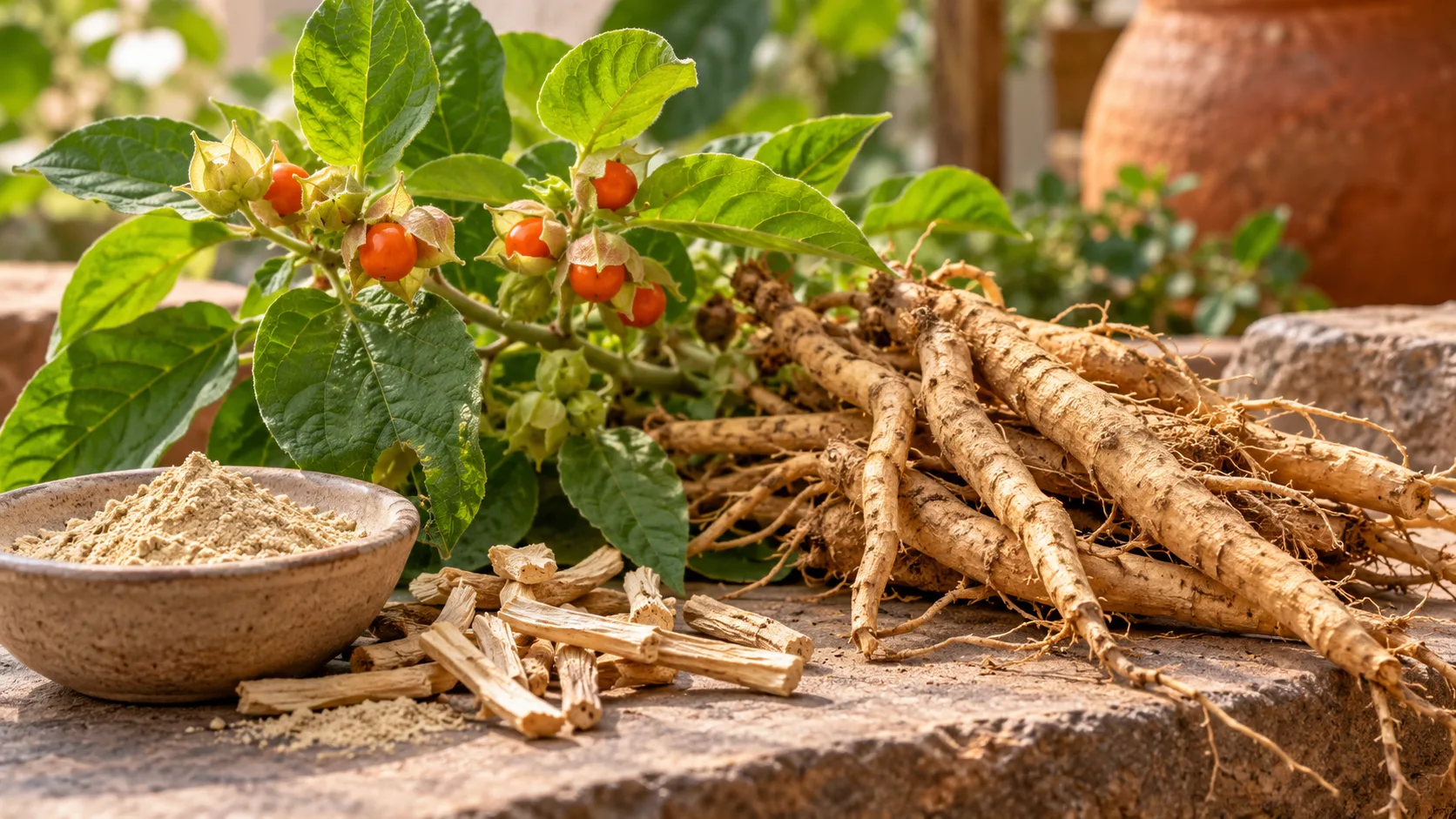
Ashwagandha is Withania somnifera, an evergreen shrub that grows in India, Africa and the Middle East. It is sometimes called Indian ginseng. According to the US National Center for Complementary and Integrative Health (NCCIH), it has been used in Ayurvedic medicine for thousands of years. Its active compounds are called withanolides. Modern supplements use the root, the leaf or a mix of both. NCCIH notes they are promoted mainly for stress, sleep, male fertility and sports performance.
What do the trials show for stress and anxiety?
A recent summary is a 2025 review in BJPsych Open. It pooled 14 randomised trials with 360 people on ashwagandha and 353 controls, mostly adults with anxiety disorders. The median dose was 600 mg a day. The median trial lasted 8 weeks, with a range of 6 to 12 weeks. Eight of the 14 trials were done in India. On paper, the results look promising. People taking ashwagandha reported greater improvements in stress, anxiety and sleep quality than those in the comparison groups. But the researchers were cautious about the findings. They rated the evidence as low quality because there were only a few trials, the results differed between studies, and some participants may have known whether they were taking ashwagandha or a placebo. This makes it harder to know how much of the improvement came from the supplement itself.
NCCIH reads the same body of work a little more cautiously. It says some ashwagandha preparations may help insomnia and stress but that the effect on anxiety is still unclear. In practice, trial participants filled in questionnaires about how stressed or anxious they felt. Their scores went down more than with a dummy pill. That is a real but modest signal.
Does ashwagandha help you sleep?
A 2021 meta-analysis in PLoS One looked at five trials with 400 adults. It found a small but significant effect on overall sleep. The benefit was clearer in people diagnosed with insomnia, at doses of 600 mg a day or more and when people took it for 8 weeks or longer. Some participants also reported feeling more alert when they woke up. But that doesn't mean ashwagandha works like a sleeping pill or will help you fall asleep tonight. If late-night scrolling or drinking chai close to bedtime is keeping you awake, start by changing those habits.
Also read: Melatonin vs Magnesium: Which Is Better for Sleep?
Does ashwagandha really boost testosterone, lower cortisol or help with weight loss?
Some studies suggest that ashwagandha may affect testosterone levels, but the results aren't as impressive as they might sound. In one trial, 57 overweight men aged 40 to 70 took either ashwagandha extract or a placebo for eight weeks. Testosterone levels rose 14.7% more in the ashwagandha group, although they remained within the normal range. More importantly, the men didn't report any meaningful improvement in energy, fatigue or sexual well-being compared with the placebo group. So, while the hormone levels changed, the participants didn't necessarily feel any different. The NCCIH also considers the evidence for testosterone and sperm quality limited.
What about weight loss? There's even less evidence to support that claim. According to the NCCIH, the strongest research on ashwagandha relates to stress and sleep. There isn't enough reliable evidence to support its use for weight loss, sports performance, diabetes, memory, menopause or female fertility. Then there's the popular claim that ashwagandha can "reset cortisol". Some studies have found reductions in cortisol levels or reported stress after several weeks of use. But lowering a stress score or a cortisol measurement doesn't mean your body's stress-response system has been reset. There's currently no good evidence that ashwagandha can deliver the quick cortisol fixes often promised on social media.
Ashwagandha side effects you should know
Ashwagandha is generally well tolerated in short-term studies, but that doesn't mean it's free from side effects. According to the NCCIH, some people may experience drowsiness, stomach upset, diarrhoea or vomiting. A 2025 review found no significant difference in side effects or treatment tolerability between people taking ashwagandha and those in the comparison groups. None of the participants in these trials stopped treatment because of a serious side effect. However, most studies have only looked at short-term use. The NCCIH suggests ashwagandha may be safe for up to three months, but its safety over several years remains unclear. There are also some less common but more serious risks worth knowing about, particularly those involving the liver and thyroid.
The liver injury reports
Ashwagandha is generally well tolerated in short-term studies, but rare cases of liver injury have been reported. LiverTox, a US National Institutes of Health resource, identifies ashwagandha as a possible cause of liver injury, sometimes accompanied by jaundice. An Indian study published in 2023 reported 23 patients with liver injury linked to ashwagandha use between 2019 and 2022. Eight cases involving single-ingredient products were examined in detail. Five of these patients already had chronic liver disease, and three developed acute liver failure and died. Tests of the products found no evidence of contamination or adulteration.
These were serious cases, but they don't tell us how often liver injury occurs among everyone taking ashwagandha. Other patients in the series recovered, although some had prolonged symptoms. The findings suggest that people with existing liver disease should be particularly cautious. If you notice yellowing of your skin or eyes, dark urine, pale stools or unusual itching while taking ashwagandha, stop the supplement and seek prompt medical advice. The NHS recommends urgent assessment for jaundice.
Also read: Can fatty liver can be reversed? What Helps and What the Research Says.
Thyroid effects
NCCIH says ashwagandha is not recommended for people with thyroid disorders. It may also interact with thyroid hormone tablets. If you take thyroxine for hypothyroidism, do not add ashwagandha on your own.
Who should avoid it
NCCIH advises against it, or warns of medicine interactions, for these groups:
Pregnant or breastfeeding women
People about to have surgery
People with autoimmune conditions
People with thyroid disorders
People on sedatives or anti-seizure medicines
People on medicines for diabetes or high blood pressure
People on immunosuppressants, which are medicines that dampen the immune system
People on thyroid hormone medicines
Men with hormone-sensitive prostate cancer
Add anyone with existing liver disease to that list, based on the Indian case series above.
How to choose an ashwagandha product

If you have none of the conditions above and want to try it for stress or sleep, be choosy.
Pick a single-ingredient root extract. Blends with ten herbs make it hard to know your dose or to tell what caused a side effect.
Check standardisation. A good label states the withanolide content per capsule, not just "ashwagandha 500 mg".
Match the trial dose. The trials above used a median of 600 mg of extract a day. More is not better.
Read the Indian label. Look for an FSSAI licence number on a supplement or an AYUSH licence on an Ayurvedic medicine, plus batch number, expiry date and the manufacturer's address.
Skip gummies loaded with sugar and anything promising testosterone, fat loss or a "cortisol detox".
Do not mix it with sleeping pills or alcohol.
If you already take several products, our guide to auditing your supplement routine helps you cut overlaps first.
How long should you try it?
Give it a defined trial. The pooled studies ran 6 to 12 weeks, so 8 weeks is a fair test. Before you start, write down one thing you want to change, such as how long you take to fall asleep or how wound up you feel by evening. If nothing has shifted after 8 weeks, stop. The NCCIH suggests that ashwagandha may be safe for short-term use of up to three months, but we don't yet know enough about its long-term safety. If you're thinking of taking it for longer, speak to your doctor first. If you notice yellowing of your skin or the whites of your eyes while taking ashwagandha, stop using it and seek urgent medical attention. These can be signs of jaundice, which the NHS advises should be checked promptly.
Stress first, herb second
Ashwagandha works best, if at all, on top of the basics: a fixed sleep time, daylight in the morning, some movement, less late-evening caffeine and someone to talk to. See a doctor or a counsellor if anxiety worries you or is not getting better. That is not something an herb should carry alone. The herb your grandmother stirred into milk may well help some people sleep and feel calmer. Treat it like any medicine with real effects, which means a short trial, a sensible dose and a clear reason to stop.
Sources
Medical Disclaimer: This article is for general information and is not a substitute for advice from your doctor. Speak to a qualified healthcare professional before starting any supplement, especially if you are pregnant, breastfeeding or taking medication.
Continue this topic
Connected guides, ingredient explainers, product context, and tools chosen from this article's topic cluster.
Sleep quality, magnesium, stress, recovery, evening routines
Relevant for daily micronutrient coverage alongside sleep and stress routines.
Skipped breakfasts, midnight noodles and cup after cup of chai. A calm guide to eating, drinking and sleeping well through exam season.
Getting sick often does not automatically mean you have a weak immune system. Exposure, poor sleep, stress, smoking, nutrition and some health conditions can all play a part.
Waking once or twice during the night is not always a problem. But if you are regularly wide awake at 2 or 3 AM, the pattern may offer clues about what is disturbing your sleep.
Quick questions
Should I stop ashwagandha before surgery?
Ashwagandha is not recommended before surgery. The US National Center for Complementary and Integrative Health says it is not recommended for people who are about to have surgery. Tell your surgeon and anaesthetist about every herb and supplement you take, ideally at the first consultation, so they can tell you when to stop.
Can teenagers take ashwagandha for exam stress?
It is better not to. The trials were done in adults and Germany's risk agency has advised that children should avoid it. For exam stress, regular sleep, breaks, meals and a trusted adult to talk to are safer first steps. If anxiety is stopping your child from studying or sleeping, speak to a doctor.
Is ashwagandha powder with milk the same as a capsule?
Not quite. Traditional churna is whole dried root, while most trials used concentrated root extracts at a measured dose. With loose powder you cannot easily tell how much of the active compounds you are getting. The same safety cautions apply to both.
Is ashwagandha safe if I am trying to get pregnant?
NCCIH says ashwagandha should be avoided during pregnancy, so avoid it unless your doctor advises otherwise. European regulators also raised concerns about its effects on sex hormones. Since many women do not know they are pregnant in the first few weeks, stopping it while trying to conceive is the cautious choice.
Do I need a liver test before starting ashwagandha?
There is no standard rule. If you already have fatty liver, drink alcohol regularly or take other medicines that affect the liver, ask your doctor first. They may suggest a liver function test before and during a short trial.
8 linked sources checked against our citation and claim-safety process.
Reviewed 22 Oct 2026 for supplement-claim and medical-disclaimer boundaries.
Recommended from the Aora range
Aora Nutrivit Plus
19 Essential Nutrients with Zinc, Magnesium and Vitamins B Complex, C and D3
- Multivitamin
- Daily Foundation
- Made in India
From₹690.00
Try Aora - free
Put this article to work on you.
Health and safety notice
- This article is educational. It is not medical advice and is not a substitute for guidance from a qualified healthcare provider. Consult a physician before starting any supplement, especially during pregnancy or breastfeeding, with a medical condition, or while on medication.
- FSSAI compliance: Health supplements and nutraceuticals are not intended for medicinal use. Any supplement-related information is provided to describe nutritional or physiological support and should not be interpreted as a claim to diagnose, treat, cure, or prevent any disease. FSSAI regulates health supplements and nutraceuticals separately from medicinal products.
Read our full medical disclaimer and editorial policy.
Sources and editorial standards
- 1it has been used in Ayurvedic medicine for thousands of years
- 214 randomised trials with 360 people on ashwagandha and 353 controls
- 3a small but significant effect on overall sleep
- 4LiverTox
- 5Indian study published in 2023
- 6NHS recommends urgent assessment for jaundice
- 7A randomized, double-blind, placebo-controlled, crossover study examining the hormonal and vitality effects of ashwagandha in aging, overweight males (American Journal of Men's Health, 2019)
- 8Ashwagandha: Is It Safe? Part 1: A Regulatory Review (Phytotherapy Research, 2025)
Supplement content is educational only and should not replace medical advice from a qualified clinician. Product mentions are reviewed for claim safety before publication.