
Weakness After Fever: Why It Lingers and How to Recover
Fever gone but stairs still feel like a hill? Why weakness after fever lingers, how to rebuild gently and the signs that need a doctor.

In this article(17 sections)
- Why do you feel so weak after the fever has gone?
- Your muscles lost ground while you were in bed
- You ate very little for a week or more
- Your sleep is still off
- Your blood may be running low
- The infection itself can leave fatigue behind
- How long does weakness after viral fever last?
- How to recover from weakness after viral fever
- Eat little and often, with protein at every meal
- Keep fluids steady
- Walk first, gym later
- Protect your sleep
- Pacing: when "push through it" is the wrong advice
- What to check with your doctor
- Red flags after dengue and when to see a doctor
- Give your body time
- Sources
The fever broke eight days ago. The doctor looked at your reports, said the platelets were back up and told you to rest. You went back to the office on Monday. On Wednesday evening, you climbed the stairs to your second-floor flat with a bag of vegetables and had to sit on the landing to catch your breath. Your legs felt like wet cotton. Your mother made khichdi and you ate half the bowl. This weakness after fever is something many people feel and few expect. If this is you, the first thing to know is that weakness after fever is common. The infection may be gone, but your body is still paying the bill for it. After dengue, the WHO says tiredness can last for several weeks. In an Australian study of three different infections, about one in eight people still had disabling fatigue at six months. A few warning signs mean you should get medical help.
Why do you feel so weak after the fever has gone?

A normal report means the infection has cleared. It does not mean your muscles, appetite and sleep have caught up. Several things pile on top of each other.
Your muscles lost ground while you were in bed
Muscles lose strength fast when they stop moving. In a small study of 11 healthy adults in their sixties kept on bed rest for 10 days, knee strength dropped by about 13 per cent and stair climbing power by about 14 per cent. Their fitness, measured as maximum aerobic capacity, fell by 12 per cent. These were well people who ate enough calories and protein throughout. This loss of fitness from lying still is called deconditioning. It can make the stairs feel like a hill.
You ate very little for a week or more
Fever burns energy. A poor appetite means you take in less of it. Many people live on rice kanji, biscuits and glucose water while ill. That keeps you going but is short on protein. Your body can then draw on its own muscle to fill the gap.
Your sleep is still off
Night sweats, body ache, cough and long daytime naps all break up your sleep. The odd-hours napping habit often stays after the illness. Poor sleep on its own makes you feel heavy and slow. Our piece on how much deep sleep adults need explains why the deeper stages matter for feeling rested.
Your blood may be running low
Dengue can lower blood counts. Heavy periods during an illness, or simply eating poorly for weeks, can push haemoglobin down. Low haemoglobin means less oxygen reaches your muscles, which shows up as breathlessness on effort and a racing heart on the stairs. If you are a woman, our guide to iron deficiency explains how low iron stores can build up quietly, even before a fever.
The infection itself can leave fatigue behind
Some fatigue after an infection is not about muscles or food. The WHO notes in its dengue fact sheet that people may feel tired for several weeks after recovering. A Singapore study interviewed 127 patients two months after a dengue hospital stay. Fatigue at that point was more likely in older patients and in women.
How long does weakness after viral fever last?
Recovery after a viral infection is different for everyone. Some people feel better within a few weeks, while others take longer, especially after a severe illness. Tiredness after dengue, for example, can continue for several weeks even after the fever has gone. An Australian study of 253 people recovering from glandular fever, Q fever and Ross River virus found that 12% still experienced severe fatigue, body pain, difficulty concentrating and low mood six months later. Those who had been more seriously ill at the start were more likely to have lingering symptoms. The study looked at specific infections, so the findings may not apply to every viral illness. But it shows why recovery doesn't always follow a fixed timeline. If you're still struggling weeks after your fever has cleared, don't simply push through it. Speak to your doctor, especially if your symptoms aren't improving.
How to recover from weakness after viral fever
The goal is to give your body raw material and time, then load it gently. Here is a simple plan for an Indian home.
Eat little and often, with protein at every meal
Your appetite may still be small, so do not wait for three big meals. Aim for five or six small ones. Add a protein source to each:
Moong dal khichdi with a spoon of ghee
Curd rice, or a bowl of plain curd with lunch
Two boiled eggs, or egg bhurji with a soft roti
Paneer bhurji or a few pieces of paneer in soup
Besan chilla, idli with sambar, or ragi porridge made with milk
Chicken or fish soup if you eat non-vegetarian food
Add fruit you can manage, such as banana, papaya or a seasonal fruit, for vitamins and easy energy. If chewing feels like work, soft and warm food is fine. Older parents who are not eating much may need closer watching. Our guide on loss of appetite in older adults covers when that becomes a concern.
Keep fluids steady
Fever and sweating take water and salt with them. Plain water, nimbu pani with a pinch of salt, coconut water, buttermilk and thin dal all help. If you still have loose motions or vomiting, ORS is the safer choice. Dark yellow urine is a sign to drink more.
Walk first, gym later
Start with movement that feels easy, such as a short walk inside the house or in the building compound. Add a little more only if you feel fine the next morning. Light stretching and climbing one flight of stairs slowly count too. Hold off on the gym, running and long badminton sessions until normal daily work no longer tires you. After dengue, ask your doctor before hard exercise. When you return to weights, start well below your usual load and sets, then build up slowly.
Protect your sleep
Go to bed and wake up at about the same time each day. Keep daytime naps short and early in the afternoon. Skip chai and coffee after the afternoon. If a cough or a blocked nose keeps you up, treat that with your doctor's advice so you can rest properly.
Pacing: when "push through it" is the wrong advice
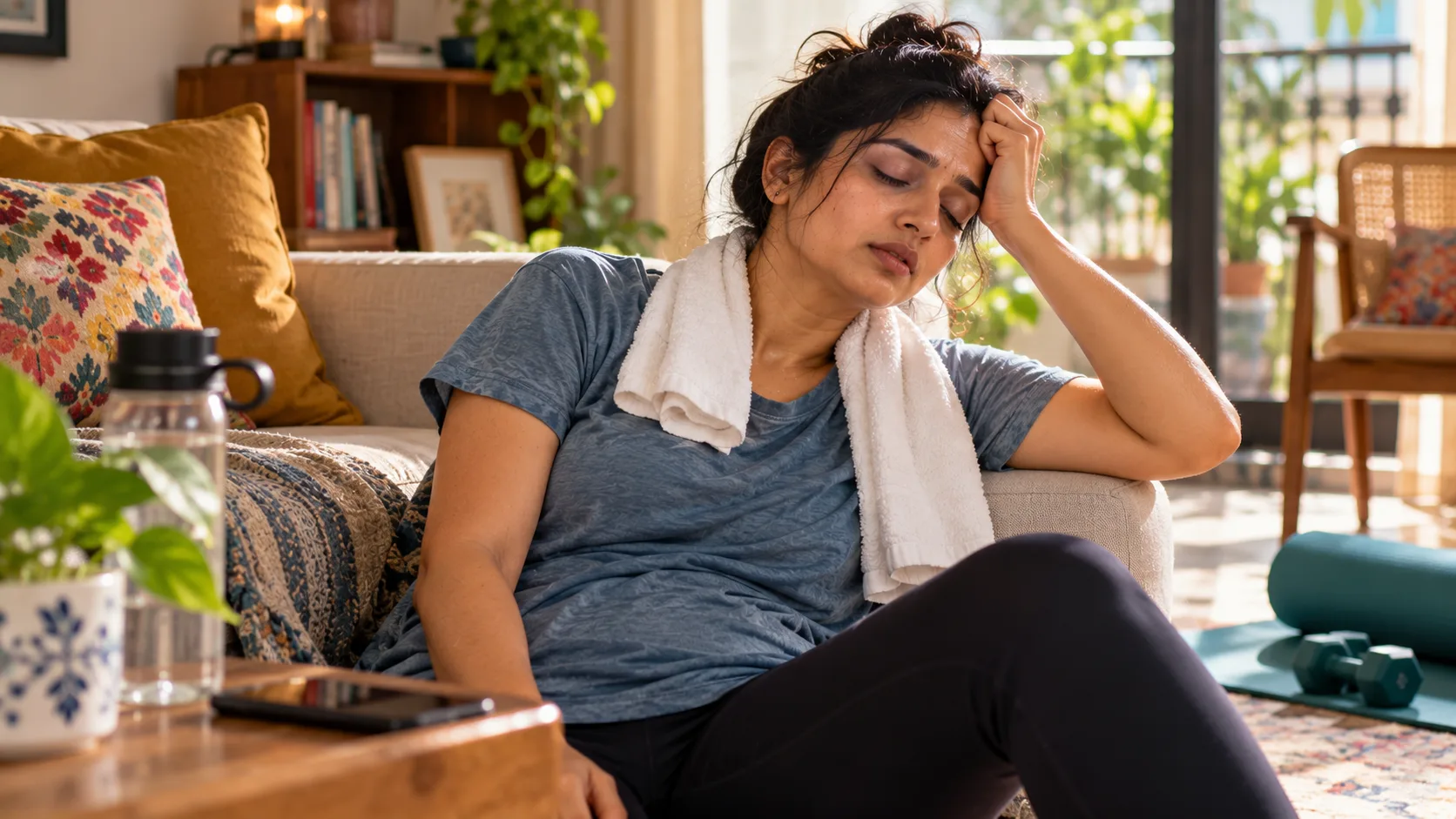
Many people get stronger with gentle, gradually rising activity. But some people notice a different pattern. They do a bit more on a good day, feel fine at the time, then crash a day or two later and stay flattened for days. Doctors call this post-exertional malaise, or PEM. The NHS describes PEM as symptoms getting worse after physical or mental activity, possibly taking weeks to get better. It is one of the four main symptoms of ME/CFS, a long-term condition where extreme tiredness can make daily activities like taking a shower or going to work difficult. The NHS says long COVID is when COVID symptoms last longer than 12 weeks. It adds that you may find your symptoms get worse if you are stressed or have been more active.
If this crash pattern sounds familiar, do not keep raising your activity on a fixed schedule. The UK health guideline body NICE advises against graded exercise therapy with fixed increases for ME/CFS. It recommends finding a level that does not worsen symptoms, staying below it for a while and then adjusting up or down as you go. A simple diary of what you did and how you felt the next day helps you and your doctor.
What to check with your doctor
If you are not improving week by week, or you are worried, see your doctor. There is no fixed test panel for tiredness after a fever. When tiredness lingers and ME/CFS is a possibility, the NICE guideline lists tests doctors use to rule out other causes, including:
Full blood count
Liver function
Thyroid function
HbA1c, a test of average blood sugar
Serum ferritin, a measure of iron stores
NICE adds that doctors can use clinical judgement to add tests such as vitamin D, vitamin B12 and folate levels. Your doctor will choose based on your illness and symptoms. Fatigue that started with the fever can also be sitting on top of a deficiency that was already there. Our Aora guide to vitamin B12 deficiency explains its symptoms in more detail. If you are falling ill again and again, rather than recovering slowly from one illness, that is a different question. Our article on why you keep getting sick looks at sleep, stress, diet and the conditions behind frequent infections.
Red flags after dengue and when to see a doctor
After dengue, timing matters. The WHO says the symptoms of severe dengue often come after the fever has gone away. A falling temperature is not always the all clear. The WHO lists these signs:
severe abdominal pain
persistent vomiting
rapid breathing
bleeding gums or nose
fatigue
restlessness
blood in vomit or stool
being very thirsty
pale and cold skin
feeling weak
The WHO says people with these severe symptoms should seek care immediately. After any fever, see a doctor if you are worried, if new symptoms appear or if the tiredness is not getting better. Talk to your doctor too if you keep crashing after small efforts or if you feel low or hopeless.
Give your body time
For many people the return of strength is quiet. One evening you notice you carried the vegetable bag up the stairs without stopping. Until then, eat a little more protein than feels natural, sleep at regular hours, walk a bit each day and let a doctor check you if the tiredness is not lifting.
Sources
Functional impact of 10 days of bed rest in healthy older adults (Journals of Gerontology, 2008)
Post-infectious fatigue syndrome in dengue infection (Journal of Clinical Virology, 2007)
Dengue and severe dengue fact sheet (World Health Organization)
Medical disclaimer: This article is for general information and is not a substitute for advice from your doctor. Speak to a qualified healthcare professional before starting any supplement, especially if you are pregnant, breastfeeding or taking medication.
Continue this topic
Connected guides, ingredient explainers, product context, and tools chosen from this article's topic cluster.
Fatigue, B12, vitamin D, iron, zinc, daily multivitamins
Relevant for daily micronutrient support.
Calf seizing at 3 am? Why night leg cramps happen, how to ease one fast, which medicines can trigger them and the signs that need a doctor.
Folate is in your dal and palak. Folic acid is in the tablet. This guide explains why the tablet matters before pregnancy, how much to take and what MTHFR claims get wrong.
Iron tablets making you sick or constipated? How to time them, what to keep away, what black stools mean and when to recheck your haemoglobin.
Quick questions
Is it normal to feel weak for a month after typhoid?
Tiredness can linger after any long fever. Typhoid often means many days of poor appetite and bed rest. If you are improving week by week, keep eating well, resting and moving gently. If you are worried, new symptoms appear or the tiredness is not getting better, see your doctor.
Can I go to the gym one week after viral fever?
Wait until normal daily work no longer tires you before you return to the gym. Start with lighter weights and shorter sessions than before. After dengue, ask your doctor first so they can check that your blood counts have recovered.
Why do my legs ache and feel heavy after fever?
Muscles lose strength quickly when you lie in bed and eat less, so your legs carry you with less power than before. Throbbing pain and swelling in one leg can be a sign of a blood clot (DVT). The NHS says to get medical help as soon as possible if you think you have DVT. It says to call emergency services if you also feel short of breath or have chest pain.
Which blood tests should I do if I feel tired after fever?
There is no fixed panel. When tiredness lingers and ME/CFS is a possibility, the NICE guideline lists tests such as a full blood count, liver function, thyroid function, HbA1c and serum ferritin. Doctors can add tests such as vitamin D, vitamin B12 and folate. Your doctor will choose based on your illness and symptoms.
Does ORS help with weakness after fever?
ORS replaces water and salts lost through sweating, vomiting or loose motions. It helps if you are still dehydrated, which can make you feel dizzy and weak. It does not rebuild muscle, so you still need food with protein, rest and gentle activity.
7 linked sources checked against our citation and claim-safety process.
Reviewed 22 Oct 2026 for supplement-claim and medical-disclaimer boundaries.
Recommended from the Aora range
Aora Nutrivit Plus
19 Essential Nutrients with Zinc, Magnesium and Vitamins B Complex, C and D3
- Multivitamin
- Daily Foundation
- Made in India
From₹690.00
Try Aora - free
Put this article to work on you.
Health and safety notice
- This article is educational. It is not medical advice and is not a substitute for guidance from a qualified healthcare provider. Consult a physician before starting any supplement, especially during pregnancy or breastfeeding, with a medical condition, or while on medication.
- FSSAI compliance: Health supplements and nutraceuticals are not intended for medicinal use. Any supplement-related information is provided to describe nutritional or physiological support and should not be interpreted as a claim to diagnose, treat, cure, or prevent any disease. FSSAI regulates health supplements and nutraceuticals separately from medicinal products.
Read our full medical disclaimer and editorial policy.
Sources and editorial standards
- 1study of 11 healthy adults in their sixties kept on bed rest for 10 days
- 2dengue fact sheet
- 3Singapore study
- 4Australian study of 253 people
- 5ME/CFS
- 6long COVID
- 7graded exercise therapy with fixed increases for ME/CFS
Supplement content is educational only and should not replace medical advice from a qualified clinician. Product mentions are reviewed for claim safety before publication.