
Seasonal Hair Fall: Why Your Hair Sheds More Some Months
More hair on your comb this month? Why hair sheds in seasonal waves, how to tell it apart from other hair loss and how to support new growth.

In this article(9 sections)
You wake up, brush your hair as usual and notice more strands than expected caught in your comb. A few days later, there's hair on your pillow and more collecting near the shower drain. You haven't changed your shampoo or routine, so why is this suddenly happening? It could be seasonal hair fall, a pattern in which some people experience increased shedding during certain times of the year. Research suggests that hair growth follows seasonal rhythms, although not everyone notices these changes. In many cases, the extra shedding settles naturally as the hair cycle continues. But how do you know whether the weather is playing a role or something else is behind your hair fall? Understanding how your hair grows, why shedding can increase during certain seasons and which changes deserve attention can help you make sense of what's happening without worrying about every strand you lose.
How does the hair cycle work?
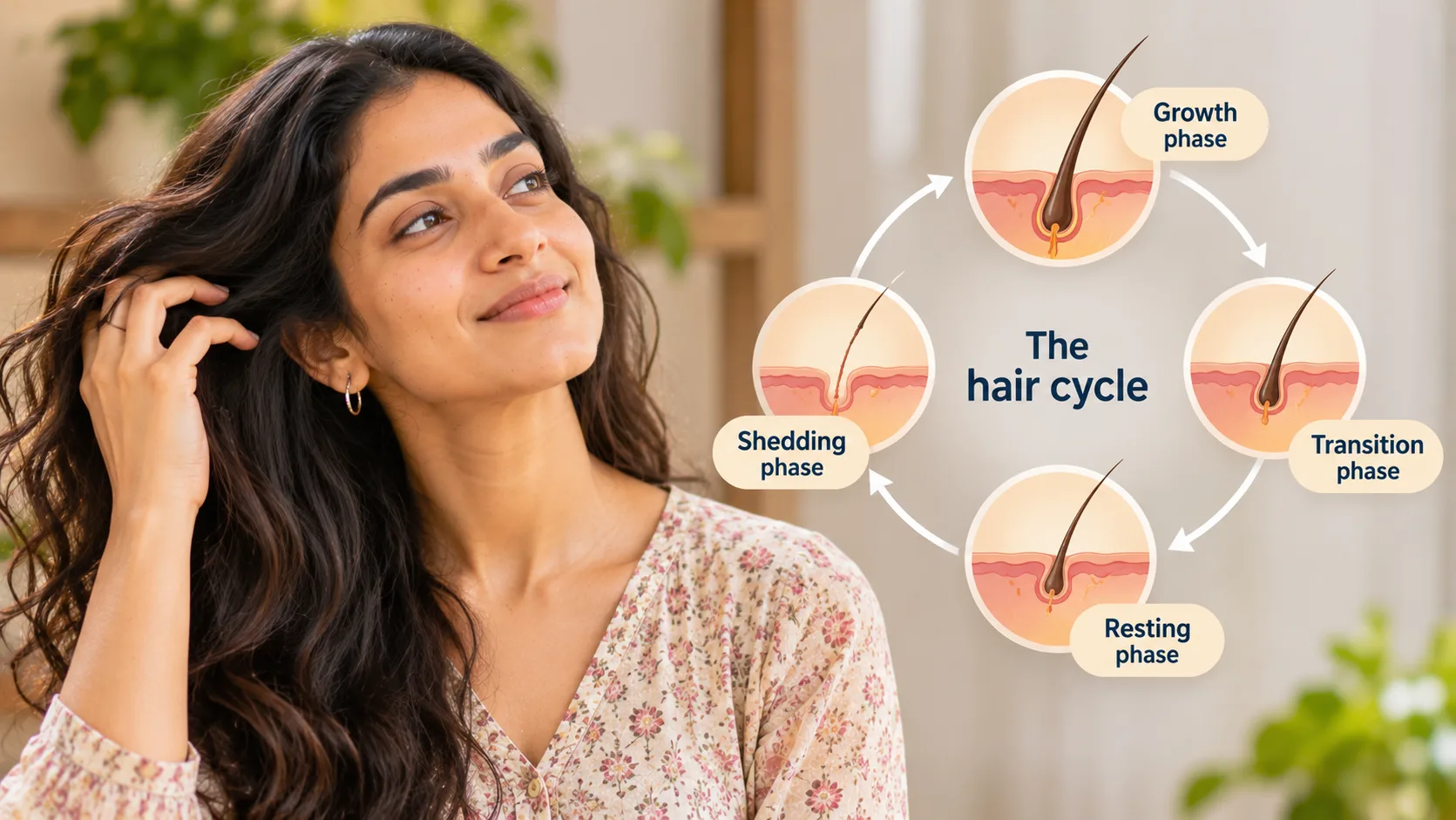
Every strand of hair grows from a tiny structure beneath your scalp called a hair follicle. Hair doesn't grow continuously throughout your life. Instead, each follicle follows a natural cycle with three main stages.
Growing: Most of your hair is in this stage, called anagen. It can last several years, allowing your hair to grow longer.
Resting: Hair growth stops, but the strand remains inside the follicle. This stage is known as telogen.
Shedding: The old strand eventually falls out, making way for a new hair to grow from the same follicle.
Because individual follicles follow their own cycles, you naturally lose some hair every day. According to the American Academy of Dermatology (AAD), shedding around 50 to 100 hairs daily is normal. Here's something interesting about this cycle. When a hair enters its resting phase, it doesn't fall out immediately. It may remain in the follicle for several months before shedding. This delay helps explain why seasonal hair fall may become noticeable weeks or months after changes in the hair growth cycle. The same delay can occur when shedding is triggered by illness, significant stress, sudden weight loss or childbirth. For example, the AAD explains that new mothers may notice increased shedding around two months after delivery, often peaking around four months. Hair usually regains its normal fullness within six to nine months.
When a physical or emotional trigger pushes more hairs than usual into the resting phase, the resulting excessive shedding is called telogen effluvium. The NHS identifies stress, illness, weight loss and iron deficiency among possible causes of temporary hair loss. A review published in Clinical, Cosmetic and Investigational Dermatology also highlights how concerning excessive shedding can be, particularly for women, and why it deserves proper assessment. Seasonal shedding isn't necessarily caused by these same triggers, but understanding the hair growth cycle helps explain why changes in shedding aren't always immediate.
Does hair really shed more in some seasons?
Research suggests it does. The clearest evidence comes from a Swiss study that looked back over six years of records from 823 otherwise healthy women who had come in worried about hair fall. Doctors examined hair samples under a microscope to count how many hairs were in the resting stage at different times of the year. They found a clear yearly pattern, with the highest share of resting hairs in summer and the lowest in late winter. A smaller second peak seemed to appear in spring.
Now add that delay of a few months. If more hairs move into the resting stage in summer, more of them fall out a couple of months later. So the heaviest shedding may show up a few months after the hottest months have passed. A wave of shedding that comes and goes with the seasons is your hair cycle at work, not damage. The AAD notes that hair shedding often stops on its own. Look along your hairline and parting for short new hairs standing up. Those baby hairs are a good sign that the cycle is doing its job.
How to tell seasonal shedding from other hair loss
Seasonal hair fall often follows a temporary pattern, with shedding increasing for a while before gradually returning to normal. But how can you tell whether that's what you're experiencing? Look for these common signs:
You notice more hair falling than usual, but the shedding gradually settles.
Hair sheds from different areas of your scalp rather than one particular spot.
Some fallen strands have a tiny white bulb at one end, which is normal for a shed hair.
Your hairline and parting look much the same as before, without noticeable thinning.
Your scalp appears healthy, without persistent redness, itching or flaking.
However, these signs alone cannot confirm seasonal hair fall. Other types of hair loss can look similar. It's also important to distinguish shedding from breakage. When hair snaps along its length rather than falling from the root, you're dealing with a different problem.
Also read: How can you tell hair shedding from hair breakage? Learn the differences and what they may mean for your hair.
What helps during a shedding season

You cannot stop the natural hair cycle and you do not need to. What you can do is give the new hairs the best start and avoid breaking the ones you have.
Feed the new growth
Hair is made of a protein called keratin and building it takes a steady supply of nutrients. Eat protein at every meal: dal, curd, paneer, eggs, sprouts, fish or chicken. Add iron-rich foods like green leafy vegetables, rajma and chana, with a vitamin C food such as amla or lemon to help your body absorb the iron. Seeds and nuts bring zinc and healthy fats. Our article on whether hair growth supplements work explains how nutrition supports the hair cycle. Aora Chamrose contains biotin and zinc, which support normal hair. It also contains lysine, cysteine, methionine, iron and vitamins A, C, D3, E and B12, along with rosemary, chamomile and jatamansi extracts. It is meant to be taken alongside good meals.
Be gentle with what you have
Use a wide tooth comb and start from the ends, working up
Avoid tight ponytails and buns that pull at the roots
Pat hair dry with a soft cotton towel instead of rubbing
Keep heat styling to a minimum
Oil your scalp if you enjoy it, with a gentle fingertip massage rather than rough rubbing
Our list of ways to prevent hair breakage has more simple habits that protect your hair while the cycle resets.
When should you see a doctor?
The AAD notes that hair shedding often stops on its own. It adds that if a stressor stays with you, shedding can last a long time. People who are under a lot of stress all the time can have long term excessive shedding. The NHS advises seeing a GP if you are worried about your hair loss. It suggests telling the GP if your hair loss is affecting your wellbeing. Hair loss has many causes. The NHS lists illness, stress, weight loss and iron deficiency among the causes of temporary hair loss. The AAD also describes other types of hair loss, including pattern hair loss. If you have heavy periods, ask your doctor whether an iron test makes sense. Our guides to iron deficiency in women and hair loss in women cover the other common reasons.
Your hair has seasons too
Trees drop their leaves and grow them back. Your hair follows a quieter version of the same rhythm. The strands on your comb this month were already resting weeks ago and new ones are already on their way. So eat well, comb gently and keep an eye on your parting for those first short new hairs. When they appear, you will know the season has turned.
Sources
Seasonality of hair shedding in healthy women complaining of hair loss (Dermatology, 2009)
American Academy of Dermatology: Do you have hair loss or hair shedding?
Telogen effluvium: a comprehensive review (Clinical, Cosmetic and Investigational Dermatology, 2019)
Medical Disclaimer: This article is for general information and is not a substitute for advice from your doctor. Speak to a qualified healthcare professional before starting any supplement, especially if you are pregnant, breastfeeding or taking medication.
Continue this topic
Connected guides, ingredient explainers, product context, and tools chosen from this article's topic cluster.
Taking biotin but still experiencing hair fall? Learn why biotin may not help, other possible causes of hair loss and when to see a dermatologist.
Handfuls of hair in the comb four months after your baby arrived? Why postpartum shedding happens, how long it lasts and what is worth checking.
Found white strands in your twenties? What research links to early greying, from genes and low B12 to stress and smoking, plus the tests worth discussing.
Quick questions
Is seasonal hair fall normal?
It can be. A Swiss study of 823 otherwise healthy women found a clear yearly pattern in the hair cycle, with the most resting hairs in summer. Those hairs fall a few months later, so you may notice more shedding a few months after the hottest season.
How long does seasonal hair fall last?
It is temporary and often stops on its own as the hair cycle moves on. The NHS advises seeing a GP if you are worried about your hair loss.
How many hairs a day is normal to lose?
The American Academy of Dermatology says it is normal to shed 50 to 100 hairs a day. During a seasonal wave you may lose more for a short time.
How can I tell seasonal shedding from hair loss?
Seasonal shedding comes in a wave, falls from all over the head and leaves your parting and hairline unchanged. Bald patches, a widening parting or a receding hairline may point to other causes.
What helps hair grow back after a shedding season?
Eat enough protein and iron-rich foods, be gentle when combing and styling and give it time. Short new hairs along your hairline and parting show the cycle is working.
5 linked sources checked against our citation and claim-safety process.
Reviewed 6 Nov 2026 for supplement-claim and medical-disclaimer boundaries.
Recommended from the Aora range
Aora Chamrose
Chamomile, Rosemary & Jatamansi Extract
- Hair Care
- Hair Support
- Made in India
From₹960
Try Aora - free
Put this article to work on you.
Health and safety notice
- This article is educational. It is not medical advice and is not a substitute for guidance from a qualified healthcare provider. Consult a physician before starting any supplement, especially during pregnancy or breastfeeding, with a medical condition, or while on medication.
- FSSAI compliance: Health supplements and nutraceuticals are not intended for medicinal use. Any supplement-related information is provided to describe nutritional or physiological support and should not be interpreted as a claim to diagnose, treat, cure, or prevent any disease. FSSAI regulates health supplements and nutraceuticals separately from medicinal products.
Read our full medical disclaimer and editorial policy.
Sources and editorial standards
- 1American Academy of Dermatology (AAD)
- 2NHS
- 3review published in Clinical, Cosmetic and Investigational Dermatology
- 4a clear yearly pattern, with the highest share of resting hairs in summer and the lowest in late winter
- 5types of hair loss
Supplement content is educational only and should not replace medical advice from a qualified clinician. Product mentions are reviewed for claim safety before publication.