Hair Fall After Delivery: A New Mother's Guide to Regrowth
Handfuls of hair in the comb four months after your baby arrived? Why postpartum shedding happens, how long it lasts and what is worth checking.

In this article(13 sections)
- Why does hair fall after delivery?
- When does it start and when does it stop?
- What else can cause hair fall after delivery?
- Iron deficiency and anaemia
- Thyroid changes after childbirth
- Hair loss that began before pregnancy
- How hair loss after delivery can affect your emotional well-being
- How to care for your hair after delivery
- A small safety note for your baby
- Are hair supplements safe while breastfeeding?
- When should you see a doctor?
- The hair will come back
- Sources
Your baby is four months old. You're still adjusting to sleepless nights, feeding schedules and a routine that seems to change every day. Then one morning, you notice something else. Your comb is full of hair. There are strands on your pillow, in the shower drain and even on your dupatta. You weren't expecting this. And suddenly, everyone at home has an explanation. Someone blames the water. Someone recommends a particular hair oil. Another says it's because you're not eating enough. With everything else you're managing, the last thing you need is another reason to worry.
The good news is that hair fall after delivery is very common and usually temporary. Doctors call it postpartum telogen effluvium, which simply means increased hair shedding following the hormonal changes of childbirth. According to the American Academy of Dermatology, most women see their hair return to its usual fullness by their baby's first birthday, often sooner. So why does your hair suddenly start falling months after delivery, how long does it last and what can you do to support healthy hair growth during recovery?
Why does hair fall after delivery?
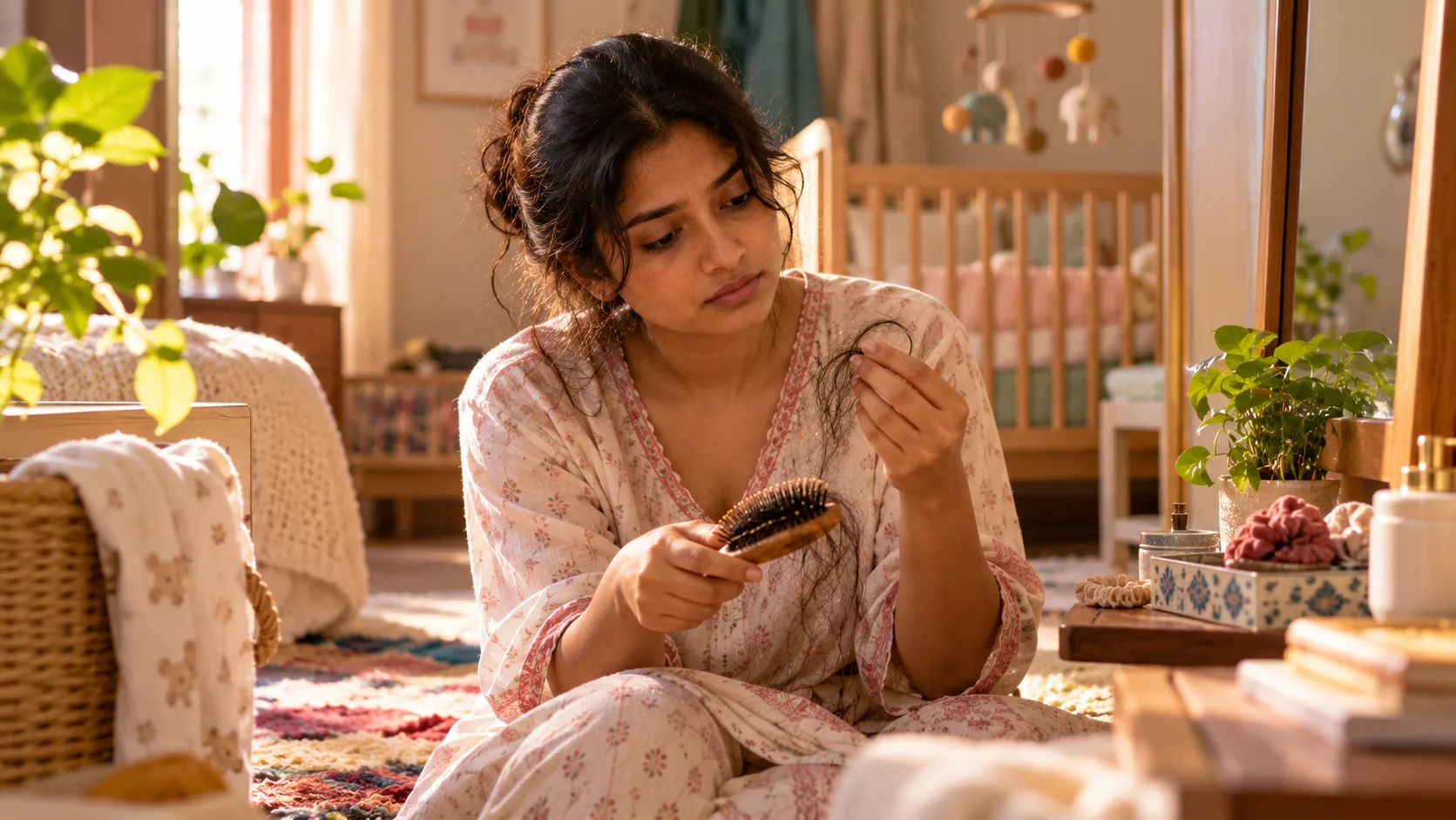
Every hair on your head lives through a cycle. For a few years, it grows. Then it rests for a few months. Then it falls out and a new hair starts growing from the same root. On a normal day, most of your hairs are in the growing phase and a small share are resting. Losing 50 to 100 hairs a day is normal. You rarely notice it. Pregnancy changes this rhythm. High levels of the hormone oestrogen keep more hairs in the growing phase for longer. Fewer hairs fall during those months, so more stay on your head.
After the baby arrives, oestrogen drops quickly. The AAD explains that this falling oestrogen is what causes the excess shedding. Large numbers of hairs that were held in the growing phase now move into the resting phase together. A few months later they all fall out at roughly the same time. You are not losing more hair than you were meant to. You are losing the hair that pregnancy held back, all in one season.
When does it start and when does it stop?
For most women the shedding becomes noticeable a few months after delivery. The AAD says it usually peaks about four months after birth. It may feel worst when you wash or oil your hair, because the loose resting hairs come away together. The way the cycle works is reassuring. Each hair that falls is followed by a new one from the same root. You may later notice short, fine hairs standing up along the parting and the hairline. These are new hairs growing back. In a clinic study of women with hair loss after childbirth, doctors saw upright regrowing hairs at the centre of the scalp in every woman whose problem was shedding alone. The AAD gives two markers. Shedding usually peaks about four months after birth. Most women see their hair return to its normal fullness by their child's first birthday. The AAD suggests seeing a dermatologist if it has not returned after one year. Every body is different, so treat these as a pattern, not a deadline.
What else can cause hair fall after delivery?
Hormonal changes are the most common reason for hair shedding after childbirth, but they aren't always the only cause. Pregnancy, delivery and the months that follow can affect your body's nutrient levels and hormone balance. Sometimes, two or more factors contribute to hair fall at the same time. Here are three worth knowing about.
Iron deficiency and anaemia
Pregnancy increases your body's need for iron, and blood loss during delivery can reduce your iron stores further. The World Health Organization identifies pregnant and postpartum women as groups particularly affected by anaemia. Low iron levels can contribute to hair shedding, especially when your iron stores are already depleted. You may also experience unusual tiredness, dizziness or breathlessness. If these symptoms sound familiar, your doctor may recommend blood tests to check your haemoglobin and iron stores.
Also read: Iron Deficiency in Women: Symptoms, Causes and Tests.
Thyroid changes after childbirth
Your thyroid helps regulate metabolism, energy and many other functions, including hair growth. Some women develop a condition called postpartum thyroiditis, which affects around 5% of women during the first year after childbirth. It can cause changes in thyroid hormone levels, sometimes in two phases:
Overactive thyroid: You may notice a racing heartbeat, anxiety or unexpected weight loss.
Underactive thyroid: You may feel unusually tired, cold, low in mood or struggle with weight gain.
Hair shedding can occur alongside these symptoms. A thyroid blood test can help your doctor identify whether your thyroid is contributing to the problem.
Hair loss that began before pregnancy
Sometimes, postpartum shedding makes an existing hair loss condition more noticeable. A study of 200 women who visited a dermatology clinic for hair loss after childbirth found that only 9.5% had postpartum shedding alone. Many also showed signs of female pattern hair loss, hair loss caused by tight hairstyles or a combination of these conditions. However, this study involved women seeking treatment at a clinic. It doesn't mean most new mothers have another hair loss condition. If your hair parting keeps widening, certain areas are becoming noticeably thinner or your hair isn't regaining its fullness over time, a dermatologist can help identify the cause.
Also read: Hair Loss in Women: Common Causes and What You Can Do.
How hair loss after delivery can affect your emotional well-being
Having a baby brings enormous changes to your life and your body. You're recovering from childbirth, adjusting to your baby's needs and often getting very little sleep. When your hair starts falling out too, it can feel like another thing to worry about. Hair is closely connected to how we look and feel about ourselves, so it's understandable if the sudden shedding affects your confidence.
And you're not alone in feeling this way. A Japanese study involving 331 mothers found that women who experienced severe hair loss after childbirth had more than four times the odds of reporting anxiety compared with those who experienced none. The study also found a link between poor sleep and anxiety, although it couldn't establish whether hair loss directly caused these feelings. If you're constantly worried, feeling low or finding it difficult to relax, speak to your doctor. Your emotional well-being deserves just as much attention as your physical recovery, regardless of what is happening with your hair.
How to care for your hair after delivery
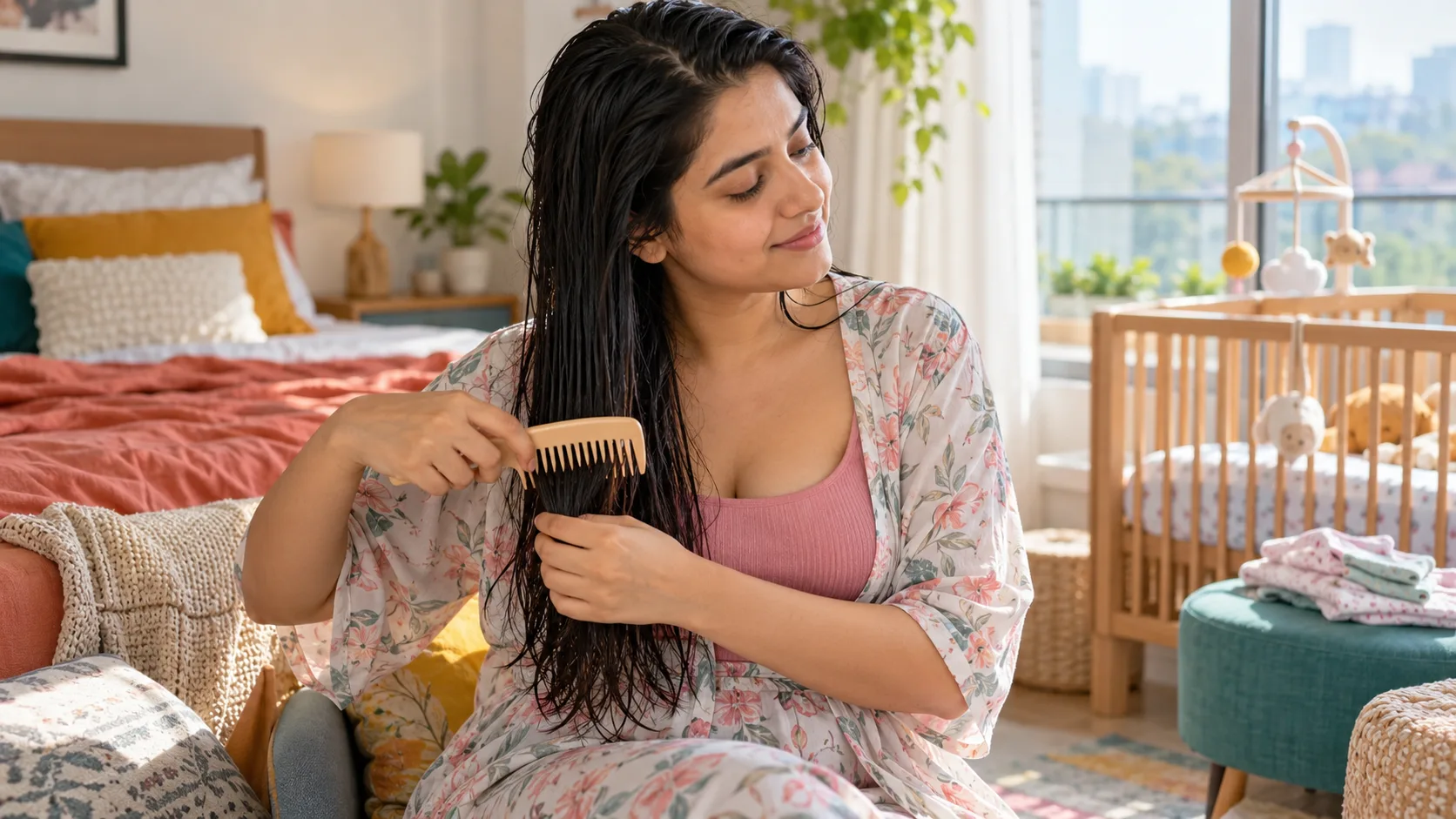
Postpartum hair shedding usually settles on its own, and you don't need special treatments to stop it. While you wait for your hair to regain its usual fullness, a few simple habits can help prevent breakage and make everyday hair care easier.
Handle wet hair gently. Use a wide-tooth comb and start detangling from the ends, gradually working upwards. This helps reduce unnecessary pulling and breakage.
Choose loose hairstyles. Go for loose plaits, soft clips or relaxed ponytails instead of tight buns. Constant pulling at the roots can cause a different type of hair loss called traction alopecia.
Use lightweight hair products. The American Academy of Dermatology (AAD) recommends volumising shampoos and lightweight conditioners, applied mainly to the ends, to help thinning hair look fuller without weighing it down.
Consider a shorter haircut. Shorter hair can be easier to wash, comb and manage, especially when you're busy caring for your baby. It may also make your hair appear fuller.
Limit heat and chemical treatments. Frequent straightening, curling and harsh chemical treatments can weaken hair and increase breakage. Keep styling gentle during this period.
Eat regular, balanced meals. Include protein-rich foods such as dal, eggs, paneer, curd, sprouts, fish or chicken. Add leafy vegetables, fruits and nuts to provide nutrients that support healthy hair growth.
Continue prescribed supplements. If your doctor recommended iron, calcium or other supplements after delivery, take them for the prescribed duration. Avoid adding new hair supplements without medical advice, particularly if you're breastfeeding.
Remember, these steps can help you care for your existing hair, but they won't necessarily stop hormonal shedding. Your hair usually recovers gradually as your body adjusts after childbirth.
Also read:
Hair Shedding vs Hair Breakage: Learn how to tell whether your hair is falling from the roots or snapping along its length.
How to Prevent Hair Breakage: Simple everyday habits to reduce damage and keep your hair healthier.
A small safety note for your baby
When you're experiencing postpartum hair shedding, loose strands can end up on your clothes, bedsheets and even your baby's fingers or toes. In rare cases, a strand of hair can wrap tightly around a baby's finger, toe or another body part, restricting blood flow. Doctors call this a hair tourniquet. If you notice a hair wrapped around your baby's finger or toe, carefully check whether you can gently unwind it. Don't pull or dig into the skin if the hair is tightly caught. The American Academy of Dermatology (AAD) advises seeking medical help if you cannot remove the hair safely. Contact your baby's doctor or visit the nearest emergency department, especially if the area looks swollen or discoloured.
Are hair supplements safe while breastfeeding?
If you're breastfeeding, speak to your gynaecologist before starting any new hair growth supplement, even one marketed as natural. Your doctor can review the supplements you're already taking and recommend blood tests if there are signs of an iron, vitamin or other nutrient deficiency. Focus on a balanced diet first, and treat any confirmed deficiencies under medical guidance. Taking extra vitamins or hair supplements without a clear need may not improve postpartum shedding, and some ingredients may be unsuitable while breastfeeding.
When should you see a doctor?
Most postpartum hair shedding improves naturally. According to the American Academy of Dermatology, hair usually regains its normal fullness by your baby's first birthday. However, see a doctor or dermatologist if:
Your hair hasn't regained its fullness after one year.
You notice bald patches or a widening hair parting.
Hair loss comes with unusual tiredness or weakness.
The shedding is affecting your confidence or well-being.
Your doctor can check for possible causes, such as iron deficiency or thyroid problems. Your emotional health matters too. If you're experiencing persistent sadness, anxiety or difficulty sleeping even when you have time to rest, speak to a healthcare professional. The NHS recommends seeking support for possible postnatal depression, even if you experience only some symptoms.
The hair will come back
One day, perhaps around the first birthday party, you will catch your reflection and notice that the parting looks like yours again. The short new hairs will have grown long enough to tuck behind your ear. Until then, be as gentle with yourself as you are with your baby.
Sources
Hair loss in new moms: dermatologist tips (American Academy of Dermatology)
Hair loss or hair shedding? (American Academy of Dermatology)
Postpartum hair loss is associated with anxiety (J Obstet Gynaecol Res, 2024)
Medical Disclaimer: This article is for general information and is not a substitute for advice from your doctor. Speak to a qualified healthcare professional before starting any supplement, especially if you are pregnant, breastfeeding or taking medication.
Continue this topic
Connected guides, ingredient explainers, product context, and tools chosen from this article's topic cluster.
Your haemoglobin is normal but your hair keeps falling. This guide explains what ferritin means, what level the research points to and how to raise it safely.
Found white strands in your twenties? What research links to early greying, from genes and low B12 to stress and smoking, plus the tests worth discussing.
Iron tablets making you sick or constipated? How to time them, what to keep away, what black stools mean and when to recheck your haemoglobin.
Quick questions
How long does hair fall after delivery last?
Shedding usually becomes noticeable a few months after birth and slows over the following months. The American Academy of Dermatology says most women see their hair return to normal fullness by their child's first birthday.
Is hair fall after delivery normal?
Hair fall after delivery is common. It is a temporary shedding called telogen effluvium. Falling oestrogen after birth moves many hairs into the resting phase at once, so they fall out together a few months later.
Will my hair grow back after postpartum hair fall?
In most women, the hair grows back. Each hair that falls is followed by a new one from the same root. Short new hairs along the parting and hairline are a sign of regrowth.
When should I see a doctor for hair fall after delivery?
The American Academy of Dermatology suggests seeing a dermatologist if your hair has not regained its normal fullness after one year. See a doctor sooner if patches, a thinning parting or tiredness worry you. If you feel low or anxious, the NHS advises speaking to your doctor, midwife or health visitor about postnatal depression.
Can I take hair supplements while breastfeeding?
Check with your gynaecologist before starting any new supplement while breastfeeding. Keep taking what your doctor prescribed after delivery, eat regular meals with protein and let a test guide any extra iron or vitamins.
7 linked sources checked against our citation and claim-safety process.
Reviewed 31 Oct 2026 for supplement-claim and medical-disclaimer boundaries.
Recommended from the Aora range
Aora Chamrose
Chamomile, Rosemary & Jatamansi Extract
- Hair Care
- Hair Support
- Made in India
From₹960.00
Try Aora - free
Put this article to work on you.
Health and safety notice
- This article is educational. It is not medical advice and is not a substitute for guidance from a qualified healthcare provider. Consult a physician before starting any supplement, especially during pregnancy or breastfeeding, with a medical condition, or while on medication.
- FSSAI compliance: Health supplements and nutraceuticals are not intended for medicinal use. Any supplement-related information is provided to describe nutritional or physiological support and should not be interpreted as a claim to diagnose, treat, cure, or prevent any disease. FSSAI regulates health supplements and nutraceuticals separately from medicinal products.
Read our full medical disclaimer and editorial policy.
Sources and editorial standards
- 1American Academy of Dermatology
- 250 to 100 hairs a day is normal
- 3upright regrowing hairs at the centre of the scalp in every woman whose problem was shedding alone
- 4World Health Organization
- 5around 5% of women during the first year after childbirth
- 6Japanese study involving 331 mothers
- 7NHS
Supplement content is educational only and should not replace medical advice from a qualified clinician. Product mentions are reviewed for claim safety before publication.