
Protein for Hair: How Much You Need and Best Indian Foods
Hair is built from keratin, a protein. How much protein an Indian adult needs, simple dal, curd, egg and paneer swaps and where lysine fits in.

In this article(14 sections)
- Why is protein suddenly everywhere?
- What is your hair actually made of?
- Can low protein make your hair fall?
- What about lysine and iron?
- When should you see a doctor?
- How much protein do you need for healthy hair?
- How much protein do you need each day?
- Best Indian foods for protein and hair
- Vegetarian sources
- Non-vegetarian sources
- Simple swaps that add up
- Do protein hair masks and keratin treatments feed your hair?
- Where do lysine, cysteine and methionine fit in?
- Sources
Protein seems to be everywhere these days. From protein bars and shakes to hair masks and keratin treatments, there are plenty of products promising different benefits. And if you've been noticing more hair in your comb or shower drain, you might wonder whether you're getting enough protein. The connection between protein and hair health is real. Every strand of hair is made largely of keratin, a type of protein. But the protein your hair needs starts with what you eat, whether that's dal, eggs, curd, paneer or chicken, rather than simply what you apply to your scalp. So how much protein do you actually need for healthy hair? This guide looks at what the research says, which everyday Indian foods can help you meet your needs and why amino acids such as lysine also matter.
Why is protein suddenly everywhere?
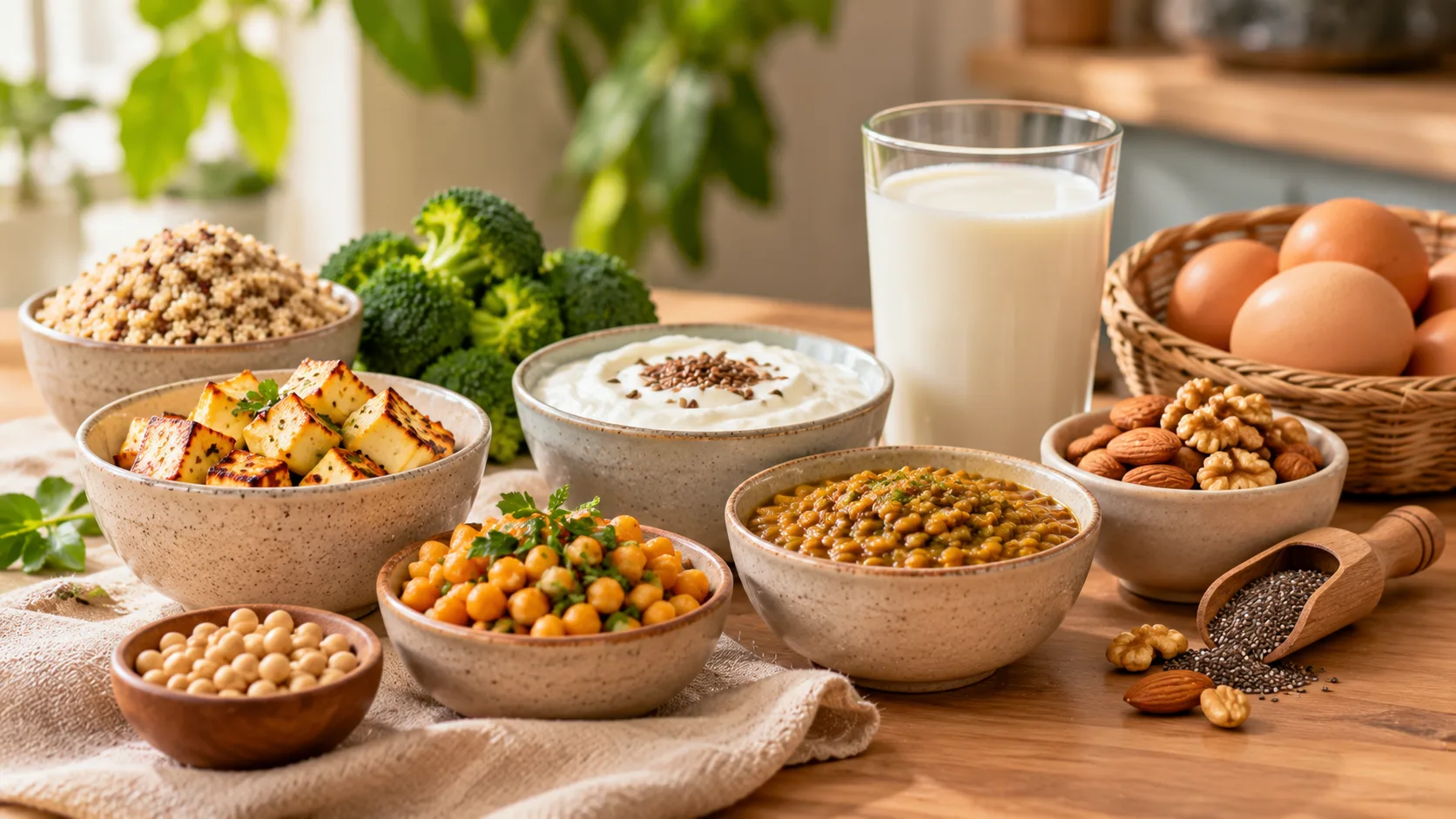
Walk through a supermarket today, and you'll find protein in everything from breakfast cereals and namkeen to biscuits and ice cream. What was once mainly associated with gym supplements has become part of everyday food choices. There's a good reason protein gets so much attention. Your body needs it to build and repair tissues, and your hair is made largely of a protein called keratin. Not getting enough protein can affect hair growth and contribute to shedding. But does eating more protein automatically mean healthier, thicker hair? Not necessarily. Once you're meeting your body's needs, extra protein hasn't been shown to improve hair growth on its own. The ICMR-NIN Dietary Guidelines for Indians explain that protein powders are generally unnecessary for healthy people who can meet their requirements through food. They also caution against excessive, prolonged use of protein supplements. The important thing is getting enough protein for your individual needs, rather than simply adding more of it.
What is your hair actually made of?
The hair you see above your scalp is made of cells that are no longer alive. The actual growth happens beneath the skin, inside tiny structures called hair follicles. Each strand is made mostly of keratin, a strong protein also found in your nails and the outer layer of your skin. What makes keratin particularly strong is its structure. It contains plenty of an amino acid called cysteine, which can form bonds with another cysteine molecule to create cystine. These sulphur bonds help hair maintain its strength, shape and structure. A review published in the International Journal of Trichology explains how these bonds contribute to the structure of hair fibres. To produce new hair, your follicles need a regular supply of amino acids, the building blocks of protein. Your body gets these from the protein-rich foods you eat.
Can low protein make your hair fall?
Yes, it can, although low protein isn't the only reason your hair might start falling. When your body isn't getting enough energy or nutrients, it may slow down processes such as hair growth to conserve resources. One way this can happen is through a type of temporary hair shedding called telogen effluvium. Your hair naturally moves through different stages of growth and rest. According to StatPearls on telogen effluvium, around 85% of scalp hairs are usually in the growing phase, while roughly 15% are in the resting phase. When your body experiences significant physical stress, more hairs than usual can enter the resting phase. Common triggers include crash dieting, inadequate protein intake, iron deficiency, illness, surgery, hormonal changes after childbirth and thyroid problems.
The confusing part is that you may not notice the shedding straight away. It often begins two to three months after the trigger. You might start a restrictive diet, lose weight and feel perfectly fine, only to notice more hair collecting in your comb or shower weeks later. If this sounds familiar, also read: Why does hair fall happen after weight loss? Understand why shedding can appear months after a diet change. A review published in Dermatology Practical & Conceptual also identifies sudden weight loss and reduced protein intake as recognised triggers of telogen effluvium.
What about lysine and iron?
Protein provides several amino acids that your body cannot make on its own. One of them is lysine, which is needed for normal protein production. The same review discusses research suggesting that lysine may also influence how the body uses iron and zinc, although more evidence is needed to establish its specific role in hair growth. Iron is another nutrient worth considering when hair shedding becomes noticeable. A review published in Clinical and Experimental Dermatology discusses the relationship between iron stores and hair loss in women. Doctors often use a blood test called serum ferritin to help assess the body's iron reserves, although low ferritin isn't responsible for every case of hair loss. It's also worth knowing that hair shedding and hair breakage are different problems. Shedding happens when a hair is released from its follicle, while breakage occurs when the strand snaps somewhere along its length. Understanding which one you're experiencing can help you identify the possible cause.
Also read: How can you tell hair shedding from hair breakage? Learn the key differences and what they may mean for your hair.
When should you see a doctor?
Hair fall has many causes, from thyroid problems and low iron to hormones and genetics. See a doctor or dermatologist if you are worried about your hair fall or it is not getting better. Your doctor may suggest blood tests to look for a cause, for example a ferritin test for your iron stores. If you already take an iron tablet or any medication, check with your doctor before adding another product that contains iron, so your total iron intake stays right for you. Women can find more on the common causes in our guide to hair loss in women.
How much protein do you need for healthy hair?
There is no separate protein requirement for healthy hair. The protein you eat supports your entire body, including your muscles, skin, immune system and hair follicles. According to the ICMR-NIN 2020 Recommended Dietary Allowances, healthy Indian adults need around 0.83 g of protein per kilogram of body weight each day. That works out to approximately 54 g for a 65 kg man and 46 g for a 55 kg woman. Protein needs are higher during pregnancy and breastfeeding. The guidelines also make an important distinction for Indian diets. If most of your protein comes from cereals, which provide a less balanced mix of essential amino acids, the recommended intake increases to 1 g per kilogram of body weight. ICMR-NIN also suggests a cereal-to-legume-to-milk ratio of 3:1:2.5 to improve overall protein quality.
How much protein do you need each day?
You can estimate your daily requirement with a simple calculation:
Start with your body weight. For example, 60 kg.
Multiply it by 0.83. That gives you approximately 50 g of protein daily.
If your diet relies heavily on rice or roti with relatively little dal, dairy or other protein-rich foods, the higher guideline of 1 g per kilogram may be more relevant. For someone weighing 60 kg, that's around 60 g daily.
Also read: What are macronutrients? Understand how protein, carbohydrates and fats work together to support your health.
Best Indian foods for protein and hair
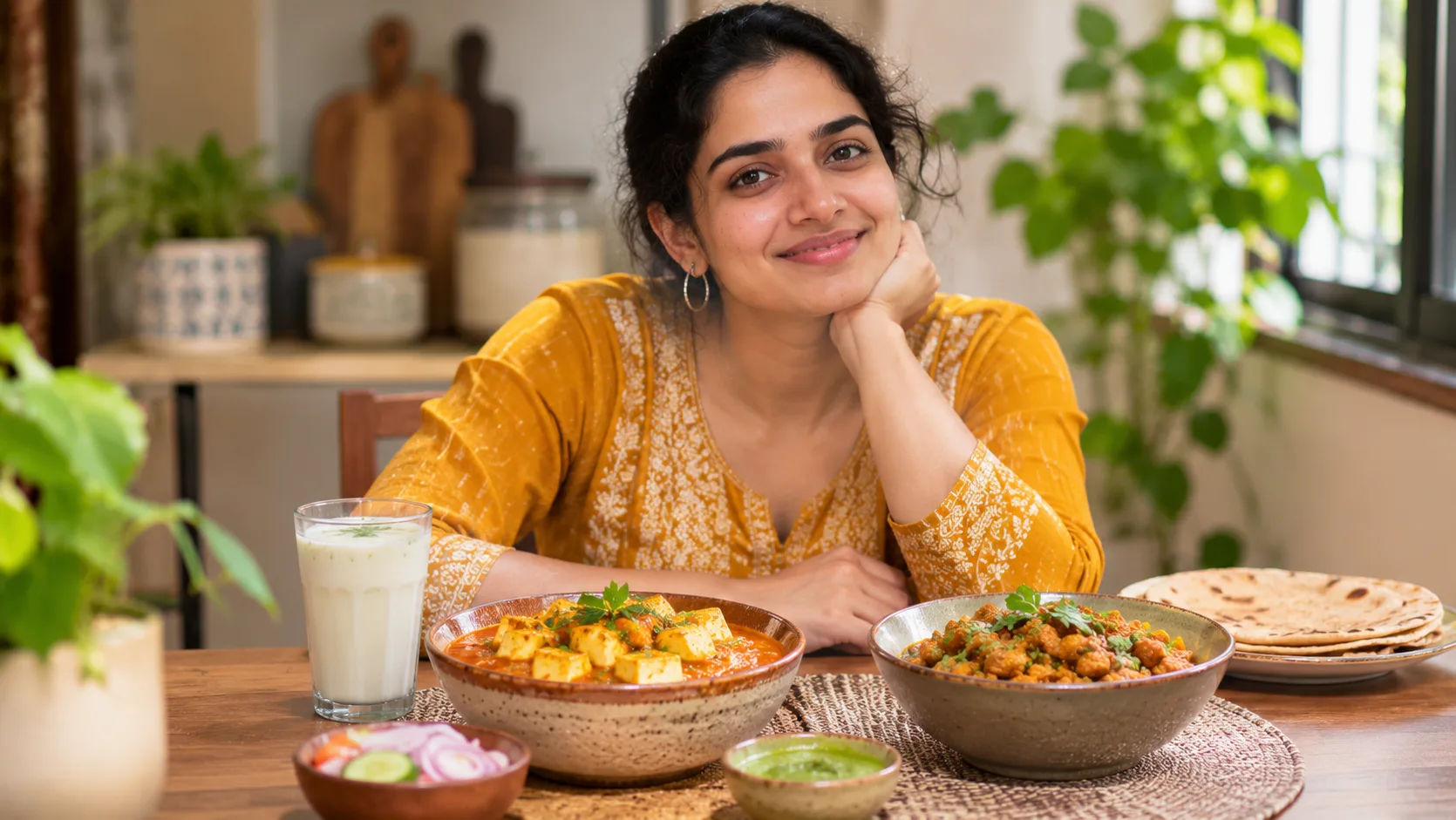
You do not need special foods. You need protein at each meal, from a mix of sources. MedlinePlus uses a handy measure: about 7 g of protein comes from 30 g of meat, fish or poultry, one large egg, a quarter cup of tofu or half a cup of cooked beans or lentils.
Vegetarian sources
Dal, rajma, chana, chole, lobia and moong sprouts
Paneer, curd, buttermilk and milk
Tofu and soya chunks
Besan in chilla, dhokla or kadhi
Peanuts, roasted chana, seeds and nuts as snacks
Millets such as ragi and bajra alongside pulses
Non-vegetarian sources
Eggs, whole or as a bhurji
Chicken, fish and prawns
Mutton in moderate amounts
The ICMR-NIN guidelines say non-vegetarians can meet their quality protein needs through fish, poultry, meat or eggs. Vegetarians can meet theirs through pulses, beans, peas and milk or curd. Pairing cereal with dal at a ratio of about 3:1 improves protein quality in a single meal.
Simple swaps that add up
Swap a plain paratha for a paneer or sattu paratha.
Add a bowl of curd to lunch instead of a second roti.
Move from poha alone to poha with peanuts and a side of sprouts.
Keep roasted chana at your desk instead of biscuits with chai.
Make the dal thicker. A watery dal carries far less protein per katori.
Add an egg or a small piece of fish to dinner a few times a week if you eat them.
Do protein hair masks and keratin treatments feed your hair?
Not quite. Protein hair masks and conditioners can help your hair feel smoother and look healthier, but they work on the strands that have already grown. They don't reach the follicles beneath your scalp, where new hair is produced. A review published in the International Journal of Trichology explains how hydrolysed proteins, which are proteins broken into smaller pieces, can attach to the hair's surface. Damaged hair carries a negative electrical charge, which may attract certain positively charged amino acids. This helps conditioning ingredients settle on damaged areas. The review describes how one hydrolysed protein treatment helped smooth the cuticle after heat styling and improve shine. However, these ingredients cannot rebuild the hair's original keratin structure. Think of them as helping care for the existing strand rather than supplying nutrients for new hair growth.
Salon keratin smoothing treatments are different from ordinary protein conditioners. Some formulations contain ingredients that can release formaldehyde when heated during blow-drying or straightening. If you're considering one, ask the salon about the ingredients and make sure the treatment is performed in a well-ventilated space.
Also read: How can you prevent hair breakage? Explore everyday ways to protect your hair from damage.
Where do lysine, cysteine and methionine fit in?
These three amino acids come up often in hair care, for good reason. Each has its own job in building the strand.
Lysine is an essential amino acid, which means your body cannot make it. You must get it from food.
Methionine is also essential. It carries sulphur, which the body uses to make cysteine.
Cysteine forms the sulphur bridges that give keratin its strength.
The practical message: a plate with enough pulses, dairy, eggs or meat already supplies these amino acids. Getting enough total protein comes first.
If your meals are in good shape and you would like added hair nutrition, Aora Chamrose contains the amino acids cysteine, methionine and lysine. It also adds zinc and biotin, which support normal hair, along with iron and vitamins C, E, A, D3 and B12. It contains chamomile, rosemary and jatamansi extracts too. It is designed to sit alongside a plate that already carries enough protein, as part of a steady daily routine.
Your plate, your sleep and a calm routine remain the base of healthy hair. Keep up the thicker dal, the daily bowl of curd or the egg at breakfast.
Sources
Nutritional factors and hair loss (Clinical and Experimental Dermatology, 2002)
Hair cosmetics: an overview (International Journal of Trichology, 2015)
Medical Disclaimer: This article is for general information and is not a substitute for advice from your doctor. Speak to a qualified healthcare professional before starting any supplement, especially if you are pregnant, breastfeeding or taking medication.
Continue this topic
Connected guides, ingredient explainers, product context, and tools chosen from this article's topic cluster.
Taking biotin but still experiencing hair fall? Learn why biotin may not help, other possible causes of hair loss and when to see a dermatologist.
Why is your hair falling out so much? Explore 6 nutrition gaps, common dietary causes, foods for hair health and when to see a doctor.
How an underactive or overactive thyroid changes the hair cycle, why hair often recovers with treatment, the tests to ask for and food that helps.
Quick questions
How much protein do I need per day for healthy hair?
There is no separate target for hair. ICMR-NIN sets the adult RDA at 0.83 g of protein per kg of body weight a day. That is about 50 g for a 60 kg adult. If your diet is mostly rice or roti with little dal, aim for about 1 g per kg.
Can low protein cause hair fall?
Low protein can lead to hair fall. Crash dieting and low protein intake are known triggers of telogen effluvium, a type of shedding from the root. Because the resting phase lasts months, the shedding can show up well after the diet change. A doctor can help find and correct the cause.
Which Indian foods are best for protein for hair?
Dal, rajma, chana, sprouts, paneer, curd, milk, tofu and soya are good vegetarian choices. Eggs, chicken and fish suit non-vegetarians. Pairing cereal with dal in about a 3 to 1 ratio improves protein quality.
Do protein hair masks repair hair?
They help the strand you already have. Hydrolysed proteins attach to the hair surface. In one example, a hydrolysed protein helped seal the cuticle after flat ironing and improved shine. They cannot rebuild damaged keratin or reach the root to grow new hair. Protein from food feeds new growth.
Why does lysine matter for hair?
Lysine is an essential amino acid, so your body cannot make it and it must come from food. Your body uses it with other amino acids to build keratin, the protein in each strand. Dal, rajma, chana, paneer, curd, eggs and soya are good sources. Enough total protein from food comes first. Ask a doctor to check your iron levels before you take iron.
When should I see a doctor for hair fall?
See a doctor or dermatologist if you are worried about your hair fall or it is not getting better. Your doctor may suggest blood tests to look for a cause, for example a ferritin test for your iron stores.
7 linked sources checked against our citation and claim-safety process.
Reviewed 6 Nov 2026 for supplement-claim and medical-disclaimer boundaries.
Recommended from the Aora range
Aora Chamrose
Chamomile, Rosemary & Jatamansi Extract
- Hair Care
- Hair Support
- Made in India
From₹960
Try Aora - free
Put this article to work on you.
Health and safety notice
- This article is educational. It is not medical advice and is not a substitute for guidance from a qualified healthcare provider. Consult a physician before starting any supplement, especially during pregnancy or breastfeeding, with a medical condition, or while on medication.
- FSSAI compliance: Health supplements and nutraceuticals are not intended for medicinal use. Any supplement-related information is provided to describe nutritional or physiological support and should not be interpreted as a claim to diagnose, treat, cure, or prevent any disease. FSSAI regulates health supplements and nutraceuticals separately from medicinal products.
Read our full medical disclaimer and editorial policy.
Sources and editorial standards
- 1ICMR-NIN Dietary Guidelines for Indians
- 2review published in the International Journal of Trichology
- 3StatPearls on telogen effluvium
- 4review published in Dermatology Practical & Conceptual
- 5review published in Clinical and Experimental Dermatology
- 6ICMR-NIN 2020 Recommended Dietary Allowances
- 7MedlinePlus
Supplement content is educational only and should not replace medical advice from a qualified clinician. Product mentions are reviewed for claim safety before publication.