
How Long Does Digestion Take? Your Food, Hour by Hour
A meal takes about a day or longer to pass through you. Follow a plate of rajma chawal through each part of the gut and learn what speeds up or slows down digestion.

In this article(12 sections)
- What lives in the colon and why it matters
- How does food move through the gut at all?
- How does food move through your digestive system?
- Stage 1: The mouth and food pipe (first minute)
- Stage 2: The stomach (around 1 to 4 hours)
- Stage 3: The small intestine (roughly another 4 to 5 hours)
- Stage 4: The large intestine (several hours to a few days)
- What affects how long digestion takes?
- How can you tell if your gut is fast or slow?
- Is slow or fast digestion ever a problem?
- A simple way to keep your gut clock steady
- Sources
How long does digestion take? You finish a plate of rajma chawal at lunch, and a few hours later, you're hungry again. Does that mean your food has been fully digested? Not quite. While your stomach may empty most of a light meal within about four hours, the entire journey through your digestive system takes much longer. Food typically spends another few hours in the small intestine before reaching the large intestine, where the remaining material can stay for a day or more. This journey, from eating food to passing waste, is known as whole gut transit time. It varies from person to person and can influence bowel movements and digestive comfort. So what happens to your food along the way? Let's follow that plate of rajma chawal through your digestive system and see what affects the timing.
What lives in the colon and why it matters
Your large intestine, or colon, is home to trillions of microorganisms, including bacteria that help break down fibre from foods such as dal, vegetables and whole grains. As these bacteria ferment fibre, they produce substances called short-chain fatty acids, which help support gut health. The time food remains in your colon can influence this process. Eating fibre-rich foods helps nourish beneficial gut bacteria, while fermented foods such as curd can also be part of a gut-friendly diet. For those looking to complement their daily diet, Aora Gut-Guard combines three Bacillus strains (B. clausii, B. subtilis and B. coagulans) with fructooligosaccharides (FOS), a prebiotic fibre. It's formulated to support everyday digestive health and gut comfort.
Plain food, enough water and a regular routine remain the base of good digestion.
Also read: What is the difference between probiotics and prebiotics? Learn how beneficial bacteria and the fibre that feeds them work together.
How does food move through the gut at all?
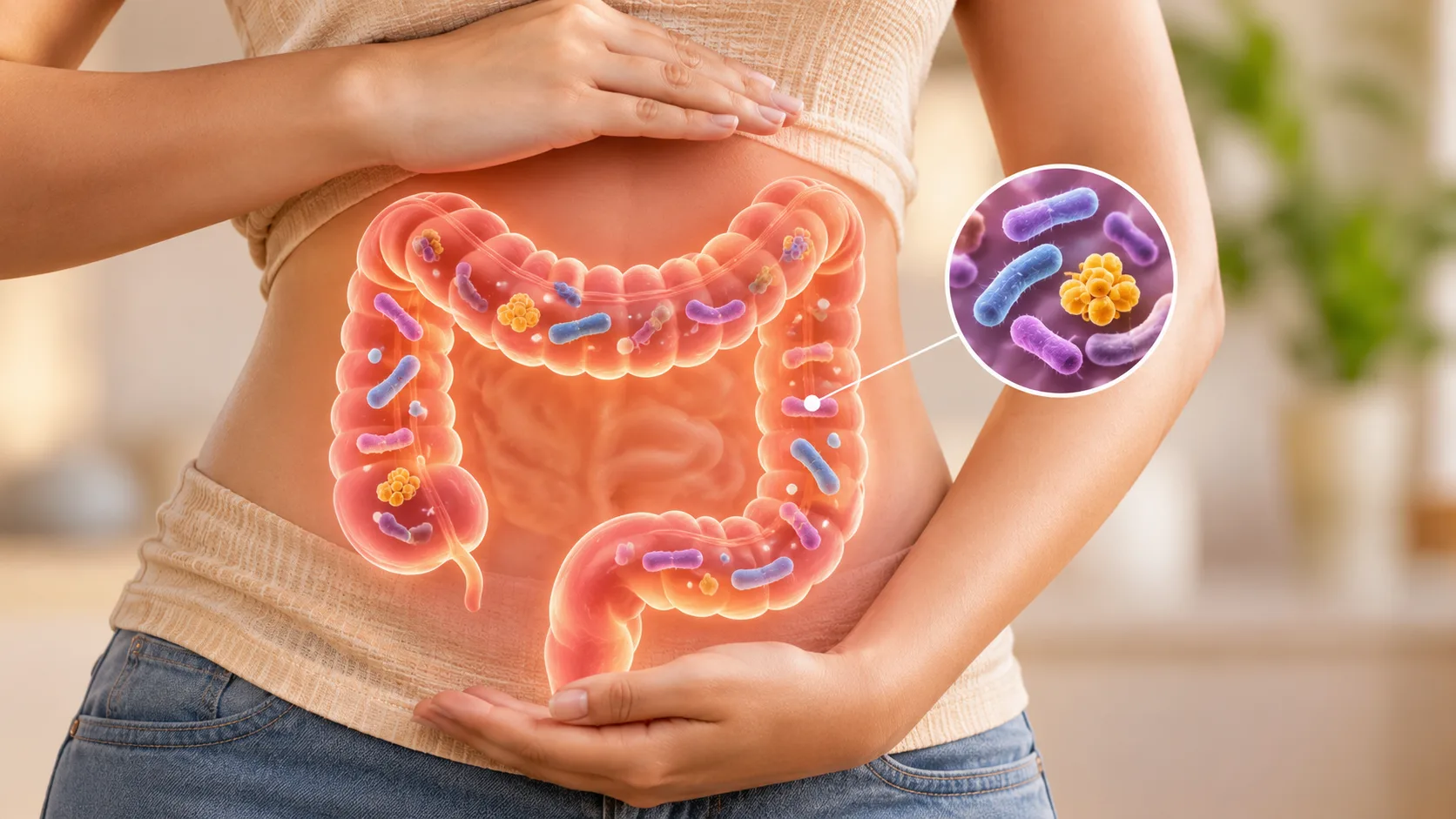
Food does not simply fall downward. The walls of your gut are lined with muscle that squeezes in waves. The muscle behind the food tightens while the muscle ahead relaxes, pushing everything forward. The National Institute of Diabetes and Digestive and Kidney Diseases calls this peristalsis. Along the way, digestive juices, bile from the liver and enzymes from the pancreas break food into pieces small enough to absorb. Gut bacteria finish part of the job further down.
How does food move through your digestive system?
Think about a typical Sunday lunch. You've had a plate of rajma chawal with a little ghee, some sliced onions and a glass of chaas. Once you've finished eating, your digestive system gets to work. But what happens to that food, and how long does each stage take?
Stage 1: The mouth and food pipe (first minute)
Digestion begins the moment you start chewing. Your teeth break the rice and rajma into smaller pieces, while saliva moistens the food and begins breaking down starch. When you swallow, muscles in your food pipe move the food towards your stomach, usually within a few seconds.
Stage 2: The stomach (around 1 to 4 hours)
Your stomach mixes food with digestive juices and acid, gradually turning it into a semi-liquid mixture called chyme. Rather than releasing everything at once, it sends small amounts into the small intestine over time. So how long does your stomach take to empty? A multicentre study involving 123 healthy adults measured stomach emptying after a standard low-fat meal. On average, approximately 69% of the meal remained in the stomach after one hour, falling to 24% after two hours and just 1.2% after four hours. Doctors use these findings as reference values when investigating delayed stomach emptying. In this particular test, retaining more than 10% of the meal after four hours is generally considered abnormal. However, these results come from a standardised low-fat meal. Your plate of rajma chawal with ghee has a different combination of carbohydrates, protein, fibre and fat. Meals higher in fat generally take longer to leave the stomach, which may explain why a rich lunch keeps you feeling full for longer.
Stage 3: The small intestine (roughly another 4 to 5 hours)
Once food enters the small intestine, most digestion and nutrient absorption take place. Carbohydrates from the rice are broken down into simple sugars, proteins from the rajma into amino acids, and fats from the ghee are digested with help from bile and pancreatic enzymes. These nutrients are then absorbed through the intestinal wall. But how long does food stay here? A Danish study involving 15 healthy volunteers used a small magnetic capsule to track movement through the digestive system. The median time spent in the small intestine was 4.4 hours, although individual results ranged from 1.8 to 7.2 hours. Because the study was small and tracked a capsule rather than an actual meal, these figures are useful estimates, not an exact timetable for every person.
Stage 4: The large intestine (several hours to a few days)
By the time the remaining material reaches your large intestine, or colon, most digestible nutrients have already been absorbed. What remains includes fibre from the rajma, some undigested carbohydrates, water and other waste. The colon absorbs water and electrolytes, while the bacteria living there ferment some of the fibre and carbohydrates that escaped digestion earlier. According to the National Institute of Diabetes and Digestive and Kidney Diseases (NIDDK), these bacteria play an important role in processing material that reaches the large intestine.
This is usually the longest stage of the journey. In the same Danish 3D-Transit study, the median time through the colon and rectum was 18.1 hours, but individual results ranged from 5 to 134 hours. The median whole gut transit time was 25.1 hours. Another study involving 111 healthy volunteers found that colonic and whole gut transit times often clustered at intervals of approximately 24 hours. The researchers suggested that daily bowel movement patterns may help explain this finding. In everyday terms, your Sunday lunch might contribute to a bowel movement on Monday or Tuesday, or even later. However, each stool contains material from multiple meals, so you cannot identify exactly when one particular plate of food has left your body.
What affects how long digestion takes?
Your digestive system doesn't follow exactly the same schedule every day. What you eat, how much you move and even your sleep routine can influence how quickly food travels through your gut. Here are some common factors.
Fibre: Foods such as whole grains, dal, rajma, vegetables and fruits help add bulk to stool and retain water, making it easier to pass. A meta-analysis of 16 trials involving adults with chronic constipation found that 66% responded to fibre supplements, compared with 41% in control groups. Benefits were greater with doses above 10 g daily, while improvements in stool frequency were clearer after at least four weeks. Psyllium (isabgol) showed particularly useful results. Since extra fibre can also increase gas, introduce it gradually.
Water: Staying hydrated helps keep stools soft, especially when you're eating more fibre. Not drinking enough fluids can contribute to constipation.
Rich meals: Foods high in fat generally take longer to leave your stomach. That's one reason a heavy, oily lunch may keep you feeling full longer than a lighter meal.
Liquids and solids: Liquids usually leave the stomach faster than solid foods, which need more time to break down. However, the ingredients and fat content of a drink or soup also affect emptying.
Physical activity: Regular movement may help maintain healthy bowel habits. In a small study involving nine older men, two weeks of reduced physical activity increased average colonic transit time from approximately 10.9 to 19.5 hours.
Age: Digestion patterns can change as you grow older. A study of 111 healthy volunteers found that increasing age was associated with longer colonic and whole gut transit times.
Sleep, stress and daily routine: Your gut follows a natural daily rhythm. Irregular sleep, travel, stress and changes in mealtimes may affect when you feel the urge to pass stools.
Medicines: Iron supplements, certain painkillers and some other medicines can slow bowel movements, while others may cause loose stools. If your bowel habits change after starting a medicine, speak to your doctor rather than stopping it yourself.
How can you tell if your gut is fast or slow?
You do not need a lab test to get a rough idea. Look at your stool. The Bristol stool form scale sorts stool into seven types, from hard separate lumps (type 1) to watery (type 7). Types 3 and 4, a sausage shape that is smooth or slightly cracked, are the comfortable middle. The scale is not just a picture chart. In a Bristol study of 66 volunteers, stool form matched whole gut transit time better than how often people went to the toilet or how much they passed. When transit was sped up or slowed down with medicines, stool form changed with it. Hard, lumpy stool tends to go with a slow gut. Loose stool tends to go with a fast one.
Is slow or fast digestion ever a problem?
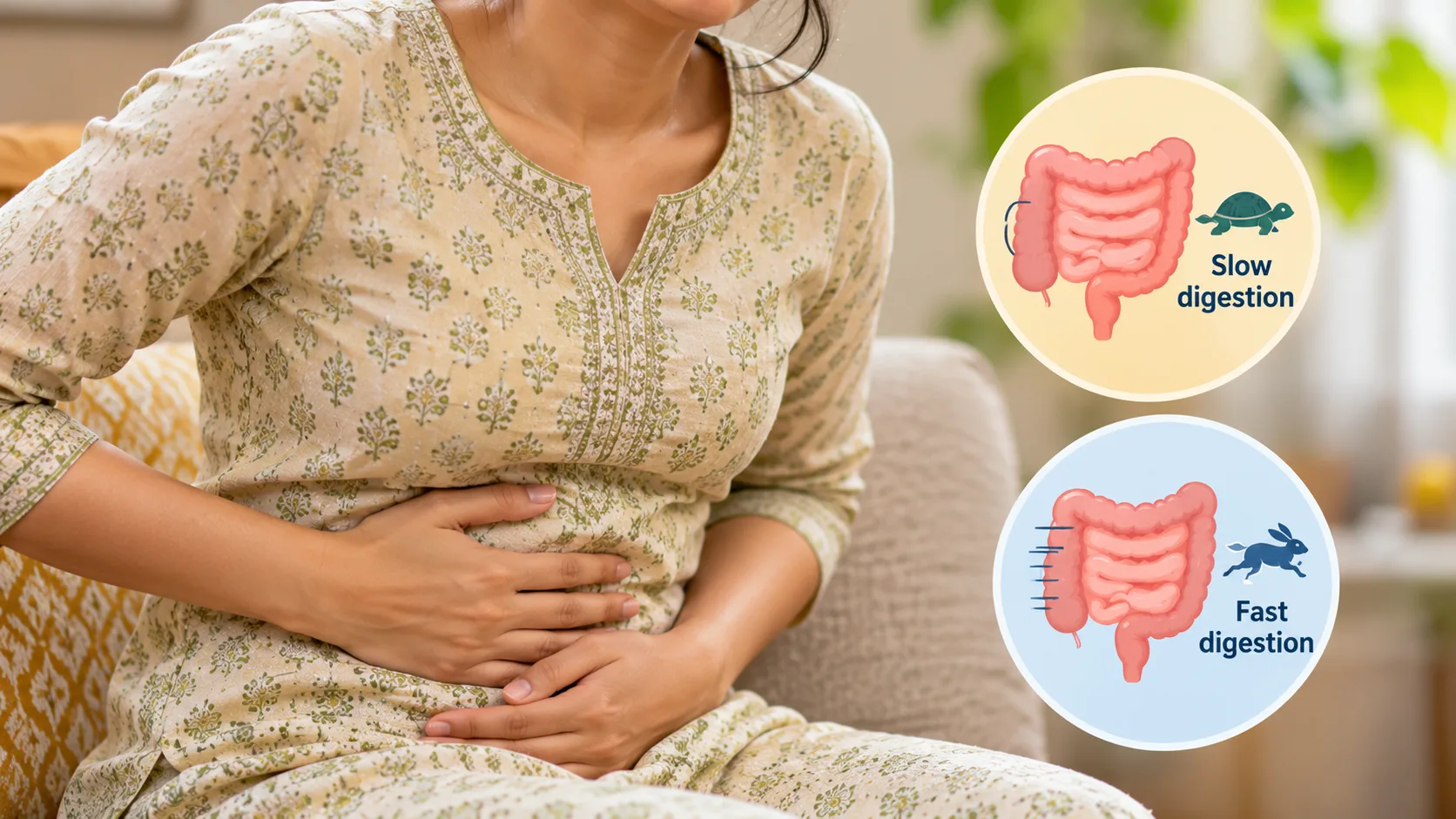
Occasional changes in digestion are normal. A heavy wedding dinner, a long train journey or a stomach infection can temporarily affect your bowel habits. However, changes that persist or keep returning deserve attention. Slow bowel movement may cause hard stools, straining, infrequent bowel movements and bloating. Faster bowel transit may be associated with loose stools, frequent bowel movements and urgency. According to the NHS, certain symptoms should prompt medical attention:
Blood in your stool: See a doctor if bleeding persists, particularly alongside changes in bowel habits, unexplained weight loss or unusual tiredness. Seek urgent medical care for black or dark red stools or bloody diarrhoea. Heavy or continuous bleeding requires emergency care.
Persistent constipation: Speak to a doctor if constipation doesn't improve with treatment, regularly causes bloating or comes with a sudden change in bowel habits.
Delayed stomach emptying: Frequent early fullness, nausea, vomiting or persistent abdominal discomfort should be assessed. Sudden severe abdominal pain or vomiting blood requires emergency care.
Ongoing diarrhoea: Seek medical advice if diarrhoea lasts more than seven days, vomiting continues beyond two days or you cannot keep fluids down. Signs of persistent dehydration also need prompt attention.
Depending on your symptoms, a doctor may recommend blood tests, stool tests or specialised investigations, including digestive transit studies.
Also read: Can constipation cause bloating and gas? Understand why these symptoms often occur together.
A simple way to keep your gut clock steady
You do not need to time your digestion to the hour. A steady rhythm matters more than a fast one. Eat a mix of dal, vegetables, whole grains and fruit across the day. Drink enough water. Walk after meals when you can. Try to sleep and wake at regular times. Respect the urge to go rather than putting it off. Your bowl of rajma chawal takes a day or more to finish its trip. Look after that system with plain food and a regular day.
Sources
Medical Disclaimer: This article is for general information and is not a substitute for advice from your doctor. Speak to a qualified healthcare professional before starting any supplement, especially if you are pregnant, breastfeeding or taking medication.
Continue this topic
Connected guides, ingredient explainers, product context, and tools chosen from this article's topic cluster.
Reels say a morning olive oil shot keeps you regular, calms inflammation and melts fat. We test each claim against the trials and do the calorie sums.
Magnesium glycinate and magnesium citrate are two common supplement forms. Here is how they differ, what the evidence actually supports and which may fit your needs better.
Constipation can come with bloating and gas, even if you are still having bowel movements. Here is how to recognise the pattern and what may help.
Quick questions
How long does it take for food to leave the stomach?
Most of a light meal leaves the stomach within four hours. In a study of 123 healthy adults about a quarter of a low-fat meal was still in the stomach at two hours and almost none was left at four hours. Heavier, richer meals may take longer.
How long does food stay in the small intestine?
Roughly four to five hours on average. One capsule tracking study found a median of 4.4 hours in healthy people with a range of about two to seven hours. This is where most nutrients pass into your blood.
Is it normal to pass a meal two or three days later?
It can be. In one study of healthy people the median whole gut transit time was about 25 hours, but time through the colon alone ranged from 5 to 134 hours. The colon is the slowest stage, partly because food waits for the next bowel movement.
What makes digestion faster?
Fibre from dal, vegetables, fruit and whole grains, enough water and regular physical activity all help food move steadily. Add fibre slowly to avoid extra gas. A steady rhythm matters more than speed.
When should I see a doctor about slow or fast digestion?
The NHS says to see a GP for blood in your poo or a change in your poo for 3 weeks, a pain or lump in your tummy or weight loss for no reason. Black or dark red poo needs an urgent GP appointment. Call 112 for non-stop bleeding, sudden and severe tummy pain or vomit with blood in it. Get urgent advice for diarrhoea lasting more than 7 days.
11 linked sources checked against our citation and claim-safety process.
Reviewed 6 Nov 2026 for supplement-claim and medical-disclaimer boundaries.
Recommended from the Aora range
Aora Nutrivit Plus
19 Essential Nutrients with Zinc, Magnesium and Vitamins B Complex, C and D3
- Multivitamin
- Daily Foundation
- Made in India
From₹690
Try Aora - free
Put this article to work on you.
Health and safety notice
- This article is educational. It is not medical advice and is not a substitute for guidance from a qualified healthcare provider. Consult a physician before starting any supplement, especially during pregnancy or breastfeeding, with a medical condition, or while on medication.
- FSSAI compliance: Health supplements and nutraceuticals are not intended for medicinal use. Any supplement-related information is provided to describe nutritional or physiological support and should not be interpreted as a claim to diagnose, treat, cure, or prevent any disease. FSSAI regulates health supplements and nutraceuticals separately from medicinal products.
Read our full medical disclaimer and editorial policy.
Sources and editorial standards
- 1National Institute of Diabetes and Digestive and Kidney Diseases
- 2multicentre study involving 123 healthy adults
- 3Danish study involving 15 healthy volunteers
- 4study involving 111 healthy volunteers
- 5meta-analysis of 16 trials
- 6small study involving nine older men
- 7Bristol study of 66 volunteers
- 8Blood in your stool
- 9Persistent constipation
- 10Delayed stomach emptying
- 11Ongoing diarrhoea
Supplement content is educational only and should not replace medical advice from a qualified clinician. Product mentions are reviewed for claim safety before publication.