
Olive Oil Shot: What a Morning Spoon Does for Your Gut
Reels say a morning olive oil shot keeps you regular, calms inflammation and melts fat. We test each claim against the trials and do the calorie sums.
In this article(7 sections)
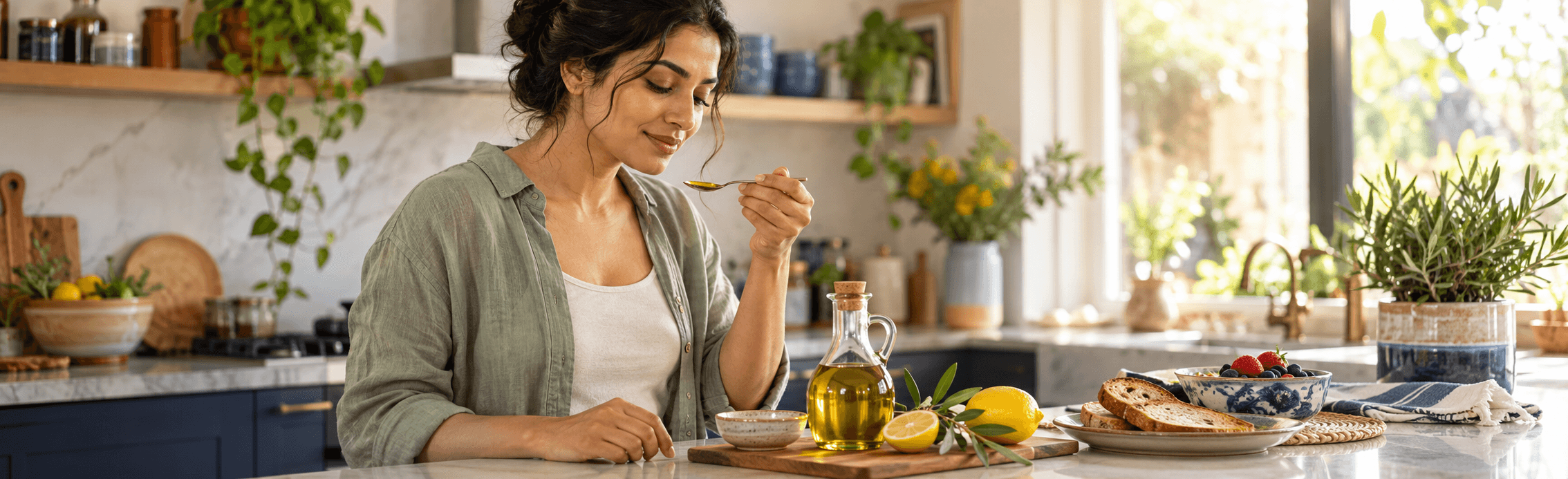
It is 6:30 in the morning. The kettle is on, and you are pouring a tablespoon of extra virgin olive oil into a glass, perhaps with a squeeze of lemon. You have seen the reels claiming this simple morning habit can improve digestion, reduce inflammation and even help you lose weight. But does it actually work? The trend is called an olive oil shot, usually one or two tablespoons of extra virgin olive oil taken on an empty stomach. While olive oil has well-studied health benefits as part of a balanced diet, there is much less evidence for taking it on its own first thing in the morning. So before making it part of your daily routine, it is worth looking at what the research says about those three popular claims and whether taking olive oil as a shot makes any difference.
Claim 1: It keeps you regular
This is a claim many people notice for themselves, so it deserves a fair hearing. Fat in a meal is thought to be one of the signals that sets your gut moving after you eat. Oil may also soften stool. So some people find a spoon of oil helps them go. The research is thin though. One small study was a four-week randomised trial in 50 people with constipation on haemodialysis (Journal of Renal Nutrition, 2015). Symptom scores improved in the olive oil group, but they improved in the mineral oil group too and the groups did not differ. Three things to keep in mind:
The people were on dialysis for kidney failure, a very different gut and diet from yours.
There was no placebo group. All three groups received some kind of oil.
The starting amount was only 4 mL a day, less than a teaspoon. A full shot is several times that.
Verdict: Possible, but evidence is limited. Olive oil may help some people with constipation, though research is still limited. If constipation is your main concern, start with the basics: enough water, fibre-rich foods and regular physical activity.
Our article on constipation, bloating and gas goes through them.
Claim 2: It fights inflammation
Inflammation is part of how your body protects itself and repairs damage. It becomes a concern when it stays active for too long. This kind of ongoing, low-grade inflammation is linked to conditions such as heart disease and type 2 diabetes, which is why so many people are interested in foods that may help keep it in check. A systematic review of randomised trials on regular olive oil intake (Nutrition, 2020) found that olive oil in the diet lowered inflammation markers in the blood, with the clearest effect on interleukin-6, a messenger protein involved in inflammation. The authors also said the right daily amount and the length of use are still unclear. They called for more trials comparing olive oil with other fats. Two details matter here. There is an important difference here. These studies looked at people who regularly consumed olive oil with meals, often in place of other fats. They did not test whether taking a shot on an empty stomach offers the same benefits. Changes in blood markers of inflammation also do not necessarily mean you will notice a difference in how you feel.
Verdict: Partly supported. Regularly including olive oil in your meals may help, but there is no clear evidence that a morning shot offers extra benefits.
If the word inflammation confuses you, our explainer on inflammation vs oxidative stress sets out what each term means.
Claim 3: It melts belly fat
This is where the reels get furthest from the evidence. A meta-analysis of 11 randomised trials lasting at least 12 weeks (Revista Española de Salud Pública, 2018) found that diets enriched with olive oil led to about 0.92 kg more weight loss than control diets. The benefit was seen when olive oil was used in its natural form in food, not when it was given as capsules. A later review of 52 trials on olive oil and body fat (Food and Function, 2023) found that olive oil does not seem to change where fat sits on the body. Now the arithmetic. Fat has 9 calories per gram, more than twice the calories in carbohydrate or protein, according to MedlinePlus on dietary fats. A level tablespoon of oil weighs about 13 g, so one shot adds about 120 calories. Two shots roughly double that. If it sits on top of your usual cooking oil, the shot adds energy rather than taking any away.
Verdict: No evidence that it burns body fat. Using olive oil in place of other fats can be part of a healthy diet, but adding an extra shot each morning will not automatically help you lose weight.
What the Mediterranean diet research really shows
Some of the strongest evidence for olive oil comes from a large study in Spain called the PREDIMED trial (New England Journal of Medicine, 2018). The study followed 7,447 adults aged 55 to 80 who were at high risk of heart disease. They were divided into three dietary groups. Among those following a Mediterranean diet supplemented with extra virgin olive oil, 3.8% had a heart attack, stroke or died from a heart-related cause, compared with 4.4% in the control group, who were advised to reduce their fat intake. There is an important detail about this study. Its original report, published in 2013, was withdrawn after researchers identified problems with how some participants had been assigned to groups. The researchers reanalysed the data and published a corrected report in 2018, with broadly similar findings.
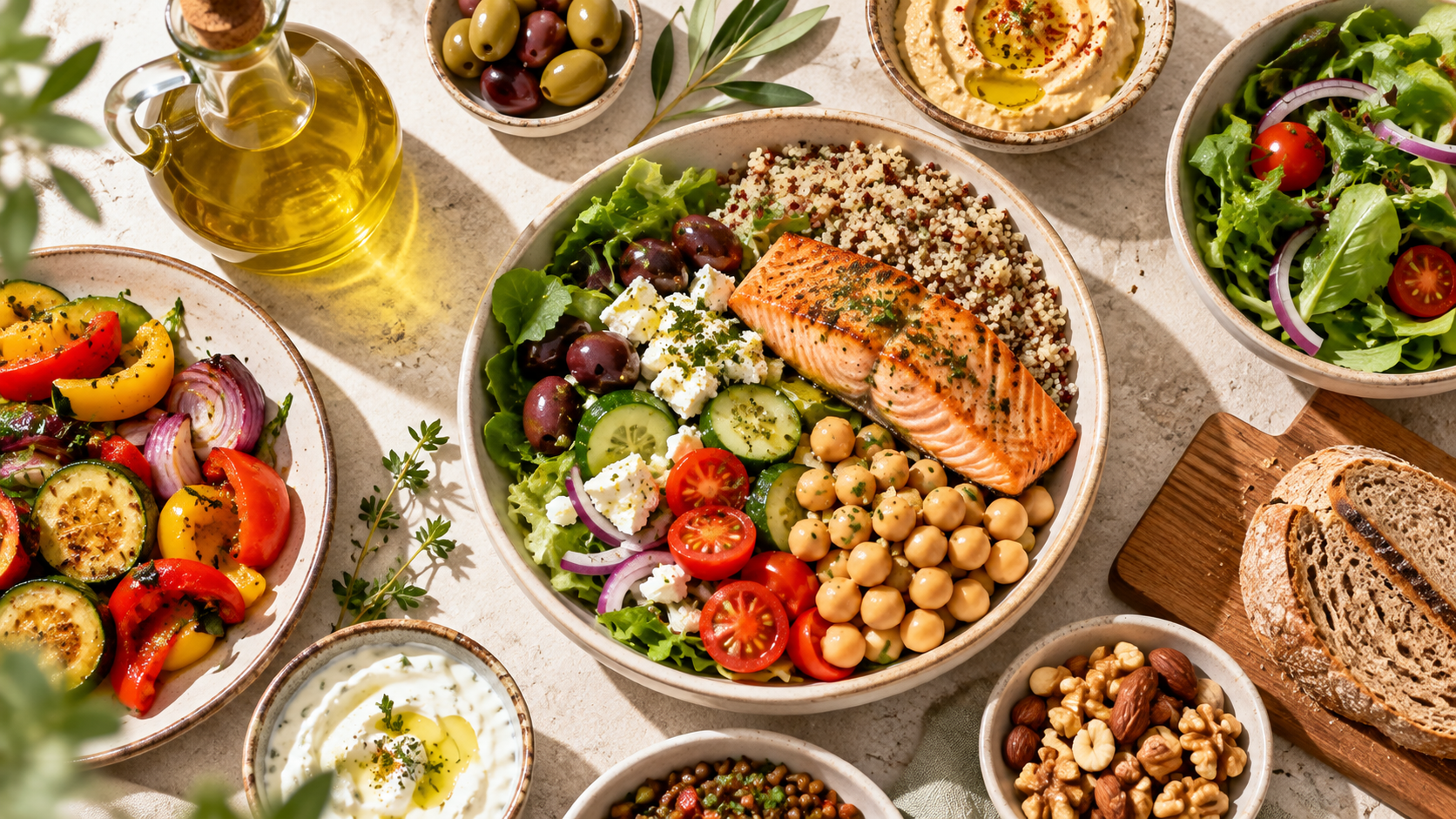
But what matters for the olive oil shot trend is how people actually consumed it. They weren't drinking olive oil on an empty stomach. They were following a Mediterranean eating pattern that included vegetables, legumes, fish, nuts and whole grains, with olive oil used in everyday meals. That is where the stronger evidence lies. Taking a spoonful of olive oil by itself every morning is a different habit, and this trial does not tell us whether it offers the same benefits.How do you use olive oil in an Indian kitchen?
You do not need to change cuisines to use it well.
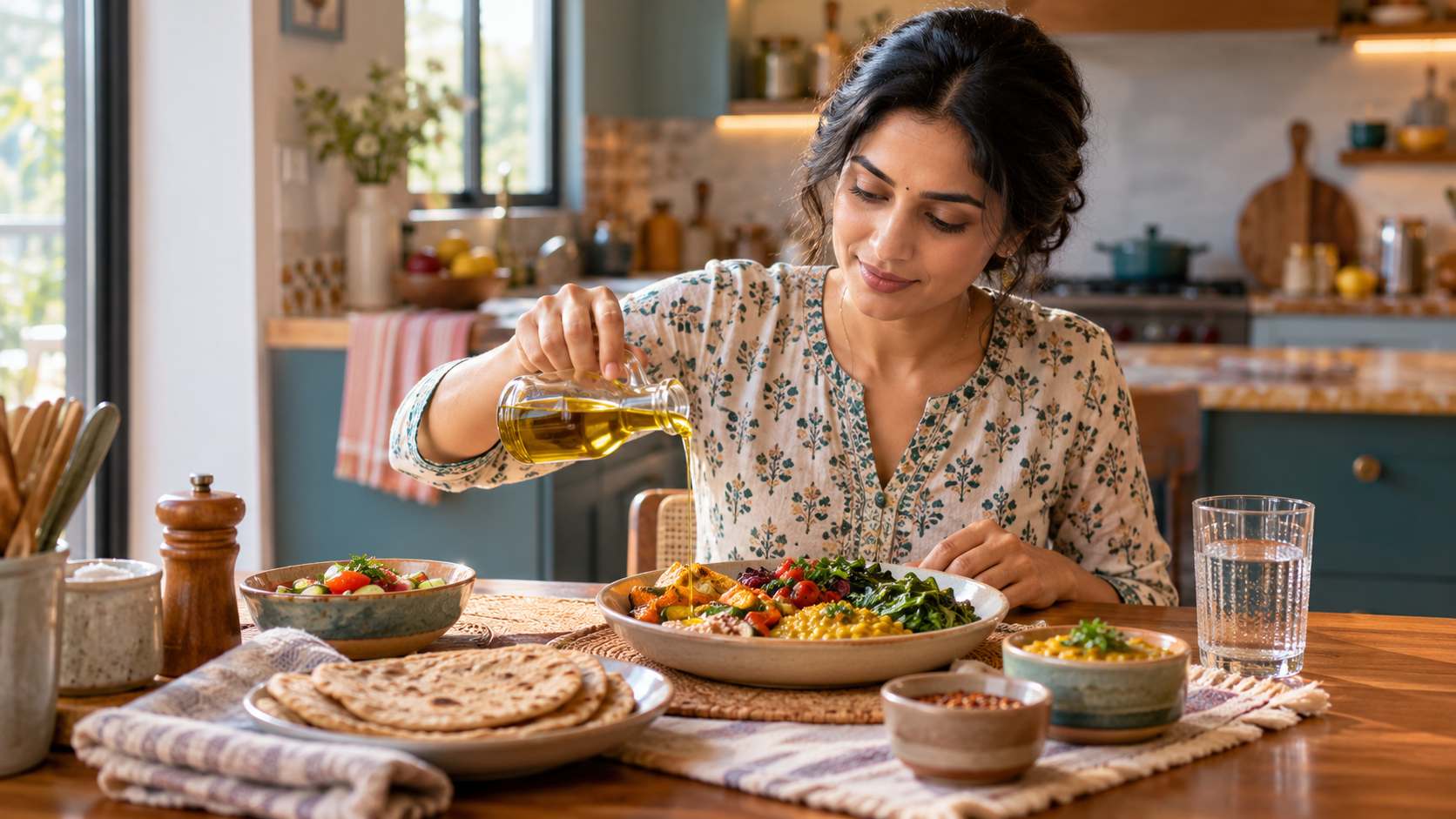
Use extra virgin olive oil raw or at gentle heat: drizzled on a salad or koshimbir, stirred into hummus or a bowl of chana chaat, or tossed with roasted vegetables.
Finish a bowl of dal or a vegetable soup with a few drops for flavour.
For everyday sautéing, a refined or light olive oil handles more heat than extra virgin.
Do not let any oil smoke in the kadhai. If the tadka smokes, the oil is too hot.
Keep rotating oils. Mustard, groundnut and olive oil each bring a different fat profile to the week.
Count your total oil, not just the olive oil.
Our guide to what macronutrients are shows how fat fits into a day's plate.
If you love the morning ritual itself, a teaspoon in a salad at lunch gives you the same oil with fibre on the side. Many people start the morning with a glass of warm water instead. Our article on whether warm water in the morning cleans your gut looks at that habit too.
Who should skip the olive oil shot?
A shot of oil on an empty stomach does not suit everyone.
People with gallstones. A fatty load makes the gallbladder squeeze. The NIDDK notes that gallbladder attacks often follow heavy meals. Do not take oil shots or liver flushes without asking your doctor.
People with reflux or a sensitive stomach, who may find neat oil brings on heartburn or loose stools.
Anyone working hard to lose weight, since the extra calories add up quickly.
People on blood thinners or diabetes medicines who are making big changes to their diet. Tell your doctor before you do, so your treatment plan can keep up.
When should you see a doctor?
The NIDDK advises seeing a doctor right away if you have any of these during or after a gallbladder attack:
Pain in your belly that lasts several hours.
Nausea and vomiting.
Fever, even a low one, or chills.
Yellowing of your skin or the whites of your eyes.
Tea-coloured urine and pale stools.
The NIDDK says these may be signs of a serious infection or inflammation of the gallbladder, liver or pancreas. For constipation, see a doctor if you are worried or it is not getting better.
So if the spoon of green oil has become part of your morning, you do not have to give it up. Just keep it small, count it in your day and put most of your olive oil where the evidence is: on a plate full of vegetables, dal and grains, shared at the table.
Sources
Medical Disclaimer: This article is for general information and is not a substitute for advice from your doctor. Speak to a qualified healthcare professional before starting any supplement, especially if you are pregnant, breastfeeding or taking medication.
Continue this topic
Connected guides, ingredient explainers, product context, and tools chosen from this article's topic cluster.
Magnesium glycinate and magnesium citrate are two common supplement forms. Here is how they differ, what the evidence actually supports and which may fit your needs better.
Constipation can come with bloating and gas, even if you are still having bowel movements. Here is how to recognise the pattern and what may help.
Quick questions
Does an olive oil shot help you poop?
Fat in a meal is thought to help set the gut moving, so some people find a spoon of oil helps. The research is small. One trial was in people on dialysis, had no placebo group, started with only 4 mL a day and found no difference between olive oil and mineral oil.
Will an olive oil shot help me lose belly fat?
No good evidence says so. A review of trials found about 0.92 kg more weight loss on diets enriched with olive oil in food, not as capsules. A shot added on top of your usual cooking only adds calories, since fat carries 9 calories per gram.
Is it better to take olive oil on an empty stomach?
There is no research showing an empty stomach works better. The studies behind olive oil used it in meals as part of a Mediterranean style diet. Some people get heartburn or loose stools from neat oil.
Who should not take an olive oil shot?
People with gallstones should not take oil shots without asking their doctor. People with reflux or a sensitive stomach may get heartburn or loose stools. Anyone trying to cut calories should count the extra oil. The NIDDK advises seeing a doctor right away for any of these during or after a gallbladder attack: belly pain lasting several hours, nausea and vomiting, fever or chills, yellowing of the skin or whites of the eyes, or tea-coloured urine and pale stools.
How can I use olive oil in Indian cooking?
Use extra virgin olive oil raw or at gentle heat on salads, chaat, hummus or to finish dal. A refined or light olive oil suits everyday sautéing. Rotate it with mustard and groundnut oil and never let any oil smoke.
7 linked sources checked against our citation and claim-safety process.
Reviewed 14 Oct 2026 for supplement-claim and medical-disclaimer boundaries.
Recommended from the Aora range
Aora Nutrivit Plus
19 Essential Nutrients with Zinc, Magnesium and Vitamins B Complex, C and D3
- Multivitamin
- Daily Foundation
- Made in India
From₹690.00
Try Aora - free
Put this article to work on you.
Health and safety notice
- This article is educational. It is not medical advice and is not a substitute for guidance from a qualified healthcare provider. Consult a physician before starting any supplement, especially during pregnancy or breastfeeding, with a medical condition, or while on medication.
- FSSAI compliance: Health supplements and nutraceuticals are not intended for medicinal use. Any supplement-related information is provided to describe nutritional or physiological support and should not be interpreted as a claim to diagnose, treat, cure, or prevent any disease. FSSAI regulates health supplements and nutraceuticals separately from medicinal products.
Read our full medical disclaimer and editorial policy.
Sources and editorial standards
- 1four-week randomised trial in 50 people with constipation on haemodialysis (Journal of Renal Nutrition, 2015)
- 2systematic review of randomised trials on regular olive oil intake (Nutrition, 2020)
- 3meta-analysis of 11 randomised trials lasting at least 12 weeks (Revista Española de Salud Pública, 2018)
- 4review of 52 trials on olive oil and body fat (Food and Function, 2023)
- 5MedlinePlus on dietary fats
- 6PREDIMED trial (New England Journal of Medicine, 2018)
- 7NIDDK notes that gallbladder attacks often follow heavy meals
Supplement content is educational only and should not replace medical advice from a qualified clinician. Product mentions are reviewed for claim safety before publication.