
Wedding Season Overeating: Can Fried Food and Sweets Affect Your Liver?
Can fried food and sweets at weddings affect your liver? Learn how frequent overeating affects liver health and how to enjoy wedding food wisely
In this article(9 sections)
- Can Overeating During Wedding Season Affect Your Liver?
- How Do Fried Foods and Sweets Affect Liver Health?
- Can One Heavy Meal Cause Fatty Liver?
- How to Enjoy Wedding Food Without Overeating
- What If You Already Have Fatty Liver?
- When Should You See a Doctor About Your Liver?
- Looking for Daily Liver Support?
- Enjoy the Wedding, Without Worrying About Every Bite
- Sources
At an Indian wedding, dinner often starts long before you reach the buffet. There are starters going around, drinks being served and relatives insisting you try something. By the time you sit down for the main course, you have already eaten quite a bit. Then comes dessert. One evening like this is unlikely to cause a liver problem. But wedding season rarely ends with one function. There might be a reception on Friday, a wedding on Sunday and another family celebration the following week. With so many occasions close together, wedding season overeating can become a habit without you realising it. What does that mean for your liver?
Can Overeating During Wedding Season Affect Your Liver?
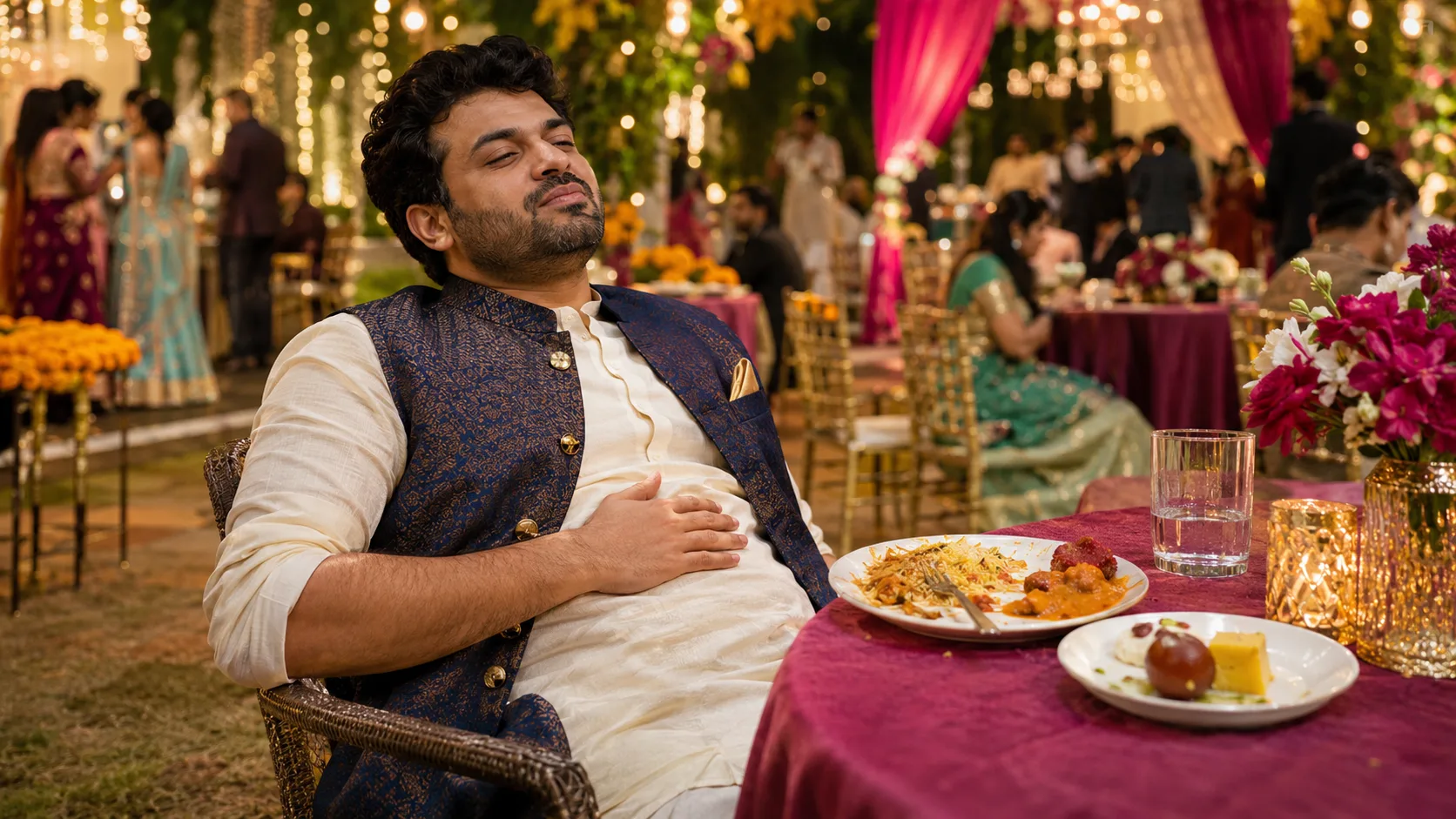
Frequent overeating can affect liver health, particularly when it continues over time. Your liver helps process nutrients from food and manages how your body stores and uses energy. When you regularly eat more calories than your body needs, the excess can contribute to weight gain and fat building up in the liver. The risk is higher for people who are overweight, have type 2 diabetes or have insulin resistance, which means their body doesn't respond to insulin as well as it should. A 2023 review of 156 studies published in Gut found that around 65% of people with type 2 diabetes had non-alcoholic fatty liver disease (NAFLD). However, being slim doesn’t rule it out. A 2021 review reported that lean NAFLD affects around 5% of the general population. According to the American Association for the Study of Liver Diseases (AASLD), regularly consuming excess calories, particularly from foods high in saturated fat, refined carbohydrates and sugary drinks, is linked to fatty liver disease. The concern is what you eat regularly over time, not a few heavy meals during wedding season.
Also read: How Does the Liver Work? What Your Liver Does All Day
How Do Fried Foods and Sweets Affect Liver Health?
Think about what you might eat at a wedding. A few pakoras while waiting for dinner, perhaps a soft drink, followed by pulao, paneer or biryani at the buffet. Then there are sweets such as jalebi, laddoos and gulab jamun. The portions may seem small when looked at individually, but by the end of the evening, you might have eaten more than you planned. Fried food can add a lot of calories to your meal, especially when you go back for more. Having it once in a while is different from eating large portions regularly. Over time, eating more calories than your body needs can lead to weight gain and increase the risk of fatty liver. Then there are the sweets and drinks. You might have dessert after dinner and a few glasses of soft drinks or sweetened mocktails during the evening. The sugar adds up without you really noticing. The National Institute of Diabetes and Digestive and Kidney Diseases (NIDDK) advises people with fatty liver to limit sugary foods and drinks, particularly those high in fructose. Alcohol matters too. It can affect your liver regardless of what you have eaten. If you already have liver disease, avoiding alcohol and following your doctor’s advice is important.
Can One Heavy Meal Cause Fatty Liver?
You come home after a wedding dinner feeling bloated and unusually full. Does that mean something is wrong with your liver? Not necessarily. Feeling uncomfortable after a heavy meal is not the same as having fatty liver. Fatty liver happens when too much fat builds up in the liver. A common type is now called metabolic dysfunction-associated steatotic liver disease (MASLD), previously known as non-alcoholic fatty liver disease (NAFLD). It is more common in people who are overweight, have type 2 diabetes or have other metabolic health problems. A 2022 Indian review of studies found that around 4 in 10 adults in India had fatty liver, based on a pooled prevalence estimate of 38.6%. Many don’t even know they have it because the condition often causes no noticeable symptoms. That is why bloating after a wedding meal doesn’t mean you have fatty liver, just as feeling perfectly fine doesn’t rule it out. Doctors look at your medical history and may use blood tests or scans to check for the condition.
How to Enjoy Wedding Food Without Overeating
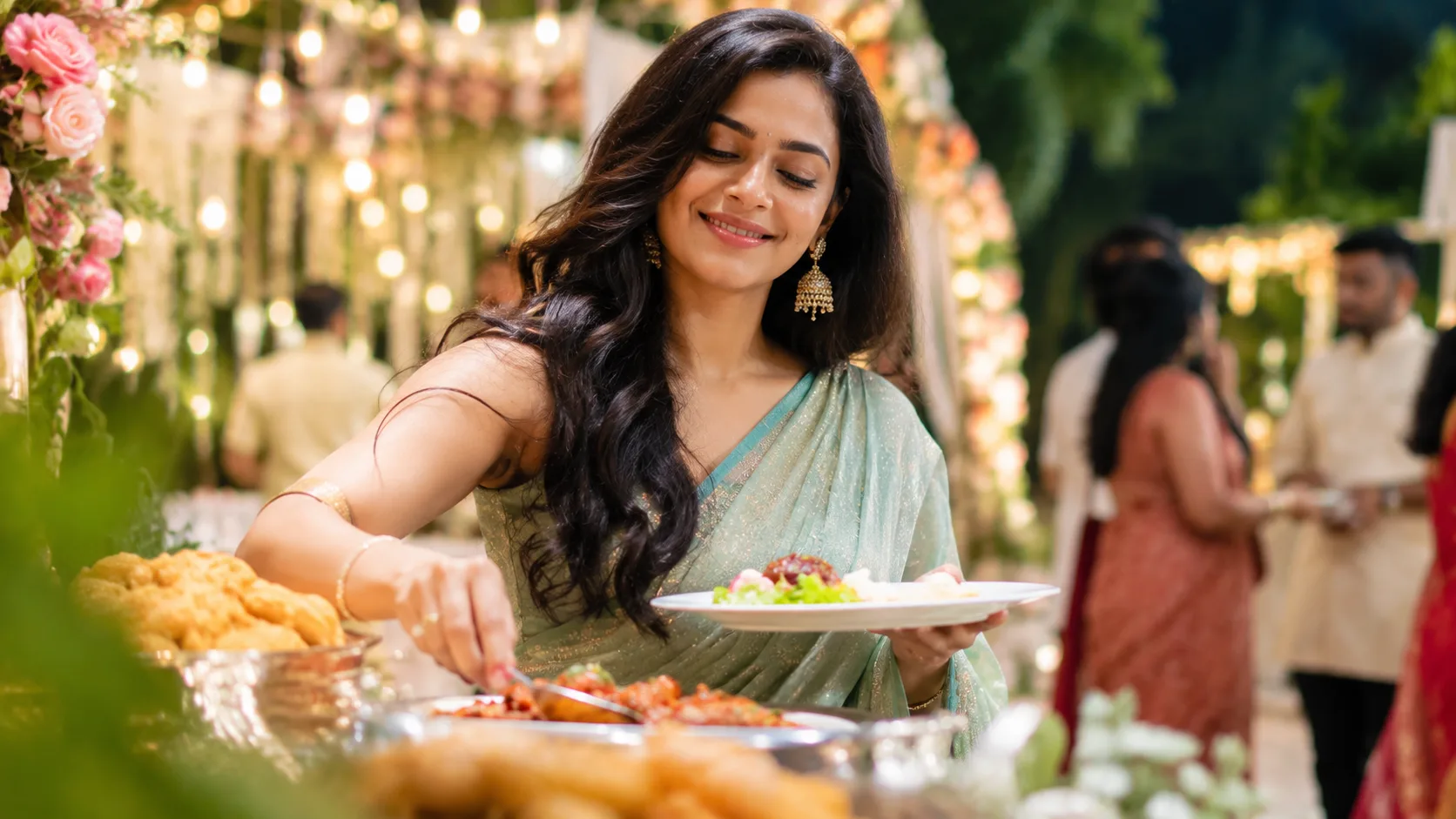
You don’t have to give up your favourite wedding food to eat sensibly. With a little planning, you can enjoy the buffet without eating too much, especially when you have several weddings to attend.
1. Don’t skip meals before the wedding: If dinner is going to be late, have your usual meals during the day. Skipping lunch to save room for dinner may leave you very hungry, making it harder to control how much you eat. Our article on skipping meals and nutrition explains why what you eat throughout the day matters
2. Go easy on the starters: Starters often keep coming long before dinner is served. It is easy to eat more than you realise while talking to relatives. Have what you like, but leave some room for the main course.
3. Choose what you want from the buffet: Take a look at what’s being served before filling your plate. Pick your favourite dishes and try to include some dal, vegetables or other protein-rich foods.
4. Enjoy your dessert: There’s no need to avoid sweets completely. Have the ones you like, but you don’t have to try everything. If you are already full, it’s fine to skip dessert.
5. Watch how many sugary drinks you have: A few soft drinks or sweetened mocktails can add quite a bit of sugar to your meal. Choose water more often, especially if you are already having sweets.
6. Get back to your usual meals the next day: If you have eaten more than usual, there is no need to skip breakfast or go on a detox diet the next day. Just return to your regular meals, eat a variety of foods and stay active.
What If You Already Have Fatty Liver?
If you have been diagnosed with fatty liver, wedding meals may need a little more planning. Your diet matters, but so do your weight, blood sugar, physical activity and any other medical conditions. For example, someone who has both fatty liver and diabetes may need to be mindful of sugary drinks and carbohydrate portions. Another person may have been given specific dietary advice based on their medical history. The 2024 European liver guidelines recommend improving diet quality, limiting foods high in sugar and saturated fat, and avoiding sugar-sweetened drinks for people with MASLD. Regular physical activity and weight management, where appropriate, are also part of recommended care. You can still enjoy weddings while following your doctor’s advice. For more tips on everyday eating, read our guide to a fatty liver diet with Indian meals.
When Should You See a Doctor About Your Liver?
Liver problems don’t always show symptoms. If you have fatty liver, abnormal liver test results or type 2 diabetes, speak to your doctor about whether you need further checks. Persistent tiredness, unexplained weight loss, nausea or pain in the upper right side of your abdomen should also be checked. Yellowing of the eyes or skin needs prompt medical attention, while severe abdominal pain, vomiting blood or sudden confusion requires emergency care. Eating too much at a wedding doesn’t mean you need a liver test. But if you have ongoing symptoms or existing health concerns, don’t ignore them.
Also read: High SGPT in Your Blood Test? What It Means and What to Do
Looking for Daily Liver Support?
Your liver works every day, not just when you have had a heavy meal. Along with eating well and staying active, you may also want to consider nutritional support as part of your daily routine. Aora Silybeet brings together milk thistle extract with 80% silymarin, N-acetylcysteine (NAC), beetroot and dandelion root in one formula designed to support normal liver function. Explore the ingredients and see if Silybeet is right for your routine. Remember, supplements cannot make up for overeating or replace medical treatment. If you have a liver condition or take medication, check with your doctor before use.
First order offer: Get 10% off with code AORAWELCOME. Cannot be combined with bundle discounts. Check offer terms at checkout.
Enjoy the Wedding, Without Worrying About Every Bite
Weddings are a time to enjoy good food and celebrate with family. Having a little extra biryani or your favourite sweet once in a while is not going to decide your liver health. What matters more is how you eat over time. If you have several weddings to attend, be mindful of how much you're eating and try to stick to your usual balanced meals between functions. If you already have fatty liver or other health concerns, follow your doctor’s advice. You don’t have to give up the foods you love. Enjoy the celebrations, and don't let a few heavy meals turn into your everyday eating habits.
Sources
Continue this topic
Connected guides, ingredient explainers, product context, and tools chosen from this article's topic cluster.
Can turmeric supplements affect your liver? Learn about curcumin, possible side effects, recent research and how supplements differ from haldi in food.
Forgot to take your vitamins or supplements? Learn what to do after a missed dose, when not to double up and how to handle prescribed supplements
Learn what an NAC supplement does, its uses, side effects, daily dosage and medication interactions. Find out who should consult a doctor before taking NAC.
Quick questions
Can eating too many sweets during wedding season cause fatty liver?
Eating sweets occasionally doesn't automatically cause fatty liver. But regularly consuming more calories and added sugar than your body needs may contribute to fat building up in the liver over time, especially if you have other metabolic risk factors.
Should I skip lunch before a heavy wedding dinner?
There's usually no need to skip lunch. Eat normally during the day and choose portions that suit your appetite at the wedding. If you have diabetes or take medication that depends on meal timing, follow your doctor's advice.
Does bloating after a heavy meal mean something is wrong with my liver?
Not necessarily. Bloating or fullness after a large meal doesn't mean you have fatty liver. If the discomfort keeps returning, persists or comes with other concerning symptoms, speak with a healthcare professional.
What should I eat the day after a heavy wedding meal?
You don’t need to skip meals or follow a detox diet. Just return to your usual meals with vegetables, dal, fruit and other foods you normally eat. Drink enough water and avoid overeating again to make up for the previous day.
Can Aora Silybeet help after eating too much at a wedding?
No. Silybeet is a nutritional supplement intended to support normal liver function. It cannot cancel out a heavy meal or treat fatty liver disease. If you're considering taking it, check the ingredients and consult your doctor if you have a medical condition or take medication.
4 linked sources checked against our citation and claim-safety process.
Reviewed 22 Nov 2026 for supplement-claim and medical-disclaimer boundaries.
Recommended from the Aora range
Aora Silybeet
Milk Thistle with N-Acetyl Cysteine, Beetroot & Dandelion Root
- Liver Support
- Made in India
From₹1,400
Try Aora - free
Put this article to work on you.
Health and safety notice
- This article is educational. It is not medical advice and is not a substitute for guidance from a qualified healthcare provider. Consult a physician before starting any supplement, especially during pregnancy or breastfeeding, with a medical condition, or while on medication.
- FSSAI compliance: Health supplements and nutraceuticals are not intended for medicinal use. Any supplement-related information is provided to describe nutritional or physiological support and should not be interpreted as a claim to diagnose, treat, cure, or prevent any disease. FSSAI regulates health supplements and nutraceuticals separately from medicinal products.
Read our full medical disclaimer and editorial policy.
Sources and editorial standards
- 1American Association for the Study of Liver Diseases (AASLD): Practice Guidance on the Clinical Assessment and Management of NAFLD (2023)
- 2National Institute of Diabetes and Digestive and Kidney Diseases (NIDDK): Eating, Diet & Nutrition for NAFLD & NASH
- 3EASL-EASD-EASO: Clinical Practice Guidelines on the Management of MASLD (2024)
- 4Mayo Clinic: Fatty Liver Disease (MASLD), Symptoms and Causes
Supplement content is educational only and should not replace medical advice from a qualified clinician. Product mentions are reviewed for claim safety before publication.