

Can Turmeric Supplements Affect Your Liver? How They Differ From Haldi in Food
Can turmeric supplements affect your liver? Learn about curcumin, possible side effects, recent research and how supplements differ from haldi in food.
In this article(10 sections)
- Quick Answers
- The Haldi in Your Kitchen and the Turmeric in a Capsule
- Why Are Turmeric Supplements Raising Liver Safety Concerns?
- Why Do Some Turmeric Supplements Contain Black Pepper?
- Isn’t Turmeric Supposed to Be Good for the Liver?
- What Are the Signs That a Turmeric Supplement May Be Affecting Your Liver?
- What Should You Check on a Turmeric Supplement Label?
- Looking for Daily Liver Support?
- You Don’t Have to Leave Haldi Out of Your Kitchen
- Sources
A pinch of haldi goes into our dal, a little more into the sabzi and sometimes a spoonful into a glass of warm milk. Most of us have grown up eating turmeric without giving much thought to its safety. So why are health authorities raising concerns about turmeric supplements? Regulatory bodies in Australia, Canada, Italy and France have highlighted the potential risk of liver injury associated with turmeric or curcumin supplements and introduced precautionary measures, including label warnings. In June 2026, the United States Pharmacopeia (USP), an independent scientific standards-setting organisation, published a comprehensive safety review recommending a cautionary statement in its turmeric and curcuminoid monographs. Does this mean we need to be careful about the turmeric we use at home too?
Quick Answers
Turmeric supplements have been linked to liver injury in rare cases.
Turmeric used in normal cooking amounts has not been associated with the same risk.
Some supplements contain ingredients that increase curcumin absorption, which may also affect their safety.
People with liver problems, gallstones or bile duct disorders, pregnant or breastfeeding women, and those taking medicines such as warfarin or tacrolimus should consult a healthcare professional before using turmeric supplements.
The Haldi in Your Kitchen and the Turmeric in a Capsule
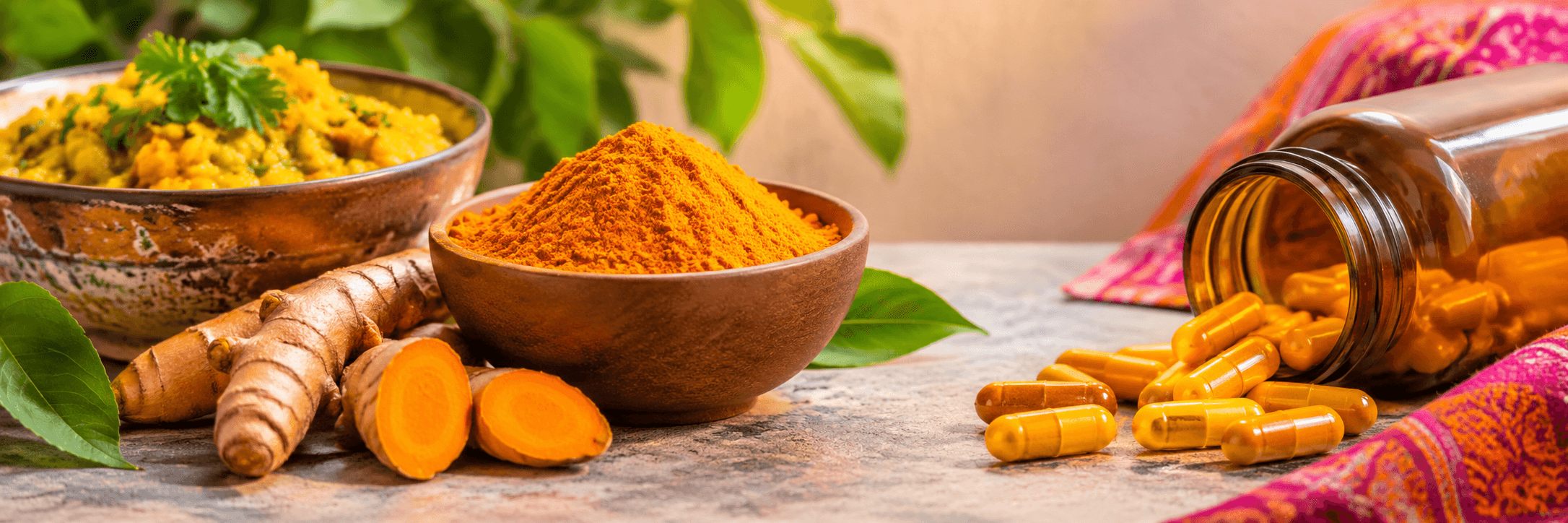
Turmeric contains several natural compounds, including curcumin, which gives it much of its yellow colour. Curcumin has antioxidant properties and has been studied for its possible effects on inflammation, joint health and liver health. According to the USP review, curcuminoids make up approximately 2 to 9% of turmeric. The average daily turmeric intake in India is around 2 to 2.5 g, providing roughly 60 to 100 mg of curcumin. Now consider a 500 mg capsule of turmeric extract standardised to 95% curcuminoids. It would contain 475 mg of curcuminoids, several times the amount typically obtained from dietary turmeric. A 500 mg capsule of ordinary turmeric powder, on the other hand, would contain considerably less. Both may have turmeric written on the front of the pack, but what you get from each can be quite different. Turmeric is also an ingredient in some liver health supplements, which makes it worth checking whether the product contains whole turmeric powder or concentrated curcumin. The amount of extract, its concentration and the other ingredients in the formula all need to be considered.
Why Are Turmeric Supplements Raising Liver Safety Concerns?
In June 2026, the United States Pharmacopeia (USP) published a comprehensive safety review after examining reports of liver problems associated with turmeric and curcumin supplements. Following its assessment, the USP recommended adding a cautionary statement to its turmeric and curcuminoid monographs to inform consumers about the rare reports of liver injury linked to these products. Concerns about turmeric supplement side effects had been raised before this review. In 2023, the US Drug-Induced Liver Injury Network (DILIN) published a study documenting 10 cases of turmeric-associated liver injury. Researchers found that seven of the ten patients carried a genetic variant known as HLA B*35:01, which is uncommon in the general population. This finding suggests a possible genetic susceptibility to turmeric-related liver injury, although the small number of cases limits what researchers can conclude.
Australia’s Therapeutic Goods Administration (TGA) had also received 18 reports of liver problems among people taking products containing turmeric or curcumin by June 2023. Nine of these reports had enough information to suggest that the products may have caused liver injury, and one case was fatal. These reports tell us that liver injury is possible, but they cannot tell us exactly how many people out of every thousand turmeric supplement users might experience it. The Australian health authority also made an important distinction: the risk did not appear to extend to turmeric consumed in normal amounts as part of food. However, the TGA advises people with current or previous liver problems to avoid medicines and herbal supplements containing turmeric or curcumin as a precaution.
Also read: High SGPT in Your Blood Test? What It Means and What to Do
Why Do Some Turmeric Supplements Contain Black Pepper?
Curcumin is not easily absorbed by the body. To get around this, manufacturers sometimes add piperine, an extract from black pepper, or use other methods to improve absorption. It may sound like better absorption is always a good thing. But when more of a compound reaches the bloodstream, its effects on the body can change too. This includes both its potential benefits and side effects. The National Institutes of Health (NIH) notes that highly bioavailable curcumin formulations, which are designed to improve the body's absorption of curcumin, may harm the liver in some people. However, researchers have not established whether piperine itself is responsible for the liver problems reported in people taking turmeric supplements. This does not mean adding pepper to your rasam or haldi milk carries the same risk as taking concentrated curcumin and piperine extracts.
Isn’t Turmeric Supposed to Be Good for the Liver?
You may have read about the potential benefits of curcumin for fatty liver. There is research behind some of these claims. A 2024 review of clinical trials involving people with non-alcoholic fatty liver disease found that curcumin supplementation reduced levels of two liver enzymes, ALT and AST, by an average of 4.10 and 3.27 units per litre respectively. ALT and AST are also known as SGPT and SGOT. These changes are worth studying further, but lower liver enzyme levels alone do not establish that fatty liver disease has improved or that curcumin can prevent long-term liver damage. There is no contradiction in an ingredient showing promising results in some studies while causing unwanted effects in a small number of people. Both findings are worth considering when comparing liver health supplements that contain curcumin. If you have fatty liver or raised liver enzymes, speak to your doctor before taking concentrated curcumin extracts.
What Are the Signs That a Turmeric Supplement May Be Affecting Your Liver?
Digestive problems such as nausea, acid reflux and diarrhoea are among the reported side effects of oral turmeric. Liver-related problems are less common, but there are certain symptoms you should not ignore:
Yellowing of the skin or eyes
Unusually dark urine
Persistent nausea or loss of appetite
Unexplained tiredness
If you develop these symptoms while taking turmeric supplements, stop taking the product and seek medical advice. Take the supplement pack with you so your doctor can check its ingredients and the amount you have been taking. These symptoms can have several causes, so a medical checkup is important.
What Should You Check on a Turmeric Supplement Label?

The next time you pick up a bottle of turmeric capsules, turn it around and look at the ingredient list. A few details can tell you more about the product than the claims on the front.
Form of turmeric: Does it contain whole turmeric powder or a concentrated extract?
Curcuminoid content: Check the amount of curcuminoids rather than just the total weight of turmeric.
Added ingredients: Look for piperine, black pepper extract or other ingredients used to increase absorption.
Daily serving: Check how much you would actually consume each day, especially if a serving contains more than one capsule.
Warnings: Read the precautions for people taking medicines or living with medical conditions.
Follow the same approach when comparing liver support supplements. A higher amount of an ingredient does not automatically make a product better.
Also read: Milk Thistle Side Effects: Who Should Be Careful Before Daily Use?
Looking for Daily Liver Support?
When choosing liver health supplements, it is worth looking at the complete formula rather than focusing on a single ingredient. Aora Silybeet brings together four ingredients for daily liver wellness in one tablet: 250 mg of milk thistle extract standardised to 80% silymarin, 200 mg of NAC, 50 mg of beetroot and 50 mg of dandelion root. With four ingredients in one daily tablet, Silybeet offers a convenient way to include liver support in your everyday routine. If you are looking for liver support supplements with clearly stated ingredient quantities, explore Aora Silybeet.
New to Aora? Get 10% off your first order with the code AORAWELCOME. This offer cannot be combined with bundle discounts.
You Don’t Have to Leave Haldi Out of Your Kitchen
There is no reason to stop adding turmeric to your everyday meals because of the reported liver problems associated with concentrated supplements. Enjoy your dal, sabzi and haldi milk as you normally would. When buying turmeric supplements, though, pay attention to the form of turmeric, how much the product contains and what else has been added to it.
Sources
Continue this topic
Connected guides, ingredient explainers, product context, and tools chosen from this article's topic cluster.
Forgot to take your vitamins or supplements? Learn what to do after a missed dose, when not to double up and how to handle prescribed supplements
Learn what an NAC supplement does, its uses, side effects, daily dosage and medication interactions. Find out who should consult a doctor before taking NAC.
What are milk thistle side effects? Learn who should be careful, possible medication interactions, daily-use safety and what to check before taking it.
Quick questions
Can turmeric supplements increase SGPT levels?
Yes, turmeric-associated liver injury can cause SGPT levels to rise. However, high SGPT can have many other causes. If your levels have increased after starting a turmeric supplement, tell your doctor about the product and when you began taking it.
How long does it take for turmeric-related liver problems to appear?
In the 2023 Drug-Induced Liver Injury Network study, liver injury typically developed within one to four months of starting turmeric. This does not mean problems cannot occur earlier or later. If you develop symptoms that could indicate liver injury, do not wait for a specific time period before seeking medical advice.
Is there a safe daily dose of turmeric supplements?
There is no single daily dose that has been established as free from liver injury risk for everyone. Products differ in their curcumin content and how easily the body absorbs them. Follow the product directions and seek medical advice if you have an existing liver condition.
Can turmeric supplements cause liver problems even without black pepper extract?
Yes. Liver injury has also been reported in people taking turmeric products without added piperine. Choosing a supplement without black pepper extract does not eliminate the risk.
Should people with fatty liver avoid turmeric in their food?
The reported safety concerns mainly involve concentrated turmeric or curcumin products rather than normal cooking amounts. Having fatty liver does not generally mean you need to stop using haldi in food, unless your doctor has advised you otherwise.
10 linked sources checked against our citation and claim-safety process.
Reviewed 27 Nov 2026 for supplement-claim and medical-disclaimer boundaries.
Recommended from the Aora range
Aora Silybeet
Milk Thistle with N-Acetyl Cysteine, Beetroot & Dandelion Root
- Liver Support
- Made in India
From₹1,400
Try Aora - free
Put this article to work on you.
Health and safety notice
- This article is educational. It is not medical advice and is not a substitute for guidance from a qualified healthcare provider. Consult a physician before starting any supplement, especially during pregnancy or breastfeeding, with a medical condition, or while on medication.
- FSSAI compliance: Health supplements and nutraceuticals are not intended for medicinal use. Any supplement-related information is provided to describe nutritional or physiological support and should not be interpreted as a claim to diagnose, treat, cure, or prevent any disease. FSSAI regulates health supplements and nutraceuticals separately from medicinal products.
Read our full medical disclaimer and editorial policy.
Sources and editorial standards
- 1United States Pharmacopeia (2026): Comprehensive Safety Review of Turmeric and Curcuminoid Dietary Supplements
- 2Drug-Induced Liver Injury Network (2023): Ten Cases of Turmeric-Associated Liver Injury
- 3Australian Therapeutic Goods Administration: Medicines Containing Turmeric or Curcumin and the Risk of Liver Injury
- 4NIH NCCIH: Turmeric, Usefulness and Safety
- 5NIH LiverTox: Turmeric
- 6Systematic Review and Meta-Analysis (2024): Effects of Curcumin Supplementation on Liver Enzymes in People With Fatty Liver Disease
- 7Health Canada (2025): Turmeric Natural Health Product Monograph
- 8Italian Ministry of Health (2019): Food Supplements Containing Extracts and Preparations of Curcuma longa
- 9French Agency for Food, Environmental and Occupational Health & Safety (ANSES, 2022): Adverse Effects Associated with the Consumption of Food Supplements Containing Turmeric
- 10New Zealand Medsafe (2018): Turmeric/Curcumin Interaction with Warfarin
Supplement content is educational only and should not replace medical advice from a qualified clinician. Product mentions are reviewed for claim safety before publication.