Silymarin vs Milk Thistle: What’s the Difference?
Milk thistle is the plant, while silymarin is a group of compounds found in its extract. Understanding that difference can make supplement labels much easier to compare.
In this article(11 sections)
- What Is Milk Thistle?
- What Is Silymarin?
- So, What Should You Look For on the Label?
- How to Compare Milk Thistle Supplement Labels
- Does a Higher Silymarin Percentage Mean a Better Supplement?
- What Does Research on Silymarin Actually Show?
- Why the Research Does Not Give a Simple Yes or No
- Are Milk Thistle and Silymarin Safe?
- Where Aora Silybeet Fits In
- Milk Thistle and Silymarin: Two Names, One Simple Difference
- Sources
Imagine you are in a supermarket or a large medical shop. You want to buy a liver supplement and walk towards the aisle thinking it will be an easy job. You start looking at the different bottles and suddenly feel confused. Some supplements say milk thistle, while others have silymarin printed on them. You take out your phone, do a quick Google search or ask your preferred AI bot and somehow you are still confused. If you relate to this situation, you are not alone. The names can make it seem like you are choosing between two different ingredients. In fact, silymarin and milk thistle are closely connected, but they are not the same thing. Milk thistle is the plant, while silymarin refers to the compounds found in extracts from the plant. You may also see silybin mentioned on a label. The important thing to know when comparing silymarin vs milk thistle is that these names refer to different parts of the same ingredient story. And once you understand that distinction, it becomes much easier for you to choose the right product for your needs.
What Is Milk Thistle?
Milk thistle (Silybum marianum) is a flowering herb from the daisy family that is native to the Mediterranean. It has been used for more than 2,000 years, particularly for liver and gallbladder problems, which is why it remains closely associated with liver health today. In simple terms, milk thistle is the plant, while silymarin refers to the group of compounds found mainly in its seeds. Milk thistle has been studied for several health conditions, particularly liver-related conditions. However, the human evidence is still mixed, and there is not enough high-quality research to treat milk thistle as a proven therapy for liver disease. The National Center for Complementary and Integrative Health also notes that there is not enough high-quality evidence to draw definite conclusions about milk thistle for liver conditions.
For a broader look at where milk thistle sits among other liver-support ingredients, see Do Liver Supplements Work? Milk Thistle, NAC and What the Evidence Says.
What Is Silymarin?
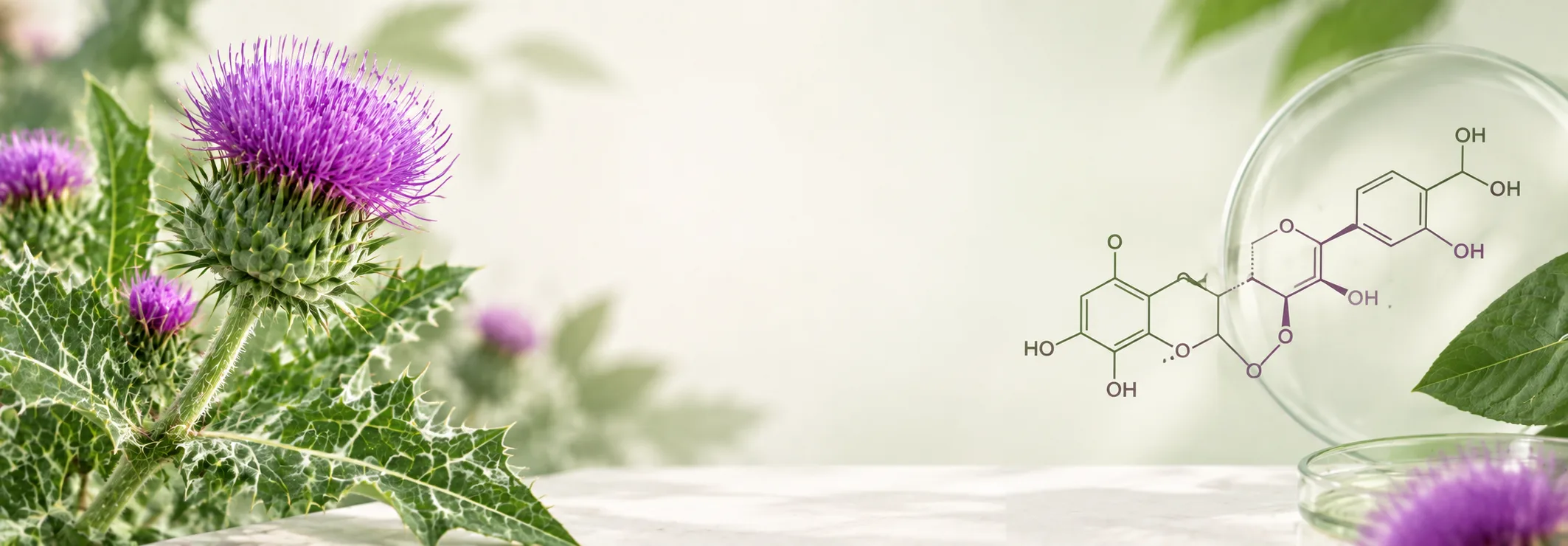
As mentioned earlier, silymarin is not another herb, vitamin or mineral. It is a mixture of plant compounds, mainly flavonolignans, found in milk thistle extracts. These include silybin, isosilybin, silychristin and silydianin. The US National Cancer Institute describes silymarin as a complex mixture rather than a single compound. Silymarin is best known for its antioxidant and anti-inflammatory properties, which is why it is closely associated with liver support. According to the Tang Center for Herbal Medicine Research, it can help neutralise free radicals and limit processes such as lipid peroxidation that can contribute to cell damage. Among its compounds, silybin is considered particularly biologically active and has been the main focus of much of the clinical research on silymarin. Researchers have also studied silymarin for blood sugar, skin health and certain cancer-related applications, but the evidence in these areas is still limited or mixed.
So, What Should You Look For on the Label?
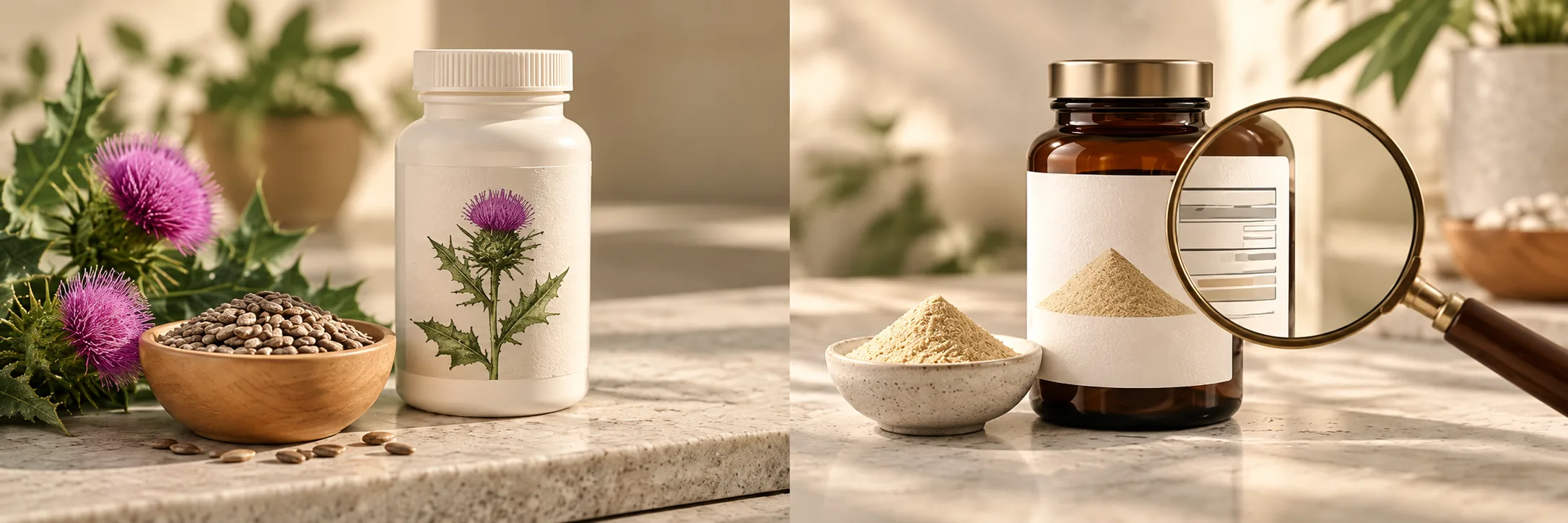
This is where the difference between milk thistle and silymarin actually becomes useful. When you are standing in front of a shelf of supplements, you may see one bottle that simply says ‘500 mg milk thistle’ and another that says ‘250 mg milk thistle extract, standardised to 80% silymarin’. At first glance, the 500 mg product looks like the stronger option. But that number alone doesn't tell you how much of the compounds you are actually getting. For example, if a product contains 250 mg of milk thistle extract standardised to 80% silymarin, that works out to 200 mg of silymarin. A product that simply says 500 mg milk thistle may be whole plant material, seed powder or an extract. Without more information on the label, you cannot tell how much silymarin it provides. That is why the biggest number on the front of the bottle is not always the most useful one. The form of the ingredient and the amount of silymarin can tell you much more about what is actually in the product.
How to Compare Milk Thistle Supplement Labels
When you pick up a milk thistle supplement, the front of the bottle only tells you so much. Turn it around and check what the milligram number actually refers to. It could be whole milk thistle, milk thistle seed, an extract or silymarin itself. If it is an extract, see whether it is standardised. A label that says ‘standardised to 80% silymarin’ gives you a clearer idea of what the extract contains than simply saying milk thistle. It is also worth checking the serving size. That 500 mg figure may be for two or three capsules rather than one. And if the product contains other active ingredients, look at those too. The simple rule is: don't compare the biggest number on the front. First make sure you are comparing the same thing.
Does a Higher Silymarin Percentage Mean a Better Supplement?
Not necessarily. A higher percentage tells you more about the composition of the extract, but it does not automatically mean the supplement will work better for you. There is also a quality issue worth keeping in mind. A 2019 study published in Scientific Reports tested 26 milk thistle supplements bought in the United States and Czech Republic and found substantial differences in their measured silymarin content. In some products, the amount found by researchers differed considerably from what the label stated. The study also found differences between batches. That does not mean every milk thistle supplement is unreliable. The study looked at a specific group of products in two countries. But it does give you a useful reason not to judge a supplement by its percentage alone. What the label says matters, but so does how reliably the product delivers what the label promises.
What Does Research on Silymarin Actually Show?
The research on silymarin is promising in some areas, but it is not as straightforward as saying that it improves liver health. A 2024 systematic review and dose-response meta-analysis of 41 randomised controlled trials found that silymarin was linked to lower levels of some liver enzymes, including ALT, AST and alkaline phosphatase. Another 2024 meta-analysis involving people with NAFLD/NASH, now generally referred to as MASLD/MASH, also reported improvements in several liver and metabolic markers. These results are encouraging, but there is an important distinction: improving a blood test does not necessarily mean that liver disease itself has improved or that long-term health outcomes will be better.
For more context on how liver markers differ from actual clinical outcomes, read Do Amino Acids Support Liver Health? What the Research Says.
Why the Research Does Not Give a Simple Yes or No
A multicentre, randomised, double-blind, placebo-controlled trial published in PLOS ONE tested higher-than-usual doses of a standardised silymarin preparation in people with non-cirrhotic NASH. After about 48 weeks, the researchers did not find a statistically significant improvement in the main liver tissue outcome compared with placebo. ALT and AST also did not differ meaningfully between the groups. The study had some limitations, so it does not settle the question on its own. More importantly, it shows why different studies can give different answers. They may use different doses, formulations, patient groups, treatment periods and ways of measuring results. For now, the National Center for Complementary and Integrative Health says there is not enough high-quality evidence to draw definite conclusions about milk thistle for liver conditions in people.
Are Milk Thistle and Silymarin Safe?
Milk thistle is generally considered safe for most people, although some people can experience side effects. According to NCCIH, these can include bloating, nausea and gas. Allergic reactions are also possible, especially if you are sensitive to plants such as ragweed, chrysanthemums, marigolds or daisies. There is limited information about using milk thistle during pregnancy and breastfeeding. If you take regular medicines, it is also a good idea to tell your doctor or pharmacist about any herbal supplements you use. Herbal does not automatically mean that a product cannot interact with your medicines. If you have liver or gallbladder disease, abnormal liver test results or unexplained symptoms, speak with a healthcare professional rather than trying to manage the problem with a supplement on your own.
If you are trying to understand whether a symptom could actually point to a liver problem rather than a supplement question, see Signs of Liver Problems in the Feet: What Science Actually Says.
Where Aora Silybeet Fits In
If you are looking for a supplement as part of an everyday liver wellness routine, understanding the label can help you make a more informed choice. Aora Silybeet contains milk thistle extract standardised to 80% silymarin, along with NAC, beetroot and dandelion root. It is designed for everyday liver wellness and is not a treatment for fatty liver disease, hepatitis, fibrosis, cirrhosis or abnormal liver test results.
Milk Thistle and Silymarin: Two Names, One Simple Difference
Once you understand the terminology, the difference is actually quite simple. Milk thistle is the plant. Silymarin is the mixture of compounds found in extracts from the plant. And if you come across silybin or silibinin, you are looking at individual compounds within that mixture. You do not need to memorise all the chemistry. The useful takeaway is that these names tell you different things about the ingredient. That makes it easier to read a supplement label, understand what you are actually getting and avoid being swayed by whichever bottle happens to have the biggest number on the front.
Sources
National Center for Complementary and Integrative Health: Milk Thistle, Usefulness and Safety
2024 Systematic Review of Silymarin and Liver and Kidney Markers, Phytotherapy Research
2024 Meta-analysis of Silymarin in NAFLD/NASH, Annals of Hepatology
Navarro and colleagues: Silymarin in Non-cirrhotic NASH, PLOS ONE
Fenclova and colleagues: Quality of Commercial Milk Thistle Supplements, Scientific Reports
Medical Disclaimer: This article is for general educational purposes only and is not a substitute for medical advice, diagnosis or treatment. Milk thistle and silymarin supplements should not be used to self-treat abnormal liver tests or diagnosed liver disease. Speak with a qualified healthcare professional before using a supplement if you have a liver or gallbladder condition, take regular medicines, are pregnant or breastfeeding, or have symptoms that concern you.
Continue this topic
Connected guides, ingredient explainers, product context, and tools chosen from this article's topic cluster.
Fatty liver basics, milk thistle, NAC, antioxidants, alcohol recovery
Relevant for liver-support and antioxidant education.
Liver supplements are widely marketed for detox and liver support, but evidence varies by ingredient. Learn what research says about milk thistle, NAC, beetroot and dandelion, and what matters more for liver health.
Learn how the liver uses amino acids for protein metabolism and glutathione, whether supplements help, and where NAC may fit.
The feet cannot diagnose the liver, but a few foot changes can occur in advanced liver disease. Here is what actually matters.
Quick questions
1. Is Silymarin the Same as Milk Thistle?
No. Milk thistle is the plant, Silybum marianum, while silymarin is a mixture of compounds found mainly in milk thistle extracts. The names are closely connected, but they refer to different things.
2. What Are the Benefits of Milk Thistle and Silymarin?
Milk thistle and its main extract, silymarin, have been studied most often for liver health. Some research has found changes in liver enzymes and other markers, but the overall evidence is still mixed. There is not enough high-quality evidence to say that milk thistle or silymarin can reliably treat liver disease.
3. Does Silymarin Help With Fatty Liver?
Silymarin has been studied in people with fatty liver disease, and some studies have reported improvements in liver enzymes and other markers. However, results have not been consistent, and it has not been established as a proven treatment for fatty liver disease.
4. Is Silymarin Safe to Take?
Milk thistle is generally considered safe for most people, although it can cause side effects such as bloating, nausea and gas. Allergic reactions are also possible, particularly if you are sensitive to plants such as ragweed, daisies or chrysanthemums. If you take regular medicines, it is worth checking with a doctor or pharmacist before starting a supplement.
7 linked sources checked against our citation and claim-safety process.
Updated 15 Sept 2026 with supplement-claim and medical-disclaimer boundaries.
Recommended from the Aora range
Silybeet | Supports Liver Health & Natural Detoxification
Milk Thistle with N-Acetyl Cysteine, Beetroot & Dandelion Root
- Liver Detox
- Hepato-Protective
- Made in India
From₹1,400.00
Try Aora - free
Put this article to work on you.
Health and safety notice
- This article is educational. It is not medical advice and is not a substitute for guidance from a qualified healthcare provider. Consult a physician before starting any supplement, especially during pregnancy or breastfeeding, with a medical condition, or while on medication.
- FSSAI compliance: Health supplements and nutraceuticals are not intended for medicinal use. Any supplement-related information is provided to describe nutritional or physiological support and should not be interpreted as a claim to diagnose, treat, cure, or prevent any disease. FSSAI regulates health supplements and nutraceuticals separately from medicinal products.
Read our full medical disclaimer and editorial policy.
Sources and editorial standards
- 1National Center for Complementary and Integrative Health
- 2US National Cancer Institute
- 3Tang Center for Herbal Medicine Research
- 42019 study published in Scientific Reports
- 52024 systematic review and dose-response meta-analysis of 41 randomised controlled trials
- 62024 meta-analysis involving people with NAFLD/NASH
- 7multicentre, randomised, double-blind, placebo-controlled trial published in PLOS ONE
Supplement content is educational only and should not replace medical advice from a qualified clinician. Product mentions are reviewed for claim safety before publication.