What Are Antioxidants? What They Really Do in Your Body
Free radicals, oxidative stress and the antioxidants your body makes and eats, explained simply with an Indian plate that covers the bases.
In this article(15 sections)
- Free radicals in plain words
- What is oxidative stress?
- The antioxidants your body makes itself
- The antioxidants you get from food
- Vitamin C
- Vitamin E
- Polyphenols
- Carotenoids and minerals
- A simple Indian plate that covers the bases
- Is more always better with antioxidants?
- How NAC helps your body make glutathione
- Silymarin, the liver's antioxidant ally
- Where Aora Silybeet fits
- When should you see a doctor?
- Sources
If you have been wondering what are antioxidants, here is the short answer. Antioxidants are substances that calm down free radicals, the unstable molecules your cells make every day while turning food into energy. Your body makes some antioxidants itself, such as glutathione. The rest come from food: vitamin C in amla and guava, vitamin E in nuts and seeds. Plant compounds called polyphenols come from tea, spices, fruits and vegetables. The goal is balance, not the biggest possible dose. You see the word everywhere now. It is printed on green tea boxes, on dry fruit packets, on juice cartons and on skin creams. Reels promise that one "antioxidant shot" a day will slow ageing. Glutathione has become a beauty buzzword. With so much noise, it helps to step back and understand what these molecules actually do inside you.
Free radicals in plain words
Every cell in your body burns fuel. When you eat a plate of rice, dal and sabzi, your cells use oxygen to release energy from that food. This process leaves behind small, unstable by-products called free radicals. A free radical is a molecule that is missing one electron. It tries to grab an electron from whatever is next to it, such as a fat in the cell wall, a protein or even DNA. Free radicals also reach you from outside. A review in the International Journal of Biomedical Science lists outside sources too: air pollution, cigarette smoke, radiation and some medicines. If you commute through Delhi winter smog or stand at a busy Mumbai signal every morning, you are adding to the load. Here is the part most advertisements skip. The same review explains that free radicals play a dual role. They can harm cells, but they are also useful. Your immune cells use them to destroy germs. Your cells use small amounts as signals to talk to each other. You need some free radicals to stay healthy.
What is oxidative stress?
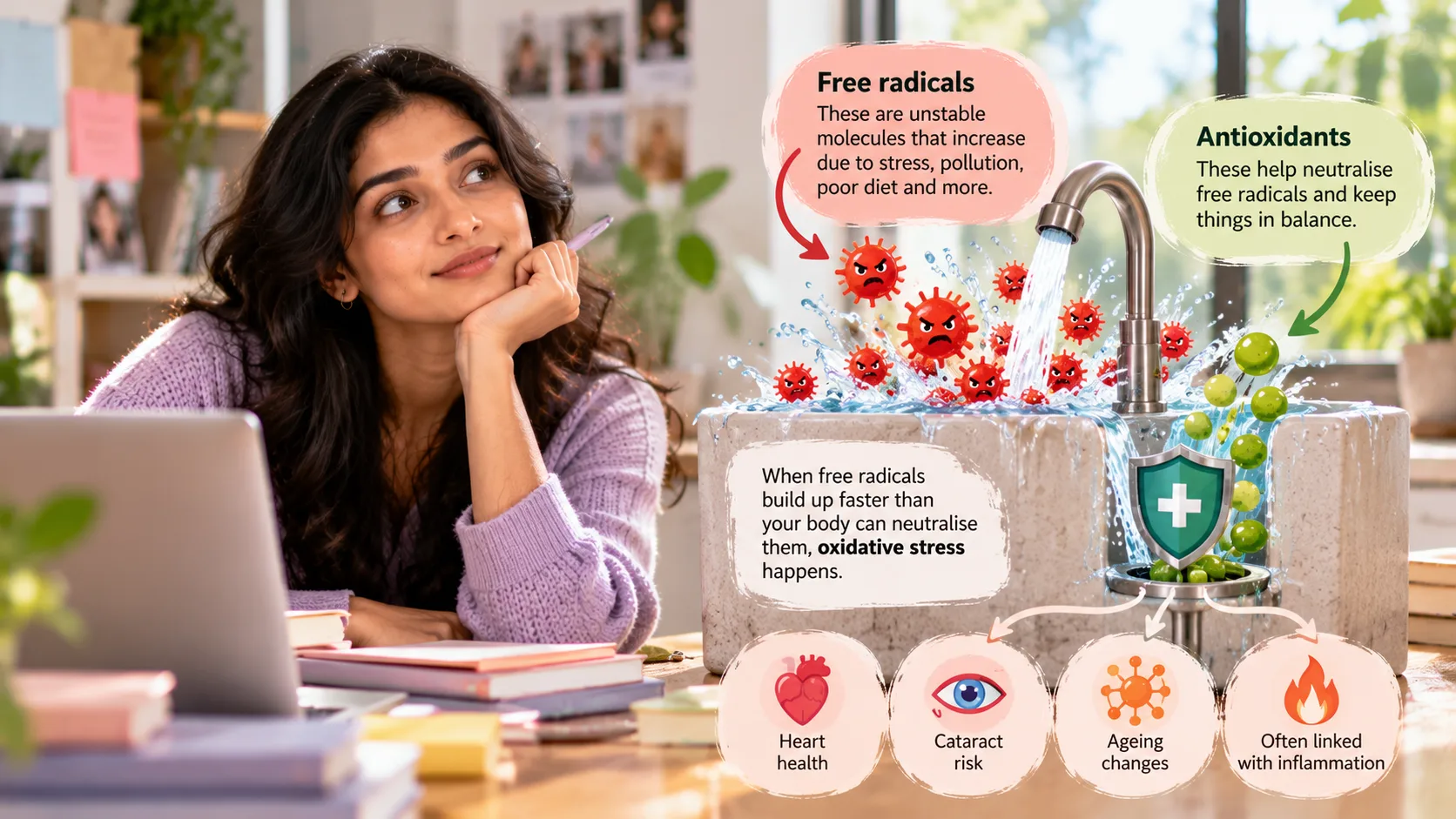
Oxidative stress is what happens when free radicals pile up faster than your body can neutralise them. Think of a kitchen sink. A little water running in is fine as long as the drain keeps up. When the tap runs harder than the drain, the sink overflows. The Pham-Huy review describes how this overload is linked with the development of many long-term conditions, including heart disease, cataract and the changes of ageing. Oxidative stress often travels with inflammation. The two feed each other. Our Aora guide on inflammation vs oxidative stress explains that link in detail, so we will not repeat it here.
The antioxidants your body makes itself
Long before you eat your first amla, your body already runs its own defence team. These are called endogenous antioxidants, which simply means "made inside".
Glutathione is a small molecule made from three amino acids: cysteine, glycine and glutamic acid. It sits inside almost every cell and is often called the master antioxidant. The liver holds a large share of it because the liver handles so much chemical work.
Superoxide dismutase, or SOD, is an enzyme that turns one of the most common free radicals into a less reactive molecule.
Catalase and glutathione peroxidase are enzymes that finish the job by breaking that product down into water and oxygen.
These enzymes need minerals to work. Zinc, copper, manganese and selenium all act as helpers for different antioxidant enzymes. This is one reason a varied diet matters more than any single "superfood".
The antioxidants you get from food
The second team comes from your plate. These are called dietary antioxidants.
Vitamin C
Vitamin C dissolves in water and works in the watery parts of your body, such as blood and the fluid inside cells. Amla is one of the richest sources in the Indian kitchen. Guava, oranges, mosambi, lemon, papaya, tomatoes and capsicum are good sources too. Vitamin C breaks down with long cooking, so a squeeze of lemon on your dal just before you eat helps.
Vitamin E
Vitamin E dissolves in fat and protects the fatty walls of your cells. Almonds, sunflower seeds, groundnuts and vegetable oils provide it. A small handful of soaked almonds in the morning is an old Indian habit that fits well here.
Polyphenols
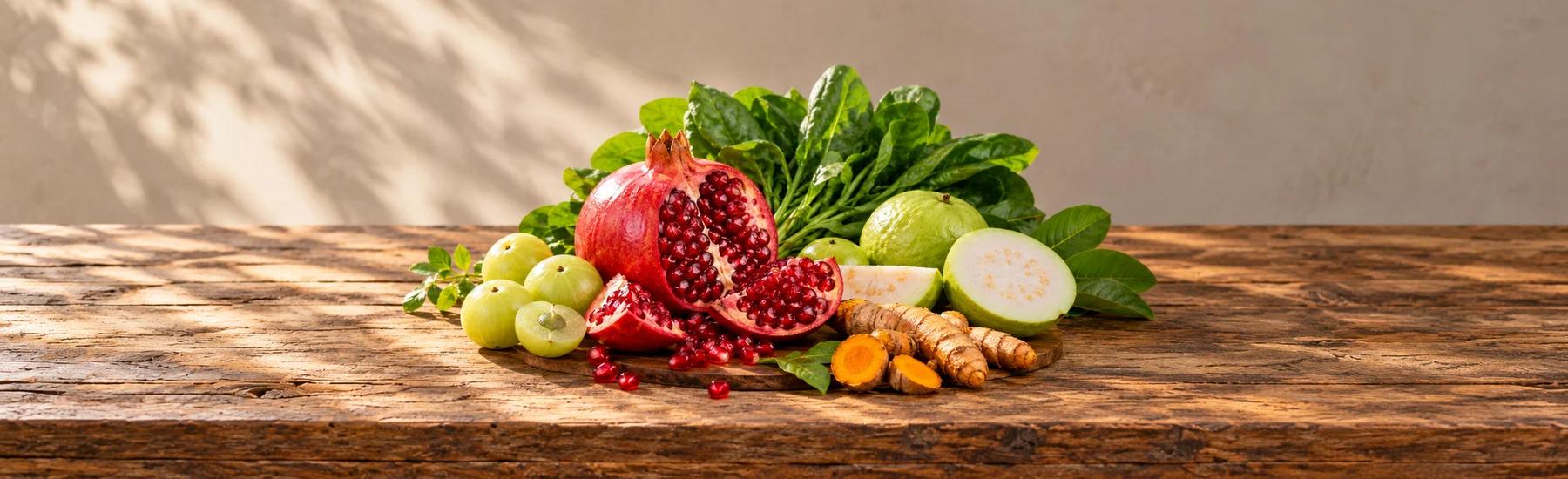
Polyphenols are a large family of plant compounds. A concise review in the Journal of Food Biochemistry describes them as compounds that help the body clear reactive oxygen species. They are found in tea, cocoa, fruits and vegetables. In an Indian diet, you get them from your morning chai, green tea, turmeric, jamun, pomegranate, red onion, rajma and dark leafy greens like palak and methi.
The same review notes that the gut microbes convert polyphenols into other useful compounds. Your gut bacteria are part of the antioxidant story too.
Carotenoids and minerals
Carrots, pumpkin, mango and papaya get their orange colour from carotenoids. Selenium comes from foods like eggs, fish and whole grains. MedlinePlus lists beta-carotene, lutein, lycopene, selenium and vitamins A, C and E among common antioxidants. It also notes that a diet rich in vegetables and fruits is healthy.
A simple Indian plate that covers the bases
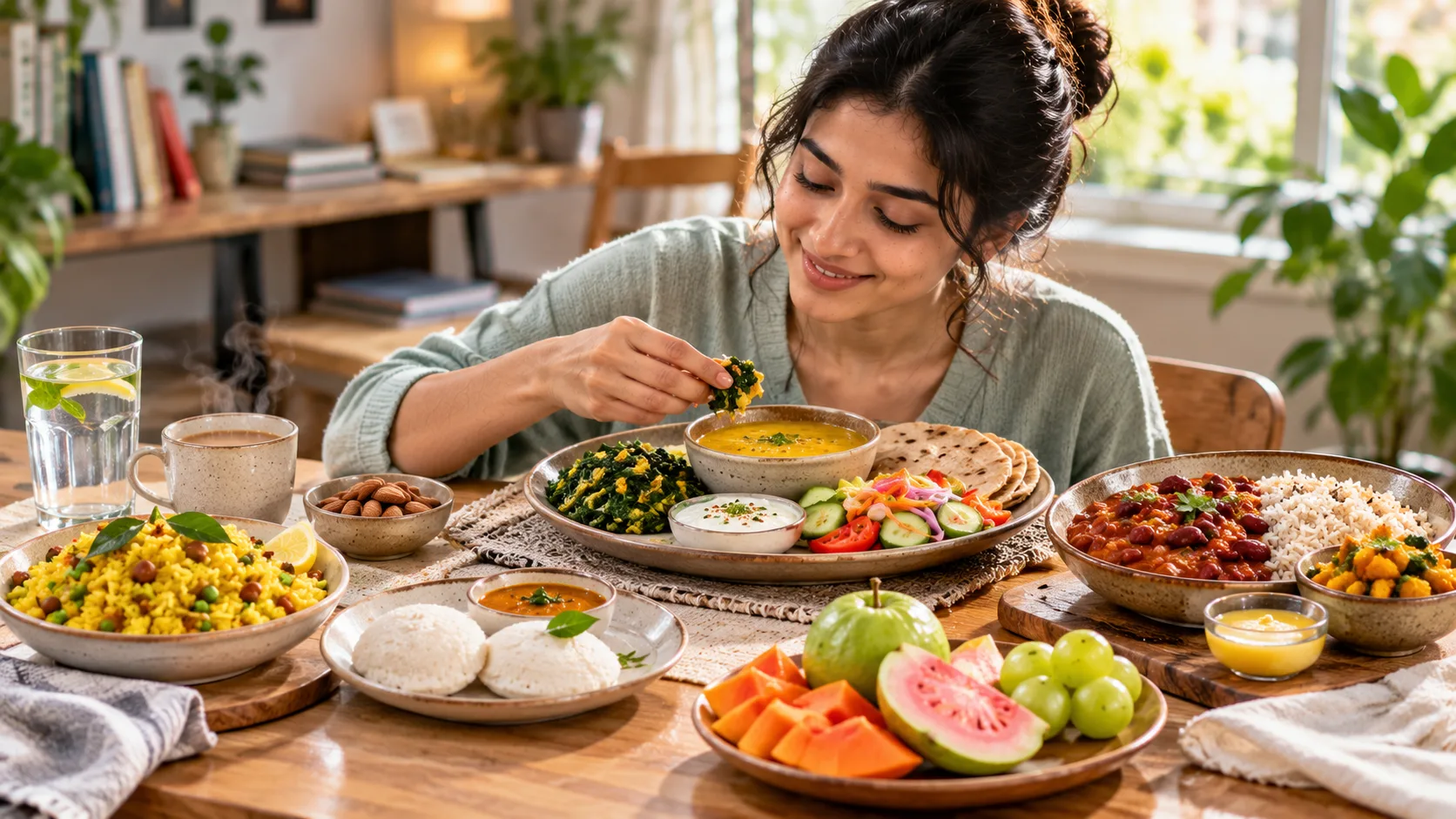
You do not need imported berries. A normal day of home food can do the job.
Morning: a glass of water, a cup of chai or green tea and a few soaked almonds.
Breakfast: poha with peanuts, onion and a squeeze of lemon, or idli with tomato chutney.
Lunch: dal, roti, a green sabzi like palak or methi, a bowl of curd and a raw salad of carrot, cucumber and tomato.
Evening: a guava, a few slices of papaya or one amla.
Dinner: rajma or chana with rice, a turmeric-rich sabzi and a little ghee.
A useful rule is to eat as many colours as you can in a day. Each colour tends to carry a different group of antioxidants.
Is more always better with antioxidants?
This is where the trend and the science part ways. Your antioxidant system works as a network. Vitamin C helps recycle vitamin E. Glutathione helps recycle vitamin C. Enzymes depend on minerals. Each part supports the others, much like the members of a joint family sharing the household work. Because free radicals also do useful work, the aim is never to wipe them all out. The aim is to keep them in balance. That is why a plate of varied food is the foundation. It is also why a supplement works best when taken at the dose printed on its label, as one part of a healthy routine. There is also a practical safety point. MedlinePlus notes that antioxidant supplements can interact with some medicines and advises you to tell your doctor about any you take. If you are on blood thinners, diabetes medicine or cancer treatment, check with your doctor first.
How NAC helps your body make glutathione
Glutathione itself is a fragile molecule. Your body builds it inside the cell from amino acids. Of the three building blocks, cysteine is usually the one in shortest supply. N-acetyl cysteine, or NAC, is a form of the amino acid cysteine. A review in Free Radical Research explains that NAC's antioxidant effect comes mainly from its ability to act as a precursor for reduced glutathione. In simple words, NAC hands your cells the missing building block so they can make more of their own master antioxidant. The same review notes that glutathione is a direct antioxidant and also feeds several antioxidant enzymes.
You also get cysteine from protein foods such as eggs, dal, paneer, chicken and fish. This article on amino acids and liver health covers how these building blocks support the liver.
Silymarin, the liver's antioxidant ally
Milk thistle is a flowering plant whose seeds contain a group of compounds called silymarin. Silymarin is one of the most studied liver ingredients in the world. A narrative review in Advances in Therapy describes silymarin as a free radical scavenger that also influences enzymes linked to cell damage. The review also reports that silymarin was generally very well tolerated in clinical studies. The liver carries a heavy chemical workload every day, which is why liver antioxidants get so much attention. To understand how liver supplements fit alongside diet and lifestyle, read our guide to liver supplements and liver health.
Where Aora Silybeet fits
If you want daily liver support built on these antioxidant ideas, Aora Silybeet brings them together in one tablet. It contains milk thistle extract standardised to 80% silymarin (250 mg) with N-acetyl cysteine (200 mg), beetroot and dandelion root. It is designed to sit alongside a varied plate, water, sleep and movement.
A colourful plate, good sleep and daily movement remain the base of your antioxidant defence.
When should you see a doctor?
Antioxidants support everyday health. They do not replace medical care. See a doctor if you notice any of these:
Yellow eyes or skin, dark urine or pale stools.
Constant tiredness that does not improve with rest.
Unexplained weight loss or loss of appetite.
Pain or heaviness on the upper right side of the belly.
Also talk to your doctor before starting any supplement if you are pregnant, breastfeeding, have a long-term illness or take regular medication.
Next time a packet shouts "rich in antioxidants" at you in the supermarket aisle, you can smile and think of your mother's plate of dal, sabzi, curd and a slice of guava. That plate has been doing this work quietly for years.
Sources
Health benefits of polyphenols: A concise review (Journal of Food Biochemistry, 2022)
Silymarin as Supportive Treatment in Liver Diseases: A Narrative Review (Advances in Therapy, 2020)
Medical Disclaimer: This article is for general information and is not a substitute for advice from your doctor. Speak to a qualified healthcare professional before starting any supplement, especially if you are pregnant, breastfeeding or taking medication.
Continue this topic
Connected guides, ingredient explainers, product context, and tools chosen from this article's topic cluster.
Fatty liver basics, milk thistle, NAC, antioxidants, alcohol recovery
Relevant for liver-support and antioxidant education.
Glutathione tablets, drips, collagen drinks and vitamin C gummies promise glowing skin. See what the trials show and what to avoid.
Reaching for a pill after a big party? Which painkillers and medicines not to mix with alcohol and what really helps the morning after.
One line on your health checkup is in red: SGPT. Learn what a high SGPT means, the normal range, the most common causes and what to do next.
Quick questions
What are antioxidants in simple words?
Antioxidants are substances that calm unstable molecules called free radicals before they damage cells. Your body makes some, such as glutathione. You get others from food, such as vitamin C, vitamin E and plant polyphenols.
Which Indian foods are rich in antioxidants?
Amla, guava, oranges, tomatoes, capsicum, almonds, groundnuts, turmeric, green tea, chai, jamun, pomegranate, rajma, palak and methi are all good sources. Eating many colours in a day gives you a wider mix.
Are free radicals always harmful?
No. Your immune cells use free radicals to kill germs. Your cells also use small amounts as signals. Trouble starts only when they build up faster than your body can neutralise them, which is called oxidative stress.
How does NAC help the body make glutathione?
NAC is a form of the amino acid cysteine, which is usually the scarcest building block for glutathione. By supplying cysteine, NAC helps your cells make more of their own glutathione.
Should I take antioxidant supplements with my medicines?
Talk to your doctor first. Some antioxidant supplements can interact with medicines such as blood thinners. Take any supplement at the dose on its label, alongside a varied diet.
5 linked sources checked against our citation and claim-safety process.
Reviewed 5 Oct 2026 for supplement-claim and medical-disclaimer boundaries.
Recommended from the Aora range
Aora Silybeet
Milk Thistle with N-Acetyl Cysteine, Beetroot & Dandelion Root
- Liver Support
- Made in India
From₹1,400.00
Try Aora - free
Put this article to work on you.
Health and safety notice
- This article is educational. It is not medical advice and is not a substitute for guidance from a qualified healthcare provider. Consult a physician before starting any supplement, especially during pregnancy or breastfeeding, with a medical condition, or while on medication.
- FSSAI compliance: Health supplements and nutraceuticals are not intended for medicinal use. Any supplement-related information is provided to describe nutritional or physiological support and should not be interpreted as a claim to diagnose, treat, cure, or prevent any disease. FSSAI regulates health supplements and nutraceuticals separately from medicinal products.
Read our full medical disclaimer and editorial policy.
Sources and editorial standards
- 1review in the International Journal of Biomedical Science
- 2concise review in the Journal of Food Biochemistry
- 3MedlinePlus
- 4review in Free Radical Research
- 5narrative review in Advances in Therapy
Supplement content is educational only and should not replace medical advice from a qualified clinician. Product mentions are reviewed for claim safety before publication.