
Can Artificial Sweeteners Cause Sugar Cravings?
Do artificial sweeteners make you crave more sugar? Explore what studies say about sucralose, hunger, sweet cravings and sugar-free foods.
In this article(9 sections)
- Why do artificial sweeteners make food taste sweet without sugar?
- Can artificial sweeteners actually make you hungrier?
- What happens when people eat sweet foods for months?
- Why do you still want biscuits with your evening chai?
- Do artificial sweeteners help with weight loss?
- What if you have diabetes?
- Are sugar-free biscuits and sweets different?
- Should you stop using sweeteners?
- References and sources
It's nearly four in the afternoon, and you're making another cup of chai at work. A few months ago, you stopped adding sugar and switched to a sweetener tablet. You barely notice the difference now. But something has been bothering you. Almost every evening, you find yourself opening the biscuit tin or looking for a piece of chocolate. You begin wondering whether your sugar-free chai is making you want more sweets. The connection between artificial sweeteners and sugar cravings has interested researchers for years. Some studies suggest that certain sweeteners may influence hunger signals, while others have found little effect on cravings or appetite. So, does replacing sugar actually make you want more of it? The answer is more interesting than a simple yes or no.
Why do artificial sweeteners make food taste sweet without sugar?
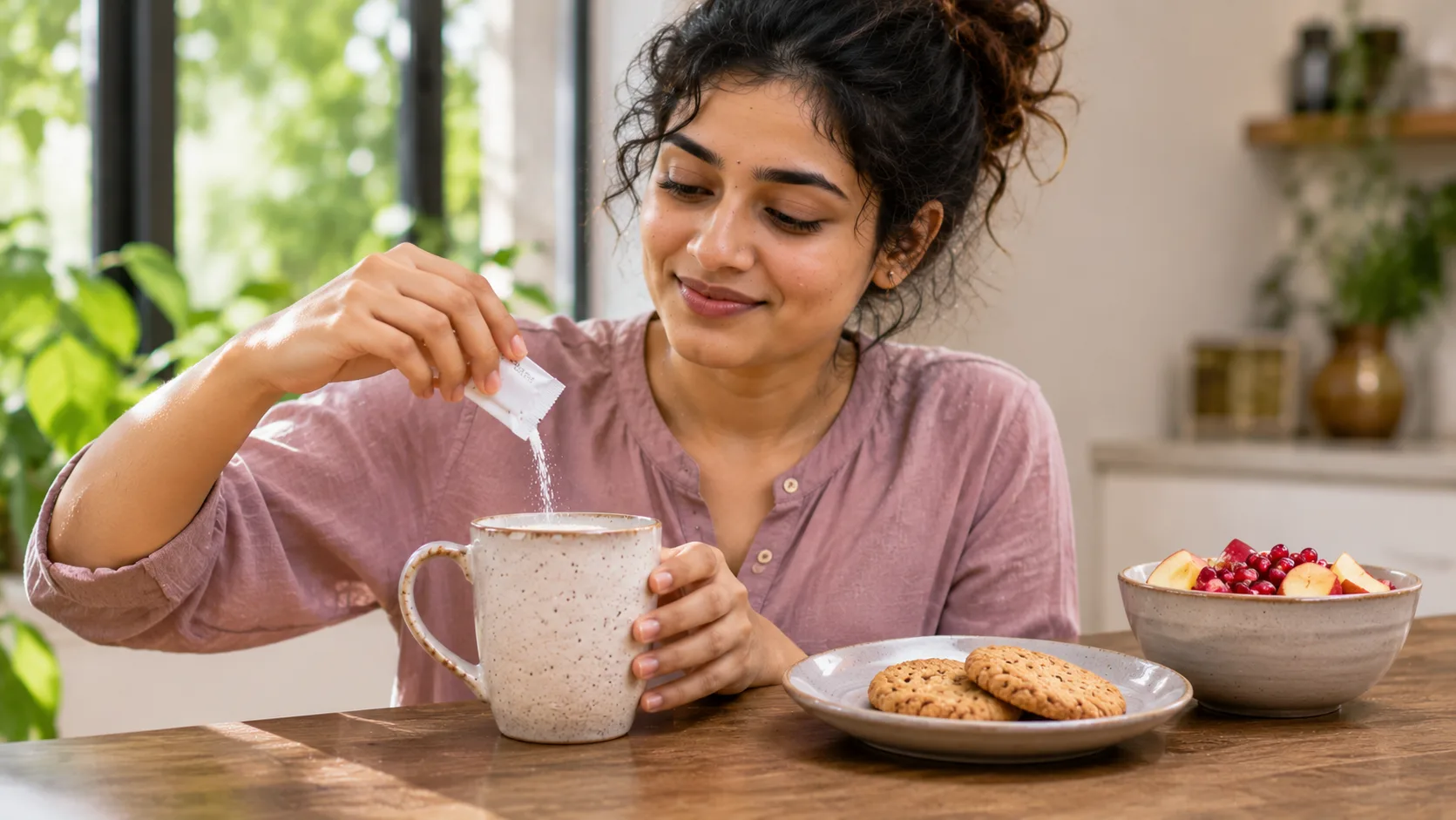
Think about that little tablet dissolving in your chai. It makes the drink taste sweet, even though you haven't added your usual spoonful of sugar. Sweeteners such as sucralose, aspartame and saccharin are much sweeter than ordinary sugar, so only small amounts are needed. You'll also find them in sugar-free soft drinks, chewing gum and desserts. Stevia-based sweeteners offer another option, although they come from a plant rather than being artificial. According to the US Food and Drug Administration (FDA), several high-intensity sweeteners have been evaluated for safety under specified conditions of use. But sweetness and hunger are different things. Your tongue recognises a sweet taste, while your brain and digestive system respond to several signals when you eat. Researchers have been studying whether providing sweetness without the usual calories changes those responses.
Can artificial sweeteners actually make you hungrier?
Back at your desk, you finish your chai. An hour later, you're hungry again. Could the sweetener be responsible? A 2025 study published in Nature Metabolism explored this question in 75 adults. On separate occasions, participants drank beverages containing sucralose, ordinary sugar or water. Researchers then measured hunger and changes in blood flow within brain regions involved in appetite. People reported greater hunger after sucralose than after the sugar-containing drink. However, their hunger ratings weren't significantly different after sucralose compared with water. That distinction matters. The findings suggest that sucralose and sugar can produce different short-term responses. They don't prove that sucralose causes persistent sugar cravings or makes people eat more biscuits later. And hunger isn't the same as craving. You can feel hungry enough for a proper meal, or want chocolate simply because you enjoy its taste.
What happens when people eat sweet foods for months?
One afternoon in a laboratory tells us only part of the story. Your usual chai, after all, is something you drink almost every day. A larger question is whether regularly eating sweet-tasting foods makes you prefer sweetness more strongly over time. The Sweet Tooth Trial, published online in 2025 and in a 2026 journal issue, followed 180 healthy adults for six months. Different groups were assigned diets with low, regular or high exposure to sweet-tasting foods, including foods containing sugar, low-calorie sweeteners and naturally sweet ingredients. Despite these differences, researchers found no meaningful changes between groups in preference for sweet tastes, food choices or overall energy intake. A 2026 review of European research also found that exposure to sweet tastes did not consistently increase cravings or appetite. These studies don't prove that everyone responds identically. But they challenge the familiar idea that tasting something sweet automatically trains your brain to demand more sweetness.
Why do you still want biscuits with your evening chai?
By the next afternoon, you're paying closer attention. Lunch was a small portion of rice and sabzi because you had back-to-back meetings. You haven't eaten since, and now you're staring at the biscuit tin again. Maybe the sweetener isn't the whole story. Your hunger may reflect the time since your last meal, how satisfying lunch was or simply a routine you've followed for years. If you've always had biscuits with chai, that familiar pairing may be part of the appeal. Stress, poor sleep and having snacks within easy reach can also influence eating habits. Before blaming your sweetener, consider a few questions:
Did you eat enough at lunch? A meal with dal, vegetables and a suitable protein source may help you feel satisfied.
Are you hungry or wanting a particular taste? Either experience is normal, but they're not the same.
Is it part of your routine? Sometimes chai and biscuits simply go together because that's what you're used to.
Has your sleep changed? Tiredness and irregular routines can affect appetite.
What else are you eating? One sweetener tablet tells you very little about your overall diet.
Also read: Why do you crave sugar all the time? Discover seven common reasons behind frequent sugar cravings.
Do artificial sweeteners help with weight loss?
Perhaps you originally switched to sugar-free chai because you wanted to reduce your sugar intake. That's a reasonable reason to compare the two options. Replacing sugar with a low-calorie sweetener reduces the sugar and calories contributed by that ingredient. However, this doesn't guarantee weight loss. The World Health Organization conditionally recommends against relying on non-sugar sweeteners for long-term weight control in the general population, because lasting benefits haven't been established. This recommendation doesn't apply to people with pre-existing diabetes and isn't a statement that approved sweeteners are inherently unsafe. Some clinical trials have found benefits when sweeteners replace sugar. The difference comes down partly to what researchers measure: replacing sugar in one drink isn't the same as studying someone's long-term eating habits and health.
What if you have diabetes?
Interestingly, researchers studied a very familiar Indian habit: adding sugar to tea and coffee. A 2024 Indian trial involving 210 adults with type 2 diabetes compared continuing sugar with replacing it using sucralose over 12 weeks. The researchers found a small reduction in body weight and waist circumference in the sucralose group, but no significant improvement in HbA1c, which reflects average blood glucose over roughly three months. For someone managing diabetes, sweeteners may have a role in reducing added sugar. However, the carbohydrates in the rest of the meal still matter.
Are sugar-free biscuits and sweets different?
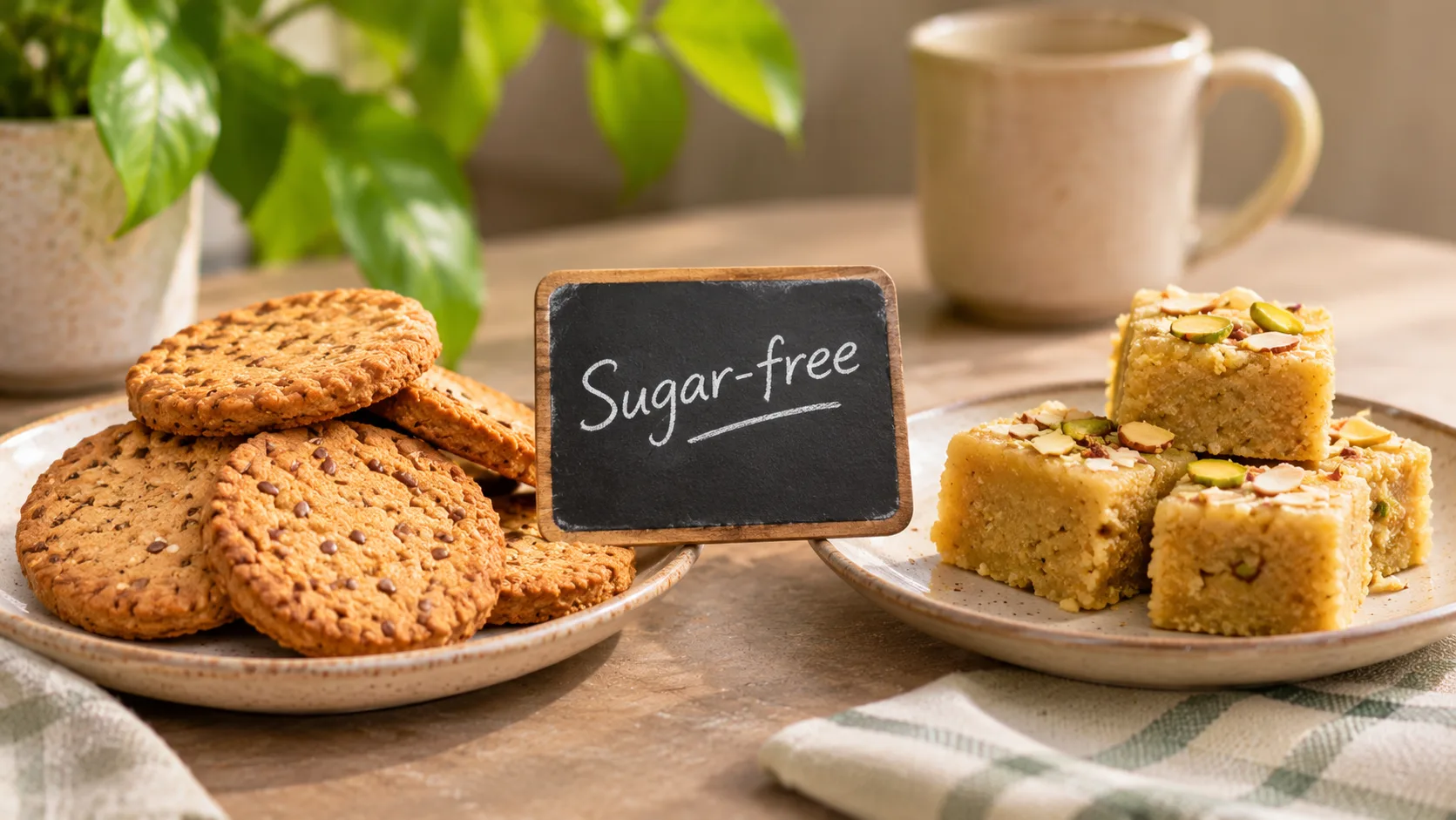
The following weekend, you're shopping for groceries and notice sugar-free biscuits beside the regular ones. You're tempted to assume they'll automatically be the healthier option. But sugar-free doesn't mean carbohydrate-free or calorie-free. Biscuits may still contain flour and fat, while sugar-free mithai can contain milk solids, nuts and other ingredients. Some products also use sugar alcohols such as sorbitol or maltitol. These are different from high-intensity sweeteners and may cause bloating or loose stools when eaten in larger amounts, particularly in sensitive people. Monash University explains why these ingredients can affect digestion. Reading the full nutrition label tells you more than the sugar-free claim alone.
Also read: Choosing sugar-free mithai this Diwali? Here's what your gut wants you to know.
Should you stop using sweeteners?
The next morning, you're back in the kitchen making chai. You can add your usual sweetener, use a little sugar or gradually get used to a less sweet drink. There isn't one choice everyone must make. The research doesn't support blaming artificial sweeteners for every sugar craving. Some may change short-term hunger responses, but longer studies haven't consistently shown that they make people prefer sweeter foods. If you're regularly craving something sweet, look at your meals, sleep and everyday habits too. Your evening biscuit may have more to do with an ordinary afternoon of hunger and routine than with the tablet in your tea.
References and sources
Chakravartti et al., 2025, Nature Metabolism. Randomised crossover trial examining sucralose, hunger and brain responses in 75 adults.
Čad et al., 2026, The American Journal of Clinical Nutrition. Six-month Sweet Tooth Trial examining dietary sweet-taste exposure among 180 adults.
2026 Review of the SWEET, SWITCH and Sweet Tooth Trials. Evidence on sweeteners, appetite, sweet preferences and weight management.
Mohan et al., 2024, Diabetes Therapy. Indian randomised trial of sucralose replacing sugar in tea and coffee.
WHO: Use of Non-Sugar Sweeteners. Conditional guidance on long-term weight management.
FDA: High-Intensity Sweeteners. Safety evaluations and permitted uses in the United States.
Monash University: What Are Polyols?. Digestive effects of sugar alcohols.
Medical disclaimer: This article is for general information and educational purposes only. It does not replace professional medical advice, diagnosis or personalised dietary guidance. Responses to sweeteners can vary. If you have diabetes, a digestive condition or other medical concerns, consult a qualified healthcare professional before making significant dietary changes. The everyday experiences described are illustrative, not accounts of a real individual.
Continue this topic
Connected guides, ingredient explainers, product context, and tools chosen from this article's topic cluster.
Stevia drops, sucralose sachets and sugar-free kaju katli. What the WHO says about weight, what the aspartame headlines meant and who gains most.
Sugar cravings usually reflect a mix of hunger, habits, stress, poor sleep and meal composition rather than one deficiency. Skipping meals or eating too little protein or fibre can make sweets harder to resist.
Quick questions
Can artificial sweeteners increase sugar cravings?
Research is mixed. Some studies have found changes in short-term hunger, but longer trials haven't consistently shown increased cravings or preference for sweetness.
Does sucralose make you hungry?
A 2025 trial found greater hunger after sucralose than after sugar, but not compared with water. This doesn't establish a lasting effect on appetite.
Is stevia better than artificial sweeteners?
Stevia-based sweeteners and artificial sweeteners are different ingredients. Neither is automatically better for everyone. The choice depends on individual needs and the product.
Can people with diabetes use artificial sweeteners?
Certain approved sweeteners may help replace added sugar, but individual dietary needs vary. People with diabetes should consider their overall carbohydrate intake and follow professional advice.
8 linked sources checked against our citation and claim-safety process.
Reviewed 10 Nov 2026 for supplement-claim and medical-disclaimer boundaries.
Recommended from the Aora range
Aora Nutrivit Plus
19 Essential Nutrients with Zinc, Magnesium and Vitamins B Complex, C and D3
- Multivitamin
- Daily Foundation
- Made in India
From₹690
Try Aora - free
Put this article to work on you.
Health and safety notice
- This article is educational. It is not medical advice and is not a substitute for guidance from a qualified healthcare provider. Consult a physician before starting any supplement, especially during pregnancy or breastfeeding, with a medical condition, or while on medication.
- FSSAI compliance: Health supplements and nutraceuticals are not intended for medicinal use. Any supplement-related information is provided to describe nutritional or physiological support and should not be interpreted as a claim to diagnose, treat, cure, or prevent any disease. FSSAI regulates health supplements and nutraceuticals separately from medicinal products.
Read our full medical disclaimer and editorial policy.
Sources and editorial standards
- 1US Food and Drug Administration (FDA)
- 22025 study published in Nature Metabolism
- 3Sweet Tooth Trial
- 42026 review of European research
- 5World Health Organization
- 62024 Indian trial involving 210 adults with type 2 diabetes
- 7Monash University
- 8WHO: Use of Non-Sugar Sweeteners
Supplement content is educational only and should not replace medical advice from a qualified clinician. Product mentions are reviewed for claim safety before publication.