Sugar Free Sweeteners: Stevia, Sucralose and the Real Risk
Stevia drops, sucralose sachets and sugar-free kaju katli. What the WHO says about weight, what the aspartame headlines meant and who gains most.
In this article(16 sections)
- What are the common sugar-free sweeteners?
- Stevia
- Sucralose
- Aspartame
- Erythritol
- Monk fruit
- Do sugar free sweeteners help you lose weight?
- What about aspartame and cancer?
- The erythritol question
- Can people with diabetes use them?
- Is sugar-free mithai really healthier?
- A note on cooking with sucralose
- A sensible way to use sweeteners
- When should you see a doctor?
- The sachet on the counter
- Sources
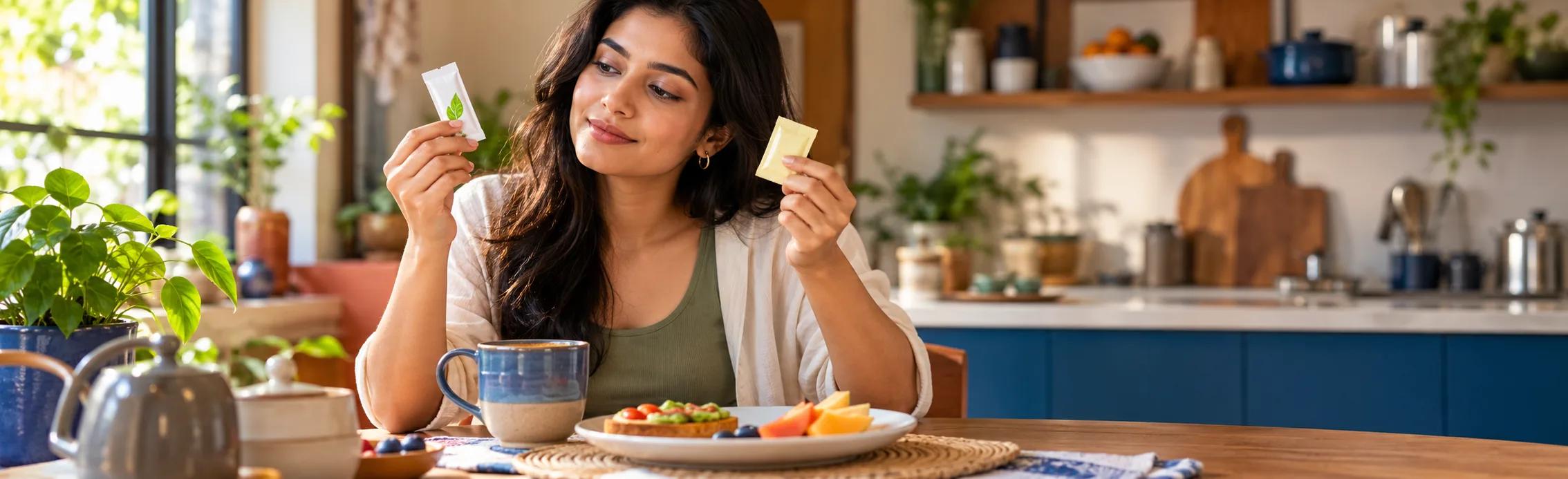
Sugar free sweeteners are substances that taste sweet but add few or no calories, so they are used in place of sugar in tea, coffee, diet drinks, mithai, biscuits and protein bars. The common ones in Indian shops are stevia, sucralose, aspartame, erythritol and monk fruit. Their sachets now sit on office pantry counters and the 'sugar-free' label has spread to festival sweet boxes. The real question for most people is simple: does switching to them help with weight or blood sugar? Are they safe? The short answer is that they are safe within limits set by food regulators. They can help a person with diabetes cut sugar. They do not seem to help with long-term weight loss on their own. The details matter, so here they are.
What are the common sugar-free sweeteners?

Stevia
Stevia comes from the leaves of a plant native to South America. The sweet compounds are called steviol glycosides. It is sold as powder, drops and tablets and is often blended with other sweeteners to soften its slightly bitter aftertaste.
Sucralose
Sucralose is made from ordinary sugar through a chemical process that swaps parts of the molecule for chlorine. The body does not use it for energy. It is one of the most common sweeteners in Indian sachets and diet products because it tastes close to sugar.
Aspartame
Aspartame is made from two amino acids. It is found in many diet colas, chewing gums and tabletop tablets. People with phenylketonuria, a rare inherited condition, must avoid it, which is why products carry a warning.
Erythritol
Erythritol is a sugar alcohol, a group that also includes sorbitol and xylitol. It looks and tastes much like table sugar, so it is popular in keto and low-carb baking. Large amounts of sugar alcohols can cause gas and loose stools in some people.
Monk fruit
Monk fruit extract comes from a small round fruit grown in Southern China. Its sweetness comes from compounds called mogrosides. It is usually sold blended with erythritol, so read the label to see what you are really buying.
Do sugar free sweeteners help you lose weight?
This is where the evidence surprised many people. In 2023 the World Health Organization released a guideline that advises against using non-sugar sweeteners to control body weight or reduce the risk of diseases like diabetes and heart disease. It covers acesulfame K, aspartame, advantame, cyclamates, neotame, saccharin, sucralose and stevia. The WHO review found that these sweeteners do not give any long-term benefit in reducing body fat in adults or children. It also noted possible unwanted effects from long-term use, such as a higher risk of type 2 diabetes, heart disease and death in adults. Most of that comes from observational studies, which can show a link but cannot prove cause. People who already have weight or sugar problems are more likely to choose diet products in the first place.
Three points from the guideline are often missed:
It is a conditional recommendation, not a strong one
It does not apply to people who already have diabetes
It does not cover sugar alcohols such as erythritol
The WHO suggests the better long-term habit is to reduce sweetness overall, with fruit or unsweetened food and drinks in place of sugar. If you find the craving hard to shake, our Aora guide on why you crave sugar explains what drives it.
What about aspartame and cancer?
In July 2023 the headlines said aspartame might cause cancer. Here is what actually happened. The International Agency for Research on Cancer placed aspartame in Group 2B, possibly carcinogenic to humans, on the basis of limited evidence. Group 2B is a list of things where the evidence is limited and uncertain. At the same time, the WHO and FAO expert committee on food additives looked at the same data and kept the acceptable daily intake at 40 mg per kilo of body weight. The WHO gave an example: a 70 kilo adult would need to drink more than 9 to 14 cans of diet soft drink a day, with no other aspartame, to go over that limit. The agencies said safety is not a major concern at typical use, while calling for more research. So a diet cola now and then is not something to panic about. Ten cans a day is a different matter, for many reasons beyond aspartame.
The erythritol question
A 2023 study in Nature Medicine looked at blood levels of erythritol in people being checked for heart disease. Those with the highest levels had a higher risk of heart attack, stroke or death over three years, with adjusted hazard ratios of 1.80 and 2.21 in two groups. In lab tests erythritol made platelets more likely to clot. In eight healthy volunteers, one serving of erythritol raised blood levels for more than two days. This is a signal, not proof. The people studied already had heart risk. The body also makes some erythritol of its own. The authors called for long-term safety studies. Until those arrive, it is sensible not to make erythritol-heavy keto sweets a daily habit, especially if you have heart disease.
Can people with diabetes use them?
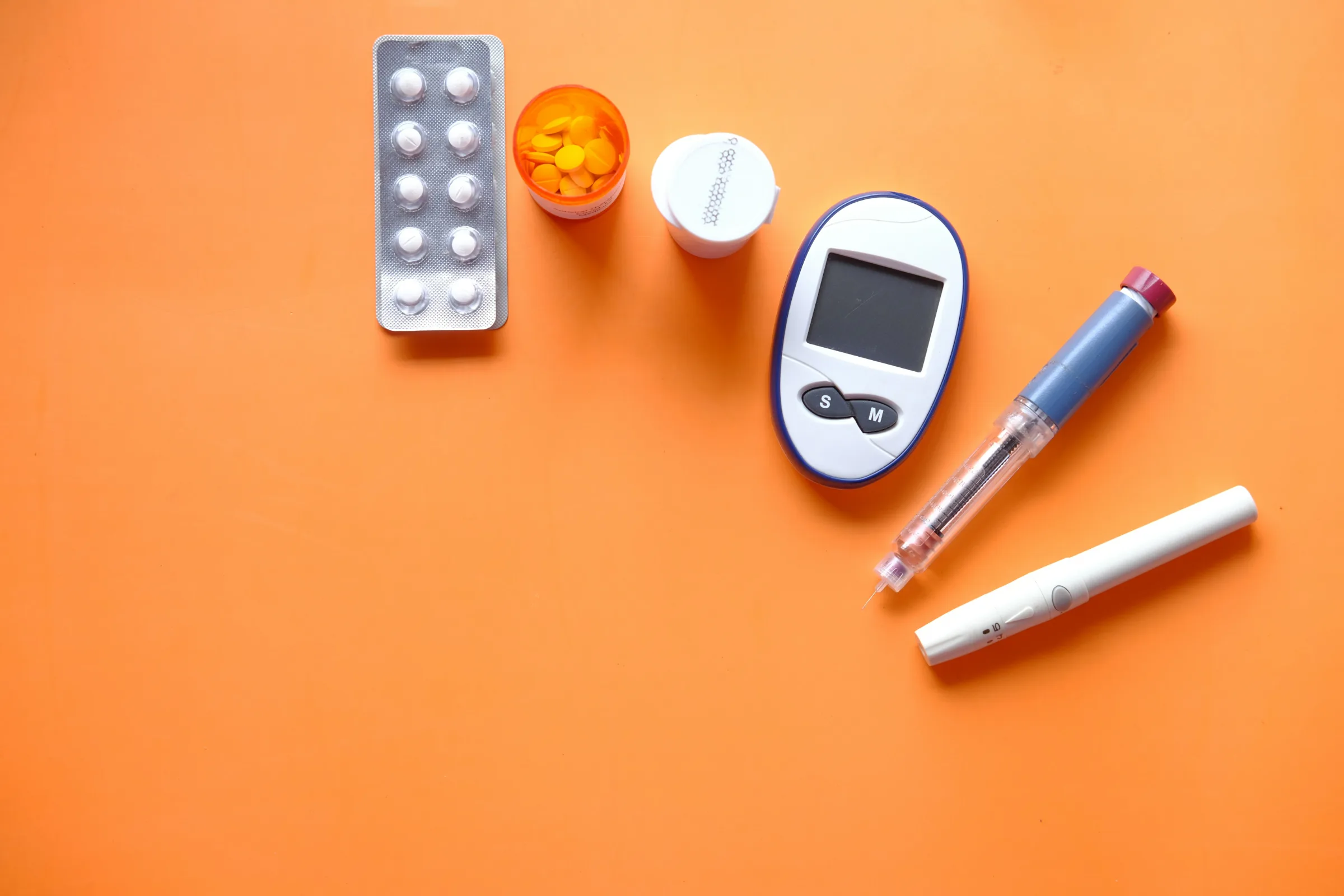
Yes. For many people with diabetes they are a useful tool. Replacing two spoons of sugar in three cups of chai a day removes a real amount of sugar from the diet. The WHO guideline does not apply to people with existing diabetes. Stevia has some direct evidence. A meta-analysis of 26 studies with 1,439 people found that stevia was linked to a small fall in blood glucose, especially in people with diabetes, a higher BMI or high blood pressure. It did not change HbA1c or insulin. The certainty of the evidence was low. Use sweeteners to cut sugar, not to license more sweets. Simple habits such as walking after meals do more for blood sugar than any sachet.
If you have PCOS, our guide to PCOS and insulin resistance covers diet in more depth. Always tell your doctor what you are using, because blood sugar medicines may need adjusting when diet changes.
Is sugar-free mithai really healthier?
Festival boxes now carry sugar-free kaju katli, barfi and laddoos. The sugar has been swapped for a sweetener, but much of the rest stays the same.
Many are still made with maida, khoya, ghee and nuts, which carry plenty of calories and fat
Some use maltitol or other sugar alcohols, which still raise blood sugar a little and can upset the stomach
Dates, figs and jaggery are often used as natural sweeteners. These are sugars too and raise blood glucose like sugar does
A 'no added sugar' label does not mean the sweet has no sugar at all
Read the ingredient list and the nutrition panel for total carbohydrates and calories per piece. One piece of real mithai, eaten slowly and enjoyed, is often a better choice than half a box of a sugar-free version eaten because it feels allowed.
A note on cooking with sucralose
Sucralose is sold for baking, but a review of the research concluded that sucralose can break down at high temperatures during cooking or baking and may form chlorinated compounds that could be harmful. The amounts in home cooking are not well measured. If you bake sweets often, stevia or a small amount of real sugar may be a simpler choice for hot recipes.
A sensible way to use sweeteners
Use them to step down from sugar, not as a permanent replacement for a sweet tooth
Keep total use modest. One or two sachets a day is very different from several diet drinks
Prefer water, plain buttermilk, nimbu pani without sugar and unsweetened chai most of the time
Read the label of every 'sugar-free' product for maida, fat and sugar alcohols
Children do not need sweeteners. Teach them to enjoy less sweet food instead
When should you see a doctor?
Speak to a doctor or dietitian if you have diabetes and are changing how you sweeten food, if you are pregnant, if you have heart or kidney disease, or if you notice bloating, gas or loose stools from sugar-free products. See a doctor soon if you have increased thirst, frequent urination, tiredness or weight loss without trying. These can be signs of high blood sugar whatever you put in your tea.
The sachet on the counter
That little packet next to the office tea flask is neither a villain nor a fix for everything. Used to help you take less sugar, it can be a fair bridge. The bigger win is teaching your palate to want less sweetness, so that one day plain chai tastes right on its own.
Sources
Aspartame hazard and risk assessment results released (World Health Organization, 2023)
The artificial sweetener erythritol and cardiovascular event risk (Nat Med, 2023)
Effect of stevia on blood glucose and HbA1C: a meta-analysis (Diabetes Metab Syndr, 2024)
Medical Disclaimer: This article is for general information and is not a substitute for advice from your doctor. Speak to a qualified healthcare professional before starting any supplement, especially if you are pregnant, breastfeeding or taking medication.
Continue this topic
Connected guides, ingredient explainers, product context, and tools chosen from this article's topic cluster.
Calf seizing at 3 am? Why night leg cramps happen, how to ease one fast, which medicines can trigger them and the signs that need a doctor.
Folate is in your dal and palak. Folic acid is in the tablet. This guide explains why the tablet matters before pregnancy, how much to take and what MTHFR claims get wrong.
Iron tablets making you sick or constipated? How to time them, what to keep away, what black stools mean and when to recheck your haemoglobin.
Quick questions
Do sugar free sweeteners help with weight loss?
The WHO advises against using them for weight control because they show no long-term benefit for body fat. Cutting overall sweetness works better than swapping sugar for a sachet.
Is aspartame safe after the cancer news?
IARC placed aspartame in Group 2B on limited evidence, while the expert committee kept the safe limit at 40 mg per kilo of body weight. A 70 kilo adult would need more than 9 to 14 cans of diet drink a day to cross it.
Which sweetener is best for people with diabetes?
Stevia and sucralose are both common choices for cutting sugar in tea and coffee. Stevia has a little direct evidence for a small fall in blood glucose. Tell your doctor what you use, since medicines may need adjusting.
Is sugar-free mithai healthy?
Not always. Many sugar-free sweets still contain maida, khoya, ghee and nuts. Some use dates or jaggery, which are sugars too. Check calories and carbohydrates per piece on the label.
Is erythritol safe?
It is widely used, but a 2023 study linked high blood levels to more heart events in people already at risk. It is sensible not to make erythritol sweets a daily habit until longer studies are done.
5 linked sources checked against our citation and claim-safety process.
Reviewed 3 Oct 2026 for supplement-claim and medical-disclaimer boundaries.
Recommended from the Aora range
Aora Nutrivit Plus
19 Essential Nutrients with Zinc, Magnesium and Vitamins B Complex, C and D3
- Multivitamin
- Daily Foundation
- Made in India
From₹690.00
Try Aora - free
Put this article to work on you.
Health and safety notice
- This article is educational. It is not medical advice and is not a substitute for guidance from a qualified healthcare provider. Consult a physician before starting any supplement, especially during pregnancy or breastfeeding, with a medical condition, or while on medication.
- FSSAI compliance: Health supplements and nutraceuticals are not intended for medicinal use. Any supplement-related information is provided to describe nutritional or physiological support and should not be interpreted as a claim to diagnose, treat, cure, or prevent any disease. FSSAI regulates health supplements and nutraceuticals separately from medicinal products.
Read our full medical disclaimer and editorial policy.
Sources and editorial standards
- 1advises against using non-sugar sweeteners to control body weight or reduce the risk of diseases like diabetes and heart disease
- 2Group 2B, possibly carcinogenic to humans, on the basis of limited evidence
- 3higher risk of heart attack, stroke or death over three years
- 4stevia was linked to a small fall in blood glucose
- 5sucralose can break down at high temperatures during cooking or baking
Supplement content is educational only and should not replace medical advice from a qualified clinician. Product mentions are reviewed for claim safety before publication.