
Why Am I So Tired During My Period? 8 Causes of Period Fatigue
Feeling unusually tired before or during your period is common. Learn eight possible reasons for period fatigue, what can help and when low iron or another cause should be checked.
In this article(14 sections)
- Is it normal to feel tired during your period?
- Why does your period make you feel so tired?
- 1. Hormone levels change before your period
- 2. Poor sleep can leave you drained
- 3. Cramps and prostaglandins can make the first days harder
- 4. Heavy bleeding can lower iron stores
- 5. Pain itself can be exhausting
- 6. Stress can amplify tiredness
- 7. Eating less regularly can leave you low on energy
- 8. Drinking less may add to ordinary tiredness
- What can help with period fatigue?
- When does period fatigue need medical attention?
- Related Articles
- Sources
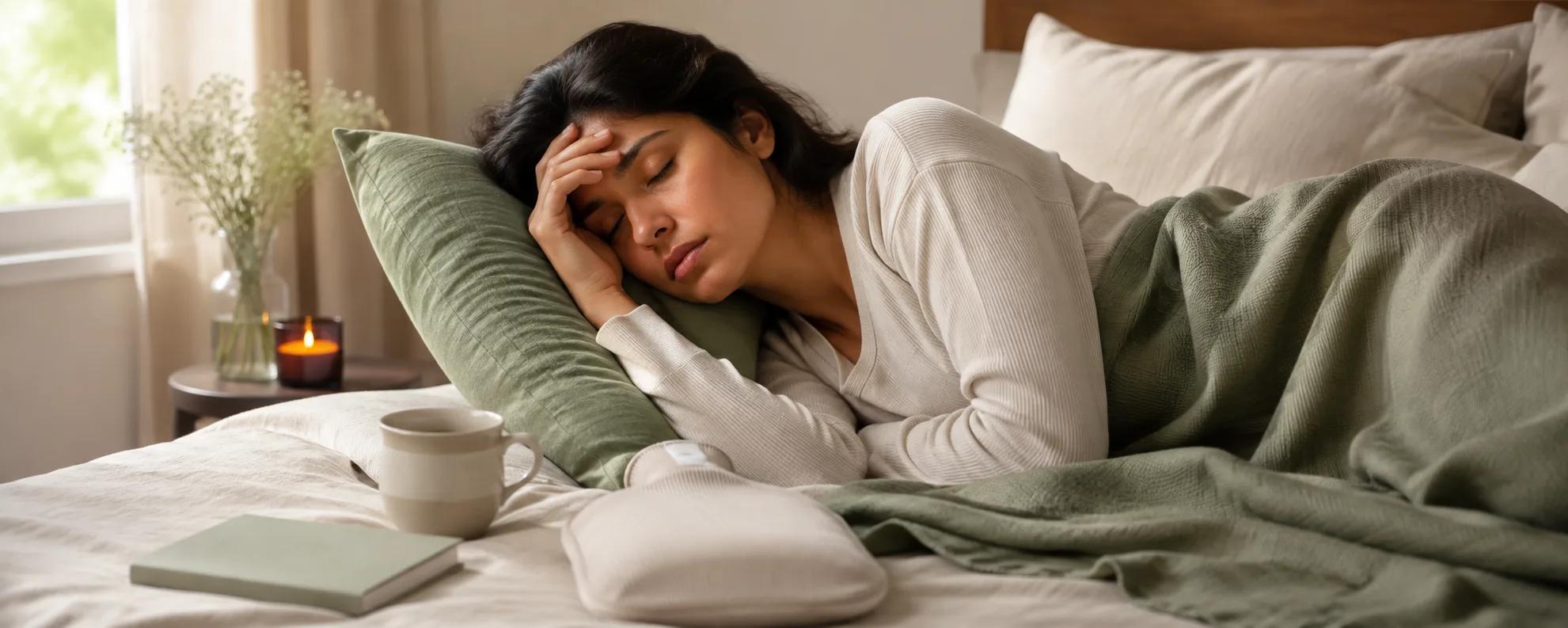
Normally, you might go through your day without thinking much about your energy. But when your period arrives, getting through that same day can feel much harder. This drop in energy is often called period fatigue, and it may begin a few days before bleeding starts or feel strongest during the first couple of days. Hormones often get all the blame, but they are only one part of the story. Cramps, poor sleep, stress, appetite changes and heavy bleeding can all add to the tiredness.
Is it normal to feel tired during your period?
Mild or moderate tiredness around menstruation is common. What matters is whether it follows a clear pattern and whether your energy returns after your period.
Before your period: Fatigue may occur with premenstrual syndrome (PMS) and other symptoms such as mood changes, food cravings, bloating or sleep problems.
During your period: Cramps, disturbed sleep, digestive symptoms and blood loss can all make the first few days feel more tiring.
Throughout the month: If you feel exhausted most days, your menstrual cycle may not be the only explanation. Persistent fatigue can have many causes, including iron deficiency, thyroid problems, poor sleep and other health conditions.
Feeling tired for a few days may fit your usual menstrual pattern. Fatigue that repeatedly interferes with work, studies, exercise or normal daily activities deserves a closer look.
Why does your period make you feel so tired?

For most people, period fatigue is not caused by one single thing. A few factors may be happening at the same time.
1. Hormone levels change before your period
Oestrogen and progesterone rise and fall across the menstrual cycle, and both decline before menstruation. These hormones do not simply switch off your energy, but some people are more sensitive to normal hormonal changes than others. A 2024 review by Modzelewski and colleagues discusses how hormonal and neurosteroid changes are involved in premenstrual symptoms and can affect mood, appetite and other aspects of wellbeing. If your tiredness reliably begins before bleeding and improves after your period starts, PMS may be part of the pattern.
2. Poor sleep can leave you drained
You may spend enough time in bed and still wake feeling unrefreshed. Cramps, restlessness and repeated waking can reduce sleep quality before and during menstruation. A 2023 review by Alzueta and Baker found that poorer sleep quality around the premenstrual phase and menstruation is especially common in people with premenstrual symptoms or painful periods. The effect varies between individuals, which is why tracking both sleep and fatigue across a few cycles can be useful.
3. Cramps and prostaglandins can make the first days harder
Prostaglandins are natural chemicals involved in uterine contractions during menstruation. The American College of Obstetricians and Gynecologists (ACOG) explains that higher prostaglandin activity is involved in menstrual cramps and can also be associated with symptoms such as nausea, diarrhoea, headaches and dizziness. Prostaglandins are not usually described as a direct cause of fatigue. But pain, digestive symptoms and disrupted sleep can make ordinary activities feel much harder.
4. Heavy bleeding can lower iron stores
An ordinary period does not automatically cause iron deficiency. Consistently heavy menstrual bleeding, however, can gradually lower iron stores and may eventually lead to iron-deficiency anaemia. The American College of Obstetricians and Gynecologists notes that heavy menstrual bleeding can cause iron-deficiency anaemia. Signs that bleeding may be unusually heavy include periods lasting more than seven days, soaking through pads or tampons very quickly, needing more than one menstrual product at a time or passing large clots. If tiredness comes with heavy periods, dizziness, breathlessness, reduced stamina or a racing heartbeat, ask a healthcare professional whether testing for iron deficiency is appropriate. Do not start high-dose iron simply because you feel tired.
5. Pain itself can be exhausting
Persistent cramps or pelvic pain can be tiring even when pain is not the direct biological cause of low energy. You may tense your muscles, sleep poorly, skip usual activities or find it harder to concentrate. Pain that is severe every month, gets progressively worse or continues beyond the first few days of your period should be discussed with a healthcare professional. Conditions such as endometriosis, adenomyosis and fibroids can cause painful or heavy periods and may need proper assessment.

6. Stress can amplify tiredness
Stress can create a loop. Period symptoms increase stress, stress interferes with sleep, and poor sleep can make pain and tiredness harder to manage. Stress may also change how regularly you eat or whether you feel able to exercise. Stress does not mean the symptoms are in your head, and it is not the sole cause of menstrual fatigue. It is simply one factor that can make an already difficult few days feel more draining.
7. Eating less regularly can leave you low on energy
Your period does not create a completely different set of nutrition rules. But cramps, nausea, cravings or a busy day can change how regularly you eat. Skipping meals or relying only on small snacks can leave you hungry and low on energy later. Keep meals simple when you do not feel like cooking. Dal with rice, eggs with toast, poha with peanuts, or curd rice with vegetables can provide a mix of carbohydrate and protein without requiring a complicated “period diet”.
8. Drinking less may add to ordinary tiredness
You do not need a special hydration routine during your period. But if cramps, nausea, diarrhoea or a busy day mean you drink much less than usual, headaches and ordinary tiredness can feel worse. Drink water regularly through the day and use thirst as a practical guide rather than forcing large amounts of water.
What can help with period fatigue?
You do not need a complicated routine. Start with the factors that are most likely to be affecting you.
Protect your sleep: Keep sleep and wake times reasonably consistent. If cramps are waking you, a heating pad may help. Ask a pharmacist or doctor which pain-relief medicine is suitable for you if needed.
Eat regular meals: Aim for a simple combination of carbohydrate, protein and a fruit or vegetable instead of relying only on snacks.
Keep moving if you feel comfortable: A walk, stretching or your usual workout can be fine during your period. A 2020 systematic review and meta-analysis by McNulty and colleagues found only a trivial average effect of menstrual-cycle phase on exercise performance, with large differences between individuals. Adjust activity to how you actually feel rather than assuming you must stop exercising or push through a hard session.
Drink normally through the day: You do not need to force extra water unless you have a specific reason to.
Track the pattern for two or three cycles: Note when the fatigue starts, how you sleep, how heavy the bleeding is and whether your energy returns after the period ends.
The aim is not to “fix” every period symptom. Tracking the pattern helps you work out whether the tiredness follows your cycle or whether something else may need attention.
When does period fatigue need medical attention?
Speak to a healthcare professional if:
Fatigue is severe enough to stop normal daily activities
Tiredness continues for most of the month
Your periods have become much heavier or longer
You feel faint, very dizzy or breathless
You notice a racing or pounding heartbeat
Period pain is severe, worsening or not improving with usual treatment
Heavy menstrual bleeding is an important risk factor for iron deficiency and iron-deficiency anaemia, so persistent tiredness alongside heavy periods deserves proper assessment rather than self-treatment with iron. Feeling more tired for a few days around your period can be part of your usual menstrual pattern. But if exhaustion is severe, continues outside your period or comes with heavy bleeding, dizziness, fainting or breathlessness, get it checked.
Related Articles
Iron Deficiency in Women: Symptoms, Causes and When to Get Tested
PCOS and Insulin Resistance: Symptoms, Weight, Testing and Diet
Sources
Alzueta E, Baker FC. The Menstrual Cycle and Sleep. Sleep Medicine Clinics. 2023.
American College of Obstetricians and Gynecologists: Dysmenorrhea: Painful Periods
American College of Obstetricians and Gynecologists: Heavy Menstrual Bleeding
Medical Disclaimer: This article is for general educational purposes only and should not replace professional medical advice, diagnosis or treatment. If your fatigue is severe, continues throughout the month or occurs with heavy bleeding, fainting, breathlessness, a racing heartbeat or severe pain, speak to a qualified healthcare professional.
Continue this topic
Connected guides, ingredient explainers, product context, and tools chosen from this article's topic cluster.
Iron tablets making you sick or constipated? How to time them, what to keep away, what black stools mean and when to recheck your haemoglobin.
Home LH strips are everywhere. When to start testing, how to read the lines, why PCOS can confuse results and what trials show.
Inositol is the PCOS supplement everyone shares. Here is what trials found on ovulation, the 40 to 1 ratio claim and safety.
Quick questions
Why am I so tired before my period?
Tiredness before a period can be part of premenstrual syndrome. Hormonal changes may affect mood, appetite and sleep, and poor sleep can make the tiredness feel stronger. If fatigue begins before most periods and improves afterwards, tracking the pattern for a few cycles can help.
Why does your period make you feel so tired?
For most people, period fatigue isn't caused by just one thing. It's usually the result of several factors working together. Usually, a few different things are happening at the same time.
What can help with low energy during your period?
When looking for period fatigue remedies, start with the basics of your daily routine.
When period fatigue deserves medical attention Speak to a healthcare professional if: Fatigue is severe enough to stop normal daily activities Tiredness continues for most of the month Your periods have become much heavier or longer You feel faint, very dizzy or breathless You n
Mild or moderate tiredness is very common. However, severe exhaustion that stops you from doing your normal daily tasks is not something you should ignore, and it is worth discussing with a doctor.
How long does period fatigue usually last?
There is no fixed duration. For some people, tiredness begins a few days before menstruation and improves after the first few days of bleeding. Fatigue that continues through most of the month is less likely to be explained by your period alone.
Does period fatigue mean I have low iron?
Not necessarily. Poor sleep, cramps, stress and hormonal changes can all contribute to period fatigue. Low iron becomes more important to consider when bleeding is heavy or tiredness persists outside your period. A blood test is needed to confirm iron deficiency.
5 linked sources checked against our citation and claim-safety process.
Reviewed 31 Aug 2026 for supplement-claim and medical-disclaimer boundaries.
Recommended from the Aora range
Aora Nutrivit Plus
19 Essential Nutrients with Zinc, Magnesium and Vitamins B Complex, C and D3
- Multivitamin
- Daily Foundation
- Made in India
From₹690.00
Try Aora - free
Put this article to work on you.
Health and safety notice
- This article is educational. It is not medical advice and is not a substitute for guidance from a qualified healthcare provider. Consult a physician before starting any supplement, especially during pregnancy or breastfeeding, with a medical condition, or while on medication.
- FSSAI compliance: Health supplements and nutraceuticals are not intended for medicinal use. Any supplement-related information is provided to describe nutritional or physiological support and should not be interpreted as a claim to diagnose, treat, cure, or prevent any disease. FSSAI regulates health supplements and nutraceuticals separately from medicinal products.
Read our full medical disclaimer and editorial policy.
Sources and editorial standards
- 1A 2024 review by Modzelewski and colleagues
- 2A 2023 review by Alzueta and Baker
- 3American College of Obstetricians and Gynecologists (ACOG)
- 4American College of Obstetricians and Gynecologists
- 52020 systematic review and meta-analysis by McNulty and colleagues
Supplement content is educational only and should not replace medical advice from a qualified clinician. Product mentions are reviewed for claim safety before publication.