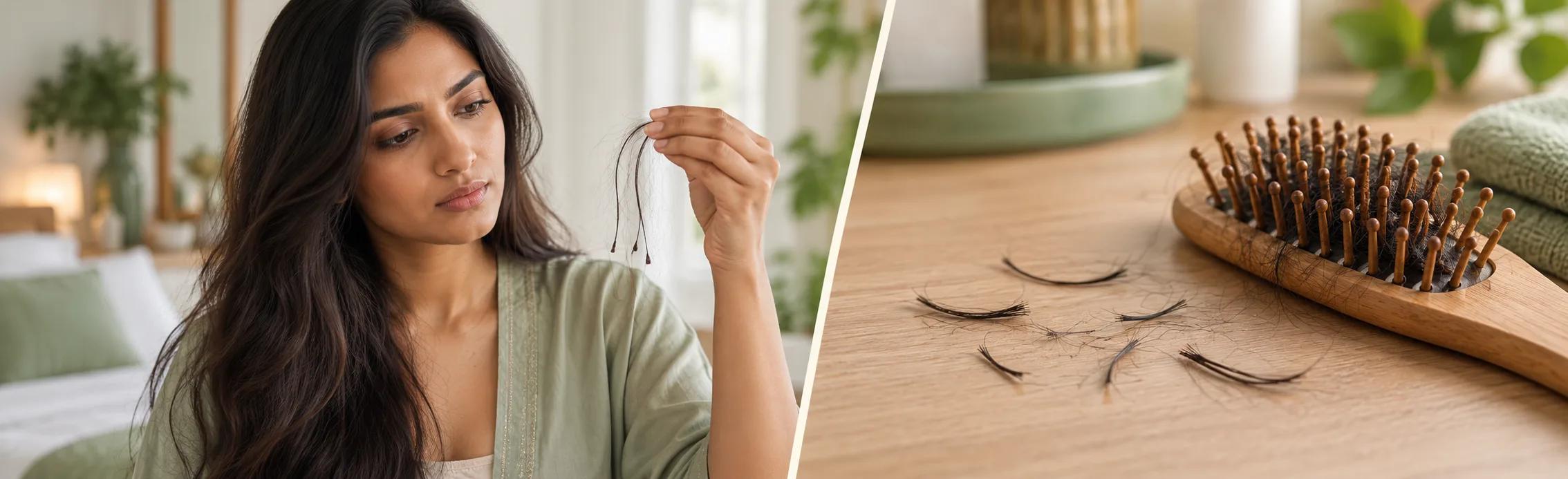
Rosemary Oil for Hair: What the Research Really Shows
Rosemary oil is a hair trend many people are trying. What the clinical trial in men found, how to use it safely and how to feed your hair from the inside too.

In this article(9 sections)
- Where the rosemary trend comes from
- What does the research on rosemary oil show?
- How might rosemary help your scalp?
- How to use rosemary oil the right way
- Feed your hair from the inside too
- Who should be careful with rosemary oil?
- When thinning hair needs a doctor
- The old ritual with a new ingredient
- Sources
If you've been looking for ways to manage hair fall, you've probably come across rosemary oil for hair. It's everywhere on social media, from people mixing it with coconut oil to those sharing photos of their hair growth journey. You might even know someone who's started using it. With so many hair care trends promising thicker, fuller hair, it's natural to wonder whether rosemary oil actually works or is just another passing trend. Interestingly, rosemary oil has been studied in a clinical trial involving men with pattern hair loss, one of the most common causes of thinning hair. The findings are worth looking at, although one study isn't enough to prove that it works for everyone. So, what does the research really say about rosemary oil for hair growth? Here's what you should know about its possible benefits, how to use it safely and when hair loss needs more than a home remedy.
Where the rosemary trend comes from
Rosemary is a fragrant herb from the Mediterranean, commonly used in cooking and traditional medicine. Rosemary essential oil is extracted from its leaves through a process called steam distillation. In India, oiling the hair is already a familiar tradition. Many of us grew up with Sunday morning scalp massages using coconut oil, often given by our mothers or grandmothers. Rosemary oil has simply become a new addition to that routine. However, its popularity isn't based on social media alone. Much of the interest comes from a clinical trial that studied whether applying rosemary oil to the scalp could help men with pattern hair loss.
What does the research on rosemary oil show?
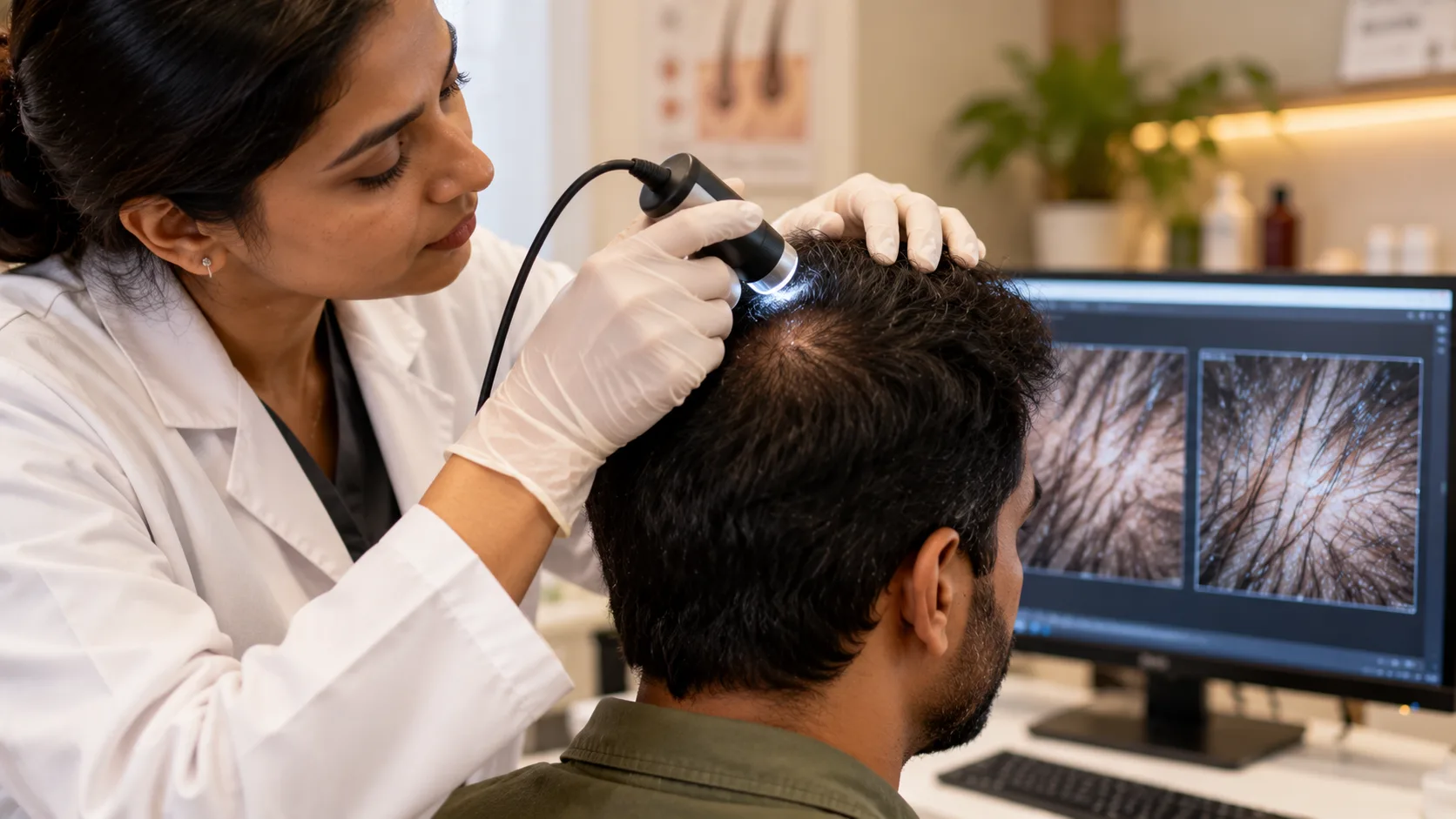
In 2015, researchers in Iran studied 100 men aged 18 to 49 with androgenetic alopecia, commonly known as male pattern hair loss. Half the men were given rosemary oil to apply to their scalp, while the other half used minoxidil 2%, a medicine commonly used for hair loss. Researchers took close-up photographs of the participants' scalps throughout the study to track changes in hair growth. After six months, the rosemary oil group showed a significant increase in hair count compared with the start of the trial. However, there was no significant improvement after three months. Rosemary oil also showed no significant effect on dry hair, greasy hair or dandruff. The results are encouraging, but there are limits. The study involved only 100 men, so we cannot assume rosemary oil will work the same way for women or for every type of hair loss. A 2024 review of natural treatments for pattern hair loss also discussed rosemary oil alongside peppermint oil, pumpkin seed oil and other herbal ingredients. However, rosemary's growing popularity doesn't change the fact that more high-quality clinical trials are needed to confirm its benefits.
How might rosemary help your scalp?
To understand this, it helps to know how hair grows. Every strand on your head comes from a tiny pocket in the skin called a follicle. Each follicle runs on its own cycle of growing, resting and shedding. In pattern hair loss, the growing phase gets shorter with every cycle and the follicles slowly shrink. The hairs they make become thinner and shorter until some stop showing at all. In men, pattern baldness is related to genes and male sex hormones and usually starts at the front hairline, which slowly moves back into an M shape. In women, it usually starts with a widening through the centre parting, with thinning mainly on the top and crown of the scalp.
The 2015 trial was built on one of rosemary's reported qualities. The researchers describe it as a plant that enhances blood flow in the tiny capillaries of the skin. The idea is that better circulation around the follicle may bring a steadier supply of oxygen and nutrients to the place where hair is made. If you want to understand the difference between hair that is falling from the root and hair that is snapping halfway, this article on hair shedding vs hair breakage shows you how to tell in a minute.
How to use rosemary oil the right way
Rosemary essential oil is concentrated. Used straight from the bottle, it can sting or irritate the skin. These simple steps keep it gentle.
Dilute it. Mix a few drops of rosemary essential oil into a tablespoon of a carrier oil you already like, such as coconut, almond or sesame oil.
Do a patch test first. Dab a little of the mix on the inside of your arm and wait a day. If you see redness or itching, do not use it on your scalp.
Massage it in gently. Use your fingertips, not your nails, for two or three minutes. Rough rubbing can break hair that is already fragile.
Leave it on for a few hours or overnight, then wash with a mild shampoo.
Be consistent. Use it a few times a week as a steady part of your hair routine rather than an occasional treat.
Keep it away from your eyes. Store the bottle out of reach of children.
Some people also make rosemary water by boiling the leaves and cooling the liquid. The trial used the oil, so the oil is the form with research behind it.
Feed your hair from the inside too

Rosemary oil may help care for your scalp, but healthy hair also depends on what you're eating. Your hair follicles need protein, iron, zinc and other nutrients to support normal hair growth. So, alongside your hair care routine, it's worth paying attention to your diet. Start with everyday foods such as dal, eggs, paneer, curd, nuts, seeds and leafy green vegetables. These provide nutrients your hair needs to grow. Iron is particularly important for women. Heavy periods can increase the risk of iron deficiency, which may contribute to hair thinning. MedlinePlus lists heavy menstrual bleeding among the factors linked to hair loss in women. If your periods are heavy and you're noticing more hair fall, speak to your doctor about checking your iron levels.
Also read: Iron Deficiency in Women:Symptoms and When to Get Tested
Protein matters too, because hair is mainly made of a protein called keratin. If your breakfast is usually just chai and biscuits, try adding an egg, besan chilla or a bowl of sprouts. Roasted chana and peanuts are also convenient snacks. Pairing iron-rich plant foods like dal or palak with lemon or amla can help your body absorb more iron.
Also read: Do Hair Growth Supplements Really Work?
Don't overlook sleep and stress either. Poor sleep, ongoing stress and irregular eating habits can affect your overall health and may contribute to certain types of hair shedding. Regular meals, enough rest and a manageable hair care routine are good places to start.
Who should be careful with rosemary oil?
Even diluted, rosemary oil can irritate some scalps. In the 2015 trial, scalp itching became more common than it was at the start. Take a little extra care in these situations.
You have sensitive skin, eczema or a scalp condition such as psoriasis
You are pregnant or breastfeeding and want to be sure about any essential oil
You are using a medicated scalp treatment, in which case ask your dermatologist before adding anything else
Stop using it if your scalp becomes red, itchy or flaky.
When thinning hair needs a doctor
Rosemary oil is a good companion for everyday hair care. Some hair loss needs a proper diagnosis first. The NHS advises seeing a GP if you are worried about your hair loss. See a doctor or dermatologist too if your hair loss is sudden or patchy, or if it comes with other changes such as irregular periods, acne, tiredness or weight changes. A dermatologist can tell you which type of hair loss you have and what will help most. Our guides to hair loss in women and hair loss in men walk through the common causes.
The old ritual with a new ingredient
Rosemary oil may be a new hair care trend, but it fits into something many of us have grown up with: the familiar Sunday oil massage. What makes it interesting is that there's some research suggesting it may help with certain types of hair loss. Still, it's worth keeping your expectations realistic. Use it safely, give your hair time and don't forget the importance of good nutrition, sleep and everyday care. And if your hair fall continues or gets worse, speak to a dermatologist rather than relying on oil alone. Healthy hair care is about finding what works for you, not following every new trend.
Sources
Medical Disclaimer: This article is for general information and is not a substitute for advice from your doctor. Speak to a qualified healthcare professional before starting any supplement, especially if you are pregnant, breastfeeding or taking medication.
Continue this topic
Connected guides, ingredient explainers, product context, and tools chosen from this article's topic cluster.
Handfuls of hair in the shower months after dengue or a viral fever? Why it happens, how long it lasts and what actually helps it grow back.
The scale finally moved and now your hair is falling out. Here is why hair fall after weight loss happens, how long it lasts and what actually helps it grow back.
Hair on your pillow, brush or bathroom floor does not always mean the same thing. Learn the signs that can help you tell increased shedding from hair breakage.
Quick questions
Does rosemary oil really help hair growth?
In a trial with 100 men who had pattern hair loss, those who applied rosemary oil to the scalp had a significant increase in hair count by the end of the study. Use it gently and consistently.
How do I apply rosemary oil to my hair?
Mix a few drops of rosemary essential oil into a tablespoon of coconut, almond or sesame oil. Do a patch test first, then massage it gently into your scalp, leave it for a few hours or overnight and wash with a mild shampoo.
Is rosemary water as good as rosemary oil?
The trial used rosemary oil applied to the scalp. Rosemary water, made by boiling the leaves, is a gentle home preparation that has not been studied in the same way. If you want the form with research behind it, choose the diluted oil.
Can I use rosemary oil every day?
A few times a week is a steady routine. Even diluted, it can cause scalp itching in some people. If your scalp becomes red, itchy or flaky, stop and speak to a dermatologist.
When should I see a doctor for hair fall?
The NHS advises seeing a GP if you are worried about your hair loss. See a doctor or dermatologist too if it is sudden or patchy, or comes with other changes such as irregular periods, acne, tiredness or weight changes.
6 linked sources checked against our citation and claim-safety process.
Reviewed 29 Oct 2026 for supplement-claim and medical-disclaimer boundaries.
Recommended from the Aora range
Aora Chamrose
Chamomile, Rosemary & Jatamansi Extract
- Hair Care
- Hair Support
- Made in India
From₹960.00
Try Aora - free
Put this article to work on you.
Health and safety notice
- This article is educational. It is not medical advice and is not a substitute for guidance from a qualified healthcare provider. Consult a physician before starting any supplement, especially during pregnancy or breastfeeding, with a medical condition, or while on medication.
- FSSAI compliance: Health supplements and nutraceuticals are not intended for medicinal use. Any supplement-related information is provided to describe nutritional or physiological support and should not be interpreted as a claim to diagnose, treat, cure, or prevent any disease. FSSAI regulates health supplements and nutraceuticals separately from medicinal products.
Read our full medical disclaimer and editorial policy.
Sources and editorial standards
- 1significant increase in hair count
- 22024 review of natural treatments for pattern hair loss
- 3is related to genes and male sex hormones
- 4it usually starts with a widening through the centre parting
- 5NHS
- 6type of hair loss
Supplement content is educational only and should not replace medical advice from a qualified clinician. Product mentions are reviewed for claim safety before publication.