Pink Salt Trick for Weight Loss: Does the Viral Drink Work?
Warm water, pink salt and lemon every morning to melt fat? Learn what the viral drink can do, what it cannot and why the salt in it matters for your blood pressure.
In this article(11 sections)
- What is pink salt, really?
- Can the pink salt trick really help you lose weight?
- Why can the water part help a little?
- How much salt is too much?
- Is pink salt iodised?
- Who should skip the pink salt trick?
- If you still want to try it
- What to drink instead
- What actually moves the scale?
- A pinch of perspective
- Sources
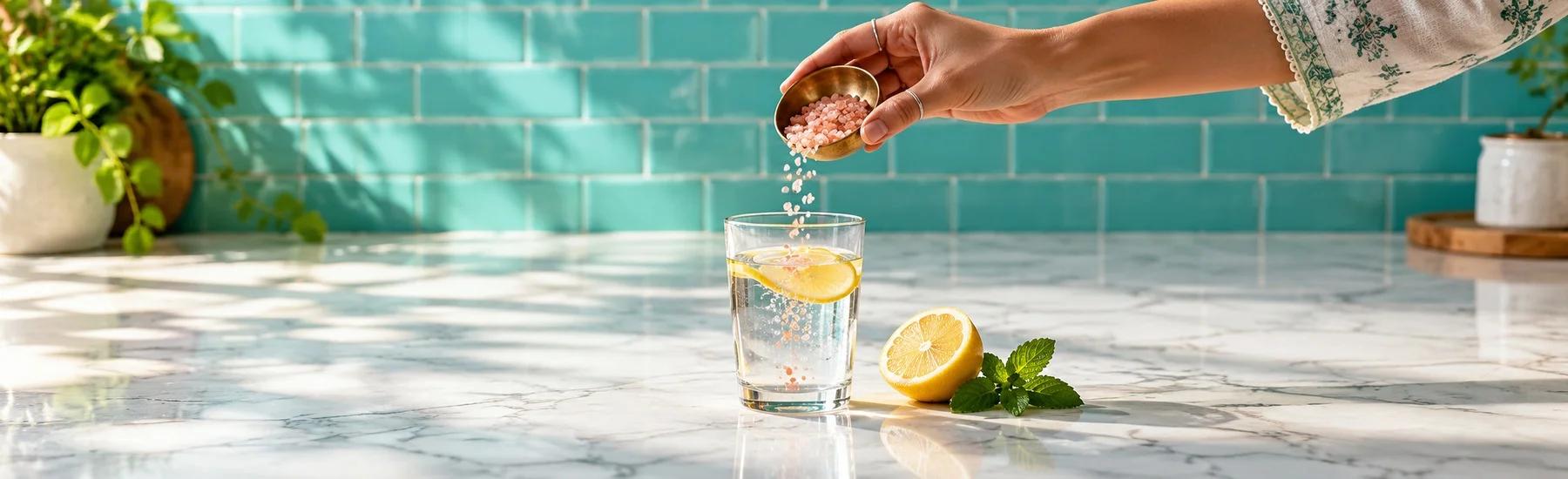
It's 6 am, and someone on your social media feed is mixing a pinch of pink Himalayan salt into warm water, squeezing in half a lemon and promising a flatter stomach in just two weeks. The recipe looks simple enough. No expensive supplements, no complicated diet, just something you probably already have in your kitchen. In many Indian homes, pink salt is familiar as sendha namak, commonly used during Navratri and other religious fasts. So when a wellness influencer claims that drinking it every morning can burn belly fat, improve hydration or even balance your hormones, it's easy to see why people are curious. This viral routine is known as the pink salt trick. It usually involves warm water, pink Himalayan salt and lemon, sometimes with a little honey.
However, there's no good evidence that drinking pink salt water burns body fat or speeds up weight loss. The water may temporarily help you feel fuller, but the added salt increases your sodium intake, something many Indian adults already get more than enough of. So, is there any real benefit to the pink salt trick, or is it just another wellness trend? Understanding what each ingredient actually does can help you decide whether this morning drink deserves a place in your routine.
What is pink salt, really?
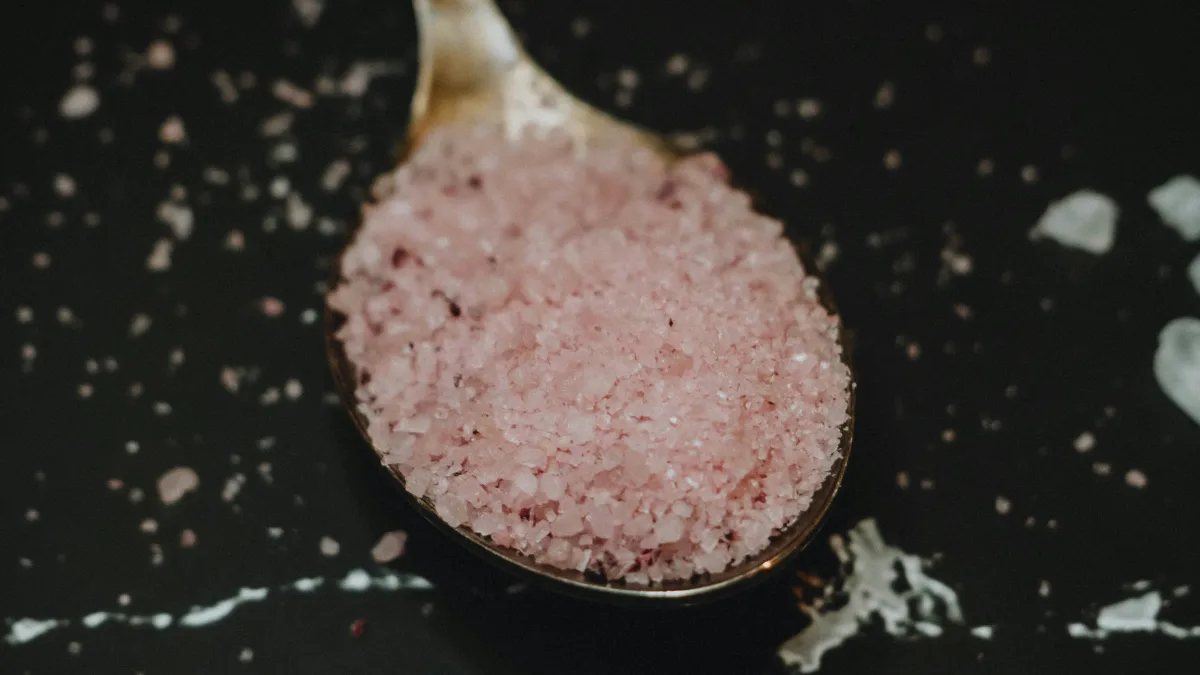
Pink Himalayan salt is rock salt mined in Pakistan. Its colour comes from small amounts of iron oxide, which is a form of rust. According to the Harvard T.H. Chan School of Public Health, it is less refined than table salt. That is why its crystals look larger and carry small amounts of iron, calcium, potassium and magnesium. The key words are "small amounts". Pink salt is still mostly sodium chloride, the same compound as the white salt in your kitchen. The same Harvard table lists about 2,200 mg of sodium in a teaspoon of pink salt, against about 2,300 mg in a teaspoon of fine iodised table salt. That is a very small gap.
What about the trace minerals? Researchers in Australia tested 31 pink salt samples bought from shops. They found that you would need more than 30 g a day, about six teaspoons, for those minerals to make any meaningful difference to your nutrition. At that dose the sodium would be harmful. The same study found that one sample carried more lead than the local food safety limit allows. Buy from a brand that states its source and testing. Sendha namak sold in India is the same type of rock salt. The same logic applies to it.
Can the pink salt trick really help you lose weight?
There's no reliable scientific evidence that drinking pink salt water helps people lose weight. No clinical studies have directly tested it as a weight loss drink, and salt has no known ability to burn body fat. Weight loss happens when your body consistently uses more energy than you consume. Adding a pinch of Himalayan salt to water doesn't change that. So why do some people claim they've lost a kilo within a week of trying it? There are a few possible explanations:
Changes in eating habits: Starting a new morning routine may make you more mindful of what you eat. You might cut back on sugary chai, biscuits or unnecessary snacks without realising it.
Drinking more water: Having a glass of water before breakfast may temporarily help you feel fuller. However, this benefit comes from the water, not the pink salt.
Normal weight fluctuations: Your weight can change by a kilo or more from one day to the next because of water retention, sodium intake and digestion. A lower reading on the scale doesn't necessarily mean you've lost body fat.
Claims that pink salt water balances your hormones or supports your adrenal glands also lack convincing clinical evidence. If you're feeling unusually tired or experiencing unexplained weight changes, speak to your doctor rather than relying on a morning salt drink. These symptoms may have underlying causes that need proper assessment.
Why can the water part help a little?
The water in the glass has some science behind it. The salt plays no part in it. In a trial in England, 84 adults with obesity were split into two groups. One group drank 500 ml of plain water 30 minutes before each main meal. The other group was asked to imagine their stomach was full before meals. After 12 weeks, the water group had lost 1.3 kg more than the comparison group. The researchers called this preliminary evidence of a moderate effect. That is a modest result from one small study. After the researchers adjusted for age, gender, ethnicity and deprivation, the gap was 1.2 kg and no longer statistically clear. One possible reason is that a fuller stomach may help you eat a little less at the meal that follows. Plain water gives you that benefit with no sodium at all. If you like warm water first thing, our Aora guide on whether warm water in the morning cleans your gut explains what it can and cannot do.
How much salt is too much?
The World Health Organization advises adults to eat less than 5 g of salt a day, which is just under one teaspoon. That equals 2,000 mg of sodium. WHO links high sodium intake to raised blood pressure, heart disease and kidney disease. Now look at the Indian plate. A national survey led by ICMR measured salt in the urine of 3,000 adults. It estimated an average intake of 8.0 g of salt a day, with 8.9 g in men and 7.1 g in women. Fewer than one in three adults knew that eating too much salt could harm health. Pickles, papad, namkeen, chutneys, bakery bread and restaurant food all add up long before you reach for the salt jar. Let us do the maths with the Harvard figure. A quarter teaspoon of pink salt carries about 550 mg of sodium. That is more than a quarter of your whole day's limit, gone before breakfast. Many recipes online use half a teaspoon, which is more than half the limit. On top of an average Indian diet that already sits above 5 g, the trick pushes you further in the wrong direction.
If you want to see how your own numbers are doing, this article on how to measure blood pressure at home walks you through doing it correctly.
Is pink salt iodised?
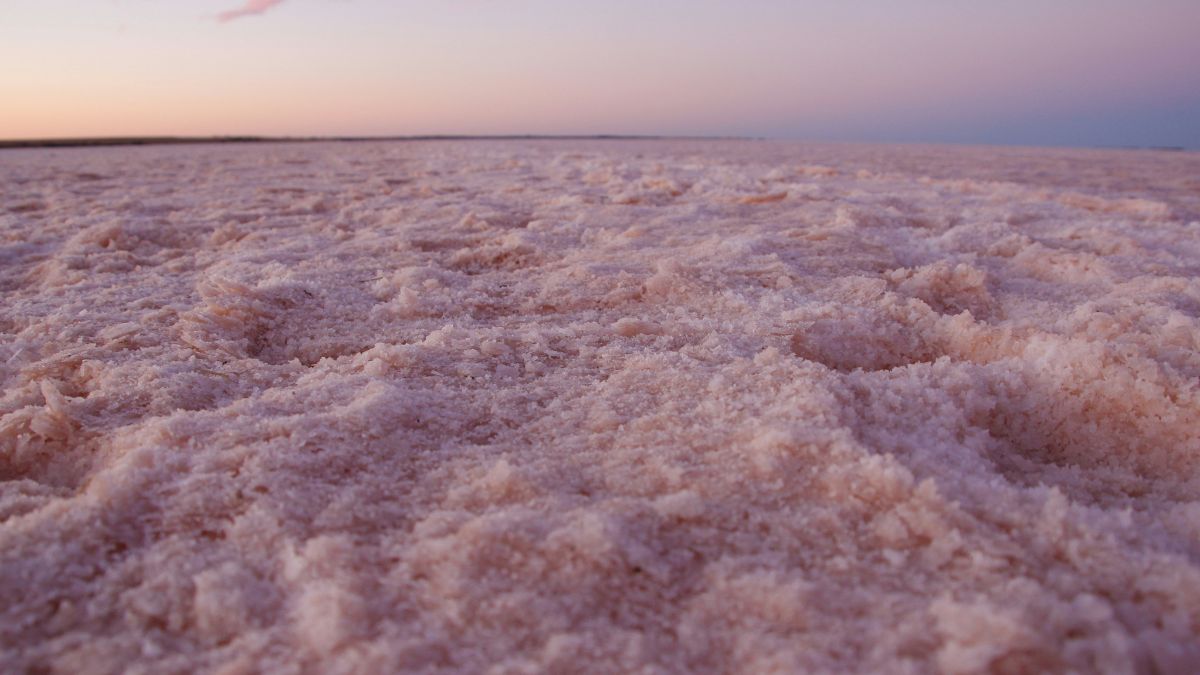
Not necessarily. Pink Himalayan salt contains meaningful amounts of iodine only if iodine has been added during processing. Unlike regular iodised table salt, pink salt is not always fortified with this essential nutrient. According to MedlinePlus, iodine helps your thyroid produce hormones that regulate metabolism and other important functions. Not getting enough iodine over time can lead to an enlarged thyroid gland, known as a goitre, or an underactive thyroid.
The World Health Organization (WHO) recommends using iodised salt because iodine is particularly important for brain development during pregnancy and early childhood. So, if you're thinking of replacing your regular cooking salt with sendha namak or pink Himalayan salt, check the packaging for the word "iodised". Without it, you could be missing an important source of iodine in your daily diet. For everyday cooking, iodised salt is generally the better choice. You can still enjoy rock salt occasionally or during religious fasts, but there's no proven health advantage to replacing iodised salt with pink salt. Whichever salt you choose, keep your overall intake moderate.
Who should skip the pink salt trick?
Avoid this drink and talk to your doctor first if any of these apply to you.
You have high blood pressure or take medication for it.
You have kidney disease of any stage.
You have heart failure or have been told to limit salt or fluids.
You have swelling in the feet or ankles that has not been checked.
You are pregnant or breastfeeding and have been told to watch your salt.
You have a thyroid condition and are thinking of giving up iodised salt.
Honey also brings sugar. If you have diabetes or prediabetes, that spoon counts.
If you still want to try it
Some people simply enjoy a warm, lightly salted nimbu pani in the morning. If that is you, keep it small and keep it honest.
Use a tiny pinch, not a quarter or half teaspoon.
Cut back on salt elsewhere that day, such as pickle or namkeen.
Skip the honey if you are watching sugar or weight.
Drink it plain some days and see if you notice any difference.
Keep your iodised salt for cooking.
What to drink instead
For the fullness effect, a large glass of plain water, warm or room temperature, 30 minutes before lunch and dinner is the better version of the trend. Lemon water without salt is fine too. Unsweetened chaas or a bowl of thin dal before a meal may also help you feel satisfied with fewer calories.
What actually moves the scale?
Weight change comes from steady habits repeated for months. None of them is as photogenic as pink crystals in a tumbler.
Build each meal around protein and fibre: dal, paneer, curd, eggs, sprouts, vegetables and whole grains. These can help keep you full for longer than refined snacks.
Watch the hidden extras: sugar in chai, fried snacks at the office, the second helping of rice.
Move after you eat. A short walk can help your body handle the sugar from a meal, as our guide on walking after meals explains.
Think about meal timing. Our piece on the best time to eat covers how an early dinner can help digestion and appetite.
Sleep well. Poor sleep can feed late-night hunger, which we cover in why you feel hungry at night.
If your weight has changed a lot without a clear reason, see a doctor, who can look for a medical cause.
A pinch of perspective
The pink salt trick borrows its appeal from things that are good for you: a calm morning, a glass of water, a moment of care before the day begins. Keep those. Let the salt go back into its dabba for the next vrat. Your blood pressure will be happier with the glass of plain water you were already drinking.
Sources
An analysis of the mineral composition of pink salt available in Australia (Foods, 2020)
Salt and sodium (Harvard T.H. Chan School of Public Health, The Nutrition Source)
Medical Disclaimer: This article is for general information and is not a substitute for advice from your doctor. Speak to a qualified healthcare professional before starting any supplement, especially if you are pregnant, breastfeeding or taking medication.
Continue this topic
Connected guides, ingredient explainers, product context, and tools chosen from this article's topic cluster.
Jade and rose quartz stones fill skincare reels. Learn where gua sha comes from, what the small studies show and how to use it gently and safely.
Wide awake at midnight and dragging at seven? How the body clock in your brain runs sleep, hunger and hormones. Plus simple ways to set it right again.
Kombucha and kimchi are trending, but your kitchen has curd, idli and kanji. What fermented foods do for your gut and what the studies actually show.
Quick questions
Does the pink salt trick help you lose weight?
There is no evidence that pink salt burns fat. In one small trial in adults with obesity, those who drank 500 ml of plain water before main meals lost 1.3 kg more over 12 weeks than a comparison group. After adjustment the gap was 1.2 kg and no longer statistically clear. Any benefit comes from the water, not the salt.
Is pink salt healthier than regular salt?
Pink salt is not healthier than regular salt in any meaningful way. It is mostly sodium chloride and has nearly as much sodium per teaspoon as table salt. Its trace minerals are so small that you would need more than 30 g a day, about six teaspoons, to gain from them, which would be far too much sodium.
How much salt is safe in a day?
The World Health Organization advises adults to eat less than 5 g of salt a day, just under one teaspoon. An ICMR survey estimated that Indian adults eat about 8 g a day on average, so many people need less salt, not more.
Is sendha namak the same as pink Himalayan salt?
Sendha namak is rock salt of the same type. Like pink salt, it is not iodised unless the pack says so. Keep iodised salt for everyday cooking and use rock salt for fasting days or the odd dish.
Who should not drink pink salt water?
Avoid it and speak to your doctor first if you have high blood pressure or take medication for it, kidney disease of any stage, heart failure, swelling in the feet or ankles that has not been checked, or a thyroid condition and are thinking of giving up iodised salt. The same applies if you have been told to limit salt or fluids, or you are pregnant or breastfeeding and have been told to watch your salt.
6 linked sources checked against our citation and claim-safety process.
Reviewed 2 Nov 2026 for supplement-claim and medical-disclaimer boundaries.
Recommended from the Aora range
Aora Nutrivit Plus
19 Essential Nutrients with Zinc, Magnesium and Vitamins B Complex, C and D3
- Multivitamin
- Daily Foundation
- Made in India
From₹690
Try Aora - free
Put this article to work on you.
Health and safety notice
- This article is educational. It is not medical advice and is not a substitute for guidance from a qualified healthcare provider. Consult a physician before starting any supplement, especially during pregnancy or breastfeeding, with a medical condition, or while on medication.
- FSSAI compliance: Health supplements and nutraceuticals are not intended for medicinal use. Any supplement-related information is provided to describe nutritional or physiological support and should not be interpreted as a claim to diagnose, treat, cure, or prevent any disease. FSSAI regulates health supplements and nutraceuticals separately from medicinal products.
Read our full medical disclaimer and editorial policy.
Sources and editorial standards
- 1Harvard T.H. Chan School of Public Health
- 2found that you would need more than 30 g a day
- 3lost 1.3 kg more than the comparison group
- 4World Health Organization advises adults to eat less than 5 g of salt a day
- 5estimated an average intake of 8.0 g of salt a day
- 6MedlinePlus
Supplement content is educational only and should not replace medical advice from a qualified clinician. Product mentions are reviewed for claim safety before publication.