Gua Sha: What Face Scraping Really Does for Your Skin
Jade and rose quartz stones fill skincare reels. Learn where gua sha comes from, what the small studies show and how to use it gently and safely.

In this article(14 sections)
- Where did gua sha come from?
- What does the research actually show?
- Blood flow just under the skin
- Neck pain
- Facial contour
- Does gua sha drain lymph or sculpt your face?
- The lymphatic drainage claim
- The face sculpting claim
- How to use gua sha safely on your face
- How to clean and care for your gua sha tool
- Who should avoid gua sha?
- When to see a dermatologist
- Is gua sha worth adding to your skincare routine?
- Sources
It's late at night, and you're scrolling through skincare reels before bed. One video after another shows someone gently gliding a smooth pink stone across their face, promising a sharper jawline, less puffiness and a more sculpted look by morning. The technique is called gua sha, a traditional East Asian practice that involves scraping the skin with a smooth-edged tool. Today, it has become a popular facial skincare ritual, often using jade or rose quartz stones with gentle massage movements. The results certainly look convincing on social media. However, what can gua sha actually do for your skin? While some research suggests possible benefits, the evidence is still limited, and many of the dramatic claims go beyond what science has established.
Where did gua sha come from?
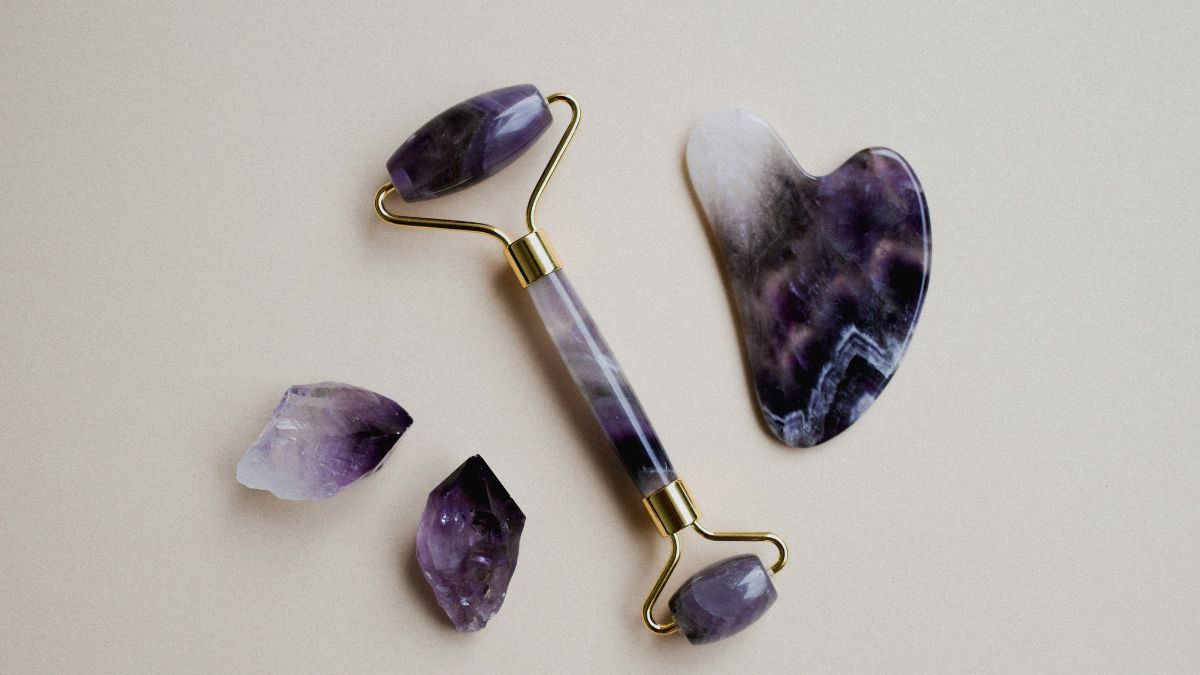
The gentle facial massage you see on social media comes from a much older practice in traditional East Asian medicine. However, the original technique is quite different from today's skincare trend. Traditional gua sha involves using a smooth-edged tool to apply firm, repeated strokes to areas such as the back, neck and shoulders. As described in a 2007 pilot study, similar practices are known by different names across Asia, including cao gio, coining, scraping and spooning. Traditionally, people often used everyday objects such as coins or porcelain spoons with a little oil. The firm pressure causes small red or purple marks beneath the skin, called petechiae, and sometimes bruising. These marks are traditionally known as "sha" and were believed to reflect the movement of stagnant blood. Practitioners have used the technique for problems involving pain and inflammation, although traditional explanations don't necessarily reflect how the body works scientifically.
Facial gua sha is much gentler. Instead of firm scraping, it uses light, controlled strokes with a smooth stone and a facial oil or serum to reduce friction. When performed correctly, it shouldn't cause bruising or leave red or purple marks. There's another important difference: much of the scientific research on gua sha has examined the traditional body technique, not the gentler facial version. This means findings about circulation or pain relief cannot automatically be applied to claims about facial lifting, sculpting or reducing wrinkles.
What does the research actually show?
Blood flow just under the skin
The 2007 pilot study used laser imaging to measure blood flow in the skin of 11 healthy hospital staff before and after one gua sha session on the back. Blood flow at the treated spot rose about fourfold for the first 7.5 minutes. It stayed higher than baseline for the full 25 minutes the researchers watched. Volunteers also reported that muscle soreness eased. That fits what you see after a gentle facial session: a warm, flushed look. But this was a single session of firm back scraping in 11 people, with no comparison group. It does not show any lasting change in the skin.
Neck pain
One clinical trial is a 2011 German study on chronic neck pain. It included 48 outpatients, most of them women with an average age of about 58. Half had one session of traditional gua sha. The other half used a heat pad. After one week, neck pain had improved more in the gua sha group, by about 30 mm on a visual pain scale. Pain on movement and daily function also improved more. This is encouraging for anyone with a stiff desk neck. Still, it was an open trial, which means patients knew which treatment they got. That can colour how pain is reported. The authors themselves said the value of gua sha for long term neck care is still unclear. If your neck stiffens through long office days, movement helps too. Our Aora guide on joint stiffness after sitting covers simple mobility habits.
Facial contour
The one facial trial we found is a 2025 Korean randomised trial. It assigned 34 women aged 20 to 50, 17 in each group, to use either a gua sha tool or a facial roller for 10 minutes, five times a week, for 8 weeks. Measured distances across the lower face and jawline shrank by about 2.2 to 2.4 mm in the gua sha group. The roller group shrank a little more, by about 2.8 to 3.3 mm. The gua sha group showed changes in muscle tone. The roller group showed better skin elasticity scores. Two millimetres is a real, measurable shift. It may be hard to see in a mirror. There was also no group that did nothing, so we cannot tell how much came from the tool itself. Fluid levels in the face change through the day too. A 2026 review of scraping therapy sums up where things stand. Gua sha is widely used for neck pain, shoulder tension and muscle soreness, yet the way it works in the body is still not well understood.
Does gua sha drain lymph or sculpt your face?
The lymphatic drainage claim
Your lymphatic system is a network of thin vessels and small glands called lymph nodes. As MedlinePlus explains, it helps clear infection and keeps body fluids in balance. When it does not work properly, fluid builds up in the tissues and causes swelling called lymphoedema. Light outward strokes may shift a little surface fluid for a while, which can make morning puffiness look softer. That part is plausible. But none of the studies above measured lymph flow in the face. A healthy lymphatic system also does not need a stone to do its job. Real lymphoedema is a medical condition that needs a doctor, who may refer you to a specialist clinic. Swelling in the face, mouth or throat that does not settle is never something to massage away at home.
The face sculpting claim
A stone cannot reshape bone, remove fat or tighten loose skin. The facial trial showed a change of about two millimetres in a small group. Much of the "before and after" lift in reels can come from lighting, angle and fluid that shifts through the day. What you can reasonably expect is a few minutes of calm, warm skin with a short lived flush and perhaps a slightly less puffy look. For lasting skin quality, sleep, sun protection and food matter more. Our guide to skin ageing and nutrition explains the parts you can influence.
How to use gua sha safely on your face
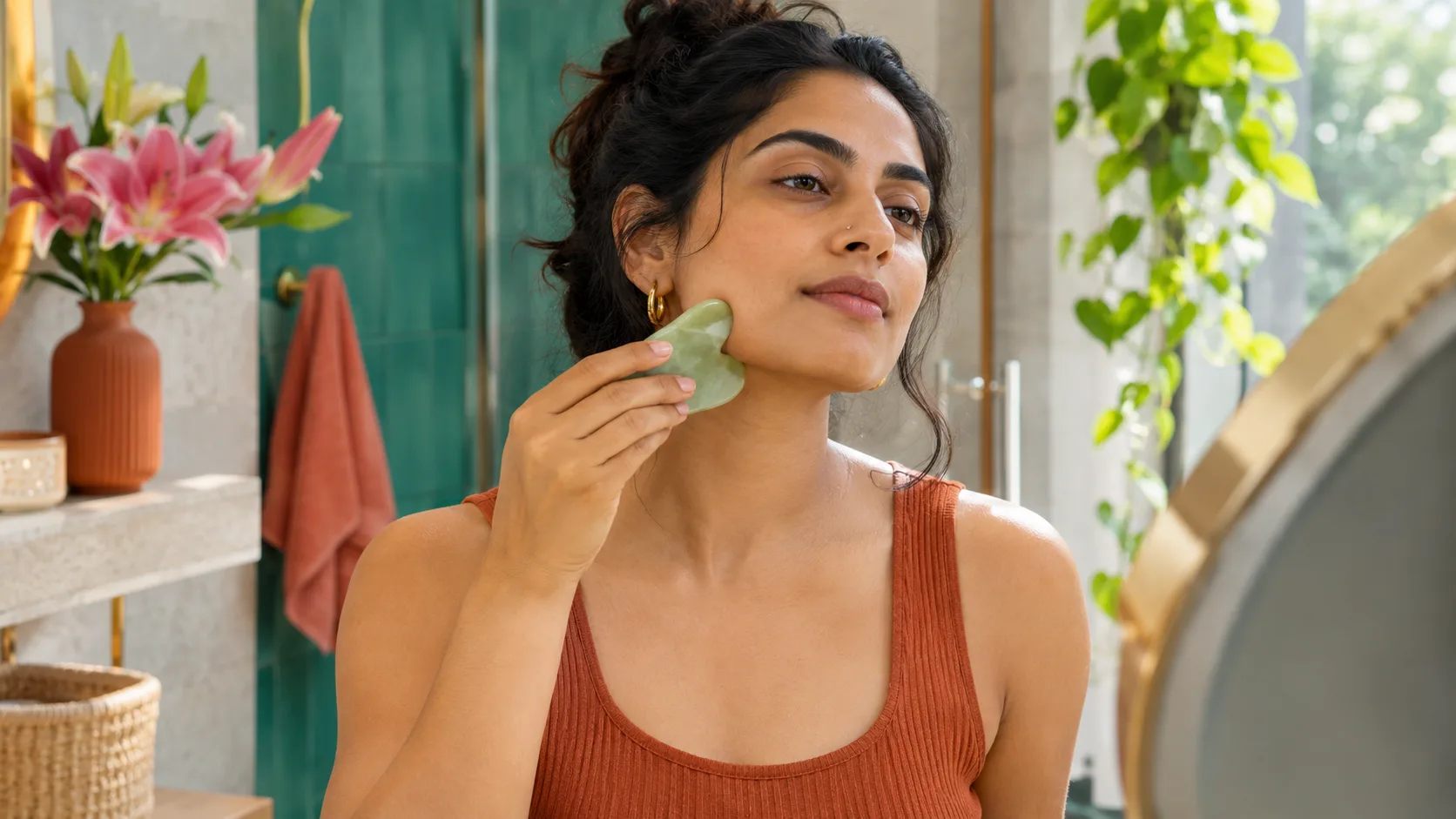
If you enjoy facial gua sha as part of your skincare routine, the key is to be gentle. You don't need strong pressure or long massage sessions to enjoy the experience. Here's a simple way to use it:
Start with clean skin. Wash your face and hands before using the tool.
Apply moisturiser or facial oil. Use enough product to help the stone glide smoothly without pulling or stretching your skin.
Hold the stone almost flat. Keep its smooth edge close to your skin rather than holding it upright like a blade.
Use very light pressure. The massage should feel comfortable, not painful. Red marks that linger or tiny red dots suggest you're pressing too hard.
Move gently across your face. Glide from your chin towards your ears, across your cheeks towards your temples and from your forehead towards your hairline.
Keep each movement short. Repeat a few gentle strokes before moving to another area. Avoid pressing on the delicate skin beneath your eyes.
Stop if your skin feels irritated. Stinging, burning, pain or bruising are signs to stop.
If you have acne-prone skin, choose a lightweight, non-comedogenic moisturiser instead of a heavy facial oil. Avoid using gua sha over active, inflamed acne, broken skin or irritated areas.
How to clean and care for your gua sha tool
A gua sha tool comes into direct contact with your skin, so keeping it clean is important. Wash it with mild soap and warm water after each use, then dry it completely before storing. Avoid sharing your tool, and replace it if you notice chips or cracks that could scratch your skin.
Does the material matter? There's no convincing evidence that jade, rose quartz or stainless steel produces better skincare results than another material. Choose a tool with smooth, rounded edges that feels comfortable to hold. How gently you use it matters more than what it's made from..
Who should avoid gua sha?
The NIH notes that the risk of harmful effects from massage appears to be low. There have been rare reports of serious side effects, such as a blood clot, nerve injury or bone fracture. Some of these involved vigorous massage or people at higher risk of injury, such as elderly people. Skip it, or ask a doctor first, if any of these apply to you.
Active acne, especially red or pus filled spots. Our article on gut health for skin breakouts looks at other habits that matter.
Rosacea during a flare, when the cheeks are red, hot or stinging.
Broken skin, cuts, sunburn, eczema patches, cold sores or any skin infection.
Easy bruising or blood thinning medicines. Ask your doctor before trying any scraping on face or body.
Recent fillers, Botox or other cosmetic procedures. Ask the clinic that did the work how long to wait before pressing on that area.
A recent facial surgery or a known blood vessel condition of the face.
Body gua sha that leaves marks is a different matter. If you want it, see a trained practitioner and tell them about your health and medication.
When to see a dermatologist
The ritual should feel pleasant and leave your skin looking calm. If your skin reacts in a way that worries you or is not getting better, stop and see a dermatologist or your doctor. That includes acne that leaves marks you would like help with. Our guide to collagen for acne scars explains what nutrition can and cannot do there. Puffiness that comes with swollen ankles, feet or legs needs a medical check rather than a stone. The NHS advises an urgent GP appointment if leg swelling comes with swelling in other areas such as your face or tummy. It says to call 999 (112 in India) if you feel short of breath or are struggling to breathe, or your chest feels tight, heavy or painful.
Sudden swelling of the face, lips or throat can be a severe allergic reaction. The NHS says to call 999 (112 in India) if you think someone is having one. Its symptoms include:
swelling of the throat and tongue
difficulty breathing or breathing very fast
difficulty swallowing, tightness in the throat or a hoarse voice
wheezing, coughing or noisy breathing
feeling tired or confused
feeling faint, dizzy or fainting
skin that feels cold to the touch
blue, grey or pale skin, lips or tongue
Is gua sha worth adding to your skincare routine?
Gua sha has a long history, and a few small studies suggest possible benefits for circulation and facial appearance. However, there's no convincing evidence that it can permanently sculpt your jawline, reduce wrinkles or reverse skin ageing. If you enjoy the massage and find it relaxing, it's fine to include it in your routine. Use gentle pressure, keep your tool clean and have realistic expectations. For lasting skin health, everyday habits such as sun protection, good sleep and balanced nutrition matter far more than any beauty tool.
Sources
Medical Disclaimer: This article is for general information and is not a substitute for advice from your doctor. Speak to a qualified healthcare professional before starting any supplement, especially if you are pregnant, breastfeeding or taking medication.
Continue this topic
Connected guides, ingredient explainers, product context, and tools chosen from this article's topic cluster.
Warm water, pink salt and lemon every morning to melt fat? Learn what the viral drink can do, what it cannot and why the salt in it matters for your blood pressure.
Wide awake at midnight and dragging at seven? How the body clock in your brain runs sleep, hunger and hormones. Plus simple ways to set it right again.
Kombucha and kimchi are trending, but your kitchen has curd, idli and kanji. What fermented foods do for your gut and what the studies actually show.
Quick questions
What is gua sha?
Gua sha is a scraping technique from traditional East Asian medicine. The body version uses firm strokes that leave small red marks. The facial version on social media uses light strokes with a smooth stone and oil and should leave no marks.
Does gua sha really sculpt the face?
Only slightly, based on one small study. In a trial of 34 women, the 17 who used gua sha saw lower face measurements shrink by about two millimetres after eight weeks of regular use. A stone cannot change bone, remove fat or tighten loose skin.
Does facial gua sha drain the lymphatic system?
Light outward strokes may shift a little surface fluid for a while, which can soften morning puffiness. No study we found measured lymph flow in the face. Swelling that does not settle needs a doctor.
Is jade better than rose quartz for gua sha?
No study shows that one stone works better than another. Pick one that feels pleasant in your hand and keep it clean.
Who should not use gua sha?
Skip it on active acne, a rosacea flare, broken or sunburnt skin or any skin infection. People who bruise easily or take blood thinning medicine should ask a doctor first. After fillers or Botox, ask the clinic how long to wait.
How often should I clean my gua sha stone?
Wash it with mild soap and warm water after every use, then dry it fully. Do not share it with others. Replace it if it chips or cracks, since a rough edge can scratch the skin.
9 linked sources checked against our citation and claim-safety process.
Reviewed 2 Nov 2026 for supplement-claim and medical-disclaimer boundaries.
Recommended from the Aora range
Aora Chamrose
Chamomile, Rosemary & Jatamansi Extract
- Hair Care
- Hair Support
- Made in India
From₹960
Try Aora - free
Put this article to work on you.
Health and safety notice
- This article is educational. It is not medical advice and is not a substitute for guidance from a qualified healthcare provider. Consult a physician before starting any supplement, especially during pregnancy or breastfeeding, with a medical condition, or while on medication.
- FSSAI compliance: Health supplements and nutraceuticals are not intended for medicinal use. Any supplement-related information is provided to describe nutritional or physiological support and should not be interpreted as a claim to diagnose, treat, cure, or prevent any disease. FSSAI regulates health supplements and nutraceuticals separately from medicinal products.
Read our full medical disclaimer and editorial policy.
Sources and editorial standards
- 12007 pilot study
- 2pain and inflammation
- 32011 German study on chronic neck pain
- 42025 Korean randomised trial
- 52026 review of scraping therapy
- 6MedlinePlus explains
- 7NIH notes
- 8NHS
- 9NHS
Supplement content is educational only and should not replace medical advice from a qualified clinician. Product mentions are reviewed for claim safety before publication.