
Can You Increase Bone Density? Exercise, Nutrition and Treatment
Learn what can help increase bone density, including progressive exercise, calcium, vitamin D, protein, bone testing and when medical treatment may be needed.
In this article(14 sections)
- Can you really increase bone density?
- Why bone density declines
- The exercise that can help increase bone density
- Progressive resistance training
- Weight-bearing and impact exercise
- Balance training still matters
- How often should you exercise?
- Can walking increase bone density?
- Nutrition that supports bone density
- What about magnesium and vitamin K?
- How is bone density measured?
- Can osteoporosis be reversed?
- Also read
- Medical Disclaimer
Can you really increase bone density?
Yes, but the answer needs context. Bone is living tissue that continually remodels, and it can respond to exercise, nutrition and medical treatment. Endotext's review of osteoporosis prevention and treatment notes that exercise studies often show modest changes in bone mineral density rather than dramatic gains.
That is why a useful plan to increase bone density is not built around promises of fast reversal. If you already have healthy bone density, the aim may be to preserve it. If you have osteopenia, the goal may be to slow loss and reduce fracture risk. If you have osteoporosis, treatment may include medication in addition to exercise and nutrition.
The amount you can increase bone density also varies by skeletal site. The spine, hip and forearm do not always respond in exactly the same way, and exercises tend to have the strongest effect on the bones they actually load.
Why bone density declines
Bone mass usually peaks in early adulthood and then gradually declines with age. After menopause, lower oestrogen levels can accelerate bone loss. Men also lose bone as they age, although the change is often more gradual.
Bone loss can be affected by more than age. Physical inactivity, low body weight, smoking, heavy alcohol intake, low calcium or vitamin D status, long-term glucocorticoid use and several medical conditions can all contribute. If you are trying to increase bone density after a scan has shown significant loss, finding the reason matters as much as choosing an exercise.
The exercise that can help increase bone density
Exercise gives bone a mechanical signal to adapt. The National Institute of Arthritis and Musculoskeletal and Skin Diseases recommends combining weight-bearing activity, muscle-strengthening exercise and balance work for bone health.
Not every activity produces the same stimulus. Swimming and cycling are excellent for cardiovascular fitness, but they remove much of the weight-bearing load from the skeleton. Walking supports mobility and general health, but a plan to increase bone density usually needs progressive resistance and, when appropriate, impact as well.
Progressive resistance training
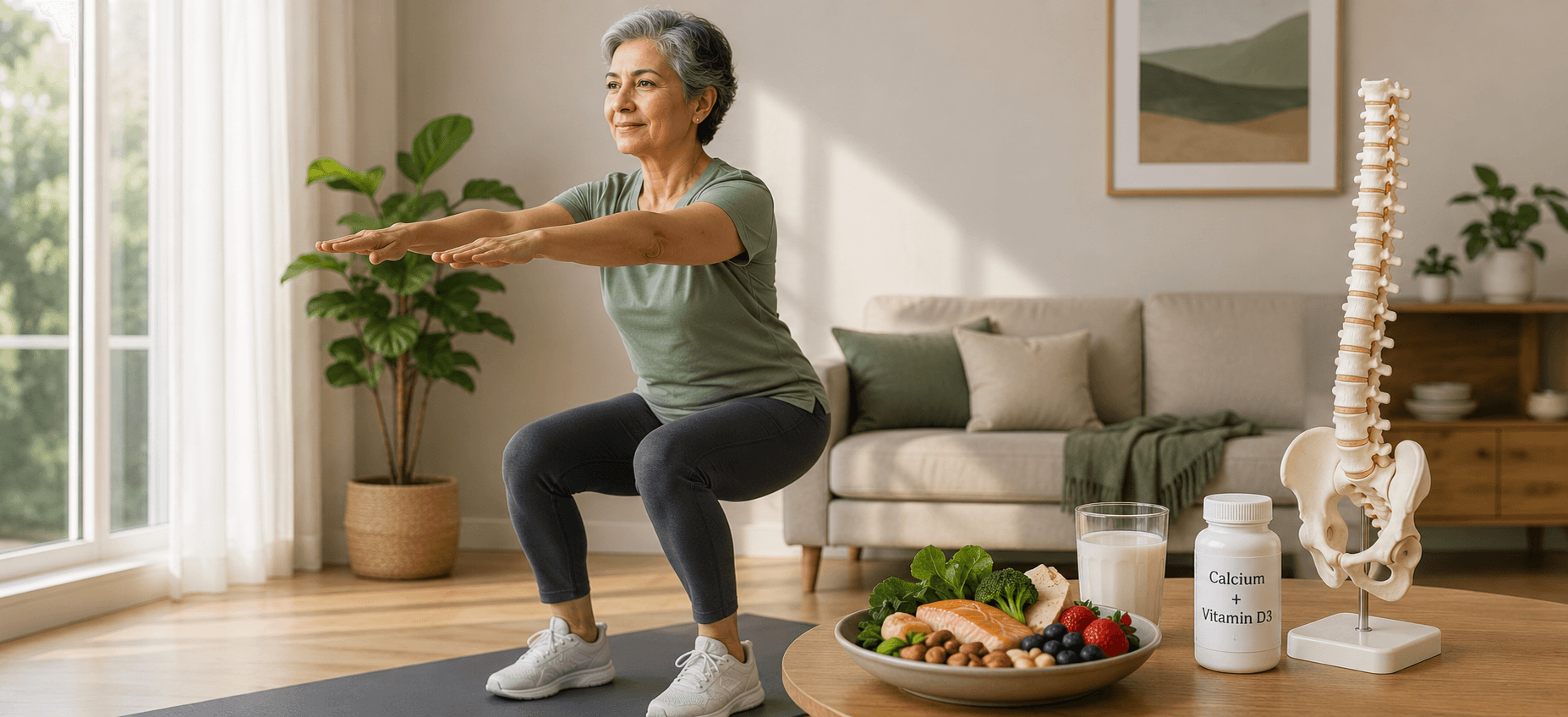
Resistance training is central when you want to increase bone density because muscles pull on bones as they work. Squats, step-ups, hip hinges, rows, presses and other large movements can be adapted with body weight, resistance bands, dumbbells or machines.
The important word is progressive. If the same light resistance stays easy for months, the bone-loading signal becomes smaller. Increase weight, repetitions, range of motion or exercise difficulty gradually while maintaining control. A 2024 UK clinical guideline for osteoporosis reports beneficial effects of exercise on bone mineral density and supports programmes that combine weight-bearing and resistance exercise.
Weight-bearing and impact exercise
Weight-bearing exercise is performed while your skeleton supports your body against gravity. Brisk walking, stair climbing, dancing and hiking fit this category. These activities are useful, but they do not all have the same potential to increase bone density.
Impact adds a different loading signal. Hops, jumps, jogging and changes of direction may help increase bone density in suitable adults because they create faster ground-reaction forces. However, impact must match fracture risk. The Royal Osteoporosis Society provides graded guidance because higher-impact exercise is not appropriate for everyone with osteoporosis, spinal fractures, severe pain or poor balance.
Balance training still matters
Balance work does not directly increase bone density in the same way as resistance or impact exercise, but it helps reduce falls. Heel-to-toe walking, supported single-leg stands and tai chi can therefore reduce one of the main pathways from low bone density to fracture.
A complete bone plan is not just about the DXA number. Stronger muscles, better balance and safer movement can lower fracture risk even when the change in bone mineral density is modest.
How often should you exercise?
There is no single schedule that suits everyone trying to increase bone density. A practical programme usually includes muscle-strengthening work at least twice each week and regular weight-bearing activity, with balance practice added according to need.
If you are starting from very little activity, increase gradually. Exercise that is too easy may not provide enough stimulus, but exercise that is too aggressive can raise injury risk. If you have osteoporosis, a previous fragility fracture or significant balance problems, a physiotherapist or clinician can help you choose a safer starting level.
Consistency matters because bone adapts slowly. Trying to increase bone density is a months-to-years project, not a two-week challenge.
Can walking increase bone density?
Walking is valuable, particularly for people who are inactive, because it is weight-bearing and easy to repeat. It supports mobility, cardiovascular health and confidence. However, walking alone may not provide enough novel load to increase bone density meaningfully at every skeletal site.
If you enjoy walking, keep it. Then add progressive resistance training and, if appropriate for your fracture risk, some higher-impact or faster-loading movement. This combination gives your skeleton a broader stimulus than walking alone.
Nutrition that supports bone density
Exercise creates the signal to increase bone density, but bone also needs adequate nutrition. Calcium is a major structural mineral, vitamin D helps the body absorb calcium, and protein supports the muscle and tissue framework around bone.
NIAMS guidance on calcium and vitamin D explains that adults need enough calcium and vitamin D to maintain bone health. Useful food sources include dairy or fortified alternatives, calcium-set tofu, small fish with edible bones, leafy vegetables, oily fish, eggs, pulses and protein foods that fit your diet.
Taking more than you need does not mean you will increase bone density faster. High-dose supplements can create side effects or interact with health conditions and medicines. Use supplements to address a genuine gap or follow professional advice rather than treating every bone-health product as additive.
What about magnesium and vitamin K?
Magnesium and vitamin K are involved in normal bone metabolism, but they should not distract from the main priorities: progressive loading, enough calcium and vitamin D, adequate protein, not smoking and appropriate medical care.
A varied diet usually provides several bone-related nutrients at once. If you are considering multiple supplements in an attempt to increase bone density, check for overlapping ingredients and discuss them with a pharmacist or healthcare professional when you take regular medicines.
How is bone density measured?
A central DXA or DEXA scan is the standard test used to measure bone mineral density at the hip and spine. NIAMS explains that a T-score is used for postmenopausal women and men aged 50 or older.
A T-score of -1 or higher is considered within the healthy range. A score between -1 and -2.5 indicates low bone density or osteopenia, while -2.5 or lower may indicate osteoporosis. The number is only one part of the assessment because fracture history, age, medicines and other risk factors also matter.
The U.S. Preventive Services Task Force recommends routine screening for women aged 65 and older and younger postmenopausal women at increased fracture risk. Evidence remains insufficient to recommend routine screening for all men, so clinicians use individual judgement.
Can osteoporosis be reversed?
The phrase "reverse osteoporosis" is too simple. Treatment can improve bone density and reduce fracture risk, and some people may move to a less severe T-score range over time. However, osteoporosis is a medical condition and should not be managed with exercise or supplements alone when medication is indicated.
If a scan shows osteoporosis, a clinician may discuss prescription treatment based on fracture risk, previous fractures and other health factors. Exercise, nutrition, fall prevention and medicine can work together. The aim is to increase bone density when possible while reducing the chance of a future fracture.
Also read
Medical Disclaimer
This article is for general educational purposes only and should not replace professional medical advice, diagnosis or treatment. Speak to a qualified healthcare professional before trying to increase bone density through a new exercise or supplement programme if you have osteoporosis, a previous fragility fracture, severe pain, balance problems or another medical condition. Bone loss and osteoporosis may require testing and prescription treatment in addition to lifestyle changes.
Continue this topic
Connected guides, ingredient explainers, product context, and tools chosen from this article's topic cluster.
Creatine is everywhere now. Learn what research shows on safety, kidneys, hair, women, older adults and the brain. Plus how much to take.
Vitamin D3 helps your gut absorb calcium and many Indians run low. Why a blood test comes first and how to use D3 safely for your bones.
Vitamin D deficiency can affect bones and muscles. Learn symptoms, risk factors, blood testing, treatment and why high doses need medical guidance.
Quick questions
Quick answer You can sometimes increase bone density modestly, especially with progressive resistance and appropriate impact exercise, but the result depends on age, baseline bone health and medical risk. Calcium, vitamin D and protein support bone, while osteoporosis may also require prescription
Yes, but the answer needs context. Bone is living tissue that continually remodels, and it can respond to exercise, nutrition and medical treatment. Endotext's review of osteoporosis prevention and treatment notes that exercise studies often show modest changes in bone mineral density rather than dramatic gains.
Why bone density declines Bone mass usually peaks in early adulthood and then gradually declines with age. After menopause, lower oestrogen levels can accelerate bone loss. Men also lose bone as they age, although the change is often more gradual. Bone loss can be affected by more than age. Phys
There is no single schedule that suits everyone trying to increase bone density. A practical programme usually includes muscle-strengthening work at least twice each week and regular weight-bearing activity, with balance practice added according to need.
Can walking increase bone density?
Walking is valuable, particularly for people who are inactive, because it is weight-bearing and easy to repeat. It supports mobility, cardiovascular health and confidence. However, walking alone may not provide enough novel load to increase bone density meaningfully at every skeletal site.
Nutrition that supports bone density Exercise creates the signal to increase bone density, but bone also needs adequate nutrition. Calcium is a major structural mineral, vitamin D helps the body absorb calcium, and protein supports the muscle and tissue framework around bone. NIAMS guidance on
Magnesium and vitamin K are involved in normal bone metabolism, but they should not distract from the main priorities: progressive loading, enough calcium and vitamin D, adequate protein, not smoking and appropriate medical care.
7 linked sources checked against our citation and claim-safety process.
Reviewed 22 Aug 2026 for supplement-claim and medical-disclaimer boundaries.
Recommended from the Aora range
Aora Nutrivit Plus
19 Essential Nutrients with Zinc, Magnesium and Vitamins B Complex, C and D3
- Multivitamin
- Daily Foundation
- Made in India
From₹690.00
Try Aora - free
Put this article to work on you.
Health and safety notice
- This article is educational. It is not medical advice and is not a substitute for guidance from a qualified healthcare provider. Consult a physician before starting any supplement, especially during pregnancy or breastfeeding, with a medical condition, or while on medication.
- FSSAI compliance: Health supplements and nutraceuticals are not intended for medicinal use. Any supplement-related information is provided to describe nutritional or physiological support and should not be interpreted as a claim to diagnose, treat, cure, or prevent any disease. FSSAI regulates health supplements and nutraceuticals separately from medicinal products.
Read our full medical disclaimer and editorial policy.
Sources and editorial standards
- 1Endotext's review of osteoporosis prevention and treatment
- 2The National Institute of Arthritis and Musculoskeletal and Skin Diseases
- 32024 UK clinical guideline for osteoporosis
- 4The Royal Osteoporosis Society
- 5NIAMS guidance on calcium and vitamin D
- 6NIAMS
- 7U.S. Preventive Services Task Force
Supplement content is educational only and should not replace medical advice from a qualified clinician. Product mentions are reviewed for claim safety before publication.