Honey in Hot Water: Is It Really Toxic? What the Science Says
Heard that honey in hot water turns toxic? See what HMF studies actually tested, what heat does to honey's enzymes, how much sugar it adds and why babies under one should never have honey.

In this article(13 sections)
- Where does the warning come from?
- What is HMF and does hot water create it?
- What did the heating studies actually measure?
- Lab heating of honey
- The Indian rat study
- The big HMF safety study
- What heat really does to honey
- Honey and the morning lemon water habit
- How much sugar does that spoon add?
- A practical way to enjoy honey in a warm drink
- The one honey rule that is truly serious
- When to see a doctor
- Sources
Honey in hot water is not toxic in the way the warning suggests. Heating honey does raise a compound called HMF and does reduce some of its natural enzymes, but the studies behind the scare tested strong lab heating or very large doses of pure HMF given to animals, not a spoonful stirred into a warm cup. The real points to watch are the sugar it adds and one firm rule: no honey at all for babies under one year. You probably heard it at home first. You are stirring a spoon of honey into your morning glass of hot water with lemon when an elder in the family stops you. "Never put honey in hot water. It turns into poison." A week later the same line arrives on the family WhatsApp group, this time with a chemistry word attached. Now you are not sure whether to keep your morning habit or drop it.
Where does the warning come from?

The idea has deep roots in Ayurveda. Classical Ayurvedic teaching advises against heating honey and against mixing it with an equal amount of ghee. An Indian study published in the journal Ayu opens by stating exactly this belief before testing it in the lab (Annapoorani and colleagues, Ayu, 2010). That tradition deserves respect. Generations of careful observers noticed that honey darkens and loses its fresh taste when cooked hard. Those observations were real. Modern science can add the question of how much changes, at what temperature, and whether the change matters for your health. The WhatsApp version of the warning usually adds one word: HMF.
What is HMF and does hot water create it?
HMF, short for 5-hydroxymethylfurfural, is a compound that forms when sugars are heated in an acidic setting. Honey is naturally sugary and slightly acidic, so a small amount of HMF forms in it over time even without heat. Storage conditions matter too. Because of this, food scientists use HMF levels as a marker of how fresh or how heat-treated a honey is (Shapla and colleagues, Chemistry Central Journal, 2018). That review lists harmful effects seen for HMF in lab and animal research, along with some possible benefits. It sees HMF as something to keep low in food, which is a fair position. It does not say a cup of honey water is dangerous.
HMF is also far from unique to honey. A long toxicology report from the US National Toxicology Program notes that HMF is found widely in everyday food. It occurs at more than 1 gram per kilo in dried fruits, caramel products and some fruit juices. It reaches up to 6.2 grams per kilo in instant coffee (National Toxicology Program, 2010). It also forms in home cooking whenever sugar and carbohydrates are heated. If HMF in food were acutely toxic at these levels, your morning coffee and your festival sweets would be a bigger worry than your honey water.
What did the heating studies actually measure?
This is where the details matter, because most forwards skip them.
Lab heating of honey
A Polish team heated raw honey to set temperatures from 30 up to 80 degrees Celsius. Even at 80 degrees for 15 minutes, the largest rise in HMF averaged 1.9 milligrams per kilo of honey. The authors concluded that heating for 15 minutes between 50 and 80 degrees did not significantly degrade the quality of the honey (Kędzierska-Matysek and colleagues, Journal of Food Science and Technology, 2016). Your glass is gentler still. You stir a spoonful into water that starts cooling the moment you pour it, where the honey is diluted many times over.
The Indian rat study
The Ayu study heated honey to 60 and 140 degrees Celsius and found HMF rose significantly at both. It then fed heated honey, ghee and honey mixed with ghee to rats for six weeks. The rats showed no significant change in food intake, weight gain or relative organ weights (Annapoorani and colleagues, Ayu, 2010). The authors still noted that heated honey mixed with ghee produces HMF which may cause harmful effects. That is a reasonable caution. The animals they fed, however, showed no measurable harm over the six weeks.
The big HMF safety study
The National Toxicology Program study is the one the scare often leans on, so it is worth reading closely. Researchers gave pure HMF directly into the stomachs of rats and mice for up to two years. The doses were 188, 375 or 750 milligrams of HMF per kilo of body weight, every dosing day (National Toxicology Program, 2010). The findings were mixed. There was no evidence of cancer in male or female rats at any dose. There was some evidence of benign liver tumours in female mice at 188 and 375 milligrams per kilo. Both species also showed more changes in the lining of the nose.
Compare that dose with the 1.9 milligrams per kilo of honey seen in the heating study above. The animal doses were measured against body weight, using pure HMF, day after day for most of the animals' lives. A spoon of honey in a warm drink is a different situation by a very wide margin. This was an animal study, so it tells us HMF is worth keeping low in food. It does not show that honey in hot water harms people.
What heat really does to honey
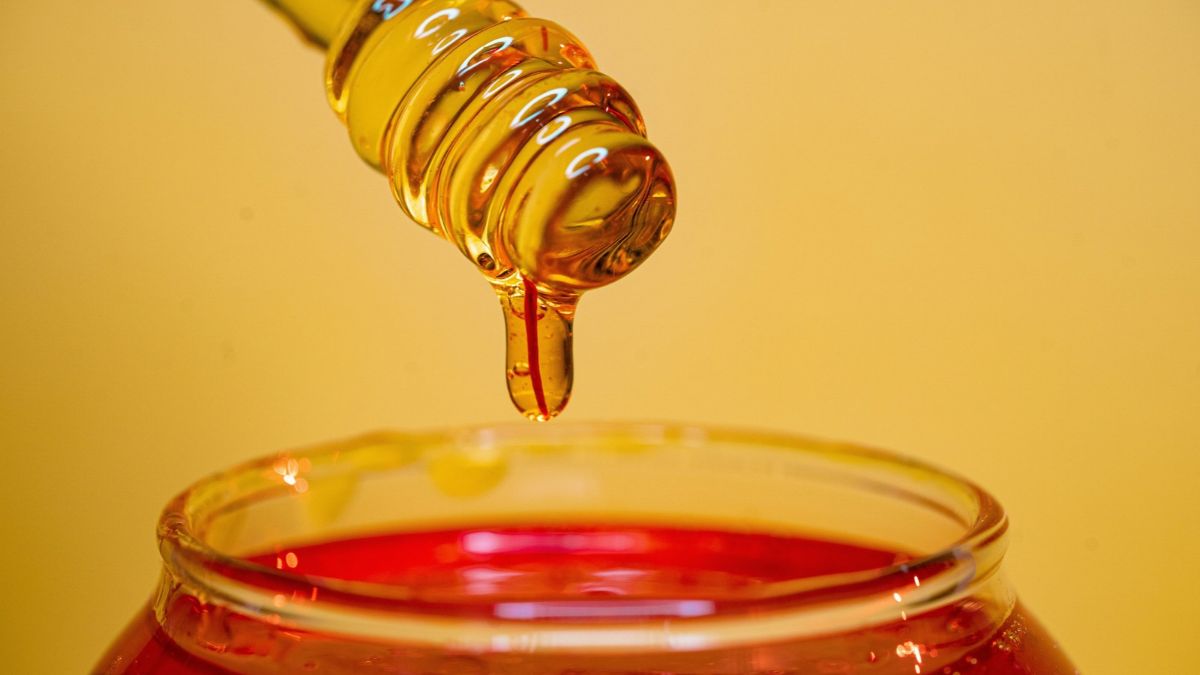
The fair part of the warning is this: heat changes honey.
Enzymes fade. Raw honey carries natural enzymes such as diastase. In the Polish study, diastase activity fell as the temperature rose (Kędzierska-Matysek and colleagues, 2016). Very hot water will reduce these enzymes.
Taste and aroma soften. The delicate floral notes of a good honey fade in boiling liquid.
Colour can darken with long, strong heating.
So if you pay extra for raw, unprocessed honey, boiling water wastes some of what you paid for. That is about quality and taste. It has nothing to do with poisoning.
Honey and the morning lemon water habit
Warm water with lemon and honey on an empty stomach is a common Indian morning ritual. It is a gentle way to start drinking water early in the day, which many people forget to do. Our Aora guide on whether warm water in the morning cleans your gut looks at what the warm water part can and cannot do. The honey part is simpler. It adds sweetness and sugar. Enjoy it for the taste and the routine rather than for any weight loss promise.
How much sugar does that spoon add?
Honey is a sugar. The World Health Organization counts the sugars naturally present in honey as free sugars, the same group as table sugar added to food. It recommends keeping free sugars below 10% of your daily energy intake, with further benefit from going below 5%, which is roughly 25 grams or six teaspoons a day (World Health Organization, 2015). That changes how to think about the habit. One spoon in the morning is easy to fit in. Honey in your morning glass, honey in your tea, a sweet after lunch and a biscuit with evening chai add up quickly. If you notice you reach for sweet things through the day, our article on why you crave sugar all the time explains the common reasons.
If you live with diabetes or prediabetes, count honey as sugar. Talk to your doctor before you make a daily honey drink part of your routine. A short walk after meals is one habit that helps many people manage their after-meal sugar, as explained in our piece on walking after meals.
A practical way to enjoy honey in a warm drink
You do not need a thermometer. A few simple habits respect both tradition and science.
Boil the water, then let it sit for a few minutes until you can sip it comfortably.
Stir in the honey at the end, after squeezing in the lemon.
Keep it to about one spoon and count it in your day's sweetness.
Store honey in a closed jar away from the stove and direct sun, so it stays fresh for longer.
Avoid cooking honey for long periods at high heat if you want to keep its flavour and enzymes.
These steps also happen to match the spirit of the old advice. Your elders were right that harsh heat changes honey. They were careful for good reason, even if the word poison goes further than the evidence.
The one honey rule that is truly serious
There is a real danger with honey. It has nothing to do with hot water. Honey can occasionally contain bacteria that produce toxins in a baby's intestines, leading to infant botulism, which is a very serious illness. The NHS advises not giving a child honey until they are over one year old (NHS, foods to avoid giving babies and young children). Heating does not make honey safe for babies. This means no honey on a dummy and no honey dabbed on a newborn's tongue at a naming ceremony, however much the custom is loved. Explain the reason gently to grandparents. Most families accept it once they understand it is about the baby's safety.
When to see a doctor
See a doctor urgently if a baby under one year has eaten honey and then shows constipation, a weak cry, poor feeding, unusual sleepiness or floppy muscles. These are known early signs of infant botulism. The illness can progress quickly to breathing problems (Cox and Hinkle, American Family Physician, 2002). For adults, speak to your doctor if you have diabetes, are watching your weight on medical advice or take medication that affects blood sugar. Honey water is a small thing, but it still counts.
If you want more small changes that are easy to keep, our list of healthy daily habits is a good next read.
The next time the forward arrives, you can smile and keep stirring. Let the water cool a little, add your spoon of honey, enjoy the warmth in your hands and keep the honey jar well away from the youngest member of the family.
Sources
Medical Disclaimer: This article is for general information and is not a substitute for advice from your doctor. Speak to a qualified healthcare professional before starting any supplement, especially if you are pregnant, breastfeeding or taking medication.
Continue this topic
Connected guides, ingredient explainers, product context, and tools chosen from this article's topic cluster.
Calf seizing at 3 am? Why night leg cramps happen, how to ease one fast, which medicines can trigger them and the signs that need a doctor.
Folate is in your dal and palak. Folic acid is in the tablet. This guide explains why the tablet matters before pregnancy, how much to take and what MTHFR claims get wrong.
Iron tablets making you sick or constipated? How to time them, what to keep away, what black stools mean and when to recheck your haemoglobin.
Quick questions
Does honey in hot water become toxic?
No. Heating raises a compound called HMF in honey, but the studies behind the warning used strong lab heating or large doses of pure HMF in animals. A spoon of honey stirred into a warm drink is a very different situation.
What is HMF in honey?
HMF is a compound that forms when sugars are heated in an acidic setting. It appears in many foods including dried fruit, caramel and instant coffee. Food scientists use it as a marker of how fresh or heat treated a honey is.
Does hot water destroy the enzymes in honey?
Strong heat does reduce natural enzymes such as diastase. If you want to keep them along with the flavour, let boiled water cool for a few minutes before you stir in the honey.
Is warm lemon water with honey good in the morning?
It is a pleasant way to start drinking water early in the day. The honey adds sugar, so keep it to about one spoon and count it in your daily sweetness.
Can I give honey in warm water to my baby?
No. Honey should not be given to a child under one year old because it can cause infant botulism. Heating does not make it safe for babies.
Should people with diabetes avoid honey water?
Honey counts as sugar. If you have diabetes or prediabetes, speak to your doctor before making a daily honey drink part of your routine.
7 linked sources checked against our citation and claim-safety process.
Reviewed 7 Oct 2026 for supplement-claim and medical-disclaimer boundaries.
Recommended from the Aora range
Aora Nutrivit Plus
19 Essential Nutrients with Zinc, Magnesium and Vitamins B Complex, C and D3
- Multivitamin
- Daily Foundation
- Made in India
From₹690.00
Try Aora - free
Put this article to work on you.
Health and safety notice
- This article is educational. It is not medical advice and is not a substitute for guidance from a qualified healthcare provider. Consult a physician before starting any supplement, especially during pregnancy or breastfeeding, with a medical condition, or while on medication.
- FSSAI compliance: Health supplements and nutraceuticals are not intended for medicinal use. Any supplement-related information is provided to describe nutritional or physiological support and should not be interpreted as a claim to diagnose, treat, cure, or prevent any disease. FSSAI regulates health supplements and nutraceuticals separately from medicinal products.
Read our full medical disclaimer and editorial policy.
Sources and editorial standards
- 1Annapoorani and colleagues, Ayu, 2010
- 2Shapla and colleagues, Chemistry Central Journal, 2018
- 3National Toxicology Program, 2010
- 4Kędzierska-Matysek and colleagues, Journal of Food Science and Technology, 2016
- 5World Health Organization, 2015
- 6NHS, foods to avoid giving babies and young children
- 7Cox and Hinkle, American Family Physician, 2002
Supplement content is educational only and should not replace medical advice from a qualified clinician. Product mentions are reviewed for claim safety before publication.