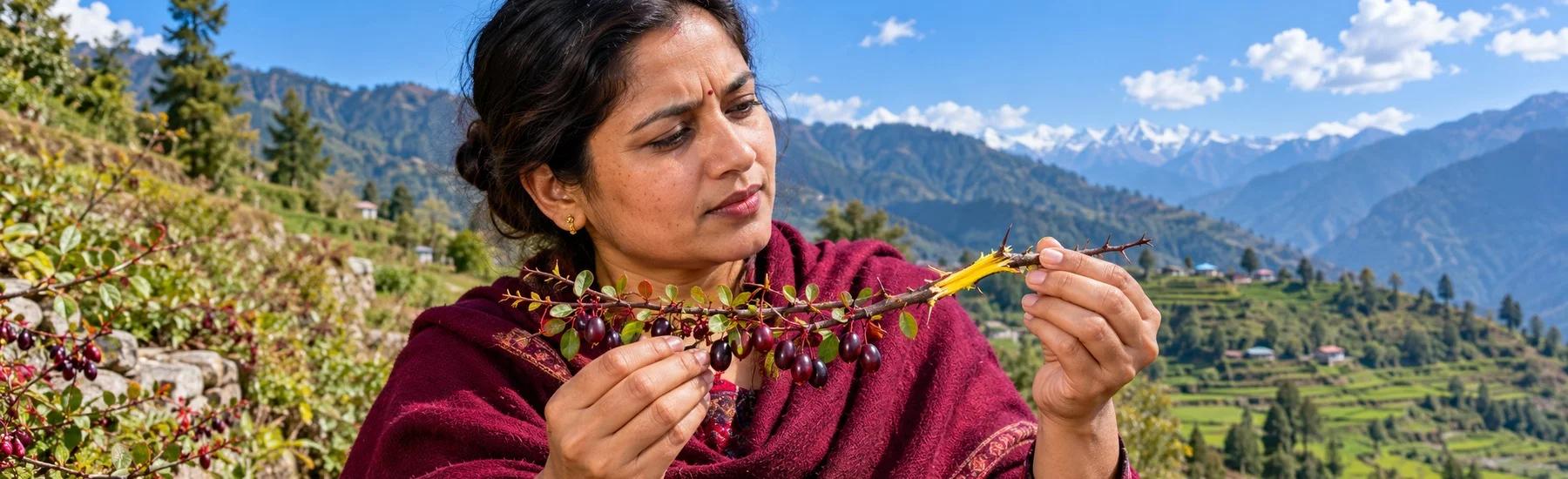
Sweet Potato Benefits: Shakarkandi Nutrition and Winter Ways
Shakarkandi season is here. What 100 g really holds, why orange flesh matters, how cooking changes blood sugar and five Indian ways to eat it.
In this article(16 sections)
- What nutrients are in 100 g of sweet potato?
- Beta-carotene and vitamin A: why the flesh colour matters
- What does research say about different sweet potato colours?
- How can you get more nutrients from sweet potato?
- Sweet potato myths: What does the evidence say?
- Is sweet potato good for diabetes?
- Five healthy Indian ways to enjoy shakarkandi
- 1. Shakarkandi chaat with a healthy twist
- 2. Roasted sweet potato
- 3. Sweet potato sabzi
- 4. Sweet potato stuffed paratha
- 5. Sweet potato and curd bowl
- Who should be careful?
- When should you see a doctor?
- A simple winter favourite worth enjoying
- Sources
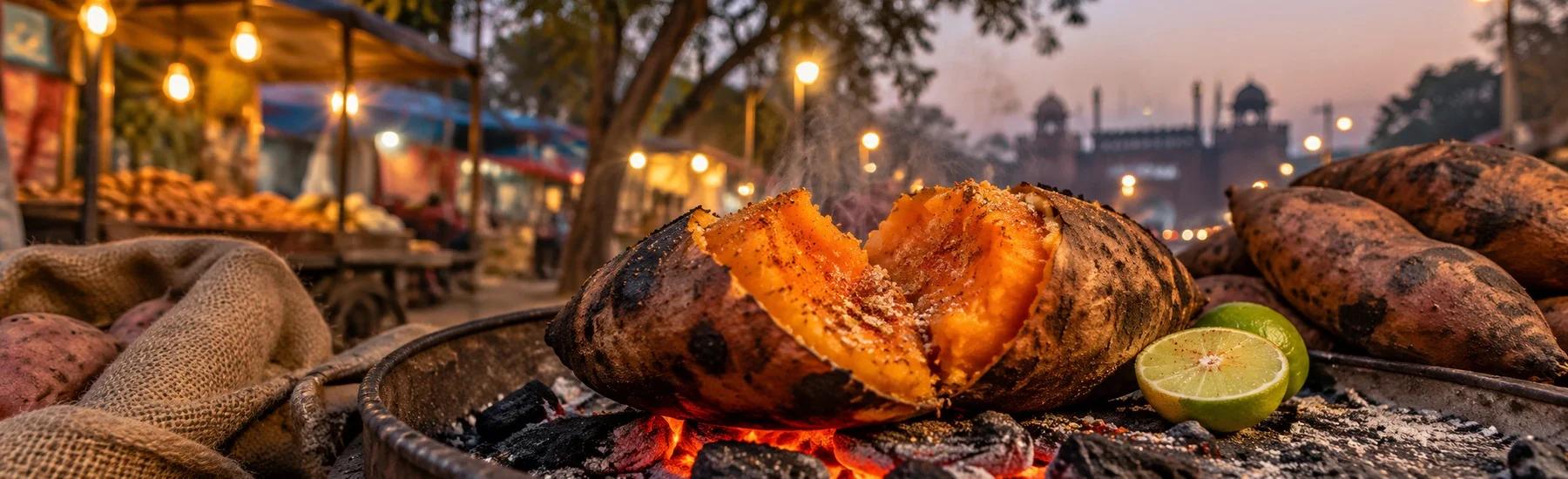
As November arrives, the familiar shakarkandi carts start appearing on street corners. Sweet potatoes roast over hot coals, ready to be peeled, sprinkled with chaat masala and enjoyed warm on a cool evening. Meanwhile, social media is calling sweet potatoes the ultimate winter superfood, promising everything from better digestion to glowing skin. So, which sweet potato benefits are actually backed by science? Sweet potatoes are a nutritious source of carbohydrates and fibre. Orange-fleshed varieties are particularly rich in beta-carotene, which your body converts into vitamin A. Their effect on blood sugar can also vary depending on how they're cooked. Let's look at what sweet potatoes contain, why their colour matters and how to enjoy them as part of a balanced Indian diet.
What nutrients are in 100 g of sweet potato?
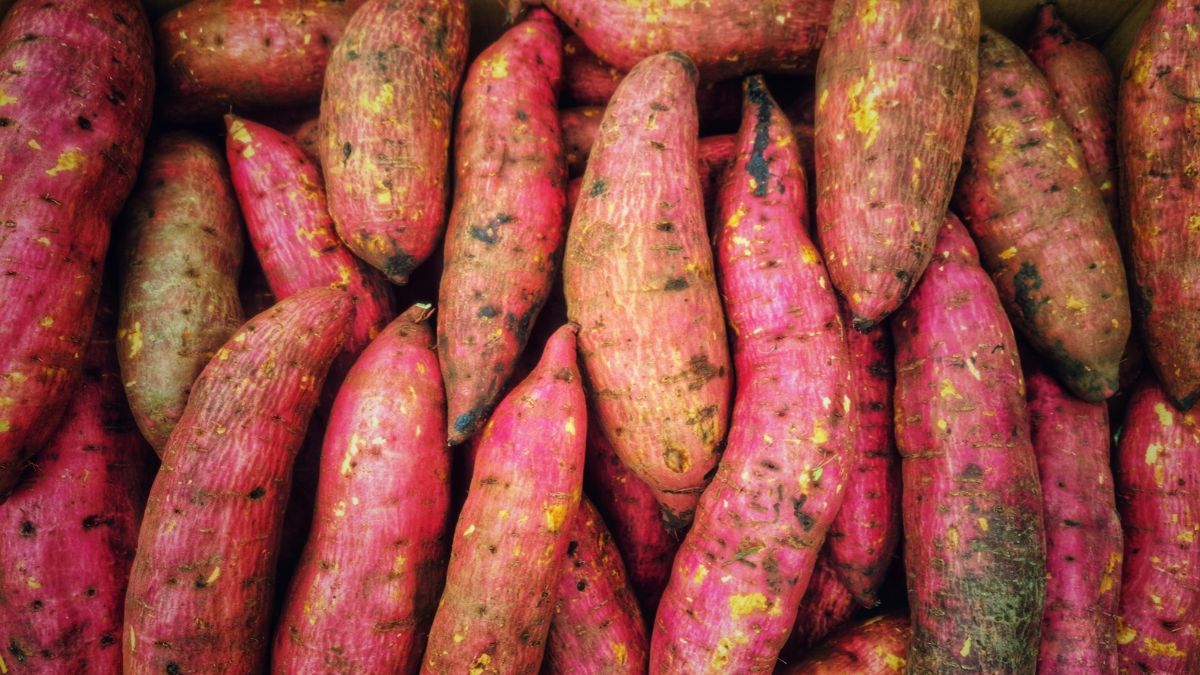
Sweet potatoes are a good source of carbohydrates and fibre, but their nutritional value can vary depending on the variety. Even the sweet potatoes commonly sold in India have slightly different nutrient profiles. According to the Indian Food Composition Tables (ICMR-National Institute of Nutrition), 100 g of raw, edible sweet potato contains approximately:
24 g of available carbohydrates, which provide energy.
4 g of dietary fibre, which supports digestion and helps you feel full.
Just over 100 calories in the brown-skinned variety.
The vitamin A content is particularly interesting. Orange-fleshed sweet potatoes contain large amounts of beta-carotene, a plant pigment that your body converts into vitamin A. This nutrient supports normal vision, immune function and skin health. In simple terms, shakarkandi provides energy, fibre and useful nutrients in one food. The flesh colour matters too, as orange varieties generally contain much more beta-carotene than white-fleshed ones.
Also read: What Are Macronutrients? Understanding Carbohydrates, Protein and Fat.
Beta-carotene and vitamin A: why the flesh colour matters
The next time you buy shakarkandi, look beyond the skin. Some sweet potatoes sold in Indian markets have pink or purple skin but white or cream-coloured flesh. Others are bright orange inside. The colour of the flesh tells you more about its nutrients than the colour of the skin. Orange-fleshed sweet potatoes are particularly rich in beta-carotene, the natural pigment that gives them their colour. Your body converts beta-carotene into vitamin A, which supports eyesight, immunity and healthy skin. According to MedlinePlus, vitamin A is especially important for vision in low light. It also helps maintain healthy skin, bones, teeth and the protective linings inside your body.
What does research say about different sweet potato colours?
A study examining 22 sweet potato varieties found some interesting nutritional differences:
Orange-fleshed varieties contained high amounts of beta-carotene, making them useful sources of vitamin A.
Purple-fleshed varieties were rich in anthocyanins, antioxidant pigments also found in jamun and black grapes.
White-fleshed varieties generally contained less beta-carotene, although their overall nutritional value varied.
There's also evidence that orange sweet potatoes can help improve vitamin A status. In a South African study involving 180 children aged 5 to 10, researchers compared two groups. One ate 125 g of boiled, mashed orange-fleshed sweet potato each school day, while the other ate the same amount of white-fleshed sweet potato. After 53 school days, children eating the orange variety showed improved vitamin A stores compared with those eating the white variety.
How can you get more nutrients from sweet potato?
Two simple choices can help you make the most of shakarkandi:
Choose the variety based on its nutrients. If you want more beta-carotene, look for orange-fleshed sweet potatoes. Purple varieties offer different beneficial plant pigments, so including both can add variety to your diet.
Pair sweet potato with a little healthy fat. Beta-carotene is fat-soluble, meaning your body absorbs it better when some fat is present in the meal. A small study involving seven adults found that adding oil to salad dressing improved carotenoid absorption compared with a fat-free dressing.
You don't need much. A little ghee, cooking oil or some full-fat curd alongside your sweet potato can help your body absorb beta-carotene more effectively.
The takeaway: Sweet potatoes of different colours offer different nutrients. Orange varieties stand out for beta-carotene, but white and purple varieties can still be nutritious additions to a balanced diet.
Sweet potato myths: What does the evidence say?
Sweet potatoes are often praised on social media for their health benefits. While some claims are supported by science, others are exaggerated.
"Sweet potato is a superfood." It's a nutritious vegetable that provides fibre, potassium and, in orange-fleshed varieties, plenty of beta-carotene. However, the term "superfood" doesn't give it any special health status.
"Sweet potato burns belly fat." No single food can burn belly fat. Sweet potatoes can be part of a filling, balanced meal that helps you manage hunger and portions.
"Sweet potato is always good for diabetes." Although it's a vegetable, sweet potato contains carbohydrates that affect blood sugar. Portion size and cooking method matter.
"Sweet potato is healthier than rice or roti." Replacing rice or roti with sweet potato can add variety and nutrients to your diet. However, it's still a source of carbohydrates, so portions count.
Is sweet potato good for diabetes?
It depends a lot on how it is cooked. In a study of ten sweet potato varieties commonly eaten in Jamaica, tested in ten healthy adults without diabetes, boiled sweet potatoes had a glycaemic index (GI) of 41 to 50. Baked ones scored 82 to 94 and roasted ones 79 to 93. GI is a measure of how fast a food raises blood sugar compared with pure glucose. The lower the number, the gentler the rise. That suggests the roadside version, roasted on coals until soft and caramelised, may raise blood sugar faster than boiled shakarkandi. The study was small and did not include people with diabetes, so treat it as a guide, not a rule. If you have diabetes or prediabetes:
Prefer boiled or steamed sweet potato over roasted, baked or fried.
Keep the portion modest. Count it as part of the meal's carbohydrate, not an extra.
Eat it with protein and fibre: chana, paneer, curd, dal or a big bowl of salad.
Take a short walk afterwards. Our piece on walking after meals for blood sugar explains how a short walk helps.
Check your own glucose meter reading two hours after eating it. Your response is the one that counts.
If sweet things are your weak spot in winter, our article on why you crave sugar may help you spot the pattern behind it.
Five healthy Indian ways to enjoy shakarkandi
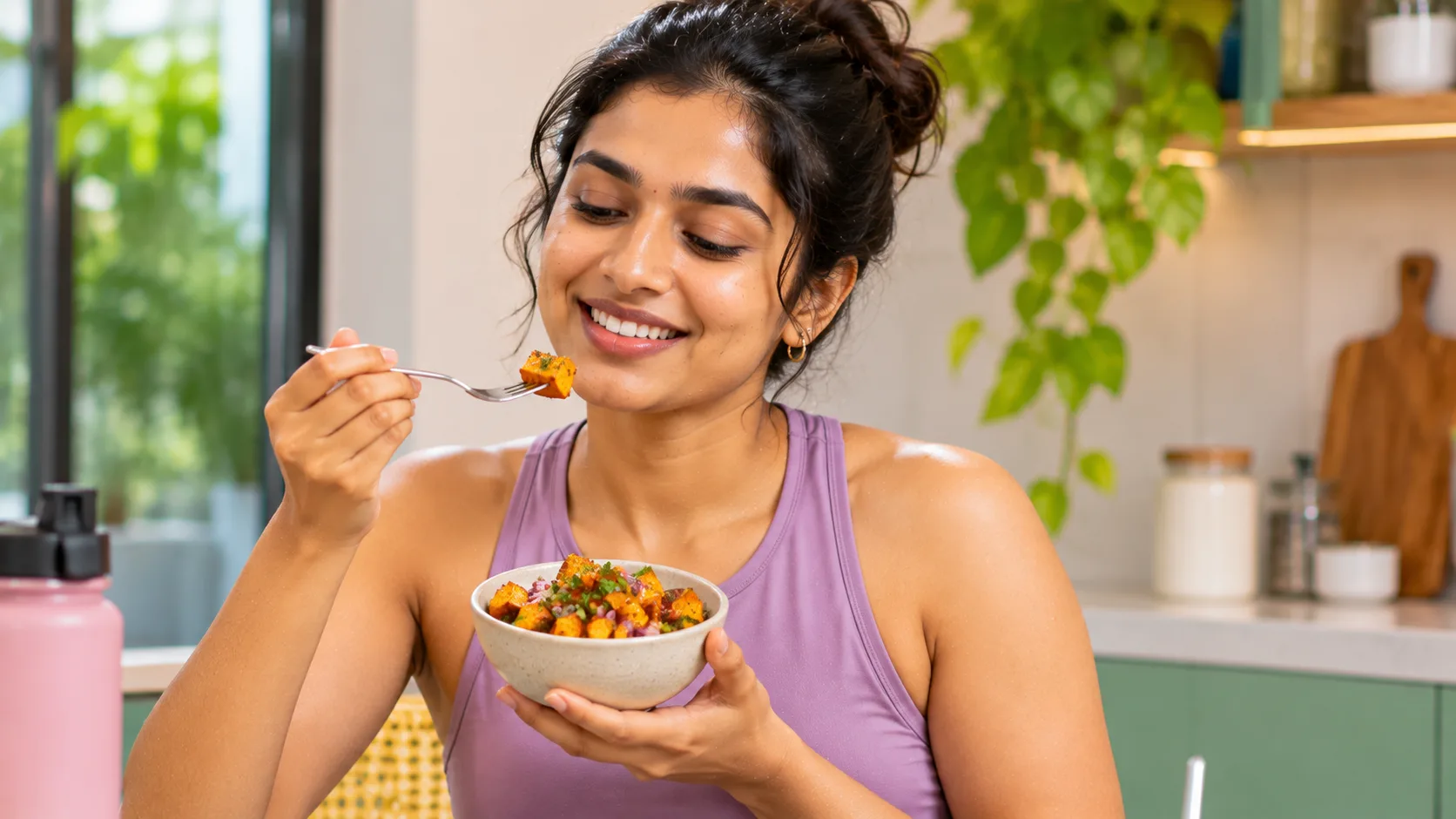
Sweet potato is easy to include in everyday Indian meals. Whether you prefer it as a snack, sabzi or breakfast, a few simple preparations can make it both nutritious and satisfying.
1. Shakarkandi chaat with a healthy twist
Boil or steam sweet potato until tender, then cut it into small cubes. Toss with lemon juice, chaat masala, roasted jeera powder and fresh coriander. Add boiled chana for protein or pomegranate seeds for extra flavour. This makes a filling snack with fibre and a mix of nutrients, without needing heavy sauces or added sugar.
2. Roasted sweet potato
If you enjoy the smoky flavour of street-style shakarkandi, try roasting it on a tawa or in the oven. Keep the skin on after washing it thoroughly, as it provides additional fibre. Serve a moderate portion with plain buttermilk or a small bowl of sprouts for a more balanced snack.
3. Sweet potato sabzi
Replace regular potatoes with boiled sweet potato cubes in a simple dry sabzi. Temper mustard seeds, curry leaves and green chilli in a little oil, then add turmeric and sweet potato. Toss gently until everything is coated. Serve with dal and roti for a balanced meal. A squeeze of lemon helps balance the natural sweetness.
4. Sweet potato stuffed paratha
Mash boiled sweet potato with ajwain, chopped coriander, green chilli and a pinch of salt. Use it as a filling for whole wheat paratha and cook with a little ghee or oil. Serve with plain curd instead of butter or sweetened sauces. Remember that both the paratha and its filling contain carbohydrates, so adjust the portion to suit your meal.
5. Sweet potato and curd bowl
Mix boiled sweet potato cubes with thick, plain curd. Add roasted jeera powder, mint and a little salt for flavour. This combination is popular during Navratri and other fasting periods. Curd adds protein and some fat, which can also help your body absorb beta-carotene from orange-fleshed sweet potatoes.
A simple tip: Whichever preparation you choose, limit deep-frying and added sugar. Sweet potato is naturally sweet, so you don't need sugary syrups or heavy toppings to enjoy it. Pairing it with protein-rich foods can also make your meal more satisfying.
Who should be careful?
People with diabetes: watch the cooking method and portion, as above.
People with kidney disease who have been told to limit potassium: sweet potato contains a fair amount. Ask your doctor or dietitian how much fits your plan.
Anyone on a weight-loss plan: it is nourishing, but a large roasted tuber adds up. Count it.
When should you see a doctor?
Food choices support health, but they do not replace medical care. See your doctor if you are worried about your blood sugar or it is not getting better with changes in diet. If you have kidney disease, ask your doctor or dietitian first about potassium-rich foods. If you take medicines for diabetes, discuss big changes in your diet with your doctor first, so your medicine plan still fits.
A simple winter favourite worth enjoying
Sweet potato doesn't need a superfood label to deserve a place in your diet. It provides fibre, energy and useful nutrients, especially beta-carotene in orange-fleshed varieties. Whether you enjoy it roasted with lemon and chaat masala or boiled with curd, the key is balance and portion size. So, the next time you pass a shakarkandi cart on a cool evening, enjoy your favourite winter snack knowing it can be part of a healthy diet.
Sources
Indian Food Composition Tables 2017 (ICMR-National Institute of Nutrition)
FoodData Central: Sweet potato, raw (US Department of Agriculture)
Bioactive Compound Diversity in a Wide Panel of Sweet Potato Cultivars (Metabolites, 2024)
Medical Disclaimer: This article is for general information and is not a substitute for advice from your doctor. Speak to a qualified healthcare professional before starting any supplement, especially if you are pregnant, breastfeeding or taking medication.
Continue this topic
Connected guides, ingredient explainers, product context, and tools chosen from this article's topic cluster.
ACV gummies and vinegar shots are everywhere. What the trials show for weight, the 2024 study that was retracted, label checks and who should avoid it.
Berberine is sold as nature's Ozempic. This guide covers what trials show for sugar and weight, why the comparison fails and which medicines it can clash with.
Most Indian breakfasts are mostly cereal. Learn what morning protein really does for fullness, cravings and muscle, plus easy swaps from home food.
Quick questions
Is sweet potato healthier than potato?
Both are starchy vegetables. Orange-fleshed sweet potato stands out for its beta-carotene, which the body turns into vitamin A. For blood sugar, the cooking method and the portion matter a great deal, as one study of sweet potato showed.
Can people with diabetes eat sweet potato?
They can, in a measured portion and preferably boiled. In one small study, boiled sweet potato had a GI of 41 to 50, while roasted and baked versions scored about 79 to 94. Pair it with protein and check your own readings.
Is roasted shakarkandi from the street healthy?
It is a simple, whole food snack with fibre. Roasting makes it raise blood sugar faster than boiling, so keep the portion small and add chana, sprouts or buttermilk alongside.
Which sweet potato has the most beta-carotene?
Orange-fleshed varieties are the ones rich in beta-carotene. White or cream-fleshed ones have very little. Cut one open before buying, because the skin colour does not tell you what is inside.
Should I eat sweet potato with the skin?
You can, if it is washed well. The skin adds fibre and texture. Scrub off the soil, especially for roasted sweet potato from the sand or coals.
7 linked sources checked against our citation and claim-safety process.
Reviewed 4 Nov 2026 for supplement-claim and medical-disclaimer boundaries.
Recommended from the Aora range
Aora Nutrivit Plus
19 Essential Nutrients with Zinc, Magnesium and Vitamins B Complex, C and D3
- Multivitamin
- Daily Foundation
- Made in India
From₹690
Try Aora - free
Put this article to work on you.
Health and safety notice
- This article is educational. It is not medical advice and is not a substitute for guidance from a qualified healthcare provider. Consult a physician before starting any supplement, especially during pregnancy or breastfeeding, with a medical condition, or while on medication.
- FSSAI compliance: Health supplements and nutraceuticals are not intended for medicinal use. Any supplement-related information is provided to describe nutritional or physiological support and should not be interpreted as a claim to diagnose, treat, cure, or prevent any disease. FSSAI regulates health supplements and nutraceuticals separately from medicinal products.
Read our full medical disclaimer and editorial policy.
Sources and editorial standards
- 1Indian Food Composition Tables (ICMR-National Institute of Nutrition)
- 2MedlinePlus
- 3study examining 22 sweet potato varieties
- 4South African study involving 180 children aged 5 to 10
- 5small study involving seven adults
- 6a glycaemic index (GI) of 41 to 50
- 7FoodData Central: Sweet potato, raw (US Department of Agriculture)
Supplement content is educational only and should not replace medical advice from a qualified clinician. Product mentions are reviewed for claim safety before publication.