Gut Bacteria and Weight: What the Science Really Shows
Reels promise a gut reset for belly fat. See what research on gut bacteria and weight really shows, what is unproven and how to feed your gut on an Indian plate.

In this article(16 sections)
- Why is everyone suddenly talking about gut health and weight?
- What the research on gut bacteria and weight actually shows
- The mouse studies that started it all
- What studies in people show
- How Do Gut Bacteria Help Control Hunger?
- What is still unproven in humans?
- So, what does the research actually tell us?
- Where do probiotics fit in?
- Why microbiome test kits overpromise
- When should you see a doctor?
- How to feed a diverse microbiome on an Indian plate
- Fibre-rich foods that support gut bacteria
- Fermented foods you already know
- Daily habits that support your gut
- Good Gut Health Starts with Everyday Habits
- Sources
Can the bacteria living in your gut affect your weight? Research suggests they can, although the connection isn't as simple as taking a probiotic and watching the kilos disappear. Your gut is home to trillions of bacteria that help digest fibre, influence appetite and affect how your body uses energy from food. Studies in animals have shown that changing these bacteria can affect body fat. In humans, however, the evidence is less clear.
Researchers have found links between gut bacteria and weight, but that doesn't mean certain bacteria directly cause weight gain or help you lose it. What you eat also influences both your gut bacteria and your weight. So, looking after your gut health is worthwhile, but it's only one part of the picture. Your diet, sleep and physical activity still matter, and understanding how they work together can help you make better choices.
Why is everyone suddenly talking about gut health and weight?

Gut health has become a big topic on social media. One influencer recommends a fizzy drink to “reset” your gut, while another promises to reduce bloating and belly fat in just seven days. You can even buy home gut bacteria test kits that claim to tell you exactly what to eat based on your results. There's also growing interest in weight loss medicines that work through a hormone called GLP-1. What many people don't realise is that GLP-1 is naturally produced in the gut after you eat. It helps regulate appetite and blood sugar, which is one reason the connection between gut health and weight has attracted so much attention. However, understanding this connection is very different from claiming that a drink, supplement or microbiome test can help you lose weight.
What the research on gut bacteria and weight actually shows
The mouse studies that started it all
Much of the early evidence comes from germ-free mice, raised in sterile conditions so they carry no gut bacteria of their own. Scientists give them bacteria from a chosen donor and watch what happens. In one study, researchers took stool samples from pairs of human twins where one twin had obesity and the other was lean. They transferred these microbes into germ-free mice. The study in Science found that increased total body and fat mass were transmissible with the bacteria from the twin with obesity. Mice carrying the lean twin's bacteria did not gain the same fat.
The study found something else. When the two groups of mice shared a cage, bacteria from the lean mice moved into the others and prevented the extra weight gain. But this protection depended on diet. It worked when the mice ate a diet rich in fruit and vegetables. It did not work on a diet high in saturated fat and low in plant foods.
What studies in people show
Most human studies compare groups and look for links. A Danish study in Nature looked at the gut bacteria of 292 adults. It found that people with low bacterial richness, about 23% of the group, had more overall body fat, more insulin resistance and higher blood fat levels. Those with obesity in the low richness group also gained more weight over time. Bacterial richness means how many different kinds of microbes live in your gut. Think of a forest with many species rather than a field of one crop. This is an association. A less varied gut and excess weight often travel together, but it does not prove which came first. Diet, medicines, sleep, stress and age shape both.
How Do Gut Bacteria Help Control Hunger?
The bacteria living in your gut do more than help with digestion. They also produce substances that can influence hunger, fullness and blood sugar. This is where the connection between gut bacteria and the hormone GLP-1 becomes interesting. When you eat fibre-rich foods such as dal, vegetables, millets and fruit, some of that fibre reaches your large intestine without being digested. Gut bacteria break it down through a process called fermentation, producing substances known as short-chain fatty acids. These include acetate, propionate and butyrate, which help nourish the cells lining your gut and act as chemical messengers.
A study published in Diabetes found that these fatty acids could trigger gut cells to release GLP-1. In mice lacking the receptors that respond to these fatty acids, GLP-1 levels were lower and blood sugar control was poorer. However, these findings come from laboratory and animal research, so they don't prove the same effect on weight loss in humans. GLP-1 helps your body release insulin after eating, slows stomach emptying and sends signals that help you feel full. Here's how the process works:
You eat fibre-rich foods such as dal, vegetables, millets and fruit.
Some fibre reaches your large intestine, where gut bacteria break it down.
This produces short-chain fatty acids that interact with cells in your gut.
These signals can encourage the release of hormones such as GLP-1, which help regulate appetite and blood sugar.
It's important to understand that eating more fibre is not the same as taking GLP-1 medication. Prescription medicines have much stronger effects than the natural changes triggered by food. Still, regularly eating fibre-rich foods can support gut health and help you feel fuller for longer. It's a simple habit worth building into your meals, even if it doesn't lead to dramatic weight loss on its own.
Also read: Why Do You Crave Sugar All the Time? Common Causes Explained.
What is still unproven in humans?
There's plenty of talk online about changing your gut bacteria to lose weight. However, research hasn't yet proven many of these claims in humans. Here's what we still don't know for certain:
Whether one type of bacteria controls your weight: Researchers have found links between certain gut bacteria and body weight, but there's no proof that a single bacterium makes you gain or lose weight.
Whether gut bacteria transplants help people lose weight: Studies in mice have shown interesting results, but transferring gut bacteria from a lean person hasn't been shown to produce reliable weight loss in humans.
Whether a seven-day gut cleanse actually works: Your gut bacteria can change within days when your diet changes. However, that doesn't mean a short cleanse can permanently reset your gut. What you eat regularly matters more.
So, what does the research actually tell us?
Your diet influences the bacteria living in your gut, and those bacteria play a role in digestion and appetite-related signals. However, your weight is also affected by what you eat, how active you are, your sleep, genetics and other health factors.
Looking after your gut is worthwhile, but it isn't a shortcut to weight loss.
Where do probiotics fit in?
Probiotics are live, friendly bacteria you take in food or supplements. They add helpful microbes to your gut, while prebiotic fibre feeds the microbes already living there. Both fit best alongside the basics of good food, sleep and movement. If you want to understand how the two differ, read our article on probiotics vs prebiotics.
Why microbiome test kits overpromise

You post a stool sample and get a report listing your bacteria, often with a score and a food plan. It feels precise, but the science behind it is not there yet. In late 2024, an international panel of gut and microbiome experts published a consensus statement in The Lancet Gastroenterology and Hepatology. It noted that evidence for the clinical usefulness of microbiome testing is scarce. It also warned that commercial direct-to-consumer tests are offered without any consensus on regulation or proven value in clinical practice. There are a few practical reasons for this:
Your gut bacteria change from day to day with what you ate, how you slept and whether you took a medicine.
There is no agreed "normal" microbiome to compare you against, especially for Indian diets.
If you have ongoing gut symptoms, a gastroenterologist will use tests that are proven to help, such as blood tests, stool tests for infection or a scope. That money is usually better spent on a doctor's visit than a kit.
When should you see a doctor?
The NHS recommends seeing a doctor if you frequently feel bloated, experience severe bloating or notice that it isn't going away. You should also see a doctor if:
Your child has blood in their stool.
You've noticed blood in your stool for three weeks.
Your stools have been softer, thinner or longer than usual for three weeks.
You have significant pain around your bottom.
You notice pain or a lump in your abdomen.
You feel more tired than usual.
You've lost weight without trying.
Seek urgent medical attention if your stools are black or dark red, or you have bloody diarrhoea. If you're bleeding heavily or the bleeding won't stop, call 112 in India or go to the nearest emergency department. If you're considering a GLP-1 weight loss medicine, speak to your doctor first. They can review your medical history, current medicines and whether the treatment is suitable for you.
The NCCIH also warns that probiotics may carry greater risks for people with serious illnesses or weakened immune systems. Check with your doctor before taking supplements if this applies to you, especially if you're pregnant or take regular medicines. Finally, take antibiotics only when prescribed and follow your doctor's instructions for completing the course.
How to feed a diverse microbiome on an Indian plate
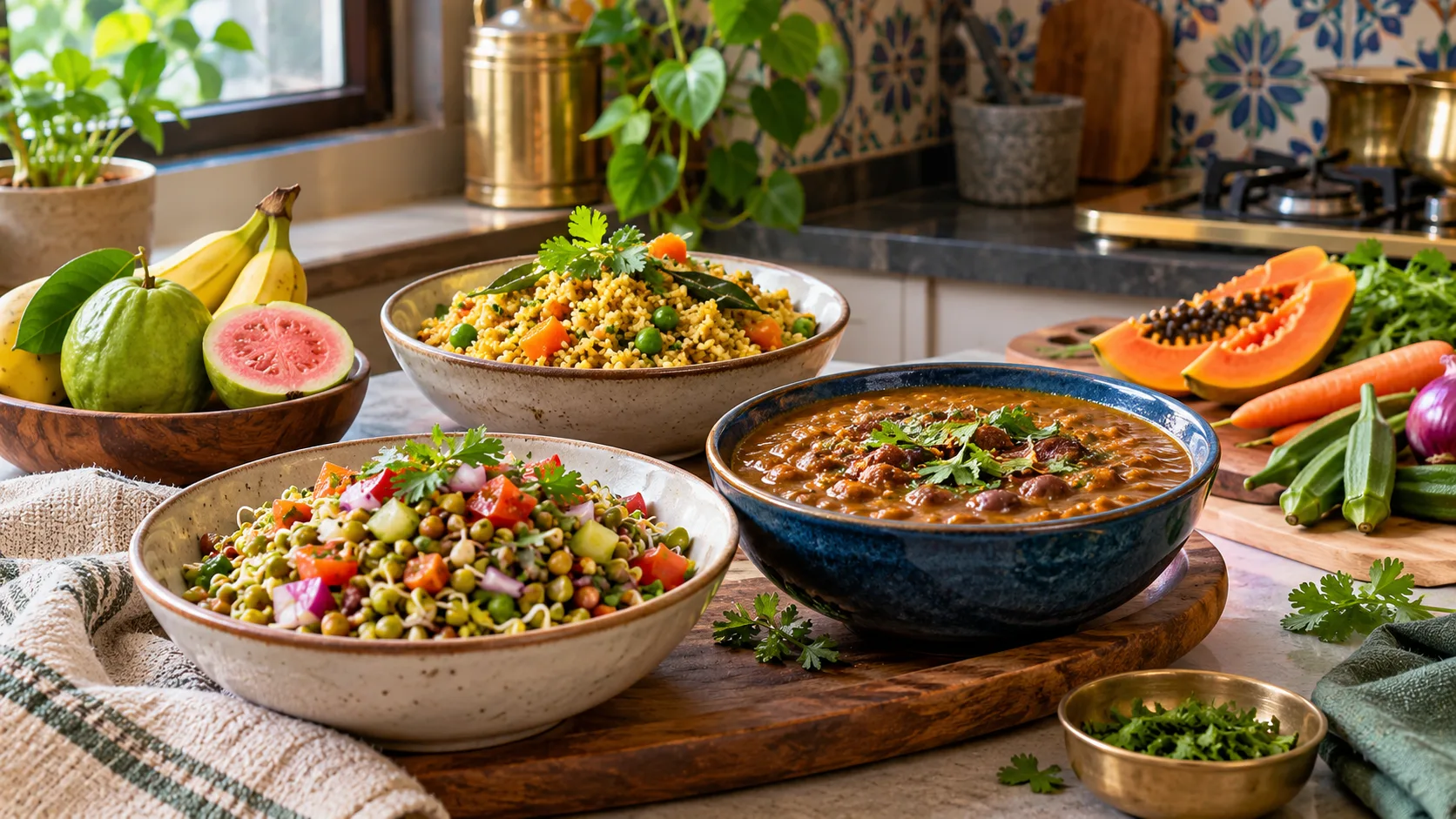
You don't need expensive supplements or imported superfoods to look after your gut bacteria. Many everyday Indian foods are naturally rich in fibre, which helps feed the beneficial bacteria living in your digestive system.
Fibre-rich foods that support gut bacteria
Dals and legumes: Moong, masoor, chana, rajma and lobia provide both protein and fibre that gut bacteria can break down.
Millets: Ragi, jowar, bajra and foxtail millet offer different types of fibre and can add variety to meals that usually rely on white rice or maida.
Vegetables: Bhindi, lauki, beans, carrots, onions and leafy greens like palak and methi are good everyday choices.
Whole fruits: Guava, bananas, papaya, apples and seasonal fruits provide fibre that you would miss out on by drinking only their juice.
Variety matters as much as quantity. Different types of fibre support different groups of gut bacteria, so try including a mix of plant foods throughout the week rather than eating the same few vegetables every day. If you're not used to eating much fibre, increase it gradually and drink enough water. Adding too much fibre suddenly can leave you feeling gassy or bloated.
Also read: Can Constipation Cause Bloating and Gas? Understanding the Difference.
Fermented foods you already know
A small randomised study in the journal Cell compared a high-fibre diet with a high fermented food diet in healthy adults over 17 weeks, with 18 people in each group. The fermented food diet steadily increased microbiota diversity and lowered inflammatory markers. Home-set curd, buttermilk, idli and dosa made from naturally fermented batter, dhokla, kanji and homemade pickles fermented in brine all belong here. A bowl of curd with lunch or a glass of chaas in the afternoon is an easy daily habit. If you are curious about bottled options, read our guide on whether probiotic drinks are good for you.
Daily habits that support your gut
Eat at regular times.
Sleep on a regular schedule, since poor sleep can unsettle appetite.
Take a short walk after meals. Our guide to walking after meals explains why it helps.
A daily probiotic can sit alongside these habits. Aora Gut Guard combines Bacillus clausii, Bacillus subtilis and Bacillus coagulans with FOS, a prebiotic fibre, to support gut comfort and daily digestion.
Good Gut Health Starts with Everyday Habits
Your gut bacteria play a role in how your body digests food and responds to hunger. Research suggests they can influence appetite-related signals, although their effect on weight in humans is still being studied. For now, the most useful steps are also the simplest. Eat more dal and vegetables, include curd and millets in your meals, get enough sleep and stay active. A healthier gut is worth working towards, even if weight loss isn't the immediate result. Lasting improvements come from consistent habits, not seven-day cleanses or quick fixes promoted on social media.
Sources
Gut microbiota from twins discordant for obesity modulate metabolism in mice (Science, 2013)
Richness of human gut microbiome correlates with metabolic markers (Nature, 2013)
Diet rapidly and reproducibly alters the human gut microbiome (Nature, 2014)
Gut-microbiota-targeted diets modulate human immune status (Cell, 2021)
Medical Disclaimer: This article is for general information and is not a substitute for advice from your doctor. Speak to a qualified healthcare professional before starting any supplement, especially if you are pregnant, breastfeeding or taking medication.
Continue this topic
Connected guides, ingredient explainers, product context, and tools chosen from this article's topic cluster.
Bloating, acidity, probiotics, enzymes, microbiome basics
Kombucha and kimchi are trending, but your kitchen has curd, idli and kanji. What fermented foods do for your gut and what the studies actually show.
Why your stomach churns before a big meeting. How your brain and gut talk to each other, what stress does to digestion and what helps calm a nervous gut.
The probiotic in those small white vials from childhood. How Bacillus clausii survives stomach acid, what trials show and how to use it well.
Quick questions
Can gut bacteria make you gain weight?
In mice, bacteria from a person with obesity raised body fat when transferred into germ-free animals. In people, studies show that a less varied gut often goes along with more body fat. This is a link rather than proof of cause. Diet, sleep, medicines and activity shape both your bacteria and your weight.
How are gut bacteria linked to GLP-1?
Gut bacteria ferment fibre into short-chain fatty acids. These fatty acids prompt special gut cells to release GLP-1, a hormone that helps insulin release after meals and signals fullness. Eating more fibre from dal, millets, vegetables and fruit supports this natural process.
Are home microbiome test kits worth buying?
An international expert consensus published in late 2024 noted that evidence for the clinical usefulness of microbiome testing is scarce. Your gut bacteria also change from day to day. If you have ongoing gut symptoms, a visit to a gastroenterologist is usually a better use of money.
Which Indian foods help a diverse gut microbiome?
Dals and legumes, millets such as ragi and jowar, a wide range of vegetables and whole fruits give your bacteria fibre to ferment. Home-set curd, buttermilk, idli and dosa batter add fermented foods. Variety across the week matters more than any single superfood.
Can a gut cleanse reset your microbiome?
No single cleanse resets your gut. Your gut bacteria shift within days of a diet change, but lasting change comes from what you eat week after week. Dal, millets, vegetables, fruit and fermented foods such as curd are a steadier base than any seven-day plan.
9 linked sources checked against our citation and claim-safety process.
Reviewed 31 Oct 2026 for supplement-claim and medical-disclaimer boundaries.
Recommended from the Aora range
Aora Nutrivit Plus
19 Essential Nutrients with Zinc, Magnesium and Vitamins B Complex, C and D3
- Multivitamin
- Daily Foundation
- Made in India
From₹690.00
Try Aora - free
Put this article to work on you.
Health and safety notice
- This article is educational. It is not medical advice and is not a substitute for guidance from a qualified healthcare provider. Consult a physician before starting any supplement, especially during pregnancy or breastfeeding, with a medical condition, or while on medication.
- FSSAI compliance: Health supplements and nutraceuticals are not intended for medicinal use. Any supplement-related information is provided to describe nutritional or physiological support and should not be interpreted as a claim to diagnose, treat, cure, or prevent any disease. FSSAI regulates health supplements and nutraceuticals separately from medicinal products.
Read our full medical disclaimer and editorial policy.
Sources and editorial standards
- 1study in Science
- 2Danish study in Nature
- 3study published in Diabetes
- 4change within days when your diet changes
- 5consensus statement in The Lancet Gastroenterology and Hepatology
- 6NHS
- 7see a doctor
- 8NCCIH
- 9randomised study in the journal Cell
Supplement content is educational only and should not replace medical advice from a qualified clinician. Product mentions are reviewed for claim safety before publication.